


Overview
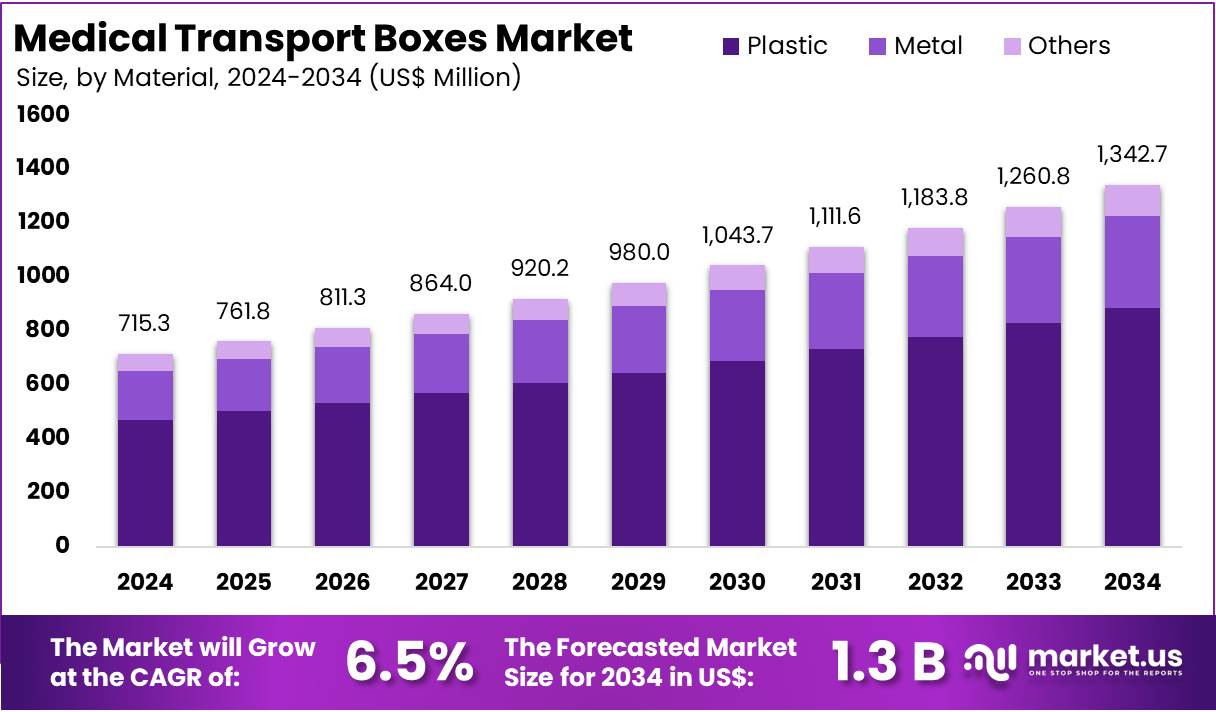
New York, NY – June 02, 2026 – The Global Medical Transport Boxes Market size is expected to be worth around US$ 1342.7 Million by 2034, from US$ 715.3 Million in 2024, growing at a CAGR of 6.5% during the forecast period from 2025 to 2034. North America held a dominant market position, capturing more than a 42.2% share and holds US$ 301.1 Million market value for the year.
Medical transport boxes are specialized containers designed to ensure the safe, secure, and temperature-controlled transportation of medical products, including vaccines, blood samples, biological specimens, pharmaceuticals, and diagnostic materials. These boxes play a critical role in maintaining product integrity throughout the healthcare supply chain and are widely used by hospitals, laboratories, blood banks, pharmaceutical companies, and research institutions.
The growing emphasis on cold chain logistics, increasing distribution of temperature-sensitive medicines, and expanding global healthcare infrastructure are contributing to the demand for advanced medical transport solutions. Medical transport boxes are manufactured using durable materials and often incorporate insulation technologies, phase-change materials, and temperature monitoring systems to maintain required storage conditions during transit.
Product offerings include reusable and disposable transport boxes, passive cooling containers, and active temperature-controlled systems designed for short- and long-distance transportation. The adoption of these solutions has increased significantly with the rise in vaccine distribution programs, biologics manufacturing, and clinical research activities.
Technological advancements such as real-time tracking, IoT-enabled monitoring, and enhanced thermal performance are further improving transportation reliability and regulatory compliance. Additionally, stringent guidelines governing the handling and transport of medical products are encouraging healthcare organizations to invest in high-quality transport packaging solutions.
As healthcare logistics continue to evolve, medical transport boxes remain an essential component in ensuring product safety, operational efficiency, and uninterrupted patient care worldwide.
Key Takeaways
- The global medical transport boxes market is anticipated to expand from US$ 715.3 million in 2024 to nearly US$ 1,342.7 million by 2034, registering a CAGR of 6.5% during the forecast period from 2025 to 2034.
- Plastic-based medical transport boxes accounted for the largest material segment share of 65.9% in 2024, supported by their durability, lightweight nature, and cost efficiency.
- Passive cooling solutions dominated the technology landscape in 2024, representing over 81.6% of the market owing to their dependable performance and lower operating expenses.
- Blood and blood components emerged as the leading application segment, capturing 35.4% of the market share in 2024 due to stringent transportation and storage requirements.
- Hospitals and clinics remained the largest end-user segment in 2024, contributing more than 35.2% of total market revenue, driven by increasing demand for temperature-controlled medical logistics.
- Direct sales led the distribution channel segment with a substantial 77.1% market share in 2024, reflecting the preference of institutional buyers for direct procurement models.
- North America maintained its position as the leading regional market in 2024, accounting for 42.2% of global revenue and reaching a market value of approximately US$ 301.1 million, supported by advanced healthcare infrastructure and established cold chain networks.
Regional Analysis
In 2024, North America accounted for the largest share of the global medical transport boxes market, representing over 42.2% of total revenue and reaching a market value of approximately US$ 301.1 million. The region’s strong position is supported by advanced healthcare infrastructure, extensive cold chain networks, and increasing demand for secure transportation of temperature-sensitive medical products.
The United States and Canada remain key contributors to regional growth due to stringent regulations governing the storage and transport of vaccines, blood products, organs, and diagnostic specimens. Compliance with regulatory standards has encouraged healthcare organizations to adopt high-performance medical transport solutions that ensure product safety and integrity throughout transit.
Rising investments in biotechnology, pharmaceutical manufacturing, and clinical research activities have further strengthened market demand. The growing movement of biologics, laboratory samples, and cell-based therapies requires reliable transport containers capable of maintaining stable environmental conditions.
Additionally, the expansion of home healthcare services across North America has increased the need for portable and temperature-controlled transport systems for medicines, diagnostic kits, and patient samples. Technological advancements, including GPS tracking, real-time monitoring, and integrated thermal sensors, are enhancing transport efficiency and visibility. These innovations continue to support the adoption of advanced medical transport boxes, reinforcing North America’s leadership in the global market.
Emerging Trends
- Increased Demand for Cold Chain Solutions: The demand for cold chain logistics is increasing significantly as vaccines, insulin, biologics, and laboratory samples require strict temperature control during transportation. Medical transport boxes help maintain product integrity, reduce spoilage risks, and support the growing need for safe healthcare delivery worldwide.
- Use of Smart Technology: Medical transport boxes are increasingly equipped with smart technologies such as GPS tracking, real-time temperature monitoring, and automated alerts. These features improve shipment visibility, reduce human errors, enhance product safety, and ensure compliance with healthcare transportation standards throughout the delivery process.
- Sustainable and Eco-Friendly Materials: Manufacturers are adopting sustainable materials such as recyclable plastics, biodegradable components, and reusable containers for medical transport boxes. This shift helps reduce environmental impact while maintaining hygiene, durability, and performance standards, supporting healthcare organizations in achieving sustainability and waste-reduction goals.
- Rising Focus on Emergency and Home Healthcare: The expansion of emergency medical services and home healthcare is increasing demand for lightweight and portable transport boxes. These solutions enable safe transportation of medicines, vaccines, and medical supplies while supporting rapid response services and patient care in non-traditional healthcare settings.
- Customization and Modular Design: Healthcare providers increasingly require customized medical transport boxes designed for specific applications such as blood, organs, vaccines, or laboratory samples. Modular configurations allow users to adjust compartments and cooling elements, improving flexibility, efficiency, and product protection across various medical transportation requirements.
- Growth in Developing Regions: Expanding healthcare infrastructure in developing countries is creating strong demand for reliable medical transport solutions. Increasing investments in hospitals, clinics, and vaccination programs are driving adoption of durable transport boxes capable of delivering critical medical products safely to remote and underserved areas.
Use Cases
- Transporting Vaccines and Temperature-Sensitive Drugs: Medical transport boxes are widely used to transport vaccines, biologics, insulin, and temperature-sensitive medications. Advanced insulation and cooling technologies maintain required temperature ranges, preventing product degradation and ensuring medicines reach healthcare facilities in safe and effective condition.
- Carrying Blood Samples and Human Organs: Hospitals and laboratories rely on medical transport boxes for the safe movement of blood products, plasma, tissues, and organs. These containers provide temperature control, contamination prevention, and physical protection, supporting critical medical procedures and life-saving transplant operations.
- Moving Laboratory Specimens: Laboratory specimens such as tissue samples, swabs, and diagnostic fluids require controlled transportation conditions. Medical transport boxes protect these materials from environmental factors, contamination, and physical damage, ensuring sample integrity and supporting accurate diagnostic testing and research outcomes.
- Use in Mobile Clinics and Remote Healthcare: Mobile healthcare units operating in rural, remote, or disaster-affected areas use medical transport boxes to carry medicines, diagnostic equipment, and emergency supplies. These boxes provide reliable protection against extreme environmental conditions, ensuring healthcare services remain effective in challenging locations.
- Clinical Trials and Research Projects: Clinical research organizations and pharmaceutical companies use medical transport boxes to transfer trial drugs, biological samples, and research materials. Controlled transportation conditions help preserve sample quality, maintain regulatory compliance, and support successful outcomes in medical research and development activities.
- Home Healthcare Deliveries: The growing home healthcare sector relies on medical transport boxes for delivering medications, diagnostic kits, and medical devices directly to patients. These boxes protect products from temperature fluctuations and physical damage, ensuring safe and reliable delivery for ongoing patient treatment.
- Disaster Relief and Military Operations: Medical transport boxes play a vital role in disaster relief efforts and military healthcare operations by transporting medicines, vaccines, blood supplies, and emergency equipment. Their rugged construction and temperature-control capabilities ensure critical medical resources remain protected in demanding environments.
Frequently Asked Questions on Medical Transport Boxes
- What materials are commonly used in medical transport boxes?
Medical transport boxes are typically manufactured using insulated plastics, expanded polystyrene, polyurethane foam, vacuum-insulated panels, and durable composite materials. These materials provide thermal protection, structural strength, and long-lasting performance across various transportation and storage environments. - How do medical transport boxes maintain temperature stability?
Medical transport boxes utilize advanced insulation technologies along with refrigerants such as gel packs, phase change materials, or dry ice. These components work together to maintain specific temperature ranges required for sensitive medical products during transportation. - What temperature ranges can medical transport boxes support?
Medical transport boxes can support various temperature ranges, including refrigerated conditions between 2°C and 8°C, frozen temperatures below -20°C, and ultra-low temperature requirements. The exact range depends on the box design and thermal management system used. - Are medical transport boxes reusable?
Many medical transport boxes are designed for multiple uses and can withstand repeated transportation cycles. Reusable models offer cost savings, reduce environmental impact, and provide long-term reliability when properly maintained and sanitized according to industry standards. - What regulations govern medical transport boxes?
Medical transport boxes must comply with various healthcare and transportation regulations, including Good Distribution Practices (GDP), World Health Organization guidelines, and country-specific pharmaceutical transport requirements. Compliance ensures product quality and patient safety throughout distribution processes. - How is technology improving medical transport boxes?
Technological advancements such as IoT-enabled sensors, GPS tracking, real-time temperature monitoring, and digital data logging are enhancing medical transport boxes. These innovations improve visibility, reduce risks, and enable immediate corrective actions during transportation. - Which regions dominate the medical transport boxes market?
North America and Europe currently hold substantial market shares due to advanced healthcare systems and strict regulatory requirements. However, Asia-Pacific is experiencing rapid growth driven by pharmaceutical manufacturing expansion and increasing healthcare investments.
Conclusion
The medical transport boxes market is witnessing steady growth, driven by the increasing need for safe and temperature-controlled transportation of vaccines, blood products, biologics, pharmaceuticals, and laboratory specimens. Advancements in cold chain logistics, smart monitoring technologies, and sustainable packaging solutions are enhancing product reliability and operational efficiency.
Strong demand from hospitals, clinics, research institutions, and home healthcare services continues to support market expansion. North America remains the leading regional market, while developing economies present significant growth opportunities. As healthcare logistics become more sophisticated, medical transport boxes will remain essential for ensuring product integrity, regulatory compliance, and uninterrupted patient care.
Discuss your needs with our analyst
Please share your requirements with more details so our analyst can check if they can solve your problem(s)




