


Overview
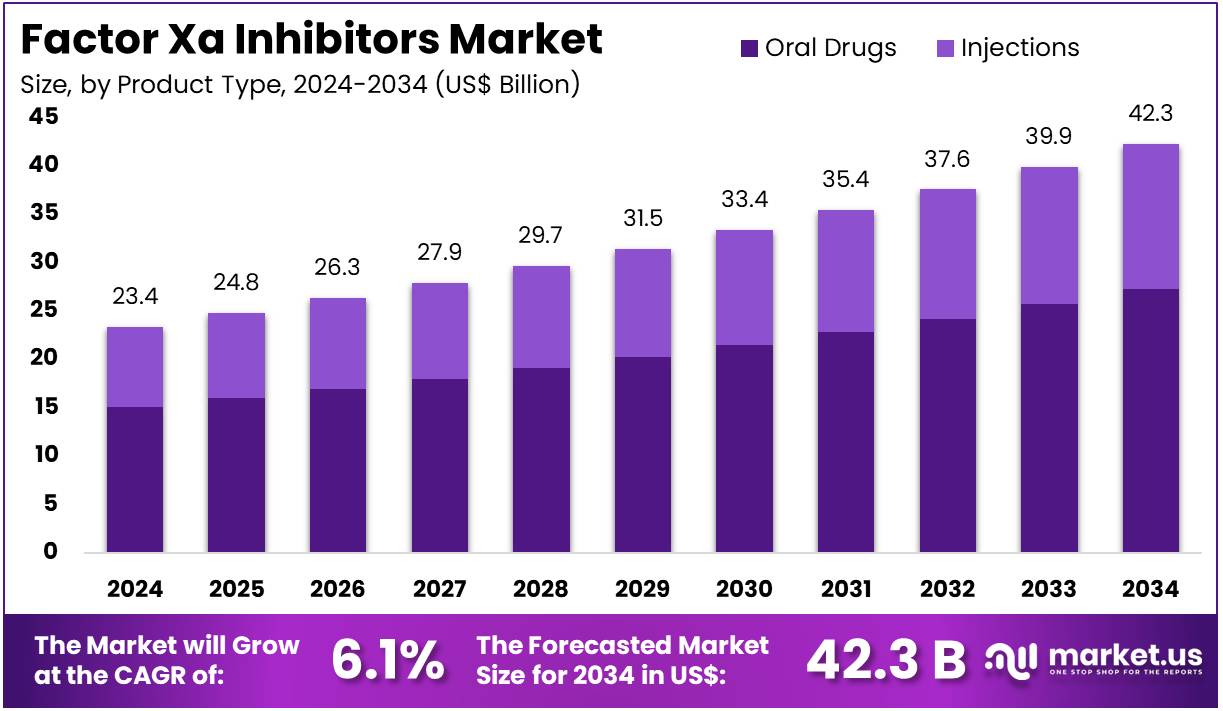
New York, NY – July 02, 2026 – The Factor Xa Inhibitors Market size is expected to be worth around US$ 42.3 Billion by 2034 from US$ 23.4 Billion in 2024, growing at a CAGR of 6.1% during the forecast period 2025 to 2034.
Factor Xa inhibitors are a class of anticoagulant medications designed to prevent and treat blood clot-related disorders by selectively blocking Factor Xa, a key enzyme in the blood coagulation cascade. By inhibiting this enzyme, these drugs reduce thrombin generation and prevent the formation of harmful blood clots while maintaining a predictable anticoagulant effect. Factor Xa inhibitors are widely prescribed for the prevention of stroke in patients with non-valvular atrial fibrillation, treatment and prevention of deep vein thrombosis (DVT), pulmonary embolism (PE), and prevention of venous thromboembolism following major orthopedic surgeries.
Compared with conventional anticoagulants, Factor Xa inhibitors offer several advantages, including rapid onset of action, fixed dosing, fewer food and drug interactions, and reduced need for routine coagulation monitoring. These benefits have contributed to their increasing adoption in clinical practice and improved patient convenience. Growing awareness regarding cardiovascular diseases, the rising incidence of thromboembolic disorders, and an expanding aging population continue to drive demand for these therapies worldwide.
Ongoing research and development efforts are focused on improving the safety profile, expanding therapeutic indications, and developing reversal agents to manage bleeding complications effectively. In addition, advancements in healthcare infrastructure, increased access to novel oral anticoagulants, and supportive clinical guidelines are expected to strengthen market growth. As healthcare providers increasingly emphasize effective and patient-friendly anticoagulation strategies, Factor Xa inhibitors are expected to remain a vital component of modern cardiovascular and thrombosis management.
Key Takeaways
- The global factor Xa inhibitors market was valued at US$ 23.4 billion in 2024 and is projected to reach US$ 42.3 billion by 2034, expanding at a CAGR of 6.1% during the forecast period.
- Based on product type, the market is segmented into oral drugs and injections, with the oral drugs segment accounting for the largest market share of 64.5%.
- By application, the market is categorized into atrial fibrillation, pulmonary embolism, and others. Among these, the atrial fibrillation segment dominated the market, capturing a 59.8% share.
- North America emerged as the leading regional market, holding a 41.2% share of the global factor Xa inhibitors market.
Regional Analysis
North America dominated the global Factor Xa inhibitors market, accounting for the largest revenue share of 41.2%, driven by the high prevalence of cardiovascular disorders, increasing cases of atrial fibrillation (AF) and venous thromboembolism (VTE), and strong adoption of novel oral anticoagulants. The growing preference for Factor Xa inhibitors over conventional anticoagulants is supported by their favorable efficacy, predictable dosing, and reduced monitoring requirements.
The expanding patient population requiring long-term anticoagulation has further strengthened market demand. In addition, the presence of leading pharmaceutical companies and continued commercial success of blockbuster therapies such as Eliquis (apixaban) have reinforced regional market growth through sustained product adoption and expanded clinical use.
Asia Pacific is projected to register the fastest CAGR during the forecast period, supported by the rising burden of cardiovascular diseases, rapidly aging populations, improving healthcare infrastructure, and greater access to advanced anticoagulant therapies. The increasing prevalence of atrial fibrillation and thromboembolic disorders in countries such as China, Japan, and India is creating substantial growth opportunities.
Government initiatives to improve cardiovascular disease management, expanding healthcare expenditure, and growing awareness of stroke prevention are accelerating market expansion. Furthermore, strategic investments and expanding commercial operations by major pharmaceutical companies across the region are expected to support the increasing adoption of Factor Xa inhibitors throughout the forecast period.
Emerging Trends
- Shift from Warfarin to Direct Oral Anticoagulants (DOACs): Healthcare providers are increasingly replacing warfarin with Factor Xa inhibitor-based direct oral anticoagulants because they require no routine blood monitoring, have fewer dietary and drug interactions, provide predictable anticoagulation, and improve patient convenience, adherence, and long-term management of thromboembolic disorders.
- Rising Use in Outpatient Care: Factor Xa inhibitors are experiencing greater adoption in outpatient clinics and home healthcare because oral administration eliminates injections and frequent hospital visits. Their convenience reduces healthcare costs, supports treatment adherence, and enables effective long-term anticoagulation management outside traditional hospital settings.
- Expanded Treatment Applications: Clinical research is expanding the therapeutic use of Factor Xa inhibitors beyond stroke prevention and venous thromboembolism treatment. Ongoing studies evaluating cancer-associated thrombosis and clotting complications in other diseases are expected to broaden approved indications and create new clinical opportunities.
- Development of Reversal Agents: The development of dedicated reversal agents is improving the safety profile of Factor Xa inhibitors by enabling rapid management of severe bleeding emergencies. Increasing physician confidence, stronger regulatory support, and improved patient safety are encouraging wider adoption across healthcare systems.
- Growing Adoption in Emerging Markets: Emerging economies are witnessing increased demand for Factor Xa inhibitors due to expanding healthcare infrastructure, improved physician awareness, and greater patient access to advanced anticoagulant therapies. Government healthcare initiatives and broader insurance coverage are supporting continued market penetration despite pricing challenges.
- Digital Health Integration: Digital health technologies are enhancing Factor Xa inhibitor therapy through medication reminder applications, remote patient monitoring, wearable devices, and telehealth services. These solutions improve treatment adherence, enable earlier intervention, reduce hospital visits, and support better long-term clinical outcomes for patients.
Use Cases
- Atrial Fibrillation (AF): Factor Xa inhibitors are extensively prescribed for patients with atrial fibrillation to reduce stroke risk by preventing clot formation. Their predictable anticoagulant effects, convenient oral administration, limited monitoring requirements, and fewer interactions make them preferred alternatives to conventional anticoagulant therapies.
- Deep Vein Thrombosis (DVT) and Pulmonary Embolism (PE): Factor Xa inhibitors are widely used to treat and prevent deep vein thrombosis and pulmonary embolism by reducing clot formation and recurrence. Their oral dosing, predictable effectiveness, and minimal monitoring requirements improve patient compliance and support successful long-term anticoagulation therapy.
- Post-Surgery Clot Prevention: Following orthopedic procedures such as hip and knee replacement surgeries, Factor Xa inhibitors are routinely prescribed to prevent postoperative blood clots. Their convenient dosing, proven effectiveness, and favorable safety profile support faster recovery while minimizing complications associated with venous thromboembolism.
- Cancer-Associated Thrombosis: Factor Xa inhibitors are increasingly utilized for managing cancer-associated thrombosis because they effectively prevent and treat blood clots while reducing treatment complexity. Their convenient oral administration and growing clinical evidence support broader adoption among oncology patients requiring long-term anticoagulation therapy.
- Bridge Therapy During Procedures: Factor Xa inhibitors are increasingly considered during temporary interruption of long-term anticoagulation before surgical procedures. Their predictable pharmacological profile, shorter duration of action, and simplified management help maintain clot prevention while reducing complications associated with treatment transitions around invasive interventions.
- Long-Term Stroke Prevention in High-Risk Populations: Factor Xa inhibitors play an important role in long-term stroke prevention among patients with cardiovascular disease, diabetes, hypertension, and other high-risk conditions. Their ease of administration, predictable anticoagulation, and reduced monitoring requirements support improved treatment adherence and favorable clinical outcomes.
Frequently Asked Questions on Factor Xa Inhibitors
- How do Factor Xa inhibitors work?
Factor Xa inhibitors work by directly inhibiting the activity of Factor Xa, preventing the conversion of prothrombin into thrombin. This interruption limits fibrin clot formation, reduces the risk of abnormal blood clotting, and helps manage conditions associated with venous and arterial thromboembolism. - What conditions are commonly treated with Factor Xa inhibitors?
Factor Xa inhibitors are commonly used to prevent stroke in patients with atrial fibrillation, treat deep vein thrombosis and pulmonary embolism, and prevent venous thromboembolism after orthopedic surgeries. Their broad therapeutic applications have increased their adoption across hospitals and outpatient healthcare settings. - What are the advantages of Factor Xa inhibitors over traditional anticoagulants?
Factor Xa inhibitors provide several advantages, including fixed dosing, rapid onset of action, fewer dietary restrictions, and limited drug interactions compared with traditional anticoagulants. These benefits improve patient convenience, reduce monitoring requirements, and support greater adherence to long-term anticoagulation therapy. - Are Factor Xa inhibitors associated with any side effects?
The most common side effect of Factor Xa inhibitors is bleeding, ranging from minor bruising to serious hemorrhagic events. Although generally considered safe when appropriately prescribed, patients should be regularly evaluated for bleeding risk, kidney function, and potential drug interactions during treatment. - Which patients should avoid Factor Xa inhibitors?
Factor Xa inhibitors may not be suitable for patients with active major bleeding, severe liver disease, certain kidney impairments, or hypersensitivity to the medication. Healthcare providers carefully evaluate individual clinical conditions before prescribing these anticoagulants to ensure treatment safety and effectiveness. - What factors are driving the growth of the Factor Xa inhibitors market?
The market is primarily driven by increasing cardiovascular disease prevalence, expanding elderly populations, growing diagnosis of thromboembolic disorders, and rising adoption of direct oral anticoagulants. Continued pharmaceutical innovation and improved healthcare infrastructure further strengthen long-term market growth opportunities worldwide. - Which regions dominate the Factor Xa inhibitors market?
North America leads the Factor Xa inhibitors market due to advanced healthcare systems, high diagnosis rates, and strong reimbursement support. Europe also represents a significant market, while Asia-Pacific is experiencing rapid growth because of expanding healthcare investments and increasing patient awareness. - What is the future outlook for the Factor Xa inhibitors market?
The future outlook for the Factor Xa inhibitors market remains positive, supported by increasing chronic disease burden, expanding aging populations, and continuous advancements in anticoagulant therapies. Rising healthcare expenditure and broader adoption of direct oral anticoagulants are expected to sustain long-term market growth.
Conclusion
The global Factor Xa inhibitors market is expected to witness steady growth, driven by the increasing prevalence of cardiovascular and thromboembolic disorders, rising aging populations, and growing preference for direct oral anticoagulants over conventional therapies. Advantages such as predictable efficacy, fixed dosing, reduced monitoring requirements, and improved patient convenience continue to support widespread adoption.
Ongoing research, expanding therapeutic indications, and the development of reversal agents are further strengthening the clinical value of these therapies. With North America maintaining market leadership and Asia Pacific emerging as the fastest-growing region, continued healthcare investments and innovation are expected to sustain long-term market expansion through 2034.
Discuss your needs with our analyst
Please share your requirements with more details so our analyst can check if they can solve your problem(s)




