
Overview
New York, NY – Nov 02, 2026 – The Global Aspiration & Biopsy Needles Market size is expected to be worth around US$ 1.5 Billion by 2035 from US$ 0.8 Billion in 2025, growing at a CAGR of 6.3% during the forecast period 2026-2035. In 2025, North America led the market, achieving over 38.7% share with a revenue of US$ 0.3 Billion.
Aspiration and biopsy needles are specialized medical devices used to collect tissue samples, cells, or fluids from different parts of the body for diagnostic examination. These needles play an important role in detecting and monitoring various medical conditions, including cancer, infections, inflammatory diseases, and other tissue abnormalities. Aspiration needles are primarily used to withdraw cells or fluids, while biopsy needles collect small tissue samples for detailed laboratory analysis.
The growing prevalence of cancer and chronic diseases is increasing the demand for accurate and minimally invasive diagnostic procedures. Healthcare professionals are increasingly adopting advanced needle technologies to improve sampling accuracy, reduce patient discomfort, and support faster diagnosis. Technological advancements, including ultrasound-guided and CT-guided biopsy procedures, are further improving the safety and precision of sample collection.
Hospitals, diagnostic imaging centers, specialty clinics, and ambulatory surgical centers represent key end users of these devices. Manufacturers are focusing on developing ergonomic designs, improved needle materials, and advanced sampling mechanisms to enhance clinical performance.
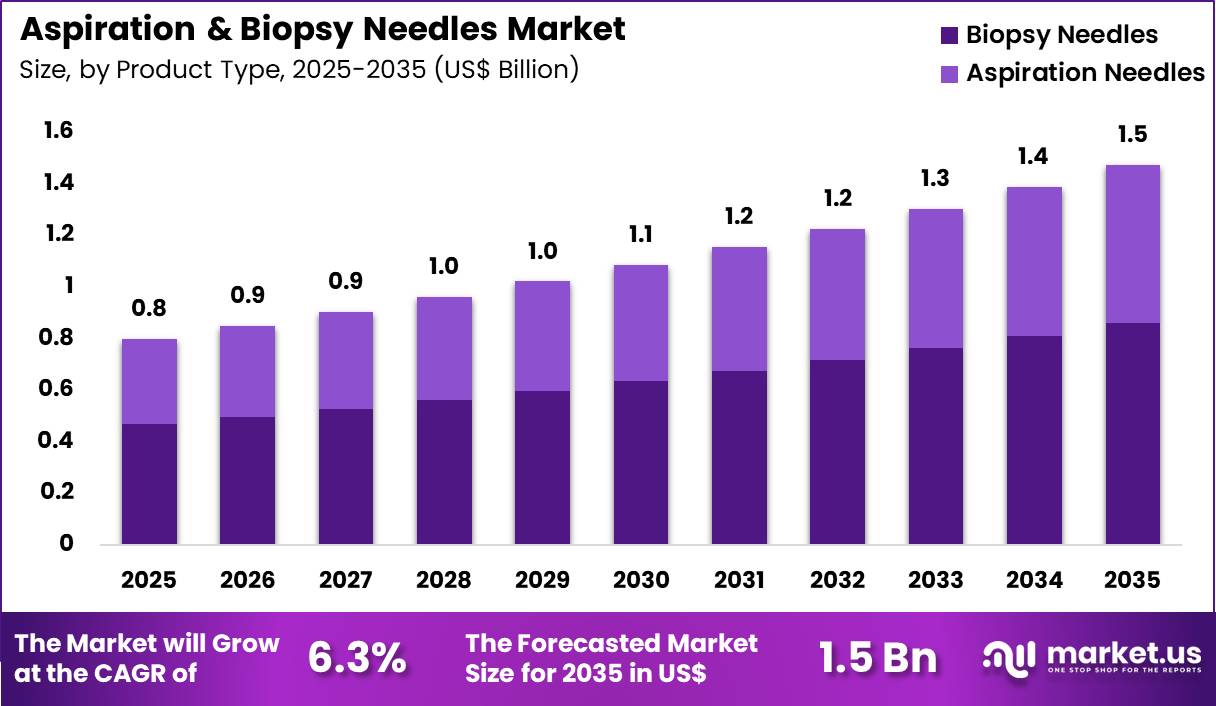
Rising awareness of early disease detection, expanding healthcare infrastructure, and increasing diagnostic testing volumes are expected to support the growth of the global Aspiration & Biopsy Needles market.
Key Takeaways
- In 2025, the global market generated US$ 0.8 Billion in revenue and is projected to reach US$ 1.5 Billion by 2035, growing at a CAGR of 6.3% during the forecast period.
- By product type, the market is segmented into biopsy needles and aspiration needles, with biopsy needles dominating the market with a share of 58.4%.
- Based on procedure, the market is categorized into image-guided and non-image-guided procedures, with image-guided procedures accounting for the largest share of 63.7%.
- By application, the market is divided into tumour/cancer, wounds, and others, with the tumour/cancer segment leading with a revenue share of 54.9%.
- Based on end user, the market is segmented into hospitals & surgical centers, diagnostic clinics & pathology laboratories, ambulatory care centers, and research & academic institutes. Hospitals & surgical centers dominated the segment with a share of 57.6%.
- Regionally, North America dominated the global Aspiration & Biopsy Needles market, accounting for a market share of 38.7%.
Key Market Segments
- Product Type Analysis: Biopsy needles dominated the product type segment with a 58.4% share, driven by their essential role in collecting tissue samples for accurate disease diagnosis. Rising cancer cases and growing demand for histopathological and molecular testing support adoption. Improved needle designs, better sample quality, and minimally invasive techniques further strengthen segment growth.
- Procedure Analysis: Image-guided procedures accounted for 63.7% of the procedure segment, supported by increasing demand for accurate and safe tissue sampling. Ultrasound, CT, and MRI guidance help healthcare professionals target lesions precisely and reduce procedural risks. Expanding imaging infrastructure and rising adoption of minimally invasive diagnostic techniques continue to drive segment growth.
- Application Analysis: Tumour and cancer applications dominated the market with a 54.9% share, driven by increasing demand for early cancer detection and accurate diagnosis. Biopsy procedures help determine tumour characteristics and identify relevant biomarkers for treatment planning. Growing cancer screening initiatives, rising disease prevalence, and increased adoption of personalized medicine further support segment expansion.
- End-User Analysis: Hospitals and surgical centers held the leading position with a 57.6% market share, supported by high volumes of diagnostic and interventional procedures. These facilities offer advanced imaging equipment, specialized medical professionals, and integrated pathology services. Expanding oncology departments, increasing biopsy procedures, and investments in healthcare infrastructure continue to strengthen segment demand.
Regional Analysis
North America dominated the Aspiration & Biopsy Needles market in 2024, accounting for a 38.7% share, driven by rising demand for minimally invasive diagnostic procedures. Hospitals and imaging centers increased the use of ultrasound, CT, and MRI-guided biopsies to improve diagnostic accuracy.
Growing cancer screening rates, an aging population, and increasing adoption of personalized treatment further supported regional demand. Advanced healthcare infrastructure and strong access to specialized diagnostic services also contributed to market growth.
Asia Pacific is expected to register the highest CAGR during the forecast period, supported by rising cancer awareness, expanding screening initiatives, and growing investments in healthcare infrastructure. Countries across the region are improving access to diagnostic imaging and minimally invasive procedures.
Increasing cancer incidence and expansion of private oncology centers are creating new opportunities. Additionally, local manufacturing is improving the availability and affordability of aspiration and biopsy needles, supporting wider adoption across emerging economies.
Emerging Trends
- Growing Adoption of Digital Mental Health Platforms: Digital therapy platforms and mobile applications are becoming important tools for managing anxiety and depression. Online cognitive behavioral therapy (CBT), guided self-help programs, and virtual counseling are improving access to mental health support. WHO recognizes digital and remote self-help interventions as scalable treatment options.
- Increasing Use of Personalized Treatment Approaches: Healthcare professionals are increasingly selecting treatments based on individual symptoms, medical history, and patient preferences. Combining psychotherapy with medication when appropriate helps address different levels of depression and anxiety. This approach supports more individualized treatment planning and patient care.
- Expansion of Community-Based Mental Healthcare: Healthcare systems are increasingly exploring psychological treatment delivery through trained community workers and non-specialist healthcare professionals. WHO supports structured psychological interventions delivered by trained and supervised workers to improve access, particularly in underserved and low-income communities.
- Rising Demand for Telepsychiatry Services: Virtual consultations, video-based therapy, and remote mental health assessments are gaining popularity. These services allow patients to connect with mental health professionals without frequent hospital visits. Telehealth also improves treatment access for people living in rural and geographically underserved areas.
- Growing Focus on Advanced Depression Treatments: Healthcare providers are exploring additional treatment options for patients who do not respond adequately to conventional therapies. Brain stimulation treatments are emerging as alternatives for selected patients with depression, creating opportunities for specialized mental healthcare services.
Use Cases
- Treatment of Generalized Anxiety Disorder: Cognitive behavioral therapy, antidepressant medications, and other psychological interventions are used to manage excessive worry and persistent anxiety. Healthcare professionals develop treatment plans according to symptom severity and individual patient needs.
- Management of Major Depression: Psychotherapy and antidepressant medications help patients manage persistent sadness, reduced interest, and changes in daily functioning. Treatment may involve individual counseling, group therapy, or a combination of medication and psychological support.
- Treatment of Panic and Social Anxiety Disorders: Exposure therapy and cognitive behavioral therapy help patients gradually manage fear, panic symptoms, and stressful social situations. These approaches support improved confidence and help individuals participate more comfortably in everyday activities.
- Remote Psychological Counseling and Self-Help: Digital platforms provide guided psychological exercises, virtual counseling, and structured self-help programs. These solutions are useful for individuals who face transportation difficulties, limited specialist availability, or challenges accessing traditional mental healthcare services.
- Treatment of Difficult-to-Treat Depression: Patients who do not achieve sufficient improvement through standard treatment may be evaluated for specialized interventions, including brain stimulation therapies. These approaches are delivered under professional supervision and provide additional options for selected patients.
Frequently Asked Questions About Anxiety Disorders & Depression Treatment
- What are the common treatments for anxiety and depression?
Common treatments include psychotherapy, antidepressant medications, cognitive behavioral therapy, and other psychological interventions. Healthcare professionals may recommend individual treatments or combinations depending on symptoms, medical history, and patient preferences. - What is cognitive behavioral therapy (CBT)?
Cognitive behavioral therapy is a psychological treatment that helps individuals identify and change negative thinking patterns and behaviors. It is widely used to manage anxiety disorders and depression through structured therapy sessions. - How does telehealth support anxiety and depression treatment?
Telehealth allows patients to receive mental health assessments, counseling, and follow-up support through video calls, phone consultations, and online platforms. It improves access to professional care, particularly in rural and underserved communities. - What factors are driving the Anxiety Disorders & Depression Treatment market?
Increasing awareness of mental health, rising diagnosis rates, expanding healthcare access, and growing adoption of digital therapy are supporting market growth. Government initiatives and improved availability of psychological services also contribute to demand. - Which treatment type is commonly used for anxiety disorders?
Cognitive behavioral therapy is a commonly recommended psychological treatment for anxiety disorders. Healthcare providers may also prescribe medications such as SSRIs and SNRIs depending on individual symptoms and treatment requirements. - What role do pharmaceutical companies play in this market?
Pharmaceutical companies develop and supply medications used to manage depression and anxiety symptoms. Their activities include researching new therapies, improving existing formulations, and supporting the availability of established treatments through healthcare providers. - What are the major opportunities in the Anxiety Disorders & Depression Treatment market?
Major opportunities include digital therapy platforms, telepsychiatry, personalized treatment approaches, and community-based mental healthcare. Expanding access to psychological services in developing regions also creates opportunities for healthcare providers and technology companies. - What is the future outlook for the Anxiety Disorders & Depression Treatment market?
The market is expected to benefit from increasing mental health awareness, wider telehealth adoption, improved treatment options, and expanding psychological care services. Digital healthcare innovation and better access to professional support will create further growth opportunities.
Conclusion
The global Aspiration & Biopsy Needles market is expected to witness steady growth, driven by rising cancer cases, increasing demand for early disease diagnosis, and growing adoption of minimally invasive procedures. Biopsy needles, image-guided procedures, and tumour/cancer applications continue to represent major market segments.
North America maintains its leading position, while Asia Pacific offers strong growth opportunities due to expanding healthcare infrastructure and diagnostic capabilities. Technological advancements, improved needle designs, and increasing investments in oncology services are further supporting market expansion. Overall, rising diagnostic needs and growing emphasis on accurate tissue sampling are expected to strengthen market growth through 2035.
Discuss your needs with our analyst
Please share your requirements with more details so our analyst can check if they can solve your problem(s)