


Overview
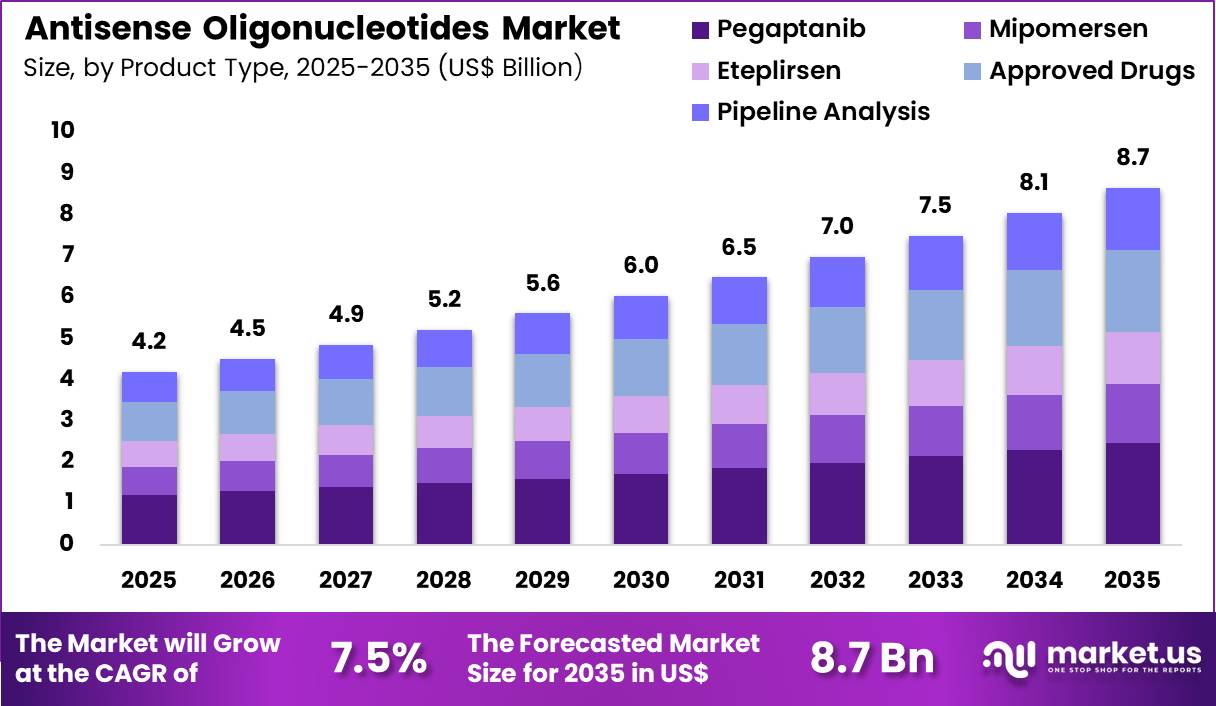
New York, NY – Nov 02, 2026 –The Global Antisense Oligonucleotides Market size is expected to be worth around US$ 8.7 Billion by 2035 from US$ 4.2 Billion in 2025, growing at a CAGR of 7.5% during the forecast period 2026-2035. In 2025, North America led the market, achieving over 38.8% share with a revenue of US$ 1.6 Billion.
Antisense oligonucleotides (ASOs) are short, synthetic strands of nucleic acids designed to bind selectively to specific RNA sequences and regulate gene expression. They work by targeting messenger RNA (mRNA),
influencing protein production through mechanisms such as RNA degradation, splicing modification, or translation inhibition. This targeted approach offers significant potential for treating genetic disorders, neurological diseases, cancer, cardiovascular conditions, and rare diseases.
ASOs have emerged as an important class of advanced therapeutics due to their ability to address disease-causing genes that are difficult to target using conventional drug development approaches. Advances in oligonucleotide chemistry, delivery technologies, and molecular biology have improved their stability, specificity, and therapeutic effectiveness.
The growing prevalence of genetic and rare diseases, increasing investments in RNA-based therapeutics, and rising clinical research activities are supporting market expansion.
Pharmaceutical and biotechnology companies are actively developing innovative ASO-based treatments, while regulatory approvals and strategic collaborations are strengthening commercialization opportunities.
Furthermore, improvements in targeted drug delivery systems and growing applications in personalized medicine are expected to create new growth opportunities. However, high development costs, complex manufacturing processes, delivery challenges, and potential safety concerns remain important market restraints.
Key Takeaways
- In 2025, the market was valued at US$ 4.2 Billion and is projected to reach US$ 8.7 Billion by 2035, growing at a CAGR of 7.5% during the forecast period.
- By product type, the market is segmented into pegaptanib, mipomersen, eteplirsen, approved drugs, and pipeline analysis. Among these, pegaptanib dominated the segment, accounting for a 28.6% market share.
- Based on indication, the market is categorized into ocular diseases, spinal muscular atrophy, diabetes, cancer, and others. Ocular diseases emerged as the leading segment, capturing a 34.8% market share.
- By application, the market is classified into basic research, target validation, genomics, and drug discovery. Basic research dominated the segment, securing the largest revenue share of 39.5%.
- Regionally, North America maintained its leading position in the market, accounting for a 38.8% market share.
Key Market Segments
- Product Type Analysis: Pegaptanib held a 28.6% share of the product type segment, supported by its established application in targeting vascular endothelial growth factor pathways for ocular disorders. Its early success as an antisense therapy strengthened confidence in RNA-based treatments. Continued clinical experience, targeted mechanisms, and advances in oligonucleotide stability and delivery technologies support its market position.
- Indication Analysis: Ocular diseases accounted for 34.8% of the indication segment, driven by the growing burden of retinal disorders and age-related vision impairment. Antisense oligonucleotides enable targeted gene regulation in ophthalmology. Improvements in localized drug delivery, early diagnosis, and retinal disease research are further supporting therapeutic development and adoption across this segment.
- Application Analysis: Basic research captured 39.5% of the application segment, driven by increasing use of antisense oligonucleotides in gene function studies and molecular biology research. Academic institutions and research laboratories utilize these molecules to investigate gene expression and biological pathways. Growing genomics research, industry collaborations, and investments in functional studies continue to strengthen demand.
Regional Analysis
North America accounted for a 38.8% share of the Antisense Oligonucleotides market in 2024, driven by increasing adoption of RNA-targeted therapies for rare and neurological disorders. Strong biopharmaceutical research, advanced clinical pipelines, academic-industry collaborations, and supportive regulatory policies strengthened regional growth.
Orphan drug incentives and investments in oligonucleotide manufacturing further improved treatment development and accessibility. Additionally, the US FDA approved 55 novel drugs through its CDER program in 2023, highlighting continued innovation in molecular therapeutics
The Asia Pacific Antisense Oligonucleotides market is projected to grow rapidly, supported by expanding genomic medicine initiatives and government investment in rare disease research. Biotechnology companies across Japan, China, South Korea, and Australia are strengthening global collaborations and clinical development activities.
Improved genetic testing infrastructure, precision medicine funding, and manufacturing investments are further supporting regional expansion. Japan’s national rare disease support framework also encourages the development and accessibility of advanced RNA-based therapies.
Emerging Trends
- Growing Focus on Personalized Medicine: Antisense oligonucleotides are gaining attention in personalized medicine because they can target specific genetic changes responsible for certain diseases. Researchers are developing treatments based on individual gene mutations, particularly in rare neurological and inherited disorders, supporting more targeted treatment approaches.
- Improvements in Drug Delivery Technologies: Researchers are developing better delivery methods to help antisense oligonucleotides reach specific organs and cells. GalNAc-based conjugation is an important development for liver-targeted treatments, while intrathecal injections continue to support drug delivery for neurological conditions.
- Increasing Research in Neurological Disorders: Growing research into neurological diseases is creating new opportunities for antisense oligonucleotide development. Treatments targeting spinal muscular atrophy and SOD1-associated amyotrophic lateral sclerosis demonstrate how ASOs can influence disease-related RNA and support the development of targeted therapies.
- Development of Advanced Chemical Modifications: Drug developers are improving ASO chemical structures to increase stability, improve target binding, and reduce unwanted effects. Modifications such as phosphorothioate backbones and 2′-MOE chemistry help protect these molecules from degradation and support their therapeutic performance.
- Expansion into Cardiovascular and Metabolic Diseases: ASO research is expanding beyond rare genetic conditions into cardiovascular and metabolic disorders. Researchers are investigating targets such as lipoprotein(a), apolipoprotein C-III, and angiotensinogen to explore new treatment options for lipid disorders, hypertension, and related conditions.
Use Cases
- Treatment of Neurological Disorders: Antisense oligonucleotides are used to address certain neurological conditions by targeting RNA linked to abnormal protein production. Nusinersen is used for spinal muscular atrophy, while tofersen targets SOD1-related amyotrophic lateral sclerosis, demonstrating their role in neurological treatment.
- Management of Genetic and Rare Diseases: ASOs help manage genetic disorders by correcting abnormal RNA processing or reducing the production of disease-related proteins. They are particularly useful in conditions caused by specific genetic mutations, including certain forms of Duchenne muscular dystrophy and hereditary transthyretin amyloidosis.
- Treatment of Cardiovascular and Lipid Disorders: Antisense oligonucleotides can target genes involved in fat and cholesterol regulation. Olezarsen, for example, reduces triglyceride levels in adults with familial chylomicronemia syndrome, providing an approved treatment option for this rare inherited lipid disorder.
- Applications in Cancer Research: Researchers are investigating antisense oligonucleotides to control RNA involved in cancer cell growth, abnormal protein production, and disease progression. These treatments may help target specific molecular pathways and explore new approaches to cancer therapy, although most applications remain investigational.
- Treatment of Infectious Diseases: Antisense oligonucleotides are being studied for their ability to target genetic material associated with viral infections. By binding to selected viral RNA sequences, they may interfere with viral replication and protein production, creating opportunities for developing targeted antiviral treatments.
Frequently Asked Questions About Antisense Oligonucleotides
- How do antisense oligonucleotides work?
Antisense oligonucleotides attach to selected RNA sequences through complementary base pairing. Depending on their design, they can destroy targeted RNA, change how genetic information is processed, or prevent cells from producing certain proteins. - Which diseases can antisense oligonucleotides treat?
Antisense oligonucleotides are used to treat certain genetic, neurological, and metabolic conditions. Examples include spinal muscular atrophy, Duchenne muscular dystrophy, SOD1-associated ALS, hereditary transthyretin amyloidosis, and familial chylomicronemia syndrome. - Are antisense oligonucleotides approved by the FDA?
Yes, the US FDA has approved several antisense oligonucleotide medicines for specific conditions. Examples include Spinraza, Qalsody, Wainua, and Tryngolza. Each medicine has an approved indication, dosage, and safety requirements. - What are the main benefits of antisense oligonucleotide therapy?
ASO therapy offers targeted control over gene activity without directly changing DNA. It can address specific disease-related RNA sequences, making it valuable for genetic disorders and conditions where conventional treatments have limited effectiveness. - What factors are driving the Antisense Oligonucleotides Market?
Market growth is supported by increasing research into genetic diseases, rising demand for targeted treatments, advances in RNA technology, and growing clinical development activities. FDA approvals are also strengthening confidence in antisense-based medicines. - Which therapeutic area offers significant opportunities in the ASO Market?
Neurological and rare genetic disorders offer important opportunities because ASOs can target specific disease-related RNA. Research into cardiovascular, metabolic, infectious, and cancer-related conditions is also expanding the potential therapeutic applications of these medicines. - What is the future outlook for the Antisense Oligonucleotides Market?
The market has promising long-term opportunities as more ASO candidates advance through clinical development. Progress in personalized medicine, organ-specific delivery, and treatments for rare diseases may support wider adoption across different therapeutic areas.
Conclusion
The Antisense Oligonucleotides market is expected to experience steady growth, driven by increasing demand for targeted therapies, rising genetic disease prevalence, and advancements in RNA-based drug development. Growing applications in neurological, rare genetic, cardiovascular, and metabolic disorders are creating new opportunities for pharmaceutical and biotechnology companies.
North America continues to lead the market, while Asia Pacific offers significant growth potential. Improvements in drug delivery, chemical modifications, and personalized medicine are further strengthening market prospects. Despite challenges related to manufacturing costs, safety, and delivery, ongoing research and regulatory approvals are expected to support market expansion through 2035.
Discuss your needs with our analyst
Please share your requirements with more details so our analyst can check if they can solve your problem(s)



