


Overview
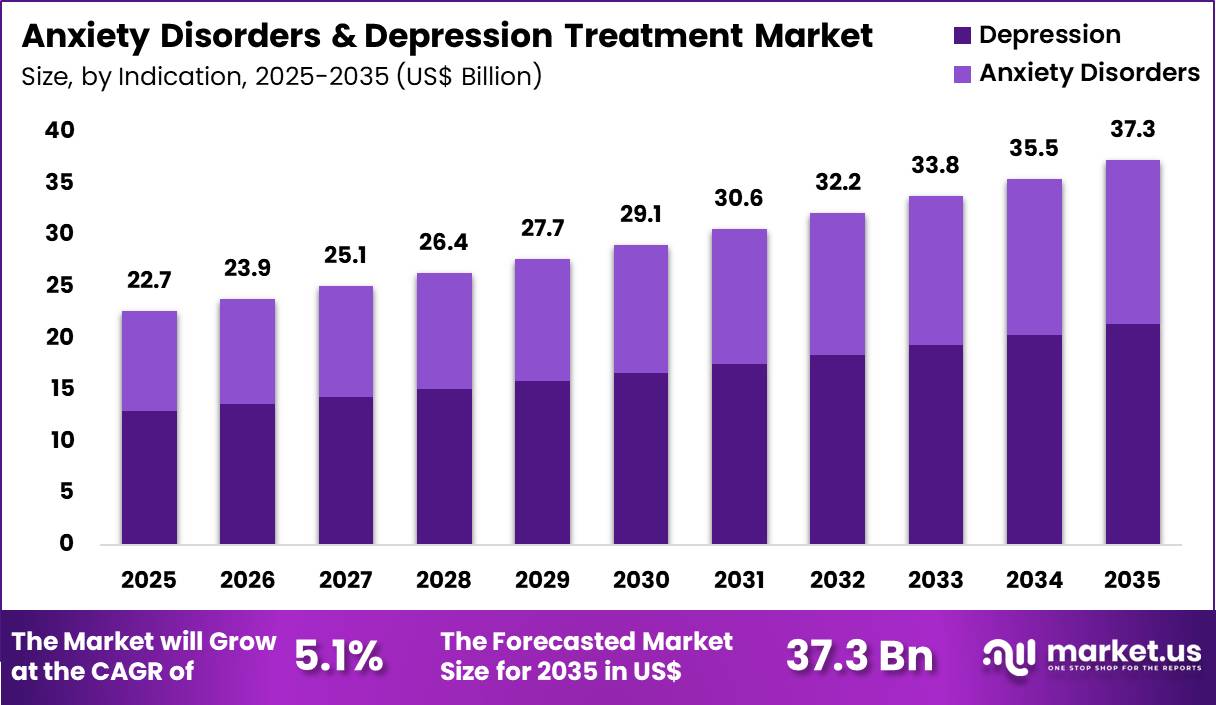
New York, NY – Nov 02, 2026 – The Global Anxiety Disorders & Depression Treatment Market size is expected to be worth around US$ 37.3 Billion by 2035 from US$ 22.7 Billion in 2025, growing at a CAGR of 5.1% during the forecast period 2026-2035. In 2025, North America led the market, achieving over 64.2% share with a revenue of US$ 10.5 Billion.
Anxiety disorders and depression are among the most common mental health conditions, affecting people across different age groups and socioeconomic backgrounds. Anxiety disorders involve excessive fear, worry, nervousness, and stress that can interfere with daily activities. Depression is characterized by persistent sadness, loss of interest, low energy, sleep disturbances, and difficulty concentrating.
Treatment typically involves a combination of psychotherapy, medication, and lifestyle modifications, depending on the patient’s condition and severity. Cognitive Behavioral Therapy (CBT) is widely used to help individuals identify negative thought patterns and develop healthier coping strategies. Antidepressants and anti-anxiety medications may also be prescribed by healthcare professionals to manage symptoms and improve emotional well-being.
Growing awareness of mental health, reduced social stigma, and improved access to psychological services are encouraging more people to seek professional support. Digital mental health platforms, telepsychiatry, and online counseling are also expanding access to treatment, particularly in underserved regions.
Early diagnosis, personalized treatment approaches, and continuous patient support play an important role in improving recovery outcomes. Increasing investments in mental healthcare infrastructure, rising demand for effective therapies, and ongoing advancements in treatment options are creating new opportunities in the global Anxiety Disorders & Depression Treatment market.
Key Takeaways
- In 2025, the market was valued at US$ 22.7 Billion and is projected to reach US$ 37.3 Billion by 2035, expanding at a CAGR of 5.1% during the forecast period.
- By product type, the market is segmented into antidepressants, anticonvulsants, anxiolytics, antipsychotics, and others. Among these, antidepressants dominated with a 38.7% market share.
- Based on indication, the market is categorized into depression and anxiety disorders, with depression accounting for the largest share of 57.3%.
- By therapy, the market is classified into pharmacotherapy, brain stimulation therapy, and psychotherapy. Pharmacotherapy emerged as the leading segment, capturing 64.5% of the total market share.
- Regionally, North America dominated the market, accounting for the largest share of 64.2%.
Key Market Segments
- Product Type Analysis: Antidepressants dominated the product type segment with a 38.7% market share, driven by their widespread use in treating depression and related mood disorders. Growing mental health awareness, rising diagnosis rates, and improved access to psychiatric care support demand. Newer medications with better tolerability and long-term treatment needs further strengthen segment growth.
- Indication Analysis: Depression led the indication segment with a 57.3% market share, supported by its high prevalence and growing demand for effective treatment. Increased screening, public awareness campaigns, and expanding access to mental healthcare encourage early diagnosis. Rising telepsychiatry adoption and treatment needs among patients with chronic conditions further support segment expansion.
- Therapy Analysis: Pharmacotherapy dominated the therapy segment with a 64.5% market share, driven by the widespread use of prescription medications to manage anxiety and depression symptoms. Improved drug availability, standardized treatment approaches, and growing access to pharmacies support adoption. Advances in psychiatric medications and long-term treatment requirements further strengthen segment growth.
Regional Analysis
North America accounted for a 46.2% share of the Anxiety Disorders & Depression Treatment market in 2024, driven by rising diagnosis rates and improved access to mental healthcare. Increased screening, telepsychiatry adoption, and digital therapy platforms strengthened treatment accessibility.
Expanding insurance coverage, workplace mental health programs, and awareness campaigns encouraged patients to seek professional support. Pharmaceutical advancements in antidepressants and combination therapies further supported market growth. According to the National Institute of Mental Health, approximately 21 million U.S. adults experienced at least one major depressive episode in 2022, highlighting substantial treatment demand.
Asia Pacific is projected to witness strong growth as governments expand mental health services and integrate psychological care into primary healthcare systems. Rising urbanization, work-related stress, and growing awareness encourage treatment adoption.
Digital counseling, mobile-based therapy applications, and pharmaceutical collaborations improve accessibility. Additionally, workforce training programs are strengthening regional mental healthcare infrastructure. According to WHO, depression affects approximately 5% of adults worldwide, highlighting the growing need for accessible treatment.
Emerging Trends
- Growing Adoption of Digital Mental Health Platforms: Digital mental health platforms are becoming an important part of anxiety and depression treatment. Mobile applications, online counselling, and guided self-help programmes allow patients to access psychological support remotely. The World Health Organization (WHO) recognizes digital self-help interventions as useful ways to expand access to affordable mental healthcare, particularly in underserved communities.
- Increasing Demand for Personalized Treatment: Healthcare providers are increasingly exploring personalized treatment approaches based on individual symptoms, medical history, and treatment response. Researchers are also studying biological markers and brain activity to identify different depression subtypes. These developments may help doctors select more suitable therapies and reduce the trial-and-error process involved in treatment selection.
- Rising Use of Brain Stimulation Therapies: Brain stimulation therapies, including repetitive transcranial magnetic stimulation (rTMS) and electroconvulsive therapy (ECT), are gaining attention for patients who do not respond adequately to conventional treatments. Newer treatment protocols are also being developed to shorten therapy sessions and improve treatment accessibility.
- Development of New and Fast-Acting Depression Treatments: Pharmaceutical companies and researchers are focusing on treatments that may provide faster relief for certain patients with difficult-to-treat depression. Esketamine nasal spray is one example of this development. Its use requires medical supervision and specific safety monitoring, creating opportunities for specialized treatment centres.
- Expansion of Integrated Mental Healthcare Services: Healthcare systems are increasingly connecting mental health services with primary care, hospitals, and community-based support programmes. This approach helps patients receive screening, counselling, medication management, and follow-up care through coordinated services. WHO supports integrated mental healthcare to improve treatment access and continuity of care.
Use Cases
- Treatment of Generalized Anxiety Disorder: Cognitive behavioural therapy (CBT), counselling, and prescribed medications are used to manage excessive worry, nervousness, and persistent fear. Exposure-based techniques can also help patients gradually manage anxiety triggers and improve their ability to handle everyday activities.
- Management of Major Depressive Disorder: Antidepressant medications and psychotherapy are commonly used to manage major depressive disorder. Healthcare professionals may combine both approaches depending on symptom severity and patient needs. Treatment aims to improve mood, sleep, daily functioning, and overall quality of life.
- Remote Counselling and Mental Health Support: Telehealth services allow patients to receive individual counselling, group therapy, mental health assessments, and medication follow-ups without regularly visiting healthcare facilities. This approach is particularly useful for people living in rural areas or facing transportation and scheduling difficulties.
- Treatment of Resistant Depression: Patients who do not respond adequately to standard medications or psychotherapy may receive specialized treatment options. Healthcare providers may consider rTMS, ECT, or supervised esketamine treatment after evaluating individual medical conditions and treatment history.
- Early Intervention and Community-Based Mental Healthcare: Mental health screening and psychological support programmes help identify anxiety and depression symptoms at an early stage. Schools, primary healthcare centres, and community organizations can connect individuals with trained professionals and appropriate treatment services.
Frequently Asked Questions About Anxiety Disorders & Depression Treatment
- What are the common treatments for anxiety disorders and depression?
Common treatments include psychotherapy, cognitive behavioural therapy, antidepressant medications, counselling, and brain stimulation therapies. Healthcare professionals select suitable treatments based on symptoms, medical history, condition severity, and individual patient requirements. - How does cognitive behavioural therapy help patients?
Cognitive behavioural therapy helps patients identify negative thoughts and unhealthy behaviour patterns. It teaches practical techniques to manage anxiety, emotional difficulties, and depressive symptoms, helping individuals develop healthier responses to stressful situations. - Which medications are commonly used to treat anxiety and depression?
Common medication categories include selective serotonin reuptake inhibitors, serotonin-norepinephrine reuptake inhibitors, and other antidepressants. Doctors select medications according to the patient’s condition, potential side effects, medical history, and response to previous treatments. - Can anxiety disorders and depression be treated through online therapy?
Yes, online therapy provides access to counselling, cognitive behavioural therapy, mental health assessments, and follow-up consultations. Telehealth services help patients receive professional support remotely, particularly when geographical distance or limited specialist availability creates barriers. - What are the major factors driving the Anxiety Disorders & Depression Treatment market?
Increasing awareness of mental health conditions, rising diagnosis rates, improved healthcare access, and growing demand for psychological support are important market drivers. Expanding telehealth services and the development of new treatment options also support market growth. - Which region offers significant opportunities in the Anxiety Disorders & Depression Treatment market?
North America offers significant opportunities due to established healthcare infrastructure, greater mental health awareness, and access to advanced treatment options. Asia-Pacific also presents growth opportunities through expanding healthcare services, increasing awareness, and improving access to mental health support. - What is the future outlook for the Anxiety Disorders & Depression Treatment market?
The market is expected to benefit from digital healthcare adoption, personalized treatment development, and expanding access to psychological services. Advances in brain stimulation and pharmaceutical research may further diversify treatment options and support long-term market development.
Conclusion
The Anxiety Disorders & Depression Treatment market is expected to experience steady growth, driven by increasing mental health awareness, rising diagnosis rates, and expanding access to treatment services. Growing adoption of antidepressants, psychotherapy, pharmacotherapy, and digital mental health platforms is strengthening market development.
North America currently holds a leading position, while Asia Pacific offers promising growth opportunities through improving healthcare infrastructure and awareness initiatives. Additionally, advancements in personalized medicine, brain stimulation therapies, and fast-acting treatments are creating new opportunities. With increasing investments in mental healthcare and continued treatment innovation, the market is expected to witness sustained expansion through 2035.
Discuss your needs with our analyst
Please share your requirements with more details so our analyst can check if they can solve your problem(s)



