


Overview
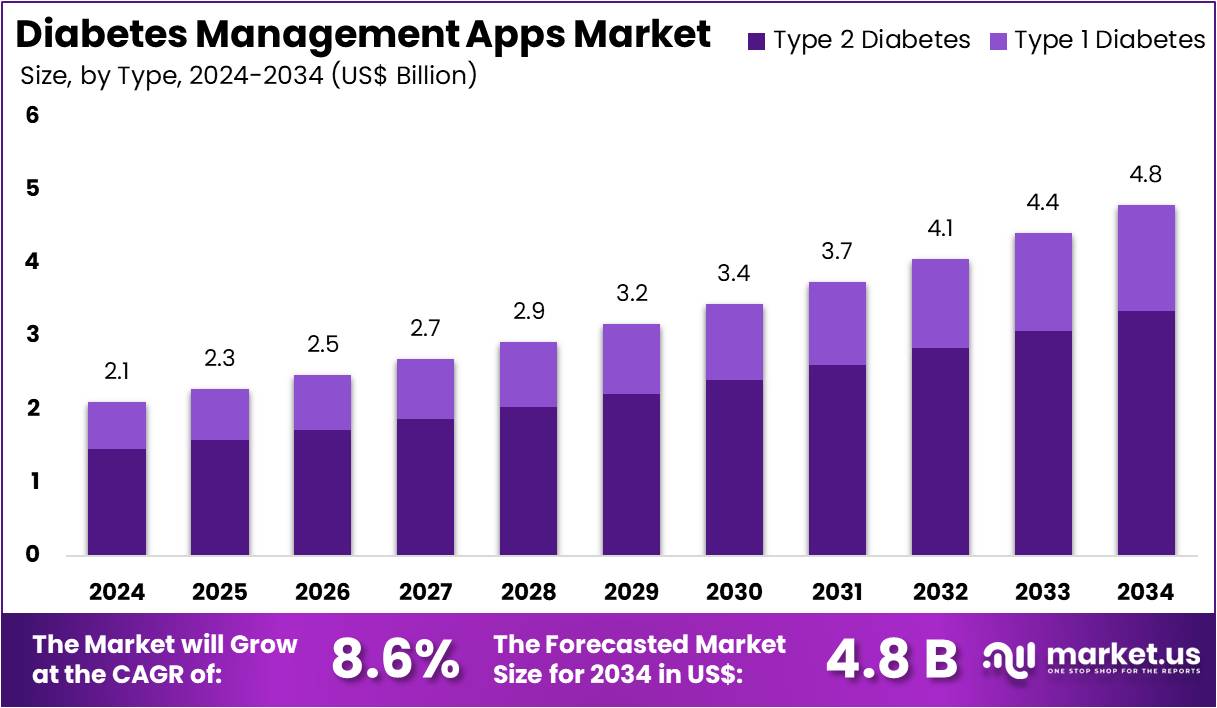
New York, NY – July 01, 2026 – The Diabetes Management Apps Market size is expected to be worth around US$ 4.8 billion by 2034 from US$ 2.1 billion in 2024, growing at a CAGR of 8.6% during the forecast period 2025 to 2034.
Diabetes management apps are digital health solutions designed to help individuals monitor, manage, and improve their diabetes care through smartphones, tablets, and wearable device integration. These applications enable users to track blood glucose levels, medication schedules, insulin doses, diet, physical activity, and other health metrics in real time. Many platforms also provide personalized insights, reminders, data visualization, and connectivity with healthcare providers, supporting informed decision-making and better disease management.
The increasing prevalence of diabetes, growing adoption of smartphones, and rising demand for remote patient monitoring have contributed to the widespread use of diabetes management apps. The integration of technologies such as artificial intelligence, cloud computing, and continuous glucose monitoring (CGM) systems has further enhanced the functionality and accuracy of these applications. In addition, the growing emphasis on preventive healthcare and digital health transformation is encouraging greater adoption among patients and healthcare professionals.
These applications play an important role in improving patient engagement, promoting treatment adherence, and supporting long-term disease management. Features such as automated alerts, personalized recommendations, and secure health data sharing help users maintain consistent monitoring while enabling healthcare providers to deliver more effective and timely interventions.
As healthcare systems continue to embrace digital solutions, diabetes management apps are expected to remain an essential component of chronic disease management. Continuous technological advancements, expanding telehealth services, and increasing awareness of self-care are anticipated to support the sustained growth and adoption of diabetes management applications worldwide.
Key Takeaways
- The Diabetes Management Apps market generated revenue of US$ 2.1 billion in 2024 and is projected to reach US$ 4.8 billion by 2034, expanding at a CAGR of 8.6% during the forecast period.
- Based on type, the market is segmented into Type 1 Diabetes and Type 2 Diabetes, with the Type 2 Diabetes segment accounting for the largest market share of 69.8%.
- By functionality, the market comprises blood glucose monitoring apps, exercise & activity tracking apps, medication management apps, weight & diet management apps, and others. Among these, blood glucose monitoring apps dominated the market with a 40.5% revenue share.
- Based on platform, the market is categorized into Android and iOS, with the Android segment leading the market by capturing a 70.3% revenue share.
- By subscription model, the market is divided into free and paid segments. The paid segment held the leading position, accounting for 58.4% of the total market revenue.
- Based on end user, the market is segmented into hospitals, diagnostic centers, and home settings. The hospitals segment emerged as the leading end user, representing 50.1% of the market.
- North America dominated the global Diabetes Management Apps market, accounting for a 38.6% market share.
Regional Analysis
North America accounted for the largest share of the diabetes management apps market, capturing 38.6% of total revenue, supported by the high prevalence of diabetes and increasing adoption of personalized digital healthcare solutions. The growing use of remote patient monitoring, continuous glucose monitoring (CGM), and mobile health applications has enabled better treatment adherence and improved patient outcomes.
According to the Centers for Disease Control and Prevention (CDC) and the American Diabetes Association (ADA), 38.4 million Americans were living with diabetes in 2021, representing 11.6% of the population, while the economic burden of diagnosed diabetes reached US$ 412.9 billion in 2022. Major companies continue to strengthen the regional market, with Dexcom reporting US$ 4.03 billion in revenue during 2024, while Abbott’s Diabetes Care generated US$ 6.4 billion, driven by growing adoption of connected glucose monitoring solutions.
Asia Pacific is projected to register the highest CAGR during the forecast period due to its expanding diabetic population, increasing smartphone penetration, and government-led digital health initiatives. The ICMR-INDIAB 2023 study estimated that India had 101 million diabetes cases, creating significant demand for digital disease management tools. Strong commercial performance from companies such as Dexcom and Abbott, supported by rising adoption of connected diabetes technologies and improving healthcare infrastructure, is expected to accelerate market growth across both urban and semi-urban areas.
Emerging Trends
- AI-Powered Personalized Care: Artificial intelligence is making diabetes apps more personalized by analyzing health data, predicting blood sugar changes, and providing tailored recommendations. These apps learn from user behavior over time, improving guidance, supporting proactive disease management, increasing treatment adherence, and enhancing long-term health outcomes for individuals.
- Integration with Wearable Devices: Diabetes apps increasingly integrate with smartwatches, fitness trackers, and continuous glucose monitors to collect real-time health data automatically. This seamless connectivity reduces manual logging, enables faster health monitoring, supports timely medical decisions, and provides users with a more convenient care experience.
- All-in-One Health Management: Modern diabetes apps are expanding beyond glucose monitoring to support blood pressure, weight, heart health, and nutrition tracking. Combining multiple health management features within one platform simplifies daily care, improves health monitoring, reduces app switching, and supports comprehensive chronic disease management.
- Remote Access to Healthcare Providers: Telehealth integration enables diabetes app users to communicate with healthcare providers through messaging or video consultations. Doctors can monitor patient progress remotely, provide timely treatment adjustments, reduce unnecessary clinic visits, improve accessibility, and strengthen long-term diabetes management through continuous support.
- Gamification for Better Engagement: Gamification features such as points, rewards, badges, and challenges encourage users to follow healthy diabetes management habits consistently. These interactive elements improve motivation, increase daily engagement, promote medication adherence, support regular glucose monitoring, and contribute to better long-term health outcomes.
- Voice and Chat Assistants: Voice and chat assistants simplify diabetes management by allowing users to log meals, receive reminders, and ask health-related questions through natural conversations. These features improve accessibility, reduce effort, enhance user convenience, support older adults, and encourage regular app engagement.
Use Cases
- Daily Blood Sugar Tracking: Diabetes apps help users record blood glucose levels manually or automatically through connected glucose monitors. Continuous tracking identifies trends, shows the impact of lifestyle habits, supports informed treatment decisions, enables healthcare provider monitoring, and improves overall diabetes control with consistent data collection.
- Meal and Carb Tracking: Meal and carbohydrate tracking features allow users to record food intake, estimate carbohydrate consumption, and understand dietary effects on blood glucose levels. Personalized meal recommendations, reminders, and nutritional insights help improve insulin management, support healthier eating habits, and maintain stable glucose control.
- Medication Reminders: Medication reminder features notify users to take insulin injections, oral medications, or perform glucose monitoring at scheduled times. These alerts improve treatment adherence, reduce missed doses, create medication history records, support healthcare consultations, and contribute to better blood sugar management and outcomes.
- Activity Monitoring: Diabetes apps monitor daily physical activities such as walking, running, and exercise through built-in trackers or wearable devices. Activity data helps users understand exercise effects on glucose levels, achieve fitness goals, improve weight management, reduce insulin resistance, and maintain healthier lifestyles.
- Remote Monitoring by Doctors: Remote monitoring features enable healthcare providers to review patient health data, including glucose readings, medication records, and lifestyle habits. Continuous access allows faster treatment adjustments, improves patient-provider communication, reduces clinic visits, enhances disease management, and expands healthcare access for remote populations.
- Educational Support: Educational resources within diabetes apps provide articles, videos, health tips, and interactive learning tools covering nutrition, glucose control, medication, and emergency management. Continuous education improves user awareness, strengthens self-care skills, builds confidence, supports informed decisions, and enhances long-term diabetes management.
Frequently Asked Questions on Diabetes Management Apps
- How do diabetes management apps improve diabetes care?
Diabetes management apps improve care by enabling continuous tracking of glucose levels, medication schedules, diet, and exercise. They provide actionable insights, facilitate communication with healthcare providers, enhance treatment adherence, and help users make informed lifestyle decisions to maintain optimal blood sugar levels. - What factors are driving the growth of the diabetes management apps market?
The market is expanding due to the increasing prevalence of diabetes, growing adoption of smartphones and wearable devices, rising demand for remote patient monitoring, advancements in continuous glucose monitoring technologies, and greater awareness of digital health solutions for chronic disease management. - Which features are commonly available in diabetes management apps?
Most diabetes management apps include blood glucose logging, medication reminders, meal tracking, carbohydrate counting, activity monitoring, insulin dose recording, report generation, and integration with wearable devices or continuous glucose monitoring systems to provide comprehensive diabetes management support. - Who are the primary users of diabetes management apps?
The primary users include individuals with Type 1 and Type 2 diabetes, prediabetic patients, caregivers, healthcare professionals, diabetes educators, and hospitals. These apps help users monitor disease progression, improve treatment adherence, and support long-term diabetes management strategies. - Which region dominates the diabetes management apps market?
North America holds the largest share of the diabetes management apps market because of its high diabetes prevalence, advanced healthcare infrastructure, widespread use of continuous glucose monitoring devices, favorable reimbursement policies, and strong presence of leading digital health technology companies. - What technologies are shaping the future of diabetes management apps?
Artificial intelligence, machine learning, cloud computing, wearable sensors, continuous glucose monitoring integration, predictive analytics, and telehealth platforms are transforming diabetes management apps by delivering personalized recommendations, improving clinical decision-making, and enabling real-time remote patient monitoring. - Who are the leading companies in the diabetes management apps market?
Leading companies operating in the diabetes management apps market include Dexcom Inc., Abbott Laboratories, Medtronic plc, Roche Holding AG, Ascensia Diabetes Care, Insulet Corporation, LifeScan Inc., and Glooko Inc., all offering advanced digital diabetes management solutions.
Conclusion
The diabetes management apps market is experiencing steady growth, supported by the rising global prevalence of diabetes, increasing smartphone adoption, and expanding use of digital healthcare technologies. Advanced features such as artificial intelligence, wearable device integration, continuous glucose monitoring, and telehealth are enhancing patient engagement, treatment adherence, and clinical outcomes.
North America remains the leading regional market, while Asia Pacific is expected to witness the fastest growth due to improving healthcare infrastructure and growing digital health adoption. As demand for personalized, connected, and data-driven chronic disease management continues to rise, diabetes management apps are expected to play an increasingly important role in improving healthcare delivery and patient outcomes worldwide.
Discuss your needs with our analyst
Please share your requirements with more details so our analyst can check if they can solve your problem(s)




