


Overview
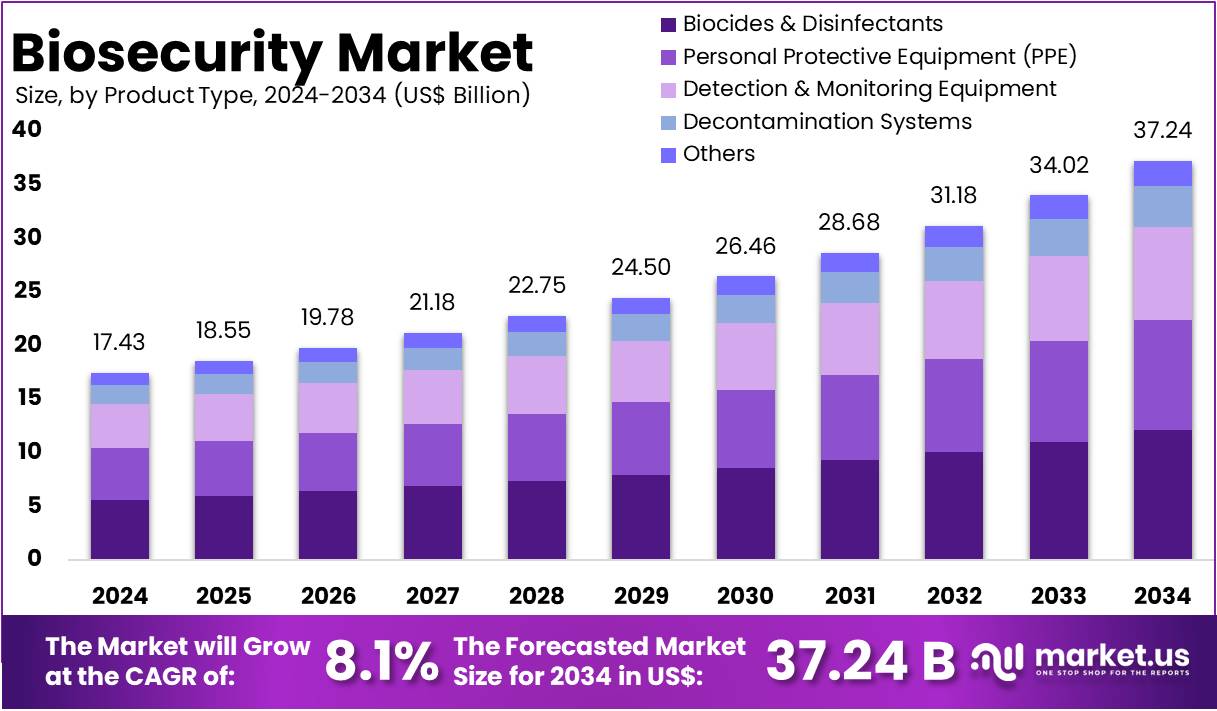
New York, NY – June 23, 2026 – The Biosecurity Market size is expected to be worth around US$ 37.24 billion by 2034 from US$ 17.43 billion in 2024, growing at a CAGR of 8.1% during the forecast period 2025 to 2034. North America held a dominant market position, capturing more than a 38.4% share and holds US$ 6.69 Billion market value for the year.
Biosecurity refers to a set of preventive measures designed to reduce the risk of introducing, spreading, and managing harmful biological agents, including diseases, pests, invasive species, and pathogens. It plays a critical role in safeguarding human health, animal welfare, agricultural productivity, food security, and environmental sustainability.
Effective biosecurity practices are implemented across various sectors, including agriculture, livestock farming, healthcare, food processing, transportation, and international trade. Common measures include hygiene protocols, disease surveillance, controlled movement of animals and goods, quarantine procedures, vaccination programs, and regular monitoring of potential biological threats.
The importance of biosecurity has increased significantly due to growing global trade, urbanization, climate change, and increased movement of people and products across borders. These factors can accelerate the spread of infectious diseases and invasive organisms, creating substantial economic, environmental, and public health challenges.
Strong biosecurity systems help minimize disease outbreaks, protect biodiversity, maintain market access for agricultural products, and strengthen national resilience against emerging biological threats. Governments, businesses, research institutions, and communities all play an essential role in supporting biosecurity initiatives through awareness, compliance, and collaboration.
As global interconnectedness continues to expand, investment in biosecurity infrastructure, research, and preparedness remains vital. A proactive biosecurity approach contributes to safer food systems, healthier populations, sustainable agricultural development, and long-term environmental protection.
Key Takeaways
- The global biosecurity market was valued at US$ 43 billion in 2024 and is projected to grow at a CAGR of 8.1% through 2034.
- By product type, the Biocides & Disinfectants segment accounted for the largest market share of 32.5% in 2024.
- Based on application, Quarantine and Disease Surveillance emerged as the leading segment, representing 31.1% of the total market revenue in 2024.
- Within the end-user category, Government & Regulatory Bodies led the market with a revenue share of 31.2% in 2024.
- North America held the dominant position in the global market, capturing 38.4% of the total revenue share in 2024 and accounting for a market value of US$ 6.69 billion.
Regional Analysis
North America dominated the global biosecurity market in 2024, accounting for 38.4% of total revenue. Market growth in the region is supported by stringent regulatory policies, substantial government funding, and advanced biosecurity infrastructure. The presence of well-established surveillance networks, diagnostic laboratories, and disease monitoring programs enhances preparedness against biological threats. Increased investments in rapid diagnostics, AI-driven surveillance technologies, and outbreak response capabilities have further strengthened the regional market. Rising focus on public health protection and food safety continues to support market expansion.
Asia Pacific is projected to register the fastest growth during the forecast period. The region’s expansion is driven by growing agricultural activities, increasing livestock populations, frequent disease outbreaks, and rising awareness regarding food and public health security. Governments across countries such as China, India, Japan, South Korea, and Australia are investing in advanced diagnostics, surveillance systems, and biosecurity infrastructure. The adoption of digital technologies, including AI-based monitoring and smart farm solutions, is accelerating market development across the region.
Emerging Trends
- Growing Role of AI and Gene-Editing in Biosecurity: Artificial intelligence and gene-editing technologies are transforming biosecurity by improving threat detection, disease monitoring, and response capabilities. AI enables rapid analysis of complex biological data, while gene-editing tools support advanced disease control solutions. However, concerns regarding accidental or intentional misuse of engineered organisms have increased the need for robust regulatory frameworks, oversight mechanisms, and safety protocols.
- Climate Change Expands Disease-Carrying Insect Habitats: Climate change is altering ecosystems and enabling disease-carrying insects to expand into new geographic regions. Rising temperatures and shifting weather patterns create favorable conditions for vectors such as mosquitoes, increasing the risk of diseases including malaria and dengue fever. These changes require enhanced surveillance, public health preparedness, and targeted prevention strategies to reduce emerging disease threats.
- Wastewater Monitoring for Early Disease Detection: Wastewater monitoring is gaining importance as an effective method for identifying infectious disease outbreaks at an early stage. By analyzing sewage samples, health authorities can detect pathogens before widespread symptoms appear within communities. This approach provides cost-efficient population-level surveillance, supports timely intervention measures, and strengthens public health preparedness against future biological threats and epidemics.
- Advanced Detection Systems Enhance Biological Threat Identification: Advanced detection technologies are improving the speed and accuracy of biological threat identification across healthcare, agriculture, and security sectors. Innovations such as rapid genomic sequencing, biosensors, and automated diagnostic platforms enable earlier detection of pathogens. These systems enhance outbreak containment efforts, support informed decision-making, and strengthen defenses against naturally occurring and engineered biological risks.
Use Cases
- Farm Biosecurity Measures: Farm biosecurity involves implementing strict hygiene practices, controlling animal movement, and limiting access to livestock facilities to prevent disease transmission. Regular cleaning of equipment, vehicles, and footwear, combined with quarantine procedures for new or sick animals, reduces outbreak risks. These measures support animal health, protect farm productivity, and ensure safer food production systems.
- Integrated Pest Management: Integrated Pest Management combines biological, cultural, mechanical, and chemical methods to control pests while minimizing environmental impact. Continuous monitoring enables early identification of pest populations, allowing targeted interventions. The use of natural predators and eco-friendly techniques reduces dependence on pesticides, promotes sustainable agriculture, and enhances long-term biosecurity within farming and livestock production systems.
- International Cooperation in Biosecurity: International cooperation plays a critical role in addressing cross-border biological threats through information sharing, collaborative research, and coordinated response strategies. Countries participate in partnerships and biosecurity dialogues to strengthen disease surveillance and emergency preparedness. Such collaboration enhances global health security, facilitates the exchange of best practices, and supports safe international trade and travel activities.
- Government and Organizational Support: Governments and organizations contribute significantly to biosecurity by developing regulations, funding preparedness programs, and supporting disease monitoring initiatives. Their efforts include workforce training, public awareness campaigns, emergency response planning, and infrastructure development. Strong institutional support encourages compliance with biosecurity standards, improves risk management capabilities, and strengthens resilience against biological threats across sectors.
Frequently Asked Questions on Biosecurity
- Why is biosecurity important?
Biosecurity is important because it helps prevent disease outbreaks, minimizes economic losses, and protects public health. Effective biosecurity measures reduce the transmission of pathogens across farms, laboratories, healthcare facilities, and international borders. As global trade and travel continue to increase, strong biosecurity frameworks have become essential for maintaining biological safety and food security. - Which industries rely heavily on biosecurity measures?
Biosecurity measures are widely used in agriculture, livestock farming, poultry production, healthcare, biotechnology, pharmaceutical manufacturing, and food processing industries. These sectors face significant risks from infectious diseases and biological contamination. As a result, organizations increasingly invest in advanced biosecurity systems to maintain safety standards and regulatory compliance. - How does biosecurity help in disease prevention?
Biosecurity helps prevent diseases by controlling the movement of people, animals, equipment, and biological materials that may carry pathogens. Through strict hygiene practices, monitoring systems, and containment procedures, biosecurity reduces opportunities for disease transmission, thereby safeguarding populations and minimizing the impact of outbreaks on economic and public health systems. - What role does technology play in modern biosecurity?
Technology plays a crucial role in enhancing biosecurity through advanced monitoring systems, diagnostic tools, artificial intelligence, and real-time surveillance platforms. These innovations improve threat detection, outbreak prediction, and response capabilities. The integration of digital technologies enables organizations to manage biological risks more efficiently and strengthen overall security frameworks. - What factors are driving the growth of the biosecurity market?
The growth of the biosecurity market is driven by rising concerns regarding infectious disease outbreaks, increasing global trade activities, stricter regulatory requirements, and growing investments in public health infrastructure. Additionally, advancements in diagnostic technologies and surveillance systems are encouraging greater adoption of biosecurity solutions across various industries worldwide. - Which segment dominates the biosecurity market?
The agriculture and livestock sector represents one of the largest segments within the biosecurity market due to the need to prevent animal diseases and protect food supply chains. However, healthcare and biotechnology applications are also experiencing significant growth as governments and organizations strengthen preparedness against emerging biological threats. - Which regions are leading the biosecurity market?
North America is a leading region in the biosecurity market due to strong regulatory frameworks, advanced healthcare infrastructure, and significant government investments. Europe also holds a substantial market share, while Asia-Pacific is expected to experience rapid growth owing to expanding agricultural activities, increasing disease awareness, and rising healthcare expenditures.
Conclusion
The global biosecurity market is experiencing steady growth, driven by increasing concerns over infectious diseases, food security, biological threats, and public health protection. Rising investments in surveillance systems, advanced diagnostics, AI-enabled monitoring, and disease prevention technologies are strengthening market development across multiple sectors.
North America remains the leading regional market, while Asia Pacific is expected to witness the fastest growth due to expanding agricultural activities and increasing government initiatives. Emerging trends such as gene-editing technologies, wastewater surveillance, and advanced detection systems are further shaping the industry. As biological risks continue to evolve, biosecurity will remain a critical component of global health, agricultural sustainability, and environmental protection strategies.
Discuss your needs with our analyst
Please share your requirements with more details so our analyst can check if they can solve your problem(s)




