


Overview
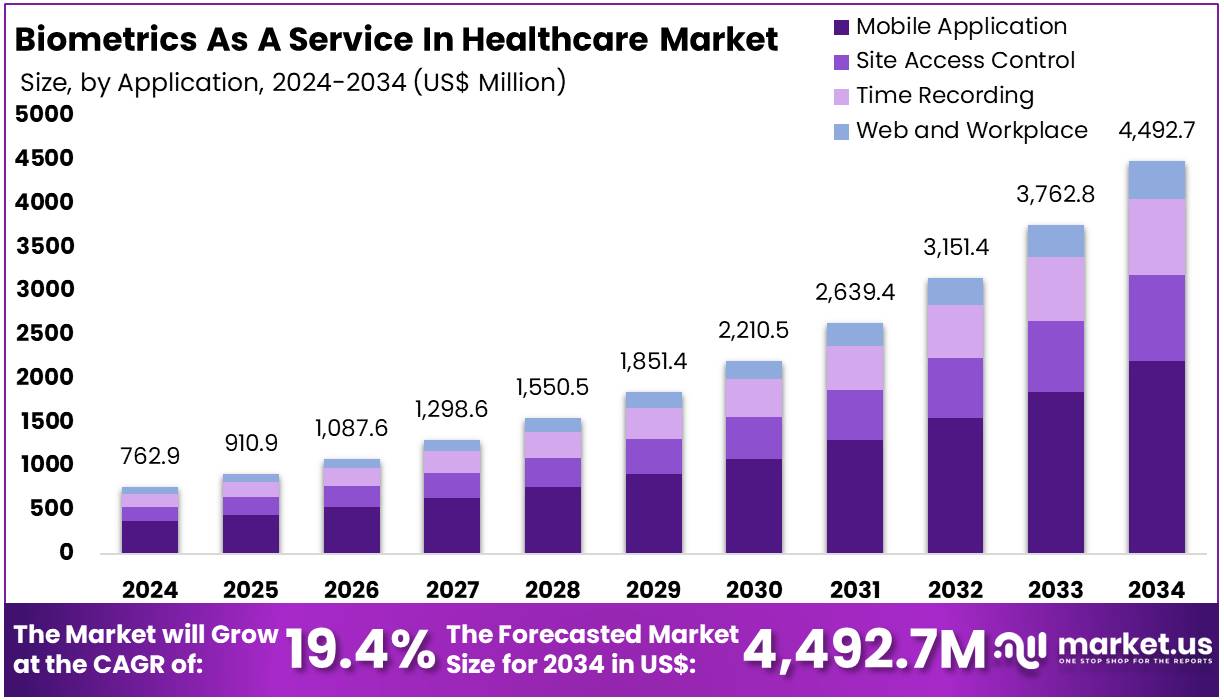
New York, NY – June 05, 2026 – The Global Biometrics As A Service In Healthcare Market size is expected to be worth around US$ 4492.7 Million by 2034, from US$ 762.9 Million in 2024, growing at a CAGR of 19.4% during the forecast period from 2025 to 2034. North America held a dominant market position, capturing more than a 47.1% share and holds US$ 359.3 Million market value for the year.
Biometrics as a Service (BaaS) is emerging as a transformative solution in the healthcare sector, enabling healthcare providers to enhance patient identification, data security, and operational efficiency through cloud-based biometric authentication technologies. The service utilizes unique biological characteristics such as fingerprints, facial recognition, iris scans, and voice recognition to verify patient and staff identities accurately and securely.
The increasing adoption of digital health platforms, electronic health records (EHRs), telemedicine services, and connected healthcare systems has heightened the need for robust identity management solutions. BaaS helps healthcare organizations reduce the risk of medical identity theft, unauthorized access to sensitive patient information, and administrative errors while supporting regulatory compliance requirements.
Healthcare providers are increasingly leveraging cloud-based biometric services due to their scalability, cost-effectiveness, and ease of integration with existing healthcare infrastructure. These solutions also improve patient experiences by enabling faster registration processes, secure access to medical records, and seamless authentication across healthcare touchpoints.
Growing concerns regarding cybersecurity threats and the rising volume of healthcare data are expected to further drive the adoption of biometric authentication technologies. Additionally, advancements in artificial intelligence, cloud computing, and multimodal biometric systems are enhancing the accuracy and reliability of these solutions.
As healthcare organizations continue to prioritize patient safety and data protection, Biometrics as a Service is expected to play a critical role in modernizing healthcare identity management and security frameworks worldwide.
Key Takeaways
- The global Biometrics as a Service (BaaS) in Healthcare market is anticipated to attain a valuation of US$ 4,492.7 million by 2034, expanding at a CAGR of 19.4% during the forecast period.
- In 2024, the Multimodal segment held a leading position in the market, capturing more than 54.2% of the total share, supported by superior authentication accuracy and enhanced security features.
- The Mobile Application segment accounted for over 41.6% of the market share in 2024, driven by the growing adoption of telehealth services, remote patient monitoring, and mobile health applications.
- Fingerprint Recognition emerged as the dominant scanner type in 2024, representing 48.3% of the market share, owing to its affordability, reliability, and extensive implementation across healthcare facilities.
- North America maintained its leadership in the global market in 2024, securing a share of more than 47.1% and generating revenue of approximately US$ 359.3 million.
Regional Analysis
In 2024, North America accounted for more than 47.1% of the global Biometrics as a Service (BaaS) in Healthcare market, generating approximately US$ 359.3 million in revenue. The region’s leading position is supported by the increasing adoption of biometric authentication technologies across healthcare facilities for patient identification, access management, and data security. Growing concerns regarding healthcare data breaches and the need for secure identity verification systems have accelerated the deployment of biometric solutions throughout the region.
The United States remains the primary contributor to market growth, driven by the widespread implementation of fingerprint and facial recognition technologies in hospitals, clinics, and healthcare networks. The growing focus on regulatory compliance, patient privacy, and secure access to electronic health records has further encouraged the adoption of advanced biometric platforms. Ongoing investments in healthcare digitalization are also supporting market expansion.
Canada is contributing significantly to regional development through the expansion of telemedicine and digital healthcare services. Biometric solutions are increasingly being integrated into remote patient monitoring systems and electronic health record platforms to enhance security and authentication. Government initiatives promoting healthcare interoperability and patient safety are further driving adoption.
Continued investments in cybersecurity, cloud-based healthcare technologies, and digital transformation initiatives are expected to strengthen North America’s position in the Biometrics as a Service in Healthcare market in the coming years.
Emerging Trends
- Increased Adoption of Multimodal Biometrics: Healthcare organizations are increasingly adopting multimodal biometric systems that combine fingerprint, facial, iris, and voice recognition technologies. This approach enhances authentication accuracy, strengthens security, reduces identification errors, and minimizes fraud risks, making patient verification more reliable across healthcare environments.
- Growth of Cloud-Based Biometric Solutions: Cloud-based biometric services are gaining popularity due to their scalability, flexibility, and lower infrastructure requirements. These solutions enable secure remote access, simplify system management, reduce operational costs, and support healthcare providers in delivering efficient services across multiple locations.
- Greater Focus on Patient Privacy and Data Security: Healthcare providers are prioritizing data privacy by implementing advanced encryption, secure storage practices, and compliance-driven biometric solutions. Strong security frameworks help protect sensitive patient information, prevent unauthorized access, reduce cyber threats, and build trust among healthcare stakeholders.
- Integration with Telehealth and Mobile Healthcare Applications: Biometric authentication is increasingly integrated into telehealth platforms and mobile health applications. These technologies enable secure patient verification during virtual consultations, improve user convenience, reduce identity-related risks, and support the growing demand for remote healthcare services worldwide.
- AI and Machine Learning Enhancing Biometric Performance: Artificial intelligence and machine learning technologies are improving biometric authentication by increasing recognition accuracy and detecting fraudulent activities. These advanced capabilities help healthcare organizations streamline workflows, strengthen security measures, reduce verification errors, and enhance patient management processes.
Use Cases
- Patient Identification and Registration: Biometric solutions enable accurate patient identification during registration and admission processes. By reducing duplicate records and identity-related errors, these systems improve patient safety, streamline administrative tasks, accelerate service delivery, and ensure healthcare professionals access correct patient information.
- Access Control for Healthcare Staff and Facilities: Healthcare facilities use biometric authentication to restrict access to sensitive locations such as operating rooms, pharmacies, and data centers. This enhances security, prevents unauthorized entry, protects critical resources, and provides a reliable alternative to traditional access credentials.
- Secure Access to Electronic Health Records (EHRs): Biometric authentication helps secure electronic health records by allowing only authorized personnel to access patient information. This strengthens data protection, supports regulatory compliance, minimizes privacy risks, and ensures healthcare providers can securely manage confidential medical records.
- Remote Patient Authentication for Telehealth Services: Biometric technologies verify patient identities during virtual healthcare consultations, ensuring secure remote interactions. These solutions help prevent identity fraud, protect sensitive information, support compliance requirements, and increase confidence in telemedicine services among patients and providers.
- Medication Dispensing and Management: Healthcare organizations use biometric systems to verify identities during medication dispensing processes. This reduces medication errors, prevents unauthorized drug access, improves accountability, strengthens patient safety, and ensures that treatments are administered to the correct individuals.
- Billing and Insurance Verification: Biometric authentication streamlines billing and insurance verification by accurately confirming patient identities. This reduces fraudulent claims, minimizes administrative delays, improves payment accuracy, enhances operational efficiency, and supports a smoother financial process for healthcare providers and patients.
Frequently Asked Questions on Biometrics As A Service In Healthcare
- What is driving the growth of the Biometrics as a Service in Healthcare market?
The market is growing due to increasing concerns about healthcare data security, rising adoption of electronic health records, expanding telehealth services, and the need for accurate patient identification. Regulatory requirements and advancements in cloud-based authentication technologies are also supporting market expansion. - How does biometric authentication improve healthcare operations?
Biometric authentication enhances healthcare operations by reducing identity fraud, preventing unauthorized access to sensitive records, and streamlining patient registration processes. It also improves workflow efficiency by enabling secure and rapid access to healthcare systems for patients and medical professionals. - Which biometric technology is most widely used in healthcare?
Fingerprint recognition remains one of the most widely adopted biometric technologies in healthcare due to its affordability, reliability, and ease of implementation. It is commonly used for patient verification, staff authentication, and secure access to healthcare facilities and digital records. - Why are healthcare organizations adopting cloud-based biometric solutions?
Healthcare organizations are adopting cloud-based biometric solutions because they offer scalability, lower infrastructure costs, and seamless integration with existing healthcare systems. These platforms also support real-time identity verification while ensuring secure management of sensitive healthcare information. - Which region leads the Biometrics as a Service in Healthcare market?
North America currently leads the Biometrics as a Service in Healthcare market, supported by advanced healthcare infrastructure, strong cybersecurity investments, and widespread adoption of digital health technologies. Regulatory compliance requirements and healthcare modernization initiatives further strengthen regional market growth. - How does Biometrics as a Service support telemedicine services?
Biometrics as a Service supports telemedicine by providing secure patient authentication during virtual consultations and remote healthcare interactions. It helps verify identities, protect patient information, and ensure compliance with privacy regulations while enhancing trust in digital healthcare platforms. - What is the future outlook for the Biometrics as a Service in Healthcare market?
The future outlook remains highly positive as healthcare providers continue investing in digital transformation and cybersecurity solutions. Growing adoption of artificial intelligence, cloud computing, and multimodal biometric technologies is expected to enhance authentication accuracy and drive long-term market growth.
Conclusion
The Biometrics as a Service (BaaS) in Healthcare market is experiencing significant growth as healthcare organizations increasingly prioritize secure patient identification, data protection, and operational efficiency. Rising adoption of digital health platforms, telemedicine, and electronic health records is accelerating demand for advanced biometric authentication solutions.
Emerging technologies such as multimodal biometrics, artificial intelligence, and cloud-based platforms are further enhancing system accuracy and scalability. With North America leading market adoption and continued investments in healthcare digitalization and cybersecurity, the market is expected to witness strong expansion, reaching US$ 4,492.7 million by 2034 and creating substantial opportunities across the healthcare ecosystem.
Discuss your needs with our analyst
Please share your requirements with more details so our analyst can check if they can solve your problem(s)




