


Overview
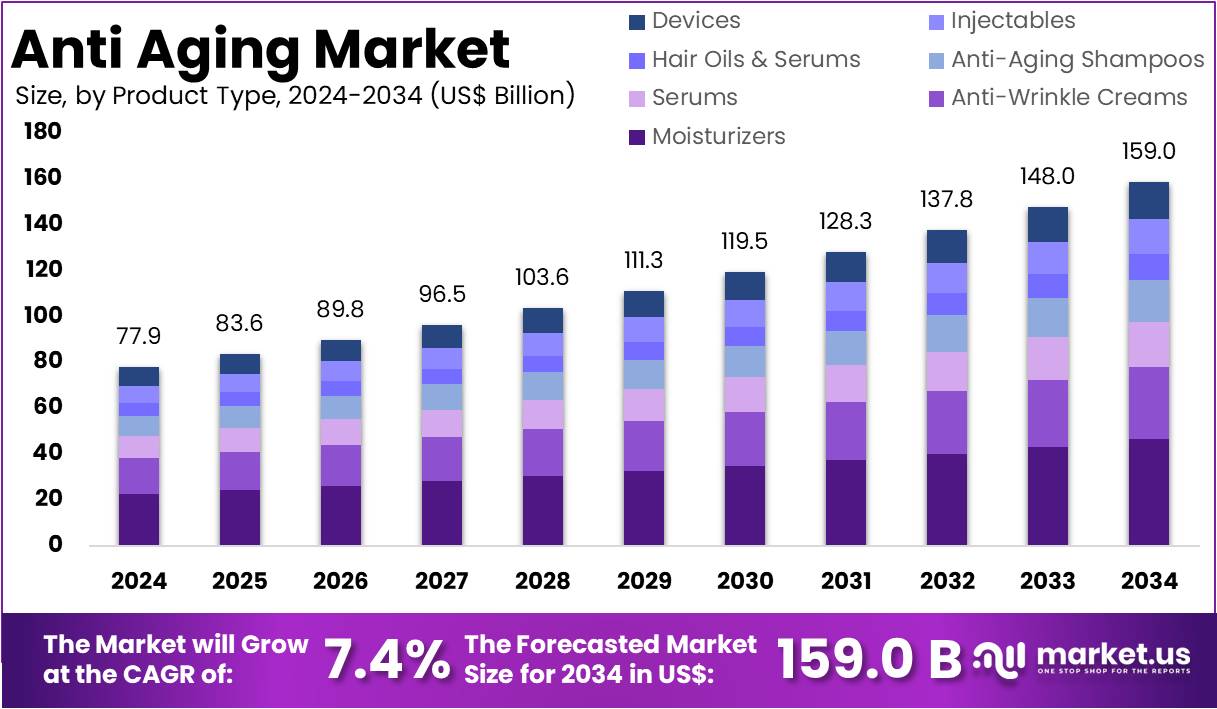
New York, NY – June 05, 2026 – The Global Anti Aging Market size is expected to be worth around US$ 159 Billion by 2034, from US$ 77.9 Billion in 2024, growing at a CAGR of 7.4% during the forecast period from 2025 to 2034.
The anti-aging industry has emerged as a significant segment of the global health, wellness, and personal care sectors, driven by increasing consumer awareness regarding age-related health concerns and aesthetic appearance. Anti-aging solutions encompass a broad range of products and services, including skincare formulations, dietary supplements, cosmetic procedures, regenerative therapies, and wellness programs designed to slow or reduce visible and biological signs of aging.
Growing life expectancy, rising disposable incomes, and increasing demand for preventive healthcare have contributed to the expansion of the anti-aging market. Consumers are increasingly seeking products that support skin health, improve vitality, and promote overall well-being. Technological advancements in biotechnology, dermatology, and regenerative medicine have further enhanced the effectiveness and accessibility of anti-aging treatments.
The market is also benefiting from the growing popularity of natural and science-backed ingredients such as antioxidants, peptides, collagen, hyaluronic acid, and plant-based extracts. In addition, the influence of social media, beauty trends, and personalized healthcare solutions continues to shape consumer preferences and purchasing decisions.
Key Takeaways
- The global anti-aging market is anticipated to grow from US$ 77.9 Billion in 2024 to approximately US$ 159 Billion by 2034, registering a CAGR of 7.4% during the forecast period.
- Among product types, moisturizers held the largest market share in 2024, accounting for more than 29.2% of the global anti-aging market.
- Based on treatment type, topical treatments dominated the market in 2024, capturing over 42.5% of the total revenue share.
- Women remained the primary consumer segment, representing more than 68.9% of the global anti-aging market in 2024.
- The retail segment emerged as the leading distribution channel, contributing over 36.5% of total anti-aging product sales worldwide in 2024.
- Asia Pacific maintained its position as the largest regional market, holding more than 43.5% of the global market share and generating revenue of US$ 33.87 Billion in 2024.
Regional Analysis
In 2024, Asia Pacific emerged as the leading region in the global anti-aging market, accounting for more than 43.5% of total market revenue and reaching a value of US$ 33.87 billion. The region’s dominance was supported by rising consumer awareness regarding skincare, personal grooming, and preventive aging solutions. Rapid urbanization, changing lifestyles, and increasing beauty consciousness across major economies such as China, Japan, South Korea, and India significantly boosted demand for anti-aging products and treatments.
A growing middle-class population with improved purchasing power further accelerated spending on premium skincare products, cosmetic treatments, and wellness solutions. The region also benefits from a rapidly aging population, particularly in Japan, where a substantial share of residents are aged 65 years and above. This demographic trend has increased demand for anti-wrinkle creams, dietary supplements, and minimally invasive aesthetic procedures.
Technological advancements and continuous product innovation have strengthened market growth, with manufacturers introducing advanced formulations containing retinoids, peptides, antioxidants, and natural extracts. Additionally, expanding access to dermatology clinics, medical spas, and digital retail platforms has enhanced product availability and consumer engagement. The widespread adoption of e-commerce and the influence of social media have further supported market expansion. These combined demographic, economic, and technological factors are expected to sustain Asia Pacific’s leadership in the anti-aging market over the coming years.
Emerging Trends in the Anti-Aging Market
- Natural and Organic Ingredients Gain Popularity: Consumer preference is shifting toward anti-aging products formulated with natural and organic ingredients. Growing awareness regarding skin health and environmental sustainability is encouraging manufacturers to develop clean-label formulations containing botanical extracts, essential oils, and eco-friendly packaging solutions.
- Personalized Skincare Solutions on the Rise: Personalized skincare is becoming increasingly important as consumers seek solutions tailored to their unique skin conditions. Advanced technologies such as artificial intelligence, skin analysis tools, and diagnostic applications enable brands to deliver customized anti-aging products with improved effectiveness and customer satisfaction.
- At-Home Anti-Aging Treatments Become Popular: The demand for convenient at-home anti-aging solutions continues to increase. Products such as LED masks, microcurrent devices, and professional-grade skincare kits provide accessible alternatives to clinical procedures, allowing consumers to maintain effective skincare routines while reducing treatment costs.
- Prevention Over Correction Is the New Focus: Consumers are adopting preventive skincare strategies at younger ages to delay visible signs of aging. Increased use of sunscreens, antioxidant-rich formulations, and healthy lifestyle practices reflects a growing emphasis on long-term skin protection rather than corrective treatments after damage occurs.
- Men’s Grooming in Anti-Aging Market Expands: The male consumer segment is experiencing significant growth as awareness of skincare and wellness increases. Manufacturers are introducing specialized anti-aging products for men that address concerns such as hydration, firmness, and wrinkle reduction, expanding the market’s overall customer base.
- Technology and Science Drive Innovation: Advancements in biotechnology, dermatology, and cosmetic science are accelerating innovation across the anti-aging market. The introduction of ingredients such as peptides, growth factors, and stem cell-derived compounds is improving product performance and supporting the development of advanced skincare solutions.
Key Use Cases of Anti-Aging Products
- Reducing Wrinkles and Fine Lines: Anti-aging creams, serums, and treatments are widely used to minimize wrinkles and fine lines. By improving skin texture and firmness, these products help create a smoother appearance, reducing visible aging signs and enhancing overall facial aesthetics.
- Improving Skin Hydration and Elasticity: Many anti-aging products are formulated to enhance skin hydration and elasticity. Proper moisture retention helps maintain skin plumpness, while elasticity-supporting ingredients improve firmness, resulting in healthier, more youthful-looking skin with reduced signs of aging.
- Evening Skin Tone and Reducing Age Spots: Anti-aging solutions are frequently used to address uneven pigmentation, dark spots, and age-related discoloration. Regular application promotes a brighter and more uniform complexion, improving skin clarity and contributing to a rejuvenated and youthful appearance.
- Protecting Skin from Environmental Damage: Products containing antioxidants and sun protection agents help shield the skin from harmful environmental factors such as ultraviolet radiation and pollution. This protective function supports skin health, slows premature aging, and preserves a more youthful appearance.
- Supporting Collagen Production: Many anti-aging formulations include active ingredients that stimulate collagen synthesis. Enhanced collagen production helps maintain skin structure, improve firmness, reduce sagging, and support natural repair mechanisms, contributing to smoother and more resilient skin over time.
- Enhancing Confidence and Self-Care: Beyond physical benefits, anti-aging products support emotional well-being by improving confidence and encouraging self-care practices. Consistent skincare routines often promote positive lifestyle habits, helping individuals feel more satisfied with their appearance and overall wellness.
Frequently Asked Questions on Anti Aging
- What are the common signs of aging?
Common signs of aging include wrinkles, fine lines, age spots, reduced skin elasticity, dryness, and uneven skin tone. Aging may also affect energy levels, muscle strength, and overall physical health due to natural biological changes. - What anti-aging products are most commonly used?
Moisturizers, serums, sunscreens, retinoid-based creams, collagen supplements, and antioxidant formulations are among the most widely used anti-aging products. These products help improve skin hydration, texture, firmness, and overall appearance. - How do anti-aging treatments work?
Anti-aging treatments work by stimulating collagen production, improving skin cell renewal, reducing oxidative stress, and enhancing hydration. Depending on the treatment type, they may target wrinkles, pigmentation, skin laxity, or other aging concerns. - Why is sunscreen important for anti-aging?
Sunscreen protects the skin from harmful ultraviolet radiation, which is a major cause of premature aging. Regular use helps prevent wrinkles, pigmentation, and loss of elasticity while maintaining healthier and younger-looking skin. - Which product segment dominates the anti-aging market?
Moisturizers represent one of the leading product segments due to their effectiveness in maintaining skin hydration and reducing visible aging signs. Their widespread availability and affordability contribute significantly to their strong market position. - Which region leads the global anti-aging market?
Asia Pacific leads the global anti-aging market, supported by a large consumer base, increasing urbanization, rising disposable incomes, and strong demand for skincare and cosmetic treatments across countries such as China, Japan, South Korea, and India. - What is the future outlook for the anti-aging market?
The anti-aging market is expected to experience steady growth over the coming decade, supported by innovation in skincare technologies, growing aging populations, increasing healthcare awareness, and rising demand for personalized beauty and wellness solutions.
Conclusion
In conclusion, the anti-aging market continues to experience strong growth, driven by increasing consumer focus on healthy aging, skincare, and overall wellness. Rising life expectancy, technological advancements, and growing demand for preventive healthcare are creating significant opportunities across product and treatment categories.
Emerging trends such as personalized skincare, natural ingredients, at-home treatments, and male grooming are reshaping the industry landscape. With Asia Pacific leading market expansion and innovation accelerating across biotechnology and dermatology, the market is expected to maintain steady growth through 2034, supported by evolving consumer preferences and continuous product development.
Discuss your needs with our analyst
Please share your requirements with more details so our analyst can check if they can solve your problem(s)




