


Overview
New York, NY – Aug 07, 2026 – The Global Electronic Skin Patch Market size is expected to be worth around US$ 33.0 Billion by 2034 from US$ 6.8 Billion in 2024, growing at a CAGR of 17.1% during the forecast period 2025 to 2034. North America held a dominant market position, capturing more than a 36.9% share and a US$ 2.5 Billion market value for the year.
The global electronic skin patch market is expanding rapidly due to increasing demand for continuous, non-invasive, and convenient health monitoring solutions. These flexible wearable devices support real-time tracking of vital signs, glucose levels, body temperature, hydration, medication delivery, and pain management. The rising burden of chronic diseases is a major growth driver, as the CDC reported that more than 59% of adult emergency department visits between 2017 and 2019 involved individuals with at least one chronic condition.
In the United States alone, 6 in 10 adults live with at least one chronic disease, increasing the need for remote monitoring technologies that reduce hospital visits and improve disease management. Advancements in flexible electronics, biosensors, and smart materials are accelerating product innovation. Electronic skin patches are becoming thinner, more durable, and capable of collecting multiple health parameters simultaneously.
In November 2024, Henkel and Linxens developed a proof-of-concept self-regulating heating element for skin patches, supporting applications such as pain relief and temperature-controlled drug delivery. Additionally, global investments in digital health continue to rise, with digital health funding reaching approximately $10 billion in 2024, supporting the development of connected wearable healthcare solutions.
Regulatory support is further strengthening market opportunities. The FDA’s Digital Health Center of Excellence is encouraging innovation in sensor-based medical devices and remote patient monitoring technologies. By August 2024, the FDA had authorized more than 950 medical devices incorporating artificial intelligence (AI) or machine learning (ML) features, many designed for advanced healthcare monitoring.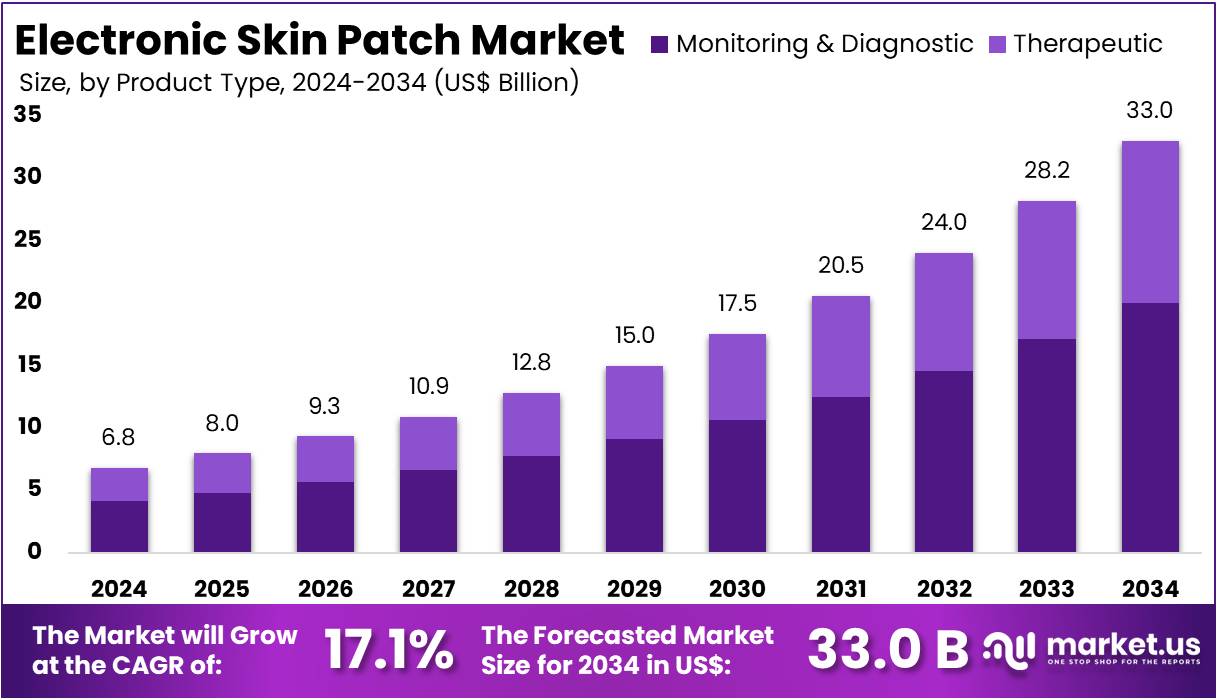
Key Takeaways
- In 2024, the electronic skin patch market generated revenue of US$ 6.8 billion and is projected to grow at a CAGR of 17.1%, reaching US$ 33.0 billion by 2034.
- Based on product type, the market is segmented into monitoring & diagnostic and therapeutic categories. The monitoring & diagnostic segment dominated the market in 2023, accounting for a 60.7% market share.
- By wireless connectivity, the market is classified into connected and non-connected segments. The connected segment held a significant market share of 72.3%.
- Based on application, the market is categorized into diabetes management, cardiovascular monitoring, temperature sensing, electrical stimulation, motion sensing, and patient monitoring. The diabetes management segment led the market with the largest revenue share of 34.1%.
- By end user, the market is segmented into healthcare professionals, consumers, and athletes & fitness enthusiasts. The healthcare professionals segment dominated the market, holding a revenue share of 50.3%.
- Regionally, North America emerged as the leading market in 2023, capturing a market share of 36.9%.
Statistical Information
- Rising Chronic Disease Burden Driving Demand for Continuous Monitoring Devices: Chronic disease prevalence is increasing the need for continuous health monitoring solutions such as electronic skin patches, wearable sensors, and remote patient monitoring devices. According to the CDC, 6 in 10 adults in the United States have at least one chronic disease, while 4 in 10 adults have two or more chronic conditions. The CDC also reported that chronic diseases are responsible for 90% of the US healthcare expenditure, creating demand for technologies that support early detection and long-term disease management.
- Diabetes Management Increasing Need for Continuous Glucose Monitoring Solutions: Diabetes management is one of the largest applications for electronic skin patch technology. The CDC estimates that 38.4 million Americans, or approximately 11.6% of the US population, have diabetes, while around 97.6 million adults have prediabetes. Continuous glucose monitoring systems using skin-based sensors help patients track glucose levels continuously, reducing risks associated with uncontrolled blood sugar levels.
- Cardiovascular Disease Driving Demand for ECG and Vital Sign Monitoring Patches: Cardiovascular monitoring is a key application area for electronic skin patches due to the high prevalence of heart-related disorders. The CDC reports that heart disease causes approximately 695,000 deaths annually in the United States, representing about 1 in every 5 deaths. Wearable ECG patches and smart sensors enable continuous monitoring of heart rate, rhythm abnormalities, and other cardiovascular indicators.
- Aging Population Creating Additional Demand for Continuous Monitoring: The growing elderly population is increasing the need for wearable monitoring solutions for chronic disease management and preventive care. According to the US Census Bureau, the number of Americans aged 65 years and older reached approximately 58 million in 2022, representing nearly 17% of the total population. Older adults often require continuous monitoring for cardiovascular conditions, diabetes, and mobility-related health concerns.
- Growing Elderly Care Requirements Driving Continuous Monitoring: The aging population is increasing demand for technologies that support independent living and chronic disease management. According to the United Nations, the global population aged 65 years and older reached approximately 761 million people in 2021 and is projected to continue increasing, creating demand for wearable healthcare monitoring solutions.
- Remote Patient Monitoring (RPM) Market Growth: The U.S. remote patient monitoring market was valued at approximately USD 14.3 billion in 2024 and is projected to exceed USD 18 billion by 2026. An estimated 71 million Americans are expected to use RPM by 2025. This rapid adoption reflects growing demand for home-based chronic disease management, directly supporting electronic skin patch market expansion.
- Increasing Adoption of Continuous Glucose Monitoring in Diabetes Care: Continuous glucose monitoring (CGM) technology is becoming an important application for electronic skin patches due to the growing need for real-time glucose tracking. The National Institute of Diabetes and Digestive and Kidney Diseases (NIDDK) reports that diabetes affects millions of people in the United States, with approximately 37.3 million Americans living with diabetes and around 96 million adults having prediabetes.
- Rising Demand for Preventive Healthcare Due to Healthcare Cost Pressure: Preventive monitoring technologies are gaining importance as healthcare systems seek ways to reduce expensive emergency care and hospitalizations. The United States healthcare system spent approximately $4.5 trillion on healthcare in 2022, representing nearly 18% of GDP, increasing interest in technologies that enable early intervention and remote management.
Regional Analysis
North America led the market by securing a market share of 36.9% in 2023.
North America remains a leading region for electronic skin patch adoption due to strong healthcare infrastructure, increasing use of remote patient monitoring, and rising chronic disease prevalence. The CDC reports that 6 in 10 US adults live with at least one chronic disease, increasing demand for continuous monitoring solutions.
Cardiovascular disease remains a major concern, with the CDC reporting 919,032 deaths in the US in 2023 due to heart disease, supporting demand for wearable ECG and vital monitoring patches. The FDA’s growing support for digital health innovation, including more than 950 AI/ML-enabled medical devices authorized by 2024, is further accelerating adoption of smart healthcare devices.
Asia Pacific is projected to experience significant growth due to rising healthcare digitization, aging populations, and increasing diabetes burden. The International Diabetes Federation estimates diabetes cases in the South-East Asia region will increase from 90 million adults in 2021 to 151 million by 2045, creating demand for continuous glucose monitoring patches. Government initiatives such as China’s Healthy China 2030 strategy are supporting digital healthcare development and wearable technology adoption across the region.
Emerging Trends
- AI-Powered Smart Monitoring and Predictive Healthcare: Artificial intelligence integration is becoming a major trend in electronic skin patches, enabling real-time health analysis and early disease detection. The FDA reported that more than 950 AI/ML-enabled medical devices were authorized by 2024, supporting wider adoption of intelligent wearable healthcare solutions. AI-based patches can analyze patterns in heart rate, glucose, and other biomarkers to provide predictive insights.
- Continuous Glucose Monitoring for Diabetes Management: Diabetes monitoring remains one of the strongest use cases for electronic skin patches. The CDC estimates that more than 37 million Americans have diabetes, increasing demand for continuous glucose monitoring (CGM) solutions. Wearable glucose patches measure glucose levels in real time and transmit data wirelessly to smartphones or healthcare providers for better disease management.
- Multi-Parameter Biosensing Technology Development: Next-generation electronic skin patches are moving beyond single measurements by combining multiple sensors for monitoring glucose, heart rate, temperature, hydration, and chemical biomarkers. NIH-supported researchers developed wearable patches capable of continuously measuring cardiovascular signals and biochemical indicators such as glucose and lactate, supporting personalized healthcare applications.
- Growth of Remote Patient Monitoring Solutions: Electronic skin patches are increasingly used in remote patient monitoring because they allow healthcare professionals to track patients outside hospitals. The FDA recognizes wearable patches as sensor-based digital health devices capable of continuous or periodic monitoring in non-clinical settings such as homes. This trend supports chronic disease management and reduces unnecessary hospital visits.
- Flexible and Skin-Friendly Wearable Materials: The development of flexible electronics, stretchable sensors, and lightweight materials is improving patient comfort and device usability. Research in wearable biosensors shows that modern electronic patches can monitor physiological and biochemical parameters continuously while maintaining flexibility and skin compatibility. These advancements support applications in healthcare, fitness, and preventive monitoring.
Use Cases
- Cardiovascular Monitoring and ECG Tracking: Electronic skin patches are increasingly used for cardiovascular monitoring, including ECG measurement, heart rate tracking, and rhythm analysis. The CDC reports that cardiovascular disease remains a major health challenge, causing approximately 695,000 deaths annually in the United States. Wearable ECG patches help detect abnormal heart patterns earlier and support continuous cardiac care.
- Sweat-Based Health Monitoring Applications: Sweat analysis is emerging as an innovative application for electronic skin patches. Researchers are developing wearable biosensors capable of detecting biomarkers such as glucose, lactate, electrolytes, and hydration indicators from sweat. These technologies may support non-invasive monitoring for athletes, diabetes management, and personalized healthcare.
- Personalized Medicine and Digital Health Integration: Electronic skin patches are becoming important tools in personalized medicine by collecting continuous health data and connecting with digital platforms. NIH highlights that wearable sensors can generate large volumes of personal health information, with research showing wearable devices can collect more than 250,000 physiological measurements per person per day in monitoring studies.
- Smart Drug Delivery and Therapeutic Applications: Electronic skin patches are being developed for controlled drug delivery, electrical stimulation, and pain management. Advanced patches combine sensors with therapeutic functions, allowing personalized treatment delivery based on patient conditions. These technologies are being explored for improving medication adherence and providing targeted therapies without frequent clinical intervention.
- Fitness, Sports, and Performance Monitoring: Electronic skin patches are gaining applications in sports and fitness by monitoring hydration, body temperature, muscle activity, and metabolic indicators. NIH-supported wearable sensor research highlights the potential of next-generation wearables to monitor vital signs, oxygen levels, and other health parameters continuously, supporting athlete performance optimization and injury prevention.
Frequently Asked Questions on Electronic Skin Patch Market
- What are the major applications of electronic skin patches?
Electronic skin patches are used in diabetes management, cardiovascular monitoring, temperature sensing, patient monitoring, electrical stimulation, drug delivery, and fitness tracking. These applications help healthcare providers and consumers achieve continuous monitoring, early detection, and personalized healthcare management. - Why is diabetes management a major application of electronic skin patches?
Diabetes management drives adoption of electronic skin patches because continuous glucose monitoring allows patients to track glucose fluctuations in real time. With more than 37 million Americans affected by diabetes, wearable glucose monitoring solutions are becoming increasingly important. - How do electronic skin patches improve remote patient monitoring?
Electronic skin patches enable healthcare professionals to monitor patient health data remotely without requiring frequent hospital visits. These devices continuously collect information such as vital signs and transmit data through connected platforms, supporting early intervention and better chronic disease management. - What technologies are used in electronic skin patches?
Electronic skin patches use flexible electronics, biosensors, wireless connectivity, artificial intelligence, and advanced materials. These technologies allow devices to measure multiple health indicators, improve accuracy, enhance comfort, and provide real-time health insights for personalized medical decisions. - What role does artificial intelligence play in electronic skin patches?
Artificial intelligence helps electronic skin patches analyze large amounts of health data, identify abnormal patterns, and provide predictive insights. The FDA authorized more than 950 AI/ML-enabled medical devices by 2024, supporting wider adoption of smart healthcare technologies. - Who are the major users of electronic skin patches?
Healthcare professionals, patients managing chronic diseases, athletes, and fitness enthusiasts are major users of electronic skin patches. Hospitals use these devices for remote monitoring, while consumers use them for preventive healthcare, fitness tracking, and personal health management. - What factors are driving the growth of the electronic skin patch market?
Increasing chronic disease prevalence, rising demand for remote monitoring, advancements in wearable technology, and growing digital healthcare adoption are major growth factors. Aging populations and demand for non-invasive monitoring solutions are also encouraging wider use of electronic skin patches. - What are the challenges affecting electronic skin patch adoption?
High development costs, regulatory requirements, battery limitations, data security concerns, and challenges related to long-term skin compatibility can restrict adoption. Manufacturers are focusing on advanced materials and improved designs to overcome these barriers and enhance user acceptance. - How are electronic skin patches used in cardiovascular monitoring?
Electronic skin patches can monitor ECG signals, heart rate, and rhythm abnormalities continuously. With cardiovascular disease causing approximately 695,000 deaths annually in the US, wearable cardiac monitoring solutions are becoming valuable tools for early detection and remote patient care. - What is the future outlook for the electronic skin patch market?
The electronic skin patch market is expected to expand with advancements in flexible sensors, AI integration, and personalized medicine. Increasing healthcare digitization and demand for continuous monitoring solutions will support future adoption across hospitals, homes, and fitness applications. - How do connected electronic skin patches work?
Connected electronic skin patches collect health information through embedded sensors and transfer data wirelessly to smartphones, cloud platforms, or healthcare systems. This connectivity allows real-time monitoring, data analysis, and faster communication between patients and healthcare providers.
Conclusion
The electronic skin patch market is experiencing significant growth due to increasing demand for continuous health monitoring, remote patient care, and personalized healthcare solutions. Rising chronic disease prevalence, advancements in flexible electronics, AI integration, and wireless connectivity are driving innovation across medical and consumer applications. These patches are transforming diabetes management, cardiovascular monitoring, drug delivery, and fitness tracking by providing real-time health insights.
Support from regulatory agencies and growing digital healthcare adoption are further accelerating market expansion. With ongoing advancements in biosensors and smart materials, electronic skin patches are expected to become an important component of future connected and preventive healthcare systems.
Discuss your needs with our analyst
Please share your requirements with more details so our analyst can check if they can solve your problem(s)




