


Overview
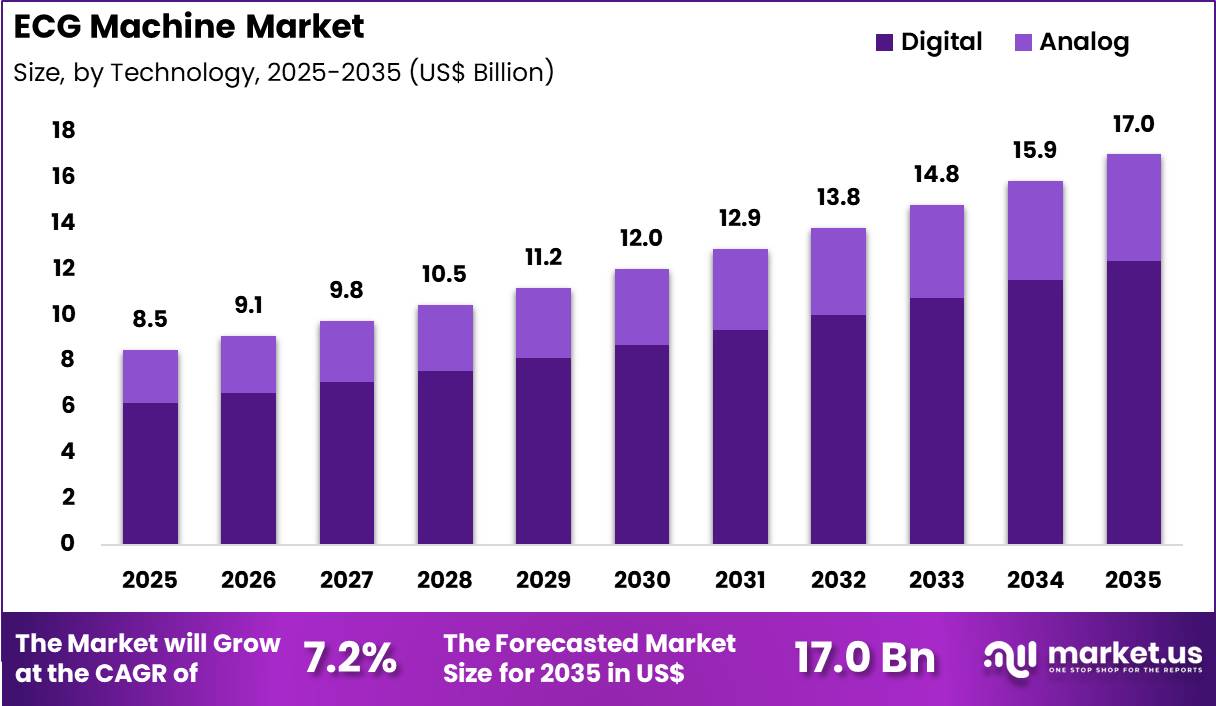
New York, NY – Nov 05 2026 – The Global ECG Machine Market size is expected to be worth around US$ 17.0 Billion by 2035 from US$ 8.5 Billion in 2025, growing at a CAGR of 7.2% during the forecast period 2026-2035. In 2025, North America led the market, achieving over 45.1% share with a revenue of US$ 3.8 Billion.
The Electrocardiogram (ECG) Machine Market is growing as healthcare providers increasingly focus on early diagnosis and continuous monitoring of heart-related conditions. ECG machines are medical devices used to record the electrical activity of the heart and identify abnormalities such as irregular heartbeats, arrhythmias, and other cardiac disorders. These devices help doctors assess heart function and support timely treatment decisions.
Rising cases of cardiovascular diseases, increasing elderly populations, and growing awareness of preventive healthcare are driving market demand. Hospitals, diagnostic centers, cardiac clinics, and emergency care units widely use ECG machines for routine examinations and critical patient monitoring. Technological advancements have also improved device accuracy, portability, and ease of operation.
Portable, wireless, and digital ECG systems are gaining attention due to their ability to support faster testing and remote patient monitoring. Integration with electronic health records and cloud-based platforms is further improving data storage and accessibility.
In addition, growing investments in healthcare infrastructure and expanding access to diagnostic services are supporting market expansion. Overall, the ECG machine market is expected to experience steady growth as healthcare facilities adopt advanced cardiac monitoring technologies to improve patient care and diagnostic efficiency.
Key Takeaways
- In 2025, the ECG Machine Market recorded revenue of US$ 8.5 Billion and is projected to reach US$ 17.0 Billion by 2035, growing at a CAGR of 7.2% during the forecast period.
- By product type, the market includes ECG holter monitoring systems, ECG resting systems, cardiopulmonary stress testing systems, and ECG stress testing systems. ECG holter monitoring systems dominated with a 36.9% market share.
- Based on technology, the market is categorized into digital and analog. The digital segment led the market, accounting for a significant share of 72.6%.
- By modality, the market is segmented into wireless and wired systems. The wireless segment dominated, capturing the largest revenue share of 58.3%.
- By end user, the market is divided into hospitals, specialty clinics, and ambulatory surgical centers. Hospitals held the leading position with a revenue share of 49.8%.
- Regionally, North America dominated the ECG Machine Market, accounting for the largest market share of 45.1%.
Key Market Segments
- Product Type Analysis: ECG Holter monitoring systems dominated the product type segment with a 36.9% market share. Rising demand for continuous heart rhythm monitoring supports adoption. These devices help detect irregular heartbeats that standard ECG tests may miss. Growing cases of atrial fibrillation, improved wearable technologies, and remote cardiac monitoring further strengthen segment growth.
- Technology Analysis: Digital systems dominated the technology segment with a 72.6% market share. Healthcare providers increasingly prefer digital ECG machines for clear signal quality, automated analysis, and efficient data storage. Integration with electronic health records supports better clinical workflows. Growing hospital modernization, remote data sharing, and advanced software capabilities further drive digital adoption.
- Modality Analysis: Wireless systems held the leading position in the modality segment with a 58.3% market share. Their portability and cable-free operation improve patient comfort and monitoring flexibility. Healthcare providers increasingly use wireless ECG devices for bedside testing and outpatient care. Growing telehealth services, mobile connectivity, and home-based cardiac monitoring support segment expansion.
- End-User Analysis: Hospitals dominated the end-user segment with a 49.8% market share. High patient volumes and increasing cardiovascular care requirements drive demand for ECG machines. Emergency departments, intensive care units, and cardiology departments depend on these devices for heart monitoring. Expanding diagnostic facilities and investments in advanced healthcare infrastructure further support adoption.
Regional Analysis
North America is leading the ECG Machine Market
North America dominated the ECG Machine Market with a 45.1% share in 2024, driven by strong demand for advanced cardiac diagnostic solutions. Hospitals and clinics increasingly use ECG machines for early detection of heart rhythm disorders and other cardiovascular conditions. Growing outpatient cardiology services and ambulatory care facilities support demand for portable monitoring devices.
Integration with electronic health records and cloud platforms improves data management and remote diagnosis. Rising adoption of wearable cardiac monitoring solutions further strengthens regional growth. According to the CDC, heart disease caused approximately 695,000 deaths annually in the United States, highlighting the need for effective cardiac monitoring.
Asia Pacific is expected to register the highest CAGR during the forecast period
Asia Pacific is expected to witness strong growth due to rising cardiovascular diseases, urbanization, and expanding healthcare infrastructure. Increasing cases of hypertension and diabetes encourage routine cardiac screening. Government healthcare initiatives, growing hospital investments, and affordable portable ECG devices are further supporting regional market expansion.
Emerging Trends
- Growing Adoption of Portable and Wearable ECG Devices: Portable ECG machines and wearable heart monitors are becoming more popular. These devices allow patients to record heart activity outside hospitals. Healthcare professionals can use these readings to monitor irregular heart rhythms and identify possible cardiac problems during daily activities.
rican Heart Association+1 - Integration of Artificial Intelligence in ECG Systems: Artificial intelligence is improving ECG analysis by helping identify unusual heart patterns and possible rhythm disorders. AI-based software can support faster interpretation of ECG recordings and assist healthcare professionals in making informed clinical decisions.
- Increasing Demand for Remote Cardiac Monitoring: Remote ECG monitoring is gaining attention as healthcare providers look for ways to track patients outside hospitals. Connected monitoring devices can transmit heart activity data to medical teams, supporting continuous observation and timely clinical follow-up.
- Development of Wireless and Smartphone-Connected ECG Devices: Manufacturers are developing wireless ECG devices that connect with smartphones and digital healthcare platforms. These systems make it easier to record, store, and share ECG readings, improving access to cardiac monitoring in home and outpatient settings.
- Improved Data Integration and Interoperability: ECG technology is moving toward better integration with electronic health records and hospital information systems. Improved data sharing helps healthcare professionals access cardiac test results, compare previous recordings, and coordinate patient care across different healthcare settings.
Use Cases
- Early Detection of Heart Rhythm Disorders: ECG machines are widely used to identify abnormal heart rhythms, including atrial fibrillation and other arrhythmias. Doctors examine electrical signals to understand heart rhythm changes and determine whether patients require additional cardiac tests or treatment.
- Monitoring Patients After Cardiac Procedures: Hospitals use ECG monitoring to observe patients after heart-related procedures and treatments. Continuous monitoring helps medical teams identify changes in electrical heart activity and respond to abnormal rhythms during the recovery period.
- Cardiac Assessment in Emergency Departments: ECG machines support emergency teams when patients experience chest pain, breathlessness, dizziness, or suspected heart problems. The recordings help clinicians assess electrical heart activity and support decisions about further diagnostic examinations and urgent treatment.
- Long-Term Monitoring of Heart Conditions: Holter monitors, wearable ECG devices, and cardiac event recorders help track heart activity over extended periods. They are useful for patients whose symptoms occur occasionally and may not appear during a standard ECG examination.
- Cardiac Monitoring During Clinical Examinations and Surgery: ECG systems are used in operating rooms, intensive care units, and clinical examination areas to monitor heart rate and electrical activity. This helps healthcare professionals observe cardiac changes during medical procedures and patient assessments.
Frequently Asked Questions About ECG Machine
- How does an ECG machine work?
An ECG machine uses electrodes placed on the patient’s skin to detect electrical signals produced by the heart. These signals are converted into waveforms, which healthcare professionals examine to assess heart activity and identify abnormalities. - What conditions can an ECG machine detect?
An ECG machine can help identify irregular heart rhythms, atrial fibrillation, tachycardia, bradycardia, and possible signs of heart damage. Doctors may also use ECG findings to investigate chest pain and other cardiac symptoms. - What are the different types of ECG machines?
Common types include resting ECG machines, stress ECG systems, Holter monitors, event recorders, and portable ECG devices. Each type serves different monitoring needs, from short cardiac examinations to longer-term heart rhythm assessment. - Are portable ECG machines useful for home monitoring?
Yes, portable ECG machines allow patients to record heart activity outside hospitals. They are useful for monitoring selected heart rhythm conditions and sharing recordings with healthcare professionals for review and appropriate medical guidance. - What factors are driving the ECG Machine Market?
Rising cardiovascular disease cases, increasing demand for early diagnosis, growing elderly populations, and wider use of remote cardiac monitoring are supporting market growth. Hospitals and diagnostic centers are also upgrading their cardiac testing equipment. - Which healthcare facilities commonly use ECG machines?
Hospitals, diagnostic laboratories, cardiology clinics, emergency departments, ambulatory surgical centers, and specialty healthcare facilities commonly use ECG machines. These devices support routine cardiac examinations, patient monitoring, emergency assessments, and post-treatment observation. - What is the future outlook for the ECG Machine Market?
The market is expected to benefit from technological improvements, including AI-based ECG analysis, wireless connectivity, portable monitoring, and remote healthcare services. These developments are likely to expand cardiac monitoring across hospitals and home care settings.
Conclusion
The ECG Machine Market is expected to witness steady growth, driven by rising cardiovascular diseases, increasing demand for early diagnosis, and growing adoption of advanced cardiac monitoring solutions. Digital, wireless, and portable ECG systems are gaining popularity due to their accuracy, convenience, and remote monitoring capabilities.
North America continues to lead the market, while Asia Pacific is expected to record strong growth during the forecast period. Increasing hospital investments, AI integration, and improved healthcare infrastructure will further support market expansion. With the market projected to reach US$ 17.0 Billion by 2035, technological advancements will play a key role in improving cardiac care.
Discuss your needs with our analyst
Please share your requirements with more details so our analyst can check if they can solve your problem(s)



