


Overview
New York, NY – Aug 12, 2026 – The Global Direct-to-Consumer Genetic Testing Market size is expected to be worth around US$ 14.23 Billion by 2034 from US$ 2.15 Billion in 2024, growing at a CAGR of 20.8% during the forecast period from 2025 to 2034. In 2024, North America led the market, achieving over 37.3% share with a revenue of US$ 801 Million.
The global direct-to-consumer genetic testing market is expanding rapidly as advances in genomics, declining sequencing costs, and supportive government initiatives make genetic information more accessible.
According to the U.S. National Human Genome Research Institute, the cost of sequencing a human genome has fallen from nearly US$100 million in 2001 to less than US$200 by 2024, representing a reduction of more than 1,000,000-fold. This dramatic decline has enabled laboratories to process millions of DNA samples at affordable prices, driving consumer adoption.
Regulatory progress is also strengthening market confidence. The U.S. Food and Drug Administration has authorized multiple direct-to-consumer health genetic reports, including selected services from 23andMe, allowing consumers to receive information on genetic health risks, carrier status, and inherited conditions.
Meanwhile, the National Institutes of Health Genetic Testing Registry listed over 68,000 genetic tests from 429 laboratories across more than 50 countries as of November 2024, reflecting the rapid expansion of genetic testing worldwide.
Government-backed genomic programs are further supporting market growth. The United Kingdom’s Genome UK strategy aims to integrate genomics across the National Health Service, while the World Health Organization issued global ethical guidance on genomic data in 2024.
Additionally, the U.S. Centers for Disease Control and Prevention reports increasing use of BRCA1/BRCA2 testing for hereditary breast and ovarian cancer risk assessment, helping expand public awareness of preventive genetic screening and supporting continued growth of the DTC genetic testing market.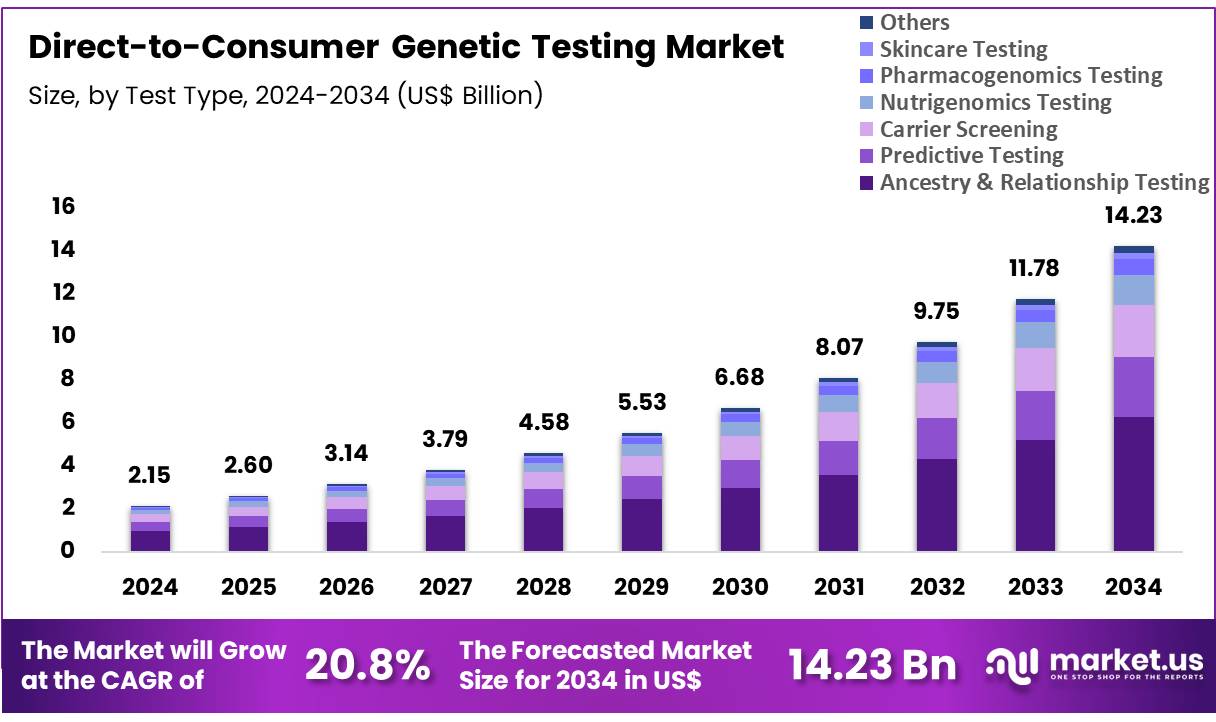
Key Takeaways
- Market Size: The global Direct-to-Consumer Genetic Testing market is projected to grow from US$ 2.15 billion in 2024 to US$ 14.23 billion by 2034.
- Market Growth: The market is anticipated to register a CAGR of 20.8% during the forecast period from 2025 to 2034.
- Test Type Analysis: Ancestry and relationship testing emerged as the leading segment, capturing 44.2% of the global market share in 2024.
- Technology Analysis: Whole genome sequencing accounted for the largest market share, representing 41.7% of the global market in 2024.
- Sample Type Analysis: Blood samples remained the dominant sample type, contributing 49.6% of the global market share in 2024.
- Distribution Channel Analysis: Online platforms led the distribution channel segment, holding a 66.8% share of the Direct-to-Consumer Genetic Testing market.
- Regional Analysis: North America dominated the global market with a 37.3% share, generating approximately US$ 801 million in revenue in 2024.
Statistical Information
- DNA Sequencing Cost Reduction Supports Market Expansion: The affordability of genetic testing has improved significantly due to the decline in genome sequencing costs. The U.S. National Human Genome Research Institute (NHGRI) reported that the cost of sequencing a human genome decreased from approximately US$100 million in 2001 to around US$600 or lower in recent years, representing a reduction of more than 99.9%. Lower sequencing costs have enabled consumer testing companies to offer more affordable DNA analysis services.
- Growing Availability of Genetic Tests Through Public Registries: The National Institutes of Health (NIH) Genetic Testing Registry (GTR) demonstrates the increasing availability of genetic testing services globally. The registry includes more than 64,000 genetic tests, covering approximately 29,000 conditions, 18,000 genes, and hundreds of laboratories. This growth reflects increasing adoption of genetic testing for ancestry, health risks, carrier screening, and inherited disorders.
- Falling DNA Sequencing Costs Increase Market Accessibility: The rapid decline in DNA sequencing costs has significantly expanded access to direct-to-consumer genetic testing. According to the U.S. National Human Genome Research Institute (NHGRI), the cost of sequencing one human genome decreased from approximately US$95 million in 2001 to less than US$600 in 2022, representing a reduction of more than 99.999%. The human genome contains approximately 3 billion DNA base pairs, and lower sequencing costs have enabled laboratories to process large volumes of consumer samples more efficiently.
- Growing Number of Genetic Tests Available Worldwide: The availability of genetic tests has expanded substantially through the NIH Genetic Testing Registry (GTR). As of 2024, the registry listed more than 68,000 genetic tests from 429 laboratories worldwide, covering more than 19,000 genes and thousands of inherited diseases and health conditions. This reflects increasing global capacity for consumer and clinical genetic testing.
- Consumer Adoption of DNA Testing Continues to Grow: Consumer interest in ancestry and health information has driven strong adoption of DTC genetic testing. 23andMe reports that it has served more than 15 million customers worldwide. Additionally, academic studies have estimated that over 26 million consumers globally had taken at-home DNA tests by 2021, with ancestry testing remaining the leading reason for purchasing these services.
- Whole Genome Sequencing Expands Genomic Analysis: Whole genome sequencing (WGS) analyzes approximately 3 billion DNA base pairs, providing nearly complete genetic information compared with targeted testing. NHGRI notes that advances in next-generation sequencing technologies have reduced sequencing costs by over 100,000-fold since 2001, supporting wider adoption of WGS in research, healthcare, and consumer genomics.
- UK Government Has Invested Billions in Genomics: The UK Government continues to expand genomics through the Genome UK strategy. The government has committed £175 million (approximately US$220 million) to create the world’s most advanced genomic healthcare system. In addition, the 100,000 Genomes Project successfully sequenced 100,000 whole genomes from around 85,000 NHS patients affected by rare diseases and cancer, supporting wider adoption of genomic medicine and increasing public awareness of genetic testing.
- NIH “All of Us” Research Program Expands Genomic Database: The U.S. National Institutes of Health (NIH) launched the All of Us Research Program, which has enrolled more than 1 million participants across the United States. The program has generated genomic data from more than 413,000 whole-genome sequences and more than 245,000 whole-genome datasets for biomedical research, accelerating discoveries in precision medicine and genetics.
- Human Genome Contains More Than 20,000 Genes: The National Human Genome Research Institute (NHGRI) reports that the human genome contains approximately 3.2 billion DNA base pairs and 20,000–21,000 protein-coding genes. Modern direct-to-consumer genetic testing analyzes hundreds of thousands of genetic markers across these genes to identify inherited traits and health-related variants.
- NIH Database Covers Thousands of Genetic Conditions: The NIH Genetic Testing Registry includes testing information for more than 19,000 genes, over 68,000 genetic tests, and 429 laboratories worldwide. The registry supports testing for thousands of inherited diseases, carrier screening, pharmacogenomics, and predictive genetic disorders.
Regional Analysis
North America led the market, achieving over 37.3% share
North America continues to lead the direct-to-consumer (DTC) genetic testing market due to its advanced genomics infrastructure, high consumer awareness, and supportive regulatory environment. The United States is the primary contributor, supported by the U.S. Food and Drug Administration (FDA), which has authorized multiple DTC genetic tests and established regulatory pathways that improve consumer confidence and product reliability.
The National Human Genome Research Institute (NHGRI) has also played a key role by funding genomic research since the completion of the US$3 billion Human Genome Project in 2003, helping reduce genome sequencing costs from nearly US$ 100 million in 2001 to below US$ 600 today. Canada further strengthens regional growth through investments in precision medicine and genomic healthcare initiatives.
The U.S. Centers for Disease Control and Prevention (CDC) also promotes genetic testing for hereditary conditions and disease prevention, increasing public awareness and adoption. Strong online distribution networks, continuous innovation, and expanding precision health programs position North America as the leading regional market for DTC genetic testing throughout the forecast period.
Emerging Trends
- Whole Genome Sequencing Becomes More Affordable: Advances in next-generation sequencing are making whole genome sequencing more accessible. According to the U.S. NHGRI, the cost of sequencing a human genome has fallen from about US$ 95 million in 2001 to less than US$ 600, enabling more consumers to access comprehensive genetic testing services.
- Expansion of FDA-Authorized Consumer Health Reports: The U.S. FDA continues to authorize direct-to-consumer genetic tests for health risks and carrier screening. FDA-approved tests provide consumers with information using saliva samples collected at home, increasing confidence in regulated genetic testing and expanding access to clinically validated health reports.
- Rapid Growth in Available Genetic Tests: The NIH Genetic Testing Registry now includes more than 64,000 genetic tests, covering approximately 29,300 conditions, 18,700 genes, and 360 laboratories worldwide. This growing database reflects continuous innovation in genetic diagnostics and personalized healthcare applications.
- Greater Focus on Genetic Data Privacy: Healthcare organizations are strengthening genomic data governance as consumer participation increases. Government agencies and public health organizations are promoting secure handling of genetic information to improve consumer trust while supporting responsible sharing of genomic data for healthcare and research purposes.
- Increasing Consumer Awareness of Preventive Healthcare: The CDC continues to encourage genetic testing for inherited conditions when appropriate. Rising public awareness about hereditary cancer, rare diseases, and family health history is encouraging more consumers to use genetic testing for preventive health planning and early medical consultation.
Use Cases
- Ancestry and Family Relationship Discovery: Millions of consumers use DTC genetic testing to identify ancestry origins and connect with biological relatives. Studies report that more than 12 million people had already used DTC genetic testing, with ancestry remaining one of the most common reasons for purchasing DNA testing kits.
- Hereditary Disease Risk Assessment: FDA-authorized DTC genetic tests allow consumers to identify selected inherited genetic variants linked to health conditions. The CDC notes that genetic testing can help identify inherited risks and support informed discussions with healthcare providers for preventive care and disease management.
- Carrier Screening for Family Planning: Consumers increasingly use genetic testing to determine carrier status for inherited disorders before pregnancy. FDA-authorized carrier screening tests analyze specific genetic variants using saliva samples, helping individuals understand reproductive risks and make informed family planning decisions.
- Supporting Precision and Personalized Medicine: Genetic information from consumer testing can help individuals better understand how inherited DNA variations may influence disease risk and treatment discussions. The NIH Genetic Testing Registry currently lists over 64,000 genetic tests, supporting broader applications in personalized healthcare and clinical decision-making.
- Remote Home-Based Health Testing: Consumers can purchase testing kits online, collect saliva samples at home, mail them to certified laboratories, and receive secure digital reports within a few weeks. This convenient testing model reduces clinic visits while improving access to genetic information for a broader population.
Frequently Asked Questions on Direct-to-Consumer Genetic Testing
- What factors are driving the growth of the Direct-to-Consumer Genetic Testing Market?
The market is expanding due to declining DNA sequencing costs, increasing consumer awareness, improved online accessibility, and growing interest in preventive healthcare. Government-supported genomic initiatives and regulatory approvals are also helping companies provide more reliable and accessible genetic testing solutions worldwide. - Why is North America a leading region in the DTC Genetic Testing Market?
North America leads due to strong genomic research infrastructure, FDA regulatory support, high consumer awareness, and advanced healthcare systems. The region also benefits from widespread internet access, established biotechnology companies, and increasing adoption of personalized medicine and preventive health solutions. - Which technologies are used in Direct-to-Consumer Genetic Testing?
Major technologies include whole genome sequencing, next-generation sequencing, and single nucleotide polymorphism (SNP) genotyping. These technologies help analyze thousands of genetic markers, allowing companies to provide information about ancestry, inherited traits, disease risks, and personalized health characteristics. - Who are the major users of Direct-to-Consumer Genetic Testing services?
Individual consumers represent the primary user group, especially people interested in ancestry, preventive healthcare, and wellness insights. Researchers, healthcare organizations, and biotechnology companies also use genetic information for studies, precision medicine development, and improving understanding of inherited conditions. - What is the future outlook for the Direct-to-Consumer Genetic Testing Market?
The future outlook remains positive due to continued reductions in sequencing costs, advancements in artificial intelligence, and growing adoption of precision healthcare. Expansion of genomic research programs and improved privacy frameworks are expected to encourage wider consumer acceptance of genetic testing services.
Conclusion
The Direct-to-Consumer (DTC) Genetic Testing market is experiencing robust growth, driven by declining DNA sequencing costs, continuous advancements in genomic technologies, and increasing consumer interest in personalized healthcare. Supportive regulatory frameworks from agencies such as the FDA, expanding genomic initiatives by governments, and growing public awareness of preventive health are strengthening market adoption.
The availability of online testing platforms and home-based sample collection has further improved accessibility and convenience. As precision medicine continues to evolve and ethical standards for genomic data protection become stronger, the DTC genetic testing market is expected to witness sustained global expansion, supported by technological innovation and increasing consumer confidence.
Discuss your needs with our analyst
Please share your requirements with more details so our analyst can check if they can solve your problem(s)




