


Overview
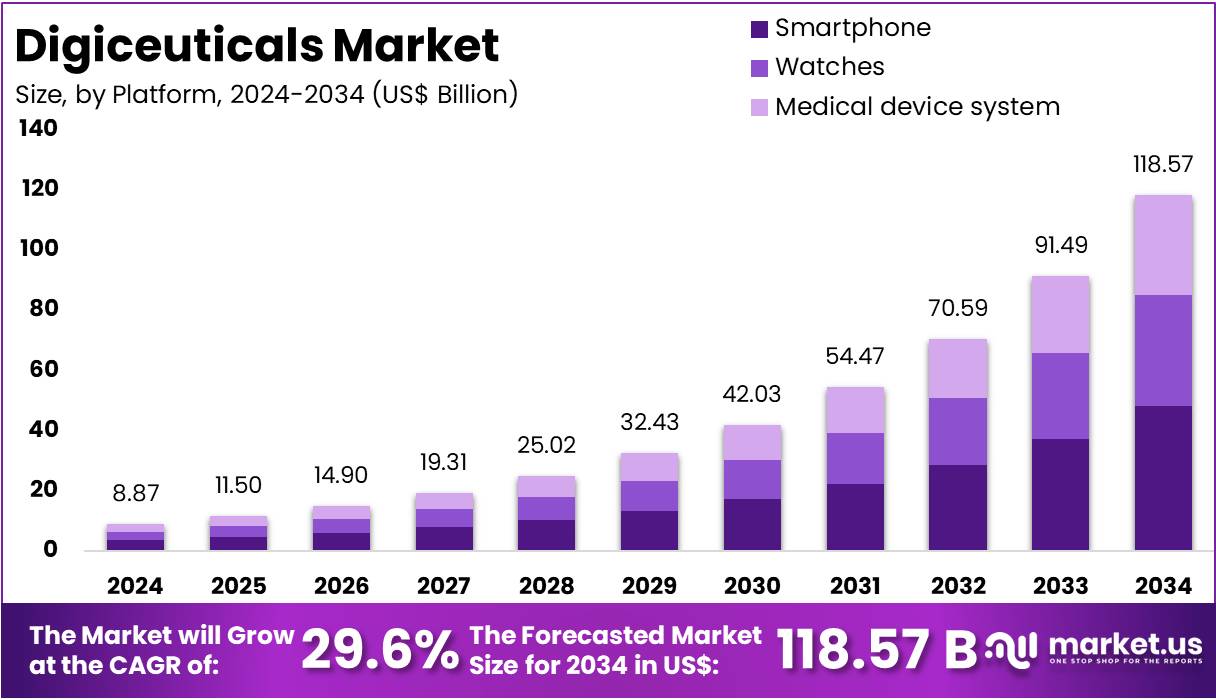
The Global Digiceuticals Market Size is expected to be worth around US$ 118.57 Billion by 2034, from US$ 8.87 Billion in 2024, growing at a CAGR of 29.6% during the forecast period from 2025 to 2034. North America held a dominant market position, capturing more than a 43.5% share and holds US$ 3.86 Billion market value for the year.
Digiceuticals are a new generation of evidence-based digital healthcare solutions designed to prevent, manage, or treat medical conditions using software-driven interventions. Unlike general wellness applications, digiceuticals are clinically validated and often prescribed or recommended by healthcare professionals to support patients with chronic diseases, mental health disorders, cardiovascular conditions, diabetes, respiratory illnesses, and neurological disorders.
These solutions typically operate through mobile applications, wearable devices, artificial intelligence, cloud-based platforms, and remote patient monitoring technologies to deliver personalized care and continuous health management.
The growing adoption of telehealth services, increasing smartphone penetration, and rising prevalence of chronic diseases are accelerating interest in digiceuticals worldwide. Healthcare providers are integrating these digital solutions into treatment pathways to improve patient adherence, enhance clinical outcomes, and reduce hospital admissions. Governments and regulatory agencies are also supporting digital health innovation by developing frameworks for the evaluation and approval of digital therapeutics.
Advancements in artificial intelligence, machine learning, and data analytics are enabling digiceuticals to provide real-time insights, adaptive treatment plans, and predictive health monitoring. Partnerships between technology companies, pharmaceutical manufacturers, and healthcare organizations are further driving product development and commercialization.
As healthcare systems continue to prioritize value-based care and patient-centered treatment, digiceuticals are expected to play an increasingly important role in improving healthcare accessibility, reducing treatment costs, and delivering scalable, data-driven solutions that complement conventional medical therapies across global healthcare markets.
Key Takeaways
- The Global Digiceuticals Market is expected to grow from US$8.87 billion in 2024 to US$118.57 billion by 2034, registering a robust CAGR of 29.6% during the forecast period.
- In 2024, the Smartphone segment led the Platform category, capturing over 40.7% of the market, driven by the increasing adoption of mobile health technologies.
- The Software segment dominated the Product Type category in 2024, accounting for more than 74.8% of the market, supported by the rising use of digital therapeutic solutions.
- Within the Application category, Diabetes Management held the largest market share of over 38.6% in 2024, fueled by the growing global burden of diabetes.
- The Business-to-Business (B2B) segment emerged as the leading Distribution Channel in 2024, securing 69.7% of the market owing to expanding collaborations between healthcare organizations and digital therapeutics providers.
- North America dominated the global Digiceuticals Market in 2024, accounting for 43.5% of the total market share and generating US$3.86 billion in revenue, supported by a well-established digital healthcare ecosystem.
Statistical Information
- In a 2025 randomized controlled trial, the Mebix digital therapeutic reduced HbA1c by 0.82 percentage points after 6 months, demonstrating measurable clinical effectiveness for digital therapeutics in diabetes management.
- The same 2025 mebix trial reported that more than 75% of participants continued using the digital therapeutic throughout the study, indicating strong long-term user adherence.
- A 2025 randomized multicenter trial of the ESYSTA digital application found an average HbA1c reduction of 0.48 percentage points after 6 months among insulin-treated diabetes patients.
- In the same 2025 ESYSTA study, the intervention achieved a 0.28 percentage-point greater HbA1c reduction than standard care in the per-protocol analysis.
- A 2025 randomized controlled trial evaluating the Vitadio mobile digital therapeutic reported an average HbA1c reduction of 0.8 percentage points after six months in the intervention group, compared with 0.3 percentage points in the control group.
- In the 2025 Vitadio trial, 77% of participants using the digital therapeutic achieved a clinically meaningful HbA1c reduction of at least 0.3%, compared with 52% receiving usual care.
- Also in the 2025 Vitadio trial, 11% of participants using the digital therapeutic achieved an HbA1c below 6.5%, while 0% of the control group reached this target.
- A 2025 systematic review and meta-analysis covering 19 randomized studies (3,264 participants) found that digital therapeutics reduced HbA1c by an average of 0.54 percentage points versus comparison groups.
Regional Analysis
In 2024, North America accounted for over 43.5% of the global digiceuticals market, reaching a market value of US$ 3.86 billion. The region’s leadership is driven by a supportive regulatory framework, strong reimbursement policies, and advanced digital healthcare infrastructure. The U.S. Food and Drug Administration (FDA) has established clear regulatory pathways for software-as-a-medical-device (SaMD) and digital therapeutics, encouraging faster product approvals and innovation. In addition, the Centers for Medicare & Medicaid Services (CMS) introduced new HCPCS G-codes under the 2025 Physician Fee Schedule for FDA-cleared digital mental health treatment devices, improving reimbursement opportunities and provider adoption.
The growing burden of chronic diseases and mental health disorders continues to increase demand for digital therapeutic solutions. Furthermore, widespread adoption of certified electronic health record (EHR) systems and FHIR-based interoperability standards enables seamless integration of digiceuticals into clinical workflows. Canada’s well-defined SaMD regulatory framework further supports regional market growth and facilitates cross-border commercialization across North America.
Emerging Trends
- AI-powered digital therapeutics are expanding rapidly. In 2025, the U.S. FDA released draft guidance for Artificial Intelligence-enabled Device Software Functions and finalized guidance for Predetermined Change Control Plans, supporting safer AI updates after approval. These frameworks are accelerating the development of adaptive digiceutical platforms for chronic disease management.
- Prescription-based software treatments are gaining clinical acceptance. Digital therapeutics are increasingly prescribed for conditions such as depression, insomnia, ADHD, and substance use disorders. Many programs deliver 6- to 12-week evidence-based interventions through smartphones, improving patient access while supporting conventional treatment.
- Remote patient monitoring is becoming a standard care model. Digiceuticals now integrate wearable sensors and mobile applications to collect continuous health data outside hospitals. FDA guidance encourages the use of digital health technologies for remote clinical data collection, supporting decentralized care and improving long-term patient monitoring.
- Cybersecurity and software lifecycle management are stronger priorities. In 2025, the FDA finalized cybersecurity guidance and strengthened expectations for secure software development, risk management, and post-market monitoring. These measures improve patient safety while increasing confidence in software-based medical treatments.
- Clinical evidence requirements continue to increase. Healthcare providers and regulators increasingly require randomized clinical trials and real-world evidence before adopting digiceuticals. NIH-supported research is expanding digital therapeutic studies across multiple mental and neurological disorders, improving confidence in treatment effectiveness.
Use Cases
- Mental health treatment through smartphone applications. Prescription digiceuticals provide cognitive behavioral therapy and structured digital exercises for depression, anxiety, and schizophrenia. Some FDA-authorized programs deliver daily therapy sessions over 6 weeks, helping patients continue treatment between clinical visits.
- Diabetes and chronic disease management. Mobile software combines glucose data, wearable monitoring, medication reminders, and personalized coaching. Continuous digital engagement helps improve adherence, supports lifestyle changes, and enables clinicians to monitor patients remotely through connected health platforms.
- Substance use disorder recovery support. FDA-authorized prescription software provides structured behavioral therapy with 67 interactive lessons over 12 weeks, helping patients remain engaged in outpatient treatment while allowing healthcare providers to monitor progress remotely.
- Clinical trial data collection. Digiceuticals are increasingly used in decentralized clinical trials to collect patient data remotely through smartphones and wearable devices. FDA guidance supports remote data acquisition, reducing clinic visits while improving participant convenience and study efficiency.
- Sleep disorder management. Digital therapeutics provide structured cognitive behavioral therapy for insomnia through software instead of medication. Evidence-based programs guide users through personalized sleep improvement plans over several weeks, increasing access to treatment while reducing dependence on traditional drug therapies.
Frequently Asked Questions on Digiceuticals
- Which medical conditions are commonly treated using digiceuticals?
Digiceuticals are widely used to support patients with diabetes, cardiovascular diseases, obesity, insomnia, anxiety, depression, asthma, chronic pain, and substance use disorders. These solutions provide personalized treatment plans, continuous monitoring, behavioral therapy, and medication adherence support through digital platforms. - What factors are driving the growth of the Digiceuticals Market?
The market is expanding due to increasing chronic disease prevalence, growing demand for remote patient monitoring, improved digital health infrastructure, supportive healthcare policies, widespread smartphone usage, and advancements in artificial intelligence, cloud computing, and wearable medical technologies that enhance patient care. - Which region leads the global Digiceuticals Market?
North America currently leads the Digiceuticals Market because of advanced healthcare infrastructure, favorable reimbursement initiatives, strong regulatory support for digital health, high healthcare spending, and widespread adoption of connected medical technologies by healthcare providers and patients. - Who are the major end users in the Digiceuticals Market?
Hospitals, specialty clinics, healthcare providers, pharmaceutical companies, employers, insurance companies, and individual patients are the primary end users. These organizations utilize digiceuticals to improve clinical outcomes, reduce healthcare costs, support disease management, and enhance long-term patient engagement. - How does artificial intelligence support digiceuticals?
Artificial intelligence improves digiceuticals by analyzing patient-generated health data, identifying disease patterns, delivering personalized recommendations, predicting health risks, and enabling timely clinical interventions. AI also enhances remote monitoring accuracy and supports healthcare providers in making informed treatment decisions. - How are wearable devices contributing to the Digiceuticals Market?
Wearable devices continuously collect health information such as heart rate, physical activity, sleep quality, blood glucose levels, and other physiological data. This real-time information helps digital therapeutic platforms deliver personalized care, improve monitoring, and encourage better patient adherence. - What is the future outlook for the Digiceuticals Market?
The Digiceuticals Market is expected to grow steadily as healthcare systems increasingly adopt digital-first care models. Continued innovation in AI, connected devices, remote monitoring, personalized medicine, and supportive regulatory frameworks will strengthen adoption across hospitals, clinics, and home healthcare settings.
Conclusion
The global Digiceuticals market is entering a phase of rapid expansion as healthcare systems increasingly adopt evidence-based digital therapies for chronic disease management, mental health, and preventive care. Rising smartphone penetration, growing demand for remote patient monitoring, and stronger regulatory support are accelerating market growth.
Software-based solutions continue to dominate due to their scalability, clinical effectiveness, and ease of integration with healthcare systems. North America remains the leading regional market, while Asia-Pacific is expected to witness significant future opportunities. Continued advances in artificial intelligence, connected devices, and personalized digital care will further strengthen the market’s long-term growth and innovation potential.
Discuss your needs with our analyst
Please share your requirements with more details so our analyst can check if they can solve your problem(s)




