


Overview
New York, NY – Sep 10, 2026 –The Global Small Bore Connectors Market size is expected to be worth around US$ 938.4 Million by 2034 from US$ 610.1 Million in 2024, growing at a CAGR of 4.4% during the forecast period 2025 to 2034. In 2024, North America led the market, achieving over 37.8% share with a revenue of US$ 230.6 Million.
The Small Bore Connectors Market is growing steadily due to increasing demand for safe and reliable fluid connection solutions in healthcare settings. These connectors are widely used in intravenous (IV) therapy, enteral feeding, respiratory care, dialysis, and catheter-based procedures. The adoption of standardized connector systems is increasing as healthcare providers focus on reducing medication errors and improving patient safety.
Small bore connectors designed according to ISO 80369 standards are becoming more common across hospitals and medical device manufacturers. These standards help prevent accidental misconnections between different medical delivery systems. The growing use of infusion pumps, catheters, and disposable medical devices is supporting demand for advanced connector technologies.
The rising prevalence of chronic diseases is creating significant opportunities for market expansion. According to the International Diabetes Federation (IDF), approximately 537 million adults worldwide were living with diabetes in 2021, with cases expected to increase to 643 million by 2030 and 783 million by 2045. The growing need for insulin delivery, medication administration, and monitoring devices is increasing the requirement for secure medical connectors.
The aging population is another important factor influencing market growth. The United Nations estimates that the global population aged 65 years and above will reach nearly 1.6 billion by 2050, increasing demand for long-term care, infusion therapies, and chronic disease management solutions.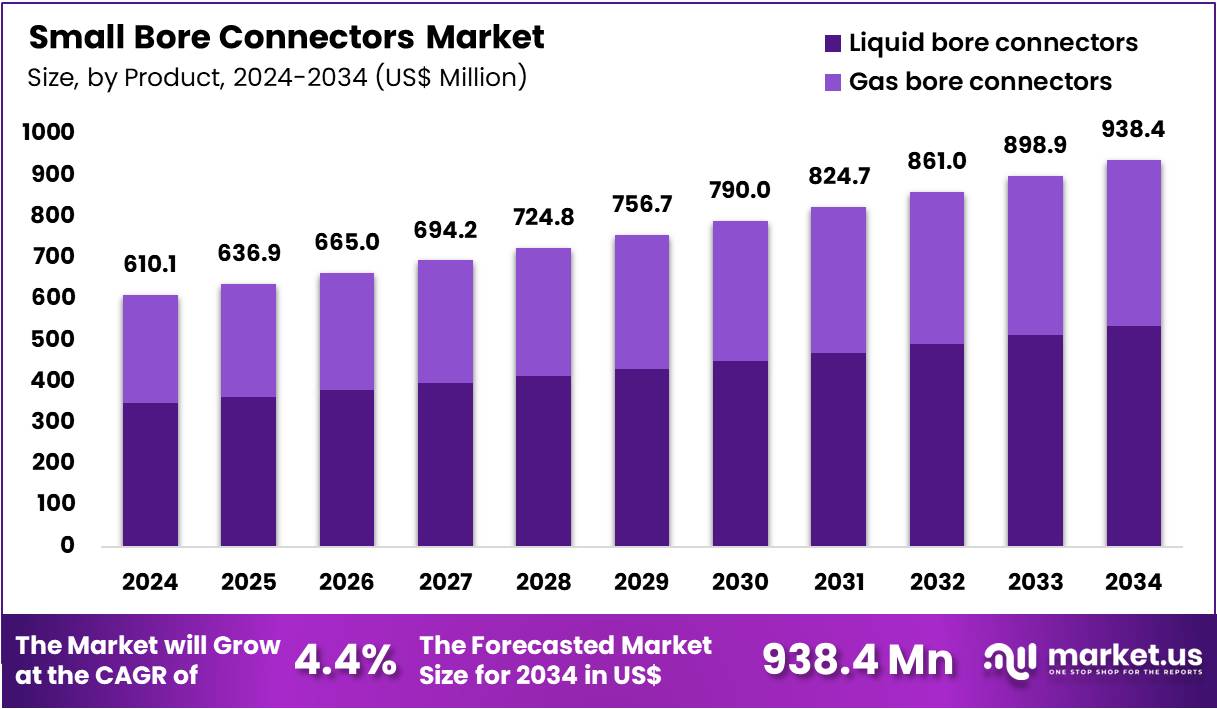
Key Takeaways
- In 2024, the Small Bore Connectors Market generated revenue of US$ 610.1 million and is projected to grow at a CAGR of 4.4%, reaching approximately US$ 938.4 million by 2034.
- Based on Product, the market is segmented into Liquid Bore Connectors and Gas Bore Connectors, with Liquid Bore Connectors accounting for the leading share of 57.1%.
- Based on Application, the market is categorized into Enteral, Intravascular, Respiratory, and Others, with the Intravascular segment holding the largest share of 29.4%.
- Based on End User, the market includes Hospitals, Home-care, and Others, with Hospitals representing the dominant segment with a 47.4% share.
- North America emerged as the leading regional market in 2024, capturing a significant market share of 37.8% due to advanced healthcare infrastructure and increasing adoption of medical safety technologies.
Statistical Information
- Expanding Global Medical Device Usage Supporting Connector Demand: Small bore connectors are used across a wide range of healthcare devices, including infusion systems, respiratory equipment, and enteral feeding devices. According to the World Health Organization (WHO), the global healthcare system uses approximately 2 million different medical device types, which are categorized into more than 7,000 generic device groups, creating a broad application base for connector technologies.
- Diabetes Growth Increasing Demand for Infusion-Based Medical Devices: The rising prevalence of diabetes is increasing the requirement for insulin delivery systems, infusion devices, and long-term disease management equipment that depend on secure connector technologies. The International Diabetes Federation (IDF) reported that approximately 537 million adults aged 20–79 years were living with diabetes in 2021, with cases projected to reach 643 million by 2030 and 783 million by 2045.
- Medical Technology Innovation Creating Future Connector Opportunities: Continuous growth in medical technology is increasing demand for advanced connector solutions used in treatment and monitoring devices. WHO estimates approximately 2 million medical device types globally, covering more than 7,000 categories, indicating significant long-term demand for components such as small bore connectors across healthcare applications.
- Aging Population Increasing Long-Term Medical Device Usage: The growing elderly population is increasing the requirement for chronic disease management devices, infusion systems, and home healthcare equipment that incorporate small bore connectors. According to the United Nations, the global population aged 65 years and older reached 761 million in 2021 and is projected to reach approximately 1.6 billion by 2050.
- Chronic Kidney Disease Increasing Dialysis Connector Requirements: Dialysis equipment requires secure fluid connection systems, including small bore connectors, to support safe patient treatment. The National Kidney Foundation reports that more than 850 million people worldwide are affected by kidney diseases, while approximately 2 million people globally receive dialysis treatment or kidney transplantation due to kidney failure.
- Cardiovascular Disease Burden Supporting Medical Device Usage: Cardiovascular treatments often involve catheterization, infusion, and monitoring systems that require reliable connector technologies. The World Health Organization (WHO) reports that cardiovascular diseases cause approximately 17.9 million deaths annually worldwide, representing about 32% of all global deaths.
- Diabetes Treatment Technology Increasing Connector Applications: The increasing use of insulin delivery devices and diabetes management technologies is supporting demand for specialized medical connection systems. The CDC reports that more than 38 million people in the United States have diabetes, including approximately 1.2 million Americans diagnosed with diabetes each year, increasing long-term healthcare device requirements.
- Aging Healthcare Needs Increasing Long-Term Medical Device Adoption: The rising elderly population is increasing demand for chronic care solutions, including infusion systems, respiratory devices, and home healthcare equipment. The U.S. Census Bureau reported that the U.S. population aged 65 years and older reached approximately 58 million people in 2022, increasing healthcare device utilization.
Regional Analysis
North America led the market by securing a market share of 37.8% in 2024.
North America dominated the Small Bore Connectors Market in 2024, accounting for 37.8% of the global market share. The region benefits from advanced healthcare infrastructure, high volumes of intravenous (IV), enteral, respiratory, and surgical procedures, and widespread adoption of standardized medical devices. The United States has been at the forefront of implementing ISO 80369 standards, with the U.S. FDA recognizing the ISO 80369 series since 2011 to reduce the risk of medical tubing misconnections and improve patient safety.
Strong regulatory oversight, hospital compliance programs, and continuous replacement of legacy connectors with standardized systems further support regional leadership. The Asia-Pacific region is expected to register the fastest growth during the forecast period. Rapid healthcare infrastructure expansion, increasing hospital admissions, rising prevalence of chronic diseases, and growing demand for home healthcare are driving adoption of safer connector technologies.
Many countries across the region are increasingly aligning medical device regulations with internationally recognized ISO 80369 standards, encouraging manufacturers and healthcare providers to adopt standardized small bore connectors for improved patient safety and compatibility.
Emerging Trends
- Growing Adoption of ISO 80369-Compliant Connectors: Healthcare providers are increasingly replacing legacy connectors with ISO 80369-compliant designs to reduce tubing misconnections and improve patient safety. The FDA first recognized the ISO 80369 series in 2011, and the standards were formally published in 2016, with updated editions continuing through 2025.
- Expansion of Standardized Enteral Connector Systems: Hospitals and medical device manufacturers are adopting standardized enteral connectors such as ISO 80369-3 (ENFit). The standard, first published in 2016 and confirmed in 2023, applies to enteral feeding sets, syringes, drainage sets, and access ports, improving patient safety during nutrition delivery.
- Higher Demand for Intravascular Connector Safety: Increasing intravenous therapies and vascular access procedures are driving adoption of safer intravascular connectors. ISO 80369-7:2021 establishes design requirements for IV and hypodermic connectors operating at pressures up to 300 kPa, reducing the likelihood of incorrect medical connections.
- More Rigorous Performance Testing for Connectors: Manufacturers are investing in stronger validation and testing processes. The FDA recognized ISO 80369-20:2024 in 2025, introducing updated common test methods for evaluating connector performance and safety before commercialization, supporting higher product quality and regulatory compliance.
- Growing Focus on Human Factors and Patient Safety: Healthcare organizations increasingly emphasize connector designs that are easier and safer to use. FDA guidance encourages manufacturers to assess misconnection risks and implement usability improvements before product approval, helping reduce medical errors in hospitals and home-care settings.
Use Cases
- Intravenous (IV) Therapy and Drug Delivery: Small bore connectors are extensively used in IV infusion systems for safe administration of medicines, blood products, and fluids. ISO 80369-7:2021 specifically supports connectors used with hypodermic syringes, IV cannulae, and vascular access devices to improve connection safety.
- Enteral Feeding Systems: Enteral feeding devices rely on dedicated small bore connectors to prevent accidental connections with IV or respiratory systems. ISO 80369-3 covers enteral feeding sets, enteral syringes, drainage systems, and patient access ports, helping improve nutritional therapy safety across healthcare facilities.
- Respiratory Therapy Equipment: Small bore connectors are widely used in oxygen delivery systems, ventilators, and breathing circuits. The ISO 80369 standards identify respiratory applications as a major healthcare area requiring dedicated connectors that reduce the risk of incompatible tubing connections.
- Home Healthcare and Long-Term Care: The increasing use of home infusion pumps, enteral feeding devices, and respiratory equipment is expanding demand for standardized connectors. FDA guidance supports manufacturers in developing safer connectors that help patients and caregivers reduce the risk of tubing misconnections outside hospital settings.
- Medical Device Manufacturing and Regulatory Compliance: Manufacturers are integrating ISO 80369-compliant connectors into new medical devices to meet FDA-recognized standards. The latest ISO 80369-1:2025 applies to multiple healthcare applications, including respiratory, enteral, intravascular, neural, and limb cuff inflation systems, supporting global product standardization.
Frequently Asked Questions on Small Bore Connectors
- Why are ISO 80369 standards important for small bore connectors?
ISO 80369 standards establish design and performance requirements for small bore connectors used in different medical applications. These standards help prevent incompatible medical tubing connections, reduce medication errors, and improve patient safety, making them an essential requirement for many healthcare providers and medical device manufacturers. - Which product segment dominates the Small Bore Connectors Market?
Liquid bore connectors account for the largest product share because they are extensively used in intravenous therapy, infusion systems, catheter-based treatments, and medication delivery. Their widespread use in hospitals and outpatient care continues to support strong demand across developed and emerging healthcare markets. - Which application holds the largest market share?
The intravascular application segment holds the largest share because of the increasing use of IV therapy, vascular access devices, and infusion pumps. Growing surgical procedures, emergency care, and chronic disease treatments continue to increase demand for reliable intravascular connector systems worldwide. - Which end-user segment contributes the highest revenue?
Hospitals represent the largest end-user segment because they perform high volumes of surgeries, infusion therapies, intensive care treatments, and respiratory procedures. Their strict compliance with patient safety regulations and standardized medical device protocols drives consistent demand for small bore connectors. - Why does North America lead the Small Bore Connectors Market?
North America leads the market because of its advanced healthcare infrastructure, widespread implementation of FDA-recognized ISO 80369 standards, high procedural volumes, and strong regulatory oversight. Continuous investments in patient safety initiatives and modern medical technologies further strengthen regional market leadership. - Why is Asia-Pacific expected to grow at the fastest rate?
Asia-Pacific is projected to experience the highest growth due to expanding healthcare infrastructure, increasing healthcare expenditure, rising chronic disease burden, and greater adoption of international medical device standards. Growing demand for home healthcare and hospital modernization is also accelerating market expansion across the region. - What role does home healthcare play in market growth?
The increasing preference for home-based treatment is creating strong demand for safe and easy-to-use connector systems. Patients requiring long-term infusion therapy, respiratory support, and enteral nutrition increasingly depend on standardized connectors that provide reliable performance outside traditional hospital settings. - What technological advancements are shaping the market?
Manufacturers are developing needle-free connectors, antimicrobial connector materials, leak-resistant locking mechanisms, and advanced polymer designs to improve safety, durability, and infection prevention. These innovations help healthcare providers reduce complications while meeting evolving international regulatory standards.
Conclusion
The Small Bore Connectors Market is expected to witness steady growth, supported by increasing emphasis on patient safety, regulatory compliance, and the adoption of standardized medical device connectors. Rising volumes of intravenous, enteral, respiratory, and dialysis procedures, along with the growing prevalence of chronic diseases, continue to drive demand across healthcare settings.
Advancements in connector design, including needle-free and leak-resistant technologies, are improving clinical outcomes and reducing the risk of medical misconnections. North America remains the leading regional market due to strong regulatory frameworks, while Asia-Pacific is emerging as the fastest-growing region because of expanding healthcare infrastructure, increasing healthcare investments, and wider adoption of international safety standards.
Discuss your needs with our analyst
Please share your requirements with more details so our analyst can check if they can solve your problem(s)




