


Overview
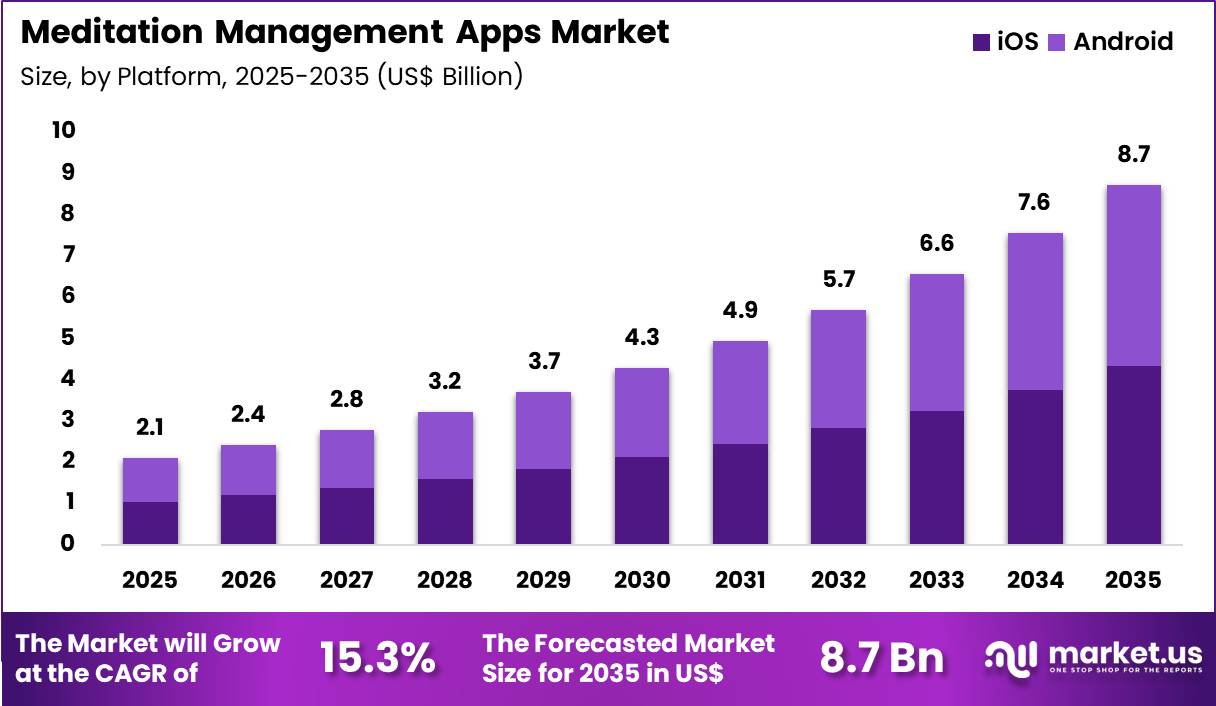
New York, NY – Nov 04 2026 – The Global Meditation Management Apps Market size is expected to be worth around US$ 8.7 Billion by 2035 from US$ 2.1 Billion in 2025, growing at a CAGR of 15.3% during the forecast period 2026-2035. In 2025, North America led the market, achieving over 41.4% share with a revenue of US$ 0.9 Billion.
Meditation Management Apps are digital platforms designed to support mental wellness through guided meditation, mindfulness exercises, breathing techniques, and relaxation programs. These applications help users manage daily stress, improve sleep quality, and develop healthy mindfulness habits. They are available on smartphones, tablets, and other connected devices, making meditation more accessible and convenient.
The market is gaining momentum as awareness of mental health and emotional well-being continues to increase. Rising stress levels, busy lifestyles, and growing interest in self-care are encouraging consumers to adopt digital meditation solutions. These apps offer features such as personalized meditation sessions, sleep stories, progress tracking, mood monitoring, and AI-powered recommendations.
Growing smartphone penetration and internet access are further supporting market expansion. Subscription-based services and free app versions are also attracting users across different age groups. In addition, employers and healthcare organizations are increasingly exploring meditation applications to support employee wellness and promote preventive mental healthcare.
Technological advancements, personalized content, and integration with wearable devices are expected to create new growth opportunities. As consumers increasingly prioritize mental wellness, Meditation Management Apps are becoming an important part of the digital health and wellness ecosystem.
Key Takeaways
- In 2025, the Meditation Management Apps Market generated US$ 2.1 Billion in revenue and is projected to reach US$ 8.7 Billion by 2035, growing at a CAGR of 15.3% during the forecast period.
- Based on platform, the market is segmented into iOS and Android. Among these, the iOS segment dominated, accounting for a market share of 49.6%.
- By revenue model, the market is categorized into free (freemium) and paid segments. The free (freemium) segment led the market, capturing a significant share of 62.2%.
- Based on deployment type, the market is divided into cloud-based and on-premise solutions. The cloud-based segment dominated, accounting for the largest revenue share of 56.5%.
- By application, the market is segmented into anxiety and stress management, improved mental health, relaxation and focus improvement, and sleep management. The anxiety and stress management segment dominated, capturing a revenue share of 56.0%.
- Regionally, North America dominated the Meditation Management Apps Market, securing a leading market share of 41.4%.
Key Market Segments
- Platform Analysis: The iOS segment dominated the platform category, accounting for 49.6% of the market. Its leadership is supported by strong adoption of premium smartphones and higher spending on digital subscriptions. Seamless payment options, wearable device integration, and advanced privacy features further encourage users to adopt meditation apps and maintain regular mindfulness routines.
- Revenue Model Analysis: The free (freemium) segment dominated the revenue model category, capturing a 62.2% market share. Its growth is driven by easy access to basic meditation services without upfront costs. Free guided sessions attract new users, while premium upgrades, personalized programs, and additional wellness features encourage subscription purchases over time.
- Deployment Type Analysis: The cloud-based segment held the leading position in the deployment category, accounting for 56.5% of the market. Its dominance is supported by easy access, flexible storage, and cross-device synchronization. Cloud infrastructure also enables faster content updates, seamless streaming, and improved scalability, making it suitable for expanding digital wellness platforms.
- Application Analysis: The anxiety and stress management segment dominated the application category, securing a 56.0% market share. Rising workplace pressure, busy lifestyles, and growing mental wellness awareness are driving demand. Guided meditation, breathing exercises, and mindfulness programs help users manage everyday stress, supporting the adoption of meditation management applications.
Regional Analysis
North America is leading the Meditation Management Apps Market
North America dominated the Meditation Management Apps Market, accounting for a 41.4% market share in 2024. Growth is driven by rising mental wellness awareness and increasing adoption of digital self-care solutions.
Employers are introducing meditation subscriptions to reduce workplace stress and improve employee well-being. Growing smartphone penetration, wearable device integration, and higher spending on premium app subscriptions further support regional growth.
Healthcare providers also encourage guided meditation for stress management, sleep improvement, and emotional wellness. According to the National Institute of Mental Health, 22.8% of U.S. adults experienced mental illness in 2022, highlighting the need for accessible mental wellness solutions.
Asia Pacific is expected to register the highest CAGR during the forecast period
Asia Pacific is expected to witness strong growth due to rising stress levels, urbanization, and expanding smartphone adoption. Affordable internet access, localized meditation content, and digital wellness initiatives are improving market penetration. Growing awareness of mental health support is further encouraging adoption across emerging economies.
Emerging Trends
- AI-Based Personalized Meditation Programs: Meditation apps are increasingly focusing on personalized experiences. Artificial intelligence can help recommend meditation sessions based on user preferences, goals, and activity patterns. This approach helps users select suitable exercises for relaxation, sleep, and stress management. The National Institute of Mental Health highlights the importance of engaging and user-friendly digital mental health tools.
- Integration with Wearable Devices: App developers are exploring connections with smartwatches and fitness trackers. These devices can provide information about heart rate, sleep patterns, and physical activity. Meditation apps can use this information to offer relevant relaxation sessions. This trend supports more connected and personalized digital wellness experiences.
- Growing Demand for Sleep Meditation Content: Sleep-related meditation is becoming an important feature in wellness applications. Developers are introducing sleep stories, calming music, breathing exercises, and guided relaxation sessions. These features help users establish bedtime routines and improve sleep-related wellness. The NIH identifies better sleep as one of the common reasons people practice mindfulness.
- Greater Focus on Data Privacy and App Safety: Users are becoming more concerned about how wellness applications collect and store personal information. Developers are placing greater importance on privacy settings, transparent data policies, and secure information handling. The National Center for Complementary and Integrative Health advises users to review app permissions and data safety information before downloading health applications.
- Combination of Digital and Human-Guided Support: Meditation platforms are exploring services that combine automated sessions with support from trained professionals. This approach can improve user engagement and provide additional guidance when needed. A U.S. National Institute of Mental Health-funded research project starting in 2025 is examining how human support can be integrated into meditation apps for depression and anxiety.
Use Cases
- Workplace Stress Management: Organizations are using digital wellness solutions to support employee mental well-being. Meditation apps provide guided breathing, short relaxation sessions, and mindfulness exercises during working hours. These tools can help employees manage daily work pressure and develop healthier routines. WHO recommends workplace interventions that build skills to manage stress and improve mental health.
- Personal Mental Wellness Management: Individuals use meditation applications to manage everyday stress and improve emotional well-being. These platforms offer guided meditation, breathing exercises, and mindfulness activities. Users can access sessions according to their schedules and personal preferences. Such applications provide complementary wellness support alongside regular healthcare when required.
- Sleep Improvement Programs: Meditation apps are useful for people who experience difficulty maintaining healthy sleep routines. Users can access bedtime meditation, relaxing sounds, and guided breathing sessions. These features encourage relaxation before sleeping and help establish consistent bedtime habits. Sleep improvement remains an important reason for adopting meditation practices.
- Healthcare and Patient Wellness Support: Healthcare providers can introduce meditation applications as complementary wellness resources for patients. These platforms offer structured mindfulness exercises and relaxation sessions. They may support patients dealing with stress during treatment and recovery. However, meditation applications should not replace prescribed treatment or professional medical advice.
- Educational Institutions and Student Wellness: Schools, colleges, and universities can use meditation applications to support student wellness programs. Students can practice guided breathing and mindfulness exercises during study breaks. These activities may help them manage academic pressure, improve relaxation, and develop healthy daily habits. Digital access also makes these exercises easier to include in student wellness initiatives.
Frequently Asked Questions About Meditation Management Apps
- What are the main benefits of Meditation Management Apps?
These applications provide convenient access to meditation and relaxation exercises. They can help users manage everyday stress, improve mindfulness, and establish better sleep routines. However, their benefits may vary depending on individual needs and consistent usage. - How do Meditation Management Apps work?
Meditation Management Apps offer audio, video, and interactive sessions that guide users through different mindfulness practices. Users select their preferred activities, follow instructions, and track their progress through daily reminders, session histories, and personalized recommendations. - Who uses Meditation Management Apps?
Meditation Management Apps are used by working professionals, students, fitness enthusiasts, and individuals interested in personal wellness. Healthcare providers and organizations may also recommend these applications as complementary resources for relaxation, mindfulness, and everyday stress management. - What features are commonly available in Meditation Management Apps?
Common features include guided meditation, breathing exercises, sleep stories, calming music, progress tracking, daily reminders, and personalized programs. Some applications also offer wearable device connectivity, offline sessions, and subscription-based access to premium wellness content. - What is driving the growth of the Meditation Management Apps Market?
Market growth is driven by rising mental wellness awareness, increasing smartphone usage, and growing demand for convenient relaxation solutions. Greater interest in digital healthcare, workplace wellness programs, and personalized meditation content is also supporting market adoption. - What opportunities are emerging in the Meditation Management Apps Market?
Emerging opportunities include wearable device integration, AI-based personalization, corporate wellness subscriptions, and multilingual meditation content. Growing interest in digital wellness across developing economies also creates opportunities for affordable applications and locally relevant meditation programs. - What is the future outlook for the Meditation Management Apps Market?
The future outlook remains promising as consumers increasingly adopt digital wellness solutions. Advancements in artificial intelligence, wearable technology, and personalized meditation programs are expected to create new opportunities. Workplace wellness and healthcare integration may further support market expansion.
Conclusion
The Meditation Management Apps Market is experiencing strong growth, driven by rising mental wellness awareness, increasing smartphone adoption, and growing demand for digital self-care solutions. The market is projected to reach US$ 8.7 Billion by 2035, growing at a CAGR of 15.3% during the forecast period.
Free (freemium), iOS, and cloud-based segments continue to support market expansion. North America holds a leading position, while Asia Pacific offers significant growth opportunities. Furthermore, AI-powered personalization, wearable integration, and workplace wellness programs are creating new opportunities. Increasing demand for accessible meditation solutions is expected to strengthen the market’s long-term growth.
Discuss your needs with our analyst
Please share your requirements with more details so our analyst can check if they can solve your problem(s)



