


Overview
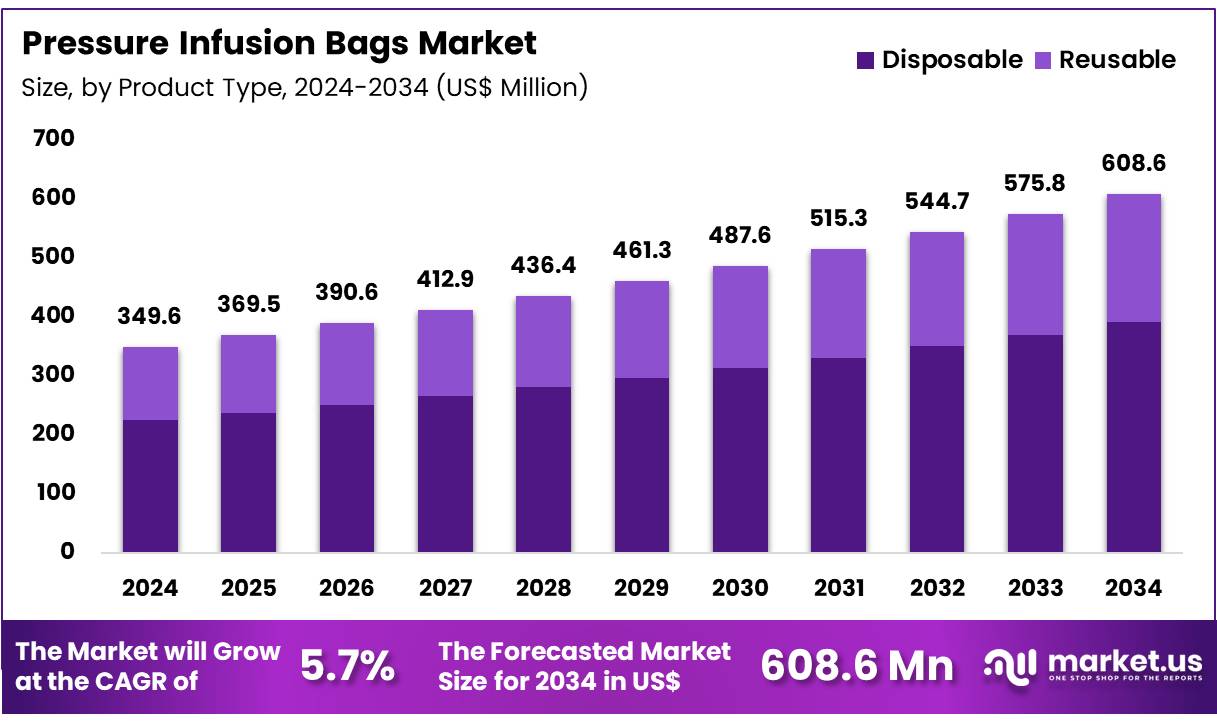
The Global Pressure Infusion Bags Market size is expected to be worth around US$ 608.6 Million by 2034 from US$ 349.6 Million in 2024, growing at a CAGR of 5.7% during the forecast period from 2025 to 2034. In 2024, North America led the market, achieving over 35.6% share with a revenue of US$ 124.5 Million.
The Pressure Infusion Bags Market is witnessing steady growth due to rising demand for rapid fluid administration in emergency care, surgical procedures, trauma management, and critical care settings. Pressure infusion bags are medical devices designed to deliver intravenous fluids, blood, and other solutions under controlled pressure, helping healthcare professionals maintain faster and more efficient infusion rates during critical situations.
Increasing surgical volumes, growing emergency department visits, and the rising prevalence of chronic diseases are key factors supporting market expansion. According to global health estimates, millions of surgical procedures are performed annually, creating continuous demand for reliable infusion technologies. Pressure infusion bags are widely used in hospitals, ambulatory surgical centers, and military healthcare facilities where quick fluid replacement is essential.
The market is driven by technological advancements such as reusable and disposable pressure infusion systems, improved pressure monitoring mechanisms, and lightweight designs that enhance portability. Many modern pressure infusion bags support pressures up to 300 mmHg, enabling faster delivery of fluids compared with conventional gravity-based infusion methods.
The growing adoption of blood transfusion procedures is also contributing to demand, as healthcare facilities require efficient solutions for managing blood components and intravenous therapies. With increasing healthcare infrastructure investments, especially in emerging economies, the pressure infusion bags market is expected to expand further.
Manufacturers are focusing on product innovation, safety improvements, and cost-effective solutions to meet the needs of hospitals and emergency medical services. The rising emphasis on patient safety, faster treatment response, and advanced critical care practices will continue to create growth opportunities in the global pressure infusion bags industry.
Key Takeaways
- Market Size: The Global Pressure Infusion Bags Market is projected to reach approximately US$ 608.6 million by 2034, increasing from US$ 349.6 million in 2024, driven by rising demand for efficient fluid and blood administration systems.
- Market Growth: The market is expected to expand at a CAGR of 5.7% from 2025 to 2034, supported by increasing surgical procedures, emergency care requirements, and the adoption of advanced infusion technologies.
- Product Type Analysis: The disposable pressure infusion bags segment dominated the market in 2024, accounting for 64.3% of the global market share, due to their convenience, hygiene benefits, and reduced risk of cross-contamination.
- Material Analysis: The nylon segment held the leading position in 2024, capturing 46.1% of the market share, owing to its durability, flexibility, and resistance to pressure during infusion procedures.
- Capacity Analysis: The 500 ml pressure infusion bags segment represented the largest market share in 2024, accounting for approximately 48.9%, due to its widespread use in routine fluid and blood infusion applications.
- Sterility Analysis: The non-sterile pressure infusion bags segment dominated the market in 2024, holding 61.1% of the total share, mainly due to their extensive use in reusable and controlled clinical settings.
- Age Group Analysis: The adult segment accounted for the largest market share in 2024, representing 76.4%, driven by higher demand for infusion procedures among adult patients.
- Application Analysis: The blood and drug infusion segment led the market in 2024, capturing 71.2% of the global share, supported by increasing utilization in hospitals, emergency care, and surgical procedures.
- End-Use Analysis: Hospitals and clinics dominated the end-use segment in 2024, accounting for approximately 59.0% of the global market share, due to their high volume of infusion-based treatments.
- Regional Analysis: North America emerged as the leading region in 2024, capturing more than 35.6% of the global market share with a market value of approximately US$ 124.5 million, supported by advanced healthcare infrastructure and high adoption of medical devices
Statistical Information
- Pressure infusion bags are available with 500 mL, 1,000 mL, and 3,000 mL fluid bag capacities in commercial medical devices, supporting different emergency and infusion volume requirements.
- Disposable pressure infusion bags can include pressure gauges calibrated across a 0–300 mmHg monitoring range, allowing clinicians to monitor applied pressure during infusion procedures.
- Pressure infusion bag safety valves can provide automatic pressure release at approximately 320 mmHg, reducing the risk of excessive inflation during operation.
- Commercial pressure infusers can operate with standard pressure settings up to 300 mmHg, while over-pressure modes can allow controlled operation between 300–450 mmHg for rapid infusion applications.
- A 2026 experimental portable positive-pressure infusion device used a pressure regulation system with an adjustable output range of 0–40 kPa for controlled fluid delivery.
- The same 2026 device study reported that delivering 500 mL of liquid consumed 2.5 g of gas, and a 90 g gas cylinder could support operation for up to 36 bags of 500 mL infusion.
- In a 2026 preclinical safety evaluation, mean peak infusion pressures were measured at 58.4 ± 2.41 mmHg for the experimental pressure infusion device and 56.4 ± 2.07 mmHg for the control pressure infuser group.
- A disposable pressure infusion bag product listed in the FDA Global Unique Device Identification Database is designed with a 3,000 mL capacity and identified as a single-use medical device.
Regional Analysis
In 2024, North America accounted for more than 35.6% of the Pressure Infusion Bags market, supported by advanced healthcare infrastructure, increasing emergency care requirements, and strong adoption of medical technologies. The region’s hospitals and emergency departments widely utilize fluid management systems for trauma care, surgeries, and critical care applications.
The U.S. healthcare system maintains extensive hospital-based data monitoring through programs such as the CDC’s National Hospital Care Survey, which tracks inpatient, emergency, and outpatient care trends.
The demand for pressure infusion bags is further supported by the high volume of emergency care services, with U.S. emergency departments recording 155.4 million visits, including 3.1 million critical care admissions.
Rising surgical needs, infection prevention awareness, and preference for disposable medical devices continue to strengthen adoption. Advanced regulatory standards and healthcare modernization initiatives are expected to maintain North America’s leading position in the global Pressure Infusion Bags market.
Emerging Trends
- Rising Adoption in Emergency and Trauma Care: Pressure infusion bags are increasingly used in emergency departments and trauma centers for rapid fluid and blood administration. Growing demand for immediate volume replacement in critical situations is driving adoption. WHO reports that around 120 million blood donations are collected each year globally, supporting the need for efficient transfusion equipment.
- Increasing Demand for Disposable Pressure Infusion Bags: Healthcare facilities are shifting toward disposable pressure infusion bags to minimize infection risks and improve patient safety. Single-use devices help reduce cross-contamination during fluid and blood delivery procedures. Infection prevention remains a major healthcare priority, with the WHO emphasizing safe medical device practices across hospitals and clinics.
- Growth of Portable Infusion Systems for Prehospital Care: Portable pressure infusion solutions are gaining importance in ambulances, military healthcare, and disaster response settings. These systems enable faster fluid delivery before patients reach hospitals. Emergency medical services are increasingly adopting compact devices to improve trauma response times and support critical care outside traditional healthcare facilities.
- Integration With Advanced Fluid Management Technologies: Manufacturers are focusing on improved pressure control mechanisms, lightweight designs, and compatibility with modern infusion systems. Advanced pressure monitoring features help healthcare professionals maintain controlled fluid flow during surgeries and emergency treatments, improving operational efficiency in intensive care units and operating rooms.
- Expansion of Blood Management Programs: Hospitals are strengthening blood management strategies to reduce transfusion complications and improve resource utilization. Pressure infusion bags support controlled blood delivery during major surgeries, trauma care, and critical procedures. WHO highlights blood safety programs as essential components of healthcare systems, with 168 countries participating in global blood safety monitoring activities.
Use Cases
- Emergency Trauma and Accident Care: Pressure infusion bags are widely used in trauma cases involving severe blood loss, accidents, and emergency surgeries. They provide rapid delivery of fluids and blood components when immediate intervention is required. Trauma centers rely on these devices to support faster patient stabilization during critical conditions.
- Cardiovascular and Major Surgical Procedures: During cardiovascular surgeries, organ transplantation, and complex operations, pressure infusion bags help maintain continuous fluid and blood flow. These devices support surgeons and anesthesiology teams by ensuring controlled administration during procedures where maintaining blood volume is essential for patient safety.
- Obstetric Emergency Management: Pressure infusion bags play an important role in managing postpartum hemorrhage and other maternal emergencies requiring rapid fluid replacement. WHO identifies postpartum hemorrhage as a major cause of maternal mortality, making quick access to transfusion and infusion equipment essential in maternity care facilities.
- Intensive Care Unit (ICU) Applications: ICUs use pressure infusion bags for critically ill patients requiring rapid fluid administration, including those with shock, severe infections, or major injuries. The devices help healthcare professionals deliver fluids efficiently while maintaining required pressure levels during intensive monitoring and treatment.
- Military, Disaster Relief, and Remote Healthcare: Pressure infusion bags are valuable in military medicine, disaster response, and rural healthcare environments where immediate treatment is needed. Portable designs allow healthcare teams to provide emergency fluid and blood administration in locations with limited medical infrastructure, improving survival chances during mass casualty events.
Frequently Asked Questions on the Pressure Infusion Bags
- What are the advantages of using pressure infusion bags?
Pressure infusion bags provide faster fluid delivery, improved control during transfusion procedures, reduced manual effort, and enhanced efficiency in critical care settings. They help healthcare professionals manage urgent medical conditions where maintaining rapid and consistent fluid flow is necessary. - How does the pressure infusion bags market grow?
The pressure infusion bags market growth is driven by increasing surgical procedures, rising emergency medical requirements, growing trauma cases, and expanding hospital infrastructure. Demand is also increasing due to greater adoption of disposable medical devices focused on infection prevention. - Are pressure infusion bags reusable or disposable?
Pressure infusion bags are available in both reusable and disposable formats. Disposable pressure infusion bags are gaining popularity because they minimize contamination risks, support infection control practices, and reduce the need for cleaning and sterilization after each use. - Which industries or healthcare sectors use pressure infusion bags?
Pressure infusion bags are primarily used in hospitals, emergency medical services, military healthcare facilities, blood banks, and surgical centers. These devices support rapid transfusion and fluid replacement procedures in critical care and emergency treatment environments. - What factors influence demand for pressure infusion bags?
Demand for pressure infusion bags is influenced by rising healthcare expenditure, increasing number of surgeries, growing emergency response systems, higher prevalence of chronic diseases, and technological improvements in medical infusion and fluid management equipment. - What are the key types of pressure infusion bags available in the market?
The pressure infusion bags market includes disposable and reusable products, with disposable variants widely adopted due to their convenience and safety benefits. Products also vary based on capacity, material quality, pressure range, and compatibility with infusion systems. - What is the future outlook for the pressure infusion bags market?
The future of the pressure infusion bags market looks positive due to increasing demand for emergency medical devices, expanding healthcare facilities, and rising focus on patient safety. Innovations in lightweight materials and advanced infusion technologies are expected to support market growth.
Conclusion
The global pressure infusion bags market is expected to witness steady growth, supported by increasing surgical procedures, rising demand for rapid fluid and blood administration, and expanding critical care requirements. The growing adoption of disposable medical devices, advanced healthcare infrastructure, and the need for efficient infusion solutions are strengthening market opportunities.
Hospitals, emergency care units, and transfusion centers remain key application areas due to their reliance on controlled pressure delivery systems. With continuous improvements in material durability, safety features, and infection control standards, pressure infusion bags are positioned to play an important role in modern healthcare delivery.
Discuss your needs with our analyst
Please share your requirements with more details so our analyst can check if they can solve your problem(s)




