
Overview
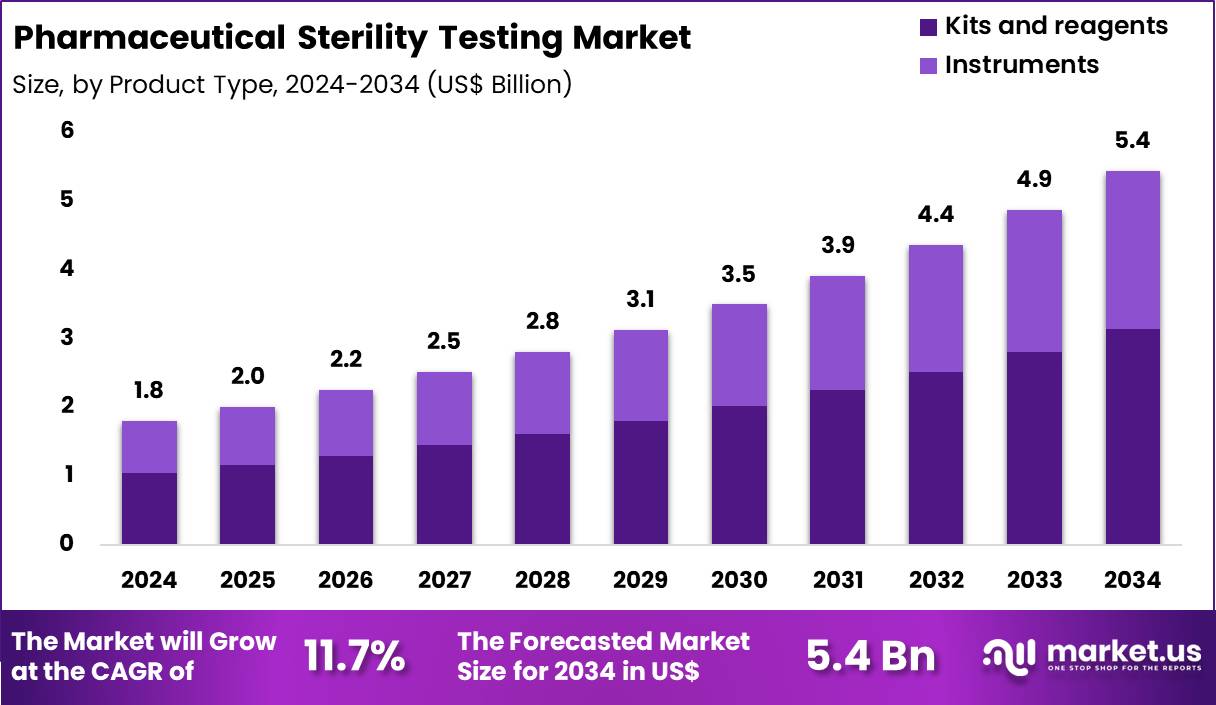
New York, NY – Oct 15, 2026 – The Global Pharmaceutical Sterility Testing Market size is expected to be worth around US$ 5.4 Billion by 2034 from US$ 1.8 Billion in 2024, growing at a CAGR of 11.7% during the forecast period 2025 to 2034. In 2024, North America led the market, achieving over 48.8% share with a revenue of US$ 0.9 Billion.
Pharmaceutical sterility testing is a critical quality control process used to determine whether pharmaceutical products are free from viable contaminating microorganisms. It plays an essential role in ensuring the safety, quality, and reliability of sterile medicines, including injectable drugs, vaccines, ophthalmic products, and intravenous solutions.
The pharmaceutical sterility testing market is driven by the increasing production of biologics, vaccines, and injectable formulations, along with stringent regulatory requirements for pharmaceutical manufacturing. Growing investments in pharmaceutical research and development, rising demand for sterile drug products, and the expansion of biopharmaceutical manufacturing facilities are further supporting market growth.
Technological advancements, including automated sterility testing systems, rapid microbiological methods, and improved laboratory testing solutions, are helping manufacturers enhance testing efficiency, reduce turnaround times, and strengthen contamination control. In addition, the growing adoption of contract testing services is creating opportunities for specialized testing laboratories and service providers.
However, high testing costs, complex validation procedures, and the need for skilled professionals may present challenges to market expansion. Regulatory compliance and maintaining aseptic manufacturing environments remain key priorities across the industry.
Overall, the pharmaceutical sterility testing market is expected to benefit from continued pharmaceutical innovation, increasing quality assurance requirements, and the growing emphasis on patient safety. Companies investing in advanced testing technologies and efficient laboratory services are likely to strengthen their competitive position in this evolving market.
Key Takeaways
- In 2024, the market was valued at US$ 1.8 billion and is projected to reach US$ 5.4 billion by 2034, expanding at a CAGR of 11.7%.
- By product type, the market is segmented into kits & reagents and instruments, with kits & reagents dominating with a 57.6% market share.
- Based on test type, the market includes bioburden testing, sterility testing, bacterial endotoxin testing, ATP bioluminescence, fluorescent labeling, and others. Bioburden testing accounted for a significant share of 34.8%.
- By application, the market is categorized into sterile drugs, biologics and therapeutics, and medical devices. The sterile drugs segment led the market with a 41.9% revenue share.
- By service type, the market is divided into outsourced and in-house services, with outsourced services holding the leading share of 62.3%.
- By end-user, the market comprises medical device companies, compounding pharmacies, and pharmaceutical companies. Medical device companies accounted for a significant market share of 39.5%.
- Regionally, North America dominated the market with a 48.8% share, supported by its established pharmaceutical industry and stringent quality control requirements.
Key Market Segments
- Product Type Analysis: Kits and reagents dominated the product type segment with a 57.6% share in 2024. Their demand is supported by frequent testing requirements, regulatory compliance, consistent testing outcomes, and growing pharmaceutical manufacturing. Ready-to-use kits further improve laboratory efficiency and operational productivity.
- By Test Type Analysis: Bioburden testing accounted for 34.8% of the test type segment in 2024. Its adoption is driven by the need to monitor microbial contamination before sterilization, improve process control, support sterilization validation, and meet regulatory requirements across pharmaceutical and medical device manufacturing.
- Application Analysis: Sterile drugs dominated the application segment with a 41.9% share in 2024. Demand is driven by stringent sterility requirements for injectable and ophthalmic products, expanding pharmaceutical production, increasing contamination control measures, and regulatory compliance throughout manufacturing and product release processes.
- Services Analysis: Outsourced services led the services segment with a 62.3% share in 2024. Growth is supported by access to specialized expertise, reduced laboratory investment, flexible testing capacity, and regulatory compliance requirements. Pharmaceutical manufacturers increasingly rely on external laboratories to improve operational efficiency.
- End-User Analysis: Medical device companies accounted for 39.5% of the end-user segment in 2024. Demand is driven by stringent sterilization validation requirements, high production volumes, regulatory compliance, contamination control, and the need for documented sterility assurance throughout medical device manufacturing and product development.
Regional Analysis
North America Market Analysis
North America dominated the Pharmaceutical Sterility Testing Market in 2024, accounting for 48.8% of the global market share. Regional growth was driven by increasing production of sterile injectables, vaccines, biologics, and advanced therapies.
Stringent regulatory requirements, particularly from the U.S. Food and Drug Administration (FDA), encouraged pharmaceutical manufacturers to adopt validated microbial testing methods. Growing outsourcing activities, increased emphasis on patient safety, and the adoption of rapid microbiology technologies further supported market expansion. These factors strengthened demand for reliable sterility testing across pharmaceutical manufacturing operations.
Asia Pacific Market Analysis
Asia Pacific is expected to register the highest CAGR during the forecast period, supported by expanding pharmaceutical manufacturing and biologics production. Government initiatives promoting domestic drug manufacturing, rising exports of injectables and biosimilars, and investments in modern laboratory infrastructure are driving regional demand.
The expansion of contract development and manufacturing organizations (CDMOs) is further increasing testing requirements. Additionally, growing vaccine production, improved laboratory automation, and stricter adherence to international quality standards are expected to create significant growth opportunities across the region.
Emerging Trends
- Growing adoption of rapid microbiological methods: Rapid microbiological methods are gaining attention because they can provide earlier indications of microbial contamination than conventional culture-based testing. Their adoption may improve laboratory productivity and support faster batch-release decisions, provided the alternative methods are properly validated. The FDA identifies these technologies as an opportunity to improve operational feedback and manufacturing efficiency.
- Automation of sterility testing processes: Pharmaceutical laboratories are increasingly interested in automated testing equipment and controlled testing environments to reduce manual handling, improve consistency, and limit contamination risks. This trend supports demand for automated instruments, closed testing systems, and integrated laboratory workflows, particularly among manufacturers operating large-scale sterile production facilities.
- Increased use of risk-based microbiological testing: Testing strategies are increasingly being assessed through product-specific risks, method suitability, and validation evidence. The European Pharmacopoeia’s revised guidance on alternative microbiological methods introduces clearer risk-based validation approaches, with implementation scheduled for April 2027. This development supports more structured adoption of alternative testing technologies.
- Stronger focus on contamination prevention and quality assurance: Manufacturers are placing greater emphasis on preventing contamination throughout sterile production rather than relying on the final sterility test alone. This approach increases the importance of environmental monitoring, aseptic process validation, laboratory controls, and investigations into unexpected test results.
- Expansion of specialized testing capabilities for advanced medicines: The development of complex biological medicines and cell and gene therapies is increasing interest in testing approaches suited to products with short shelf lives, limited sample volumes, or complex formulations. This creates opportunities for specialized laboratories and technology providers capable of validating methods for specific product requirements.
Use Cases
- Quality testing of injectable medicines: Sterility testing is used for injectable products, including intravenous medicines and other parenteral preparations, to detect potential bacterial or fungal contamination. This application is important because contaminated injections can expose patients directly to harmful microorganisms. Testing forms part of a broader contamination-control system.
- Sterility assessment of ophthalmic products: Eye drops and other ophthalmic medicines that are required to be sterile undergo appropriate microbiological controls. Testing helps manufacturers assess whether products meet applicable sterility requirements before release. This application supports quality assurance in products administered directly to sensitive eye tissues.
- Testing of sterile pharmaceutical raw materials and components: Sterility testing can be applied to materials and components intended for sterile products, where required by their specifications and applicable standards. Examples include sterile ingredients, containers, and closures. These checks help identify contamination risks before materials enter or complete the manufacturing process.
- Validation of aseptic manufacturing processes: Sterility testing supports the assessment of products manufactured through aseptic processing, where sterilized ingredients and components are handled under controlled conditions. Combined with process simulations, environmental monitoring, and documented investigations, it helps manufacturers evaluate contamination risks throughout production.
- Investigation of suspected contamination and product quality failures: When microbial growth is detected or contamination is suspected, sterility testing results can support laboratory investigations, product assessments, and decisions about batch disposition. Microorganism identification and review of laboratory controls help determine whether contamination may originate from the product, manufacturing environment, or testing procedure.
Frequently Asked Questions About Pharmaceutical Sterility Testing
- Why is sterility testing important in pharmaceutical manufacturing?
Sterility testing helps identify potential microbial contamination in sterile medicines before distribution. It is an important part of pharmaceutical quality control, alongside validated manufacturing processes, environmental monitoring, and contamination prevention measures designed to protect patient safety. - What are the main methods used for sterility testing?
The two established pharmacopoeial approaches are membrane filtration and direct inoculation into culture media. Membrane filtration is generally used when suitable for the product, while direct inoculation is applied when filtration is unsuitable. - How long does pharmaceutical sterility testing take?
Conventional pharmacopoeial sterility testing commonly requires 14 days of incubation. The actual laboratory timeline can also include sample preparation, method suitability checks, result review, and investigations. Validated rapid methods may provide earlier results when appropriately accepted. - What are the major factors driving market growth?
Market growth is supported by stringent pharmaceutical quality requirements, increasing production of sterile medicines, and investment in laboratory automation. Demand for advanced testing methods and improved contamination control also creates opportunities for equipment manufacturers and specialist testing service providers. - Which technologies are shaping the pharmaceutical sterility testing market?
Conventional membrane filtration and direct inoculation remain established approaches, while rapid microbiological methods, automated systems, and improved microbial identification technologies are attracting interest. Their commercial adoption depends on validation requirements, product suitability, regulatory acceptance, and operational benefits. - What opportunities exist for companies in this market?
Opportunities include developing rapid testing technologies, supplying automated laboratory equipment, expanding contract testing services, and providing specialized solutions for complex sterile medicines. Providers that demonstrate reliable results, strong validation support, and efficient workflows may be well positioned to address evolving customer requirements. - What is the future outlook for the pharmaceutical sterility testing market?
The market outlook is supported by continuing requirements for sterile product quality and interest in faster, more efficient laboratory methods. However, market growth rates and revenue projections should be established using dedicated market data rather than regulatory guidance alone.
Conclusion
The pharmaceutical sterility testing market is expected to witness substantial growth, supported by increasing demand for sterile medicines, expanding biopharmaceutical production, and stringent regulatory requirements. The rising adoption of automated testing systems, rapid microbiological methods, and outsourced testing services is creating new opportunities for market participants.
North America currently leads the market, while Asia Pacific is expected to experience significant growth due to expanding pharmaceutical manufacturing capabilities. Despite challenges related to testing costs, method validation, and skilled workforce availability, continued technological advancements and investments in quality assurance are expected to strengthen market development. Companies focusing on innovation and operational efficiency will be well positioned for future growth.
Discuss your needs with our analyst
Please share your requirements with more details so our analyst can check if they can solve your problem(s)