


Overview
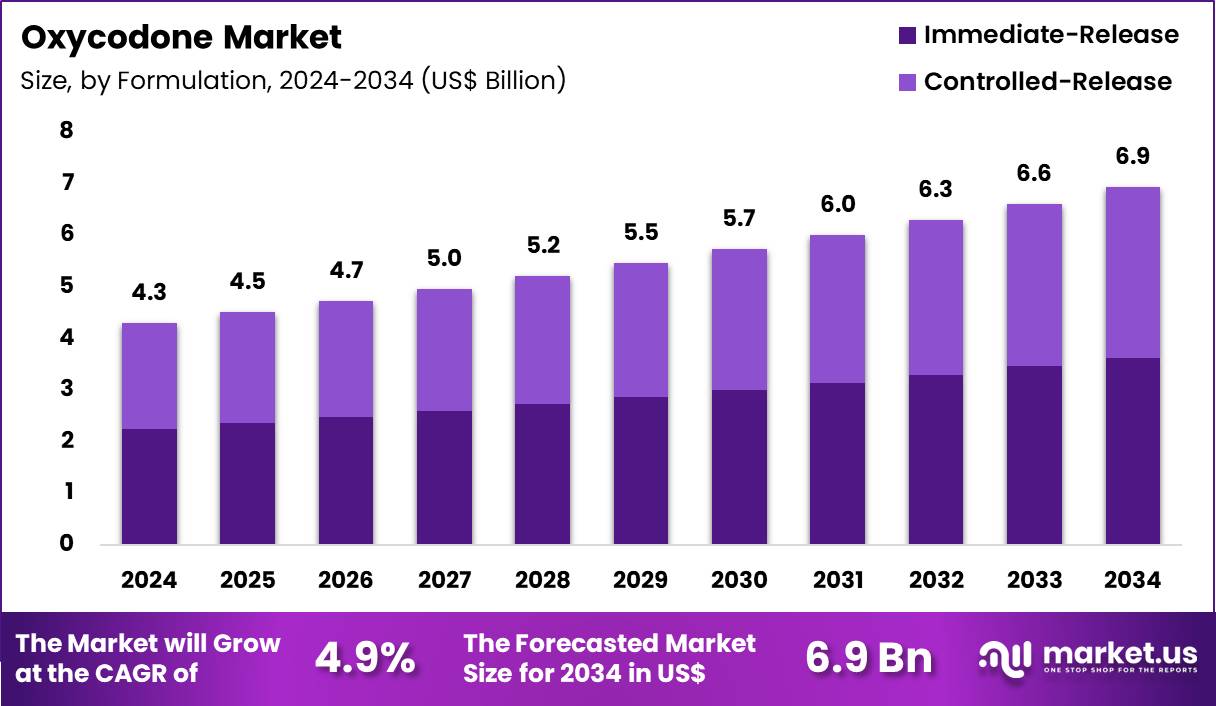
New York, NY – Sep 29, 2026 – The Global Oxycodone Market size is expected to be worth around US$ 6.9 Billion by 2034 from US$ 4.3 Billion in 2024, growing at a CAGR of 4.9% during the forecast period 2025 to 2034. In 2024, North America led the market, achieving over 33.5% share with a revenue of US$ 1.4 Billion.
Oxycodone is a prescription opioid medicine used to manage moderate to severe pain when treatment with an opioid is considered medically appropriate. According to the US Drug Enforcement Administration (DEA), it is available in immediate-release and extended-release formulations, as well as combination products containing other pain-relieving ingredients.
The oxycodone market is supported by its established role in pain management, including selected cases of postoperative pain, injury-related pain and certain long-term pain conditions. Demand is influenced by clinical requirements, prescribing practices, healthcare access, pharmaceutical manufacturing and the availability of alternative treatments.
Product development within this market includes different dosage forms, generic medicines and formulations designed to provide pain relief over varying periods. Generic products also contribute to competition, while regulatory requirements influence manufacturing, distribution and prescribing practices.
However, oxycodone carries significant safety risks, including dependence, addiction, respiratory depression and potentially fatal overdose. The US DEA classifies oxycodone as a Schedule II controlled substance, reflecting its accepted medical use and high potential for misuse and dependence.
Healthcare providers are encouraged to assess individual patient needs, consider non-opioid treatments where appropriate, prescribe carefully and monitor treatment outcomes. The CDC’s 2022 opioid prescribing guideline emphasizes informed decisions, individualized care and a balanced assessment of benefits and risks.
Looking ahead, the market’s development will depend on pain management needs, generic competition, regulatory oversight and advances in safer treatment approaches. Responsible prescribing, patient education and improved access to appropriate pain care will remain important considerations for pharmaceutical manufacturers, healthcare providers and policymakers worldwide.
Key Takeaways
- In 2024, the oxycodone market was valued at US$ 4.3 billion and is projected to grow at a CAGR of 4.9%, reaching US$ 6.9 billion by 2034.
- By formulation, the market is segmented into immediate-release and controlled-release products. The immediate-release segment dominated in 2024, accounting for 52.3% of the market share.
- By route of administration, the market is categorized into oral, intravenous, and other routes. The oral segment held a significant market share of 64.1% in 2024.
- By patient type, the market is divided into adult and geriatric segments. The adult segment dominated in 2024, accounting for 59.5% of the total market revenue.
- By distribution channel, the market is segmented into retail pharmacies, hospital pharmacies, and online pharmacies. Retail pharmacies led the market in 2024, capturing a revenue share of 48.0%.
- Regionally, North America dominated the oxycodone market in 2024, accounting for 33.5% of the global market share.
Key Market Segments
- Formulation Analysis: Immediate-release formulations held 52.3% of the oxycodone market, supported by demand for rapid pain relief in acute and breakthrough pain. Their faster onset, flexible dosing, and broad clinical use in postoperative and injury-related pain support continued adoption across hospitals and outpatient settings.
- Route of Administration Analysis: Oral administration accounted for 64.1% of the oxycodone market, mainly due to convenience, patient acceptance, and suitability for outpatient treatment. Oral formulations support home-based recovery, routine pain management, and cost-efficient treatment while simplifying prescribing, dispensing, and monitoring across healthcare settings.
- Patient Type Analysis: Adult patients represented 59.5% of the oxycodone market, supported by higher exposure to surgeries, injuries, and chronic musculoskeletal conditions. Demand is further supported by orthopedic procedures, acute pain treatment, and structured pain management programs requiring regular clinical monitoring and follow-up.
- Distribution Channel Analysis: Retail pharmacies accounted for 48.0% of the oxycodone market, supported by widespread accessibility, convenient dispensing, and prescription fulfillment services. Electronic prescribing, refill management, pharmacist counseling, and established reimbursement systems further strengthen retail pharmacies as an important distribution channel for patients.
Regional Analysis
North America
North America accounted for 33.5% of the global oxycodone market in 2024, supported by demand for pain management in postoperative care, trauma, and selected chronic conditions.
Strong healthcare infrastructure, prescription monitoring, regulatory oversight, and the availability of established formulations continue to influence regional demand. Efforts to reduce misuse and improve opioid safety are also shaping prescribing practices.
Asia Pacific
The Asia Pacific region is expected to record the highest CAGR during the forecast period, supported by expanding healthcare infrastructure, increasing surgical procedures, and growing demand for pain management. Rising cancer and musculoskeletal disease burdens are supporting clinical use.
Government healthcare programs, wider access to medicines, generic manufacturing, and improving medical services are expected to strengthen regional market development. However, opioid regulation and responsible prescribing remain important considerations across the region.
Emerging Trends
- Expansion of generic formulations: Generic immediate-release and extended-release products contribute to product availability and price competition. Manufacturers must meet applicable quality, safety and regulatory requirements.
- Greater focus on opioid safety: Prescribing decisions increasingly emphasize individual risk assessment, appropriate dosage, follow-up and communication between clinicians and patients. These priorities are reflected in CDC guidance.
- Growth in multimodal pain management: Opioids are being considered alongside non-opioid medicines, physical therapies and other suitable approaches. This creates a greater role for integrated pain management rather than reliance on one medicine.
- Stronger regulatory oversight: Controlled-substance requirements influence prescribing, distribution, recordkeeping and supply-chain management. Compliance remains a key operational consideration for pharmaceutical companies and healthcare providers.
- Increased attention to treatment outcomes: Pain relief, daily functioning, adverse effects and continued treatment benefits are important in reviewing opioid therapy. This supports patient-specific monitoring and reassessment throughout treatment.
Use Cases
- Postoperative pain management: Oxycodone may be prescribed for moderate to severe pain following surgery when an opioid is clinically appropriate. Treatment selection depends on the procedure, pain severity and individual patient risks.
- Injury-related pain: Selected injuries can cause severe pain requiring prescription treatment. Oxycodone may be considered when expected benefits outweigh risks, alongside appropriate treatment of the underlying injury.
- Cancer-related pain: Oxycodone is used in cancer pain management where clinically appropriate. Pain control requirements, treatment goals and patient tolerance guide its use within an individualized care plan.
- Selected chronic pain conditions: For certain patients with persistent pain, oxycodone may be considered after evaluating alternative treatments. Continued therapy requires reassessment of pain relief, functional improvement, adverse effects and potential risks.
- Palliative and end-of-life care: Oxycodone can be used to relieve pain in palliative and end-of-life settings. Treatment is individualized to support comfort, taking account of the patient’s condition and clinical needs.
Frequently Asked Questions About Oxycodone
- Is oxycodone a controlled substance?
Yes. In the United States, oxycodone is classified as a Schedule II controlled substance. This classification reflects its accepted medical use and high potential for misuse, addiction and physical or psychological dependence. - What is the difference between immediate-release and extended-release oxycodone?
Immediate-release oxycodone releases medicine more quickly, while extended-release formulations release it over a longer period. These formulations have different clinical uses and must be taken according to the prescribed instructions. - What factors influence the oxycodone market?
Market activity is influenced by pain management needs, prescription practices, generic competition, healthcare access, regulatory requirements and alternative treatments. Safety concerns and efforts to reduce opioid-related harm also affect prescribing patterns and commercial demand. - Which product types are included in the oxycodone market?
The market includes immediate-release and extended-release oxycodone products, available as single-ingredient medicines or combinations with other pain relievers. Products differ by formulation, dosage strength, brand, manufacturer and applicable regulatory approval. - What are the major emerging trends in the oxycodone market?
Key developments include generic product competition, stronger safety monitoring, tighter controlled-substance compliance, integrated pain management and increased attention to patient outcomes. These trends reflect clinical and regulatory changes rather than guaranteed market growth. - What is the future outlook for the oxycodone market?
Future market performance will depend on clinical demand, generic competition, healthcare policies, product availability and safety requirements. Reliable forecasts require current sales data, defined geographic coverage, a stated forecast period and transparent research methods.
Conclusion
The oxycodone market is supported by its established role in managing moderate to severe pain across postoperative, injury-related, cancer-related, and selected chronic pain conditions. Market growth is being influenced by demand for immediate-release formulations, oral administration, adult patient treatment, and retail pharmacy distribution.
North America remains a leading regional market, while Asia Pacific is expected to experience strong growth during the forecast period. At the same time, regulatory controls, opioid safety concerns, generic competition, and the adoption of non-opioid pain management approaches are shaping market development. Responsible prescribing, patient monitoring, product innovation, and regulatory compliance will remain important factors influencing the market’s future.
Discuss your needs with our analyst
Please share your requirements with more details so our analyst can check if they can solve your problem(s)




