


Overview
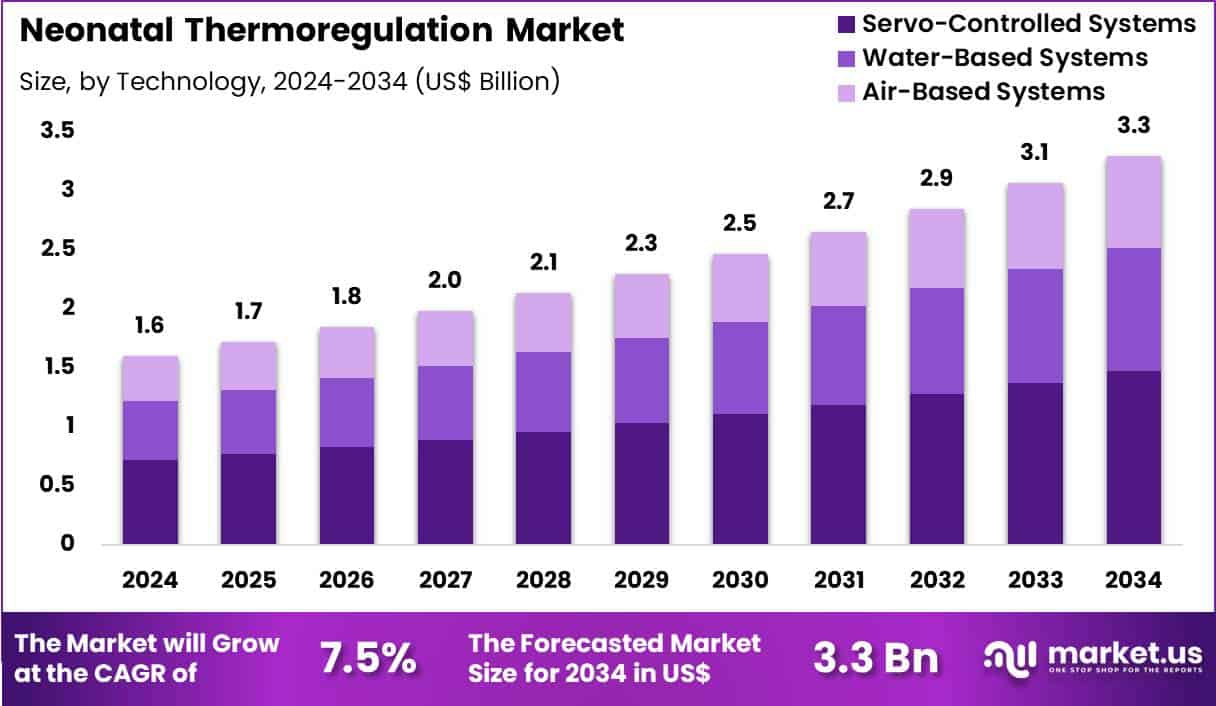
New York, NY – Oct 27, 2026 – Global Neonatal Thermoregulation Market size is expected to be worth around US$ 3.3 Billion by 2034 from US$ 1.6 Billion in 2024, growing at a CAGR of 7.5% during the forecast period 2025 to 2034. In 2024, North America led the market, achieving over 38.8% share with a revenue of US$ 0.6 Billion.
Neonatal thermoregulation refers to the ability of newborn babies to maintain a stable body temperature after birth. It is a critical aspect of neonatal care, as newborns, particularly premature and low-birth-weight infants, have limited capacity to regulate their body temperature. Maintaining an optimal temperature is essential for healthy growth, normal body functions, and survival.
Newborns are highly susceptible to heat loss due to their relatively large body surface area, thin skin, limited insulating fat, and immature temperature-regulating mechanisms. Exposure to cold can lead to neonatal hypothermia, increasing the risk of respiratory distress, low blood sugar, metabolic complications, and other serious health problems. Excessive heat can also cause dehydration and other complications.
Effective thermoregulation strategies include immediate drying after birth, skin-to-skin contact between mother and baby, early breastfeeding, the use of warm blankets, and maintaining an appropriate room temperature. For premature and critically ill newborns, specialized equipment such as radiant warmers and incubators plays an important role in providing controlled thermal environments.
Growing awareness of neonatal thermoregulation is strengthening the focus on newborn care in hospitals and neonatal intensive care units (NICUs). Advances in temperature-monitoring technologies and neonatal warming equipment are supporting improved clinical practices. By prioritizing temperature management from birth, healthcare providers can help reduce preventable complications and improve neonatal health outcomes, particularly in vulnerable newborn populations.
Key Takeaways
- In 2024, the neonatal thermoregulation market was valued at US$ 1.6 billion and is projected to grow at a CAGR of 7.5%, reaching US$ 3.3 billion by 2034.
- By product type, the market is segmented into incubators, thermal blankets and mattresses, temperature monitoring devices, radiant warmers, infant warmers, and heated mattresses. Incubators dominated the market, accounting for a share of 36.4%.
- Based on technology, the market is categorized into servo-controlled systems, water-based systems, and air-based systems. Servo-controlled systems held a significant market share of 44.8%.
- By application, the market is divided into hypothermia management, normal thermoregulation, and hyperthermia management. Hypothermia management emerged as the leading segment, accounting for 42.9% of the total market revenue.
- By end user, the market is segmented into hospitals, specialty clinics, neonatal intensive care units, and homecare settings. Hospitals led the market, capturing a revenue share of 48.6%.
- Regionally, North America dominated the neonatal thermoregulation market, accounting for a market share of 38.8%.
Key Market Segments
- Product Type Analysis: Incubators dominated the neonatal thermoregulation market, accounting for 36.4% of the product type segment. Their ability to maintain controlled temperature, humidity, and oxygen levels supports premature and low-birth-weight infants. Rising preterm births, expanding neonatal intensive care units, and advancements in incubator design are expected to sustain segment growth.
- Technology Analysis: Servo-controlled systems led the technology segment, accounting for 44.8% of the neonatal thermoregulation market. These systems automatically adjust heat output based on real-time temperature feedback, ensuring precise thermal management. Growing adoption of automated monitoring technologies and increasing demand for patient safety are expected to support continued segment expansion.
- Application Analysis: Hypothermia management dominated the application segment, accounting for 42.9% of the neonatal thermoregulation market. Newborns, particularly premature and low-birth-weight infants, face increased risks of heat loss. Rising awareness, standardized thermal care protocols, and expanding maternal and neonatal healthcare services are expected to drive sustained demand.
- End-User Analysis: Hospitals dominated the end-user segment, accounting for 48.6% of the neonatal thermoregulation market. Their advanced maternity facilities, skilled healthcare professionals, and specialized neonatal equipment support effective temperature management. Increasing institutional births, expanding neonatal intensive care units, and investments in modern healthcare infrastructure are expected to strengthen hospital demand.
Regional Analysis
North America Market Analysis
North America dominated the neonatal thermoregulation market in 2024, accounting for 38.8% of the global market. Regional growth is supported by advanced neonatal care infrastructure, high preterm birth rates, and increasing adoption of innovative incubators, radiant warmers, and temperature-monitoring systems.
The United States recorded a preterm birth rate of 10.41% in 2024, according to provisional CDC data. Investments in neonatal intensive care units and growing emphasis on thermal management are expected to sustain regional demand.
Asia Pacific Market Analysis
The Asia Pacific neonatal thermoregulation market is expected to register the highest CAGR during the forecast period, driven by expanding healthcare infrastructure, government initiatives to reduce neonatal mortality, and rising investments in specialized newborn care.
Increasing adoption of cost-effective incubators, portable radiant warmers, and advanced temperature-monitoring devices is improving access to neonatal thermal care. Growing awareness of hypothermia prevention and improvements in neonatal intensive care facilities are further supporting market expansion. The region’s considerable neonatal healthcare needs are expected to create opportunities for equipment manufacturers and healthcare providers.
Emerging Trends
- Increasing adoption of servo-controlled temperature systems: Hospitals are increasingly using temperature probes linked to heating equipment to support automatic temperature adjustment. This approach helps maintain stable conditions and reduces reliance on manual adjustments. Demand is supported by the need for accurate temperature management in premature and low-birth-weight infants.
- Development of hybrid incubators and radiant warmers: Equipment combining enclosed incubator care with open radiant warming is becoming an important product direction. These systems can support temperature stability while allowing healthcare professionals easier access to infants during examinations and procedures.
- Greater focus on temperature protection during transport: Healthcare providers are emphasizing thermal protection when newborns move between delivery rooms, neonatal units, and referral hospitals. This supports demand for transport incubators, portable warming equipment, and reliable temperature monitoring during transfers.
- Integration of temperature monitoring with clinical workflows: Hospitals need timely temperature readings and clear records to identify thermal instability. This creates opportunities for connected monitoring systems, alarms, and digital documentation that help clinical teams recognize abnormal readings and respond according to established care protocols.
- Demand for affordable equipment in emerging healthcare markets: The need to improve newborn care in resource-limited settings is creating opportunities for affordable, durable, and easy-to-maintain warming systems. Equipment selection increasingly depends on clinical needs, staff training, reliable power, maintenance support, and total ownership cost.
Use Cases
- Care of premature and low-birth-weight babies: Incubators provide a controlled warm environment for infants who have difficulty maintaining their own body temperature. These devices are especially useful for premature babies and small newborns who need additional thermal support and, where indicated, humidity control.
- Thermal support immediately after birth: Radiant warmers help prevent excessive heat loss during initial newborn assessment, resuscitation, and stabilization. Their open design enables healthcare professionals to access the baby quickly while providing external warmth when clinically required.
- Transfer between healthcare facilities: Transport incubators help maintain a controlled thermal environment when vulnerable newborns are transferred to facilities with specialized neonatal services. This is particularly relevant for referral networks where babies require respiratory support, intensive monitoring, or specialist treatment.
- Kangaroo mother care and routine newborn care: Skin-to-skin contact, supported by appropriate covering and temperature checks, is an important thermal-care method for eligible infants. It can complement clinical equipment and supports care models that keep mothers and newborns together when medically appropriate.
- Thermal stabilization during intensive procedures: Warming mattresses, incubators, and radiant warmers can help limit heat loss during selected procedures and intensive care. These solutions are useful for very premature infants who are particularly vulnerable to temperature changes, with close monitoring needed to avoid overheating.
Frequently Asked Questions About Neonatal Thermoregulation
- Why is thermoregulation important for newborn babies?
Thermoregulation is essential because newborns, particularly premature and low-birth-weight infants, can lose body heat quickly. Poor temperature control may increase health risks and the need for medical intervention, making thermal protection an important part of essential newborn care. - What is the normal temperature range for a newborn?
Clinical guidance commonly identifies 36.5°C to 37.5°C as the target range for newborn temperature maintenance. Temperature should be measured and monitored according to the baby’s condition and hospital protocol to identify both hypothermia and overheating. - What is the difference between an incubator and a radiant warmer?
An incubator provides an enclosed, temperature-controlled environment, sometimes with humidity control. A radiant warmer delivers heat from above while keeping the newborn accessible for examination, resuscitation, and procedures. The appropriate device depends on clinical requirements. - What factors are driving the neonatal thermoregulation market?
Market demand is supported by the need to care for premature and low-birth-weight infants, improve neonatal intensive care capacity, and prevent temperature-related complications. Hospital modernization, improved monitoring technology, and wider access to specialized newborn services also support potential demand. - Which healthcare facilities use neonatal thermoregulation products?
These products are used in neonatal intensive care units, maternity hospitals, delivery rooms, special newborn care units, and neonatal transport services. Their adoption depends on the number of vulnerable newborns treated, clinical capabilities, equipment availability, and referral arrangements. - How is technology influencing the neonatal thermoregulation market?
Technology is supporting the development of servo-controlled heating, integrated temperature monitoring, hybrid incubator-warmers, and improved transport systems. These solutions aim to improve temperature control, simplify clinical workflows, and support timely intervention when abnormal readings are detected. - What is the future outlook for the neonatal thermoregulation market?
The market outlook is supported by ongoing needs in premature infant care, neonatal intensive care expansion, and improved temperature-monitoring technologies. However, the pace of growth will vary by region and depend on clinical adoption, affordability, procurement investment, and healthcare infrastructure.
Conclusion
The neonatal thermoregulation market is expected to experience steady growth, supported by rising demand for specialized newborn care, increasing preterm births, and expanding neonatal intensive care infrastructure. Valued at US$ 1.6 billion in 2024, the market is projected to reach US$ 3.3 billion by 2034, growing at a CAGR of 7.5%. Incubators, servo-controlled systems, and hypothermia management remain key market segments.
North America currently leads the market, while Asia Pacific offers significant growth opportunities. Technological advancements, affordable equipment, and improved temperature-monitoring solutions are expected to strengthen market development and support better neonatal health outcomes.
Discuss your needs with our analyst
Please share your requirements with more details so our analyst can check if they can solve your problem(s)



