


Overview
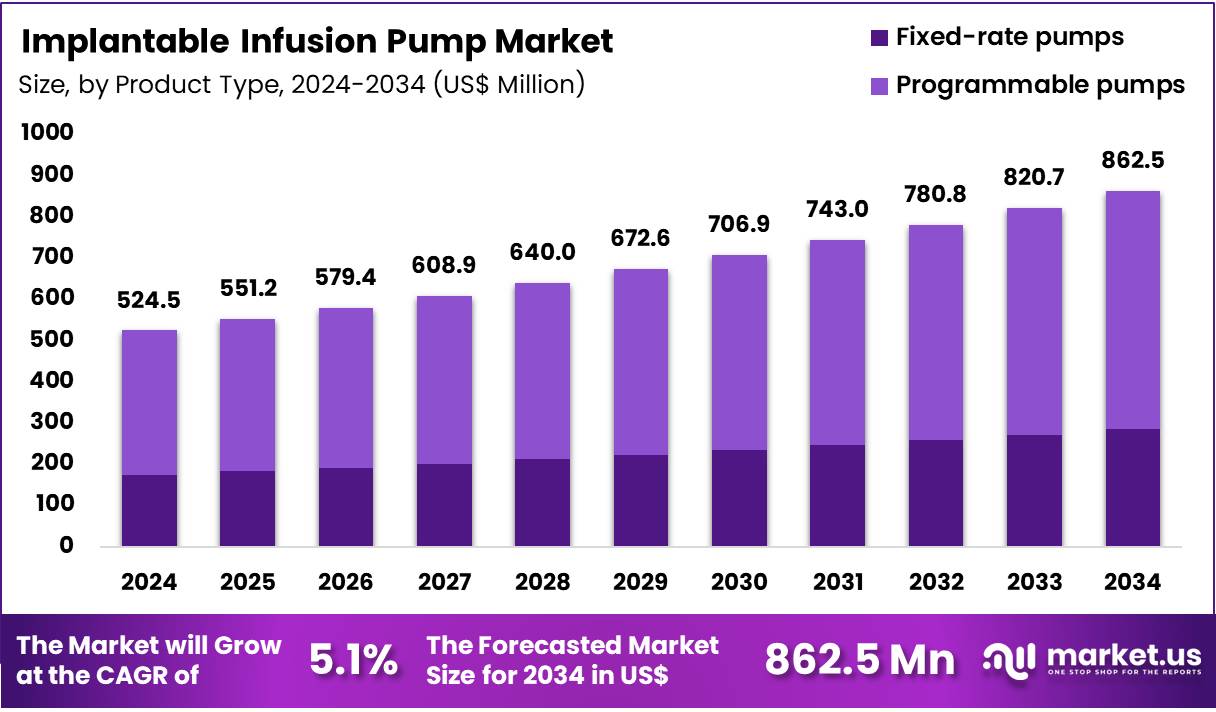
New York, NY – Sep 02, 2026 – The Global Implantable Infusion Pump Market size is expected to be worth around US$ 862.5 Million by 2034 from US$ 524.5 Million in 2024, growing at a CAGR of 5.1% during the forecast period from 2025 to 2034. In 2024, North America led the market, achieving over 41.5% share with a revenue of US$ 217.7 Million.
The global Implantable Infusion Pump Market is witnessing steady growth due to rising demand for advanced drug delivery solutions, increasing prevalence of chronic diseases, and growing adoption of targeted therapies.
Implantable infusion pumps are medical devices surgically placed inside the body to deliver precise doses of medications over extended periods. These systems are widely used in pain management, cancer therapy, neurological disorders, and spasticity treatment.
The market is driven by the increasing burden of chronic pain conditions, with millions of patients worldwide requiring long-term medication management. According to healthcare estimates, chronic pain affects more than 20% of adults globally, creating significant demand for controlled drug delivery technologies. Additionally, the rising geriatric population, which is expected to reach approximately 1.6 billion people by 2050, is contributing to higher adoption of implantable therapeutic devices.
Technological advancements, including programmable pumps, remote monitoring capabilities, and improved catheter systems, are enhancing treatment accuracy and patient outcomes. The growing preference for minimally invasive therapies and personalized medicine is further supporting market expansion.
The global Implantable Infusion Pump Market is projected to grow significantly during the forecast period, supported by increasing healthcare expenditure, advancements in medical device engineering, and rising investments in implantable drug delivery research. In 2024, North America remained a leading region due to advanced healthcare infrastructure, strong reimbursement frameworks, and high adoption of innovative medical technologies.
Major healthcare companies are focusing on product innovation, regulatory approvals, and strategic collaborations to strengthen their position in this expanding market.
Key Takeaways
- Market Size: The global Implantable Infusion Pump Market is expected to reach approximately US$ 862.5 Million by 2034, increasing from US$ 524.5 Million in 2024.
- Market Growth: The market is projected to expand at a CAGR of 5.1% during the forecast period from 2025 to 2034, driven by rising demand for advanced drug delivery systems and chronic disease management solutions.
- Product Type Analysis: Programmable pumps dominated the global market in 2024, accounting for 66.9% of the market share. Their leading position is attributed to the growing requirement for accurate, customizable, and controlled drug delivery in chronic and complex therapeutic applications.
- Application Analysis: Chronic pain management emerged as the leading application segment in 2024, capturing 47.1% of the global market share due to increasing demand for long-term pain control solutions and targeted medication delivery.
- End-Use Analysis: Hospitals held the largest market share in 2024, accounting for 62.5% of the global market. This dominance is supported by the increasing number of complex surgical procedures, the availability of specialized healthcare professionals, and access to advanced patient monitoring technologies.
- Regional Analysis: In 2024, North America maintained a leading position in the Implantable Infusion Pump Market, capturing more than 41.5% of the global market share with a market value of approximately US$ 217.7 Million. The region’s growth is supported by advanced healthcare infrastructure, strong adoption of innovative medical devices, and favorable reimbursement policies.
Market segmentation
- Product Type Analysis: Programmable pumps dominated the implantable infusion pump market with a 66.9% share in 2024, driven by precise dosage control, flexible programming, and personalized treatment delivery. Fixed-rate pumps maintained demand due to their simplicity, reliability, and cost-effectiveness in consistent infusion applications.
- Application Analysis: Chronic pain management accounted for the largest share at 47.1% in 2024, supported by increasing chronic pain cases and the adoption of intrathecal therapies. Spasticity treatment, cancer therapy, and other applications continue to expand with broader clinical utilization.
- End-User Analysis: Hospitals led the market with a 62.5% share in 2024, owing to advanced surgical facilities, skilled specialists, and monitoring capabilities. Specialty clinics and ambulatory surgical centers are growing due to personalized care approaches and rising minimally invasive procedures.
Statistical Information
- The Medtronic SynchroMed™ III implantable infusion system provides a reservoir capacity of 20 mL or 40 mL, allowing continuous medication delivery for chronic therapies such as pain and spasticity management.
- The SynchroMed™ II implantable pump delivers medication at programmable flow rates ranging from 0.048 mL/day to 24 mL/day, enabling customized dosing for individual patient requirements.
- The SynchroMed™ II pump has a battery service life of approximately 4–7 years, depending on programmed flow rate and therapy conditions, reducing the frequency of replacement procedures.
- The Flowonix Prometra® II intrathecal infusion system includes a 20 mL reservoir and supports programmable drug delivery for long-term therapies requiring controlled infusion.
- The Prometra® II pump provides a programmable infusion rate range of 0.01–30 mL/day, supporting flexible medication delivery across different therapeutic applications.
- A clinical study evaluating intrathecal baclofen therapy using implantable infusion pumps reported that pump-based treatment reduced spasticity scores by more than 50% in treated patients.
- Clinical evaluations of intrathecal drug delivery systems have reported that implanted pumps can deliver medication concentrations up to 300 times higher at the spinal target site compared with systemic administration while reducing systemic exposure.
- Implantable infusion pumps used for chronic pain management can reduce opioid requirements by approximately 50% or more in selected patients receiving intrathecal therapy, according to clinical literature reviews.
Regional Analysis
In 2024, North America dominated the Implantable Infusion Pump Market with a 41.5% share, valued at US$ 217.7 million. The region’s leadership is supported by advanced healthcare infrastructure, strong adoption of targeted drug delivery systems, and increasing demand for chronic pain and neurological disorder management. The United States remains a key contributor due to the presence of specialized hospitals, advanced surgical facilities, and established medical device companies.
The growing prevalence of chronic pain, cancer-related conditions, and severe spasticity has increased the adoption of implantable infusion technologies. Healthcare providers are increasingly using programmable infusion systems because they enable controlled medication delivery and long-term therapy management. Devices such as Medtronic’s SynchroMed systems are designed for chronic intrathecal infusion applications, including pain and spasticity treatment.
Favorable reimbursement policies, regulatory support from agencies such as the U.S. FDA, and continuous product innovation are strengthening regional growth. FDA-approved programmable infusion systems have supported wider clinical confidence and adoption across healthcare settings.
Additionally, increasing investments in pain management, oncology, and neurological care are encouraging hospitals and specialty clinics to integrate advanced infusion solutions. The expansion of minimally invasive procedures, improved physician training, and rising demand for personalized therapies are expected to further support North America’s position in the implantable infusion pump market.
Business opportunities
The Implantable Infusion Pump Market presents significant business opportunities driven by increasing demand for advanced drug delivery technologies, rising chronic disease prevalence, and growing adoption of personalized treatment approaches. Manufacturers have opportunities to develop next-generation programmable infusion pumps with enhanced accuracy, longer operational life, wireless connectivity, and remote monitoring capabilities.
The expansion of chronic pain management, neurological disorder treatment, and cancer care applications is creating new avenues for market growth. Companies can focus on integrating digital health technologies, including smart monitoring systems and data-driven therapy optimization, to improve patient management and clinical outcomes.
Emerging economies also provide attractive opportunities due to improving healthcare infrastructure, increasing investments in medical technologies, and rising awareness of advanced therapeutic solutions. Strategic collaborations between device manufacturers, hospitals, and research institutions can accelerate innovation in implantable drug delivery systems.
Additionally, advancements in minimally invasive implantation techniques, battery efficiency, and targeted drug delivery are expected to create competitive opportunities. Companies investing in cost-effective solutions, physician training programs, and expanded clinical applications can strengthen their presence in this evolving market.
Overall, innovation, digital integration, and broader therapeutic adoption will remain key growth opportunities in the implantable infusion pump industry.
Emerging Trends
- Integration of Smart Monitoring Features: Implantable infusion pump technology is moving toward connected healthcare solutions with improved monitoring capabilities. Newer systems are focusing on remote programming, digital tracking, and better therapy management. These advancements aim to reduce unnecessary clinical visits and improve long-term patient monitoring efficiency.
- Development of Miniaturized Pump Designs: Manufacturers are focusing on smaller and more efficient implantable pump designs to improve patient comfort and reduce implantation complexity. Advanced engineering approaches are helping reduce device size while maintaining accurate medication delivery performance for long-term therapeutic applications.
- Increasing Adoption of Personalized Drug Delivery: Personalized medicine is becoming an important trend in implantable infusion therapy. Programmable systems allow clinicians to adjust medication delivery according to patient response. This approach supports individualized treatment strategies, particularly for patients requiring continuous and variable drug administration.
- Improvements in Battery and Device Longevity: Research is focused on extending implantable pump operational life through improved battery technology and energy-efficient components. Longer device durability can reduce replacement surgeries and improve patient convenience. Modern pumps are designed to support multi-year therapy management with fewer maintenance requirements.
- Expansion of Home-Based Therapy Models: Healthcare systems are increasingly shifting toward outpatient and home-based chronic disease management. Implantable infusion pumps support this transition by enabling continuous medication delivery outside hospital environments. This trend is supported by rising demand for convenient treatment options and improved patient independence.
Use Cases
- Cancer Pain Management: Implantable infusion pumps are used in oncology care to provide targeted pain relief for patients experiencing severe cancer-related discomfort. The systems enable continuous medication administration, helping clinicians manage complex pain conditions while reducing dependence on frequent external drug delivery methods.
- Pulmonary Hypertension Treatment: Implantable infusion pumps are used for delivering continuous therapies in advanced pulmonary hypertension cases. These systems help maintain consistent medication levels, supporting patients who require uninterrupted treatment to manage disease symptoms and improve daily functioning.
- Movement Disorder Management: Patients with severe movement-related disorders may benefit from implantable infusion technologies that provide controlled medication delivery. These systems support neurological treatment strategies where stable drug levels are required to manage symptoms and improve patient quality of life.
- Rehabilitation and Long-Term Care Applications: Implantable pumps are increasingly used in rehabilitation settings for patients requiring continuous therapeutic support. They assist in managing long-term conditions by providing reliable medication delivery, reducing dependency on repeated manual administration, and supporting structured care programs.
- Pediatric and Specialized Patient Care: Implantable infusion pumps are applied in selected pediatric and specialized cases where controlled medication delivery is required over extended periods. Their programmable nature allows healthcare providers to modify therapy settings according to patient needs and clinical conditions.
Recent development
- In February 2025, Medtronic received FDA approval for a supplement related to the SynchroMed™ Pump & Infusion System, allowing manufacturing process improvements, including the addition of a new laser welder system and reduced frequency of power check monitoring requirements.
- In May 2025, Medtronic received FDA approval for updates to the SynchroMed™ Infusion System and Ascenda™ Intrathecal Catheters, supporting continued improvements in its implantable drug delivery platform
- In December 2025, Johnson & Johnson completed the acquisition of Halda Therapeutics for approximately US$3.05 billion, strengthening its oncology innovation portfolio; however, the acquisition was focused on cancer therapeutics rather than implantable infusion pump technology.
Frequently Asked Questions on Implantable Infusion Pump
- What are the major applications of implantable infusion pumps?
Implantable infusion pumps are primarily used for chronic pain management, spasticity treatment, cancer therapy, and neurological disorders. These devices provide targeted drug delivery, helping patients receive continuous medication while improving treatment effectiveness and reducing dependence on external administration methods. - What factors are driving the Implantable Infusion Pump Market growth?
The Implantable Infusion Pump Market is growing due to increasing chronic disease prevalence, rising demand for targeted therapies, technological advancements, and improved healthcare infrastructure. Growing adoption of programmable devices is also encouraging healthcare providers to use advanced infusion solutions. - Which product type dominates the Implantable Infusion Pump Market?
Programmable implantable infusion pumps represent the leading product category due to their ability to provide adjustable medication delivery. These systems support personalized treatment plans, improve dosage accuracy, and are widely adopted in complex therapeutic areas requiring long-term infusion management. - What are the benefits of implantable infusion pumps?
Implantable infusion pumps provide accurate medication delivery, improved patient comfort, and consistent therapeutic outcomes. They reduce the need for frequent medication administration and allow targeted treatment delivery, which can minimize systemic side effects compared with conventional drug delivery approaches. - Who are the key users of implantable infusion pumps?
Hospitals, specialty clinics, and ambulatory surgical centers are major users of implantable infusion pumps. Hospitals lead adoption due to advanced surgical capabilities and specialized healthcare teams, while specialty centers increasingly use these devices for pain and neurological treatment programs. - What role does technology play in implantable infusion pump development?
Technology advancements are improving implantable infusion pumps through programmable features, remote monitoring capabilities, improved battery performance, and enhanced safety systems. These innovations support precise therapy adjustments, better patient management, and improved reliability of long-term drug delivery solutions. - What is the future outlook for the Implantable Infusion Pump Market?
The future of the Implantable Infusion Pump Market is expected to be shaped by personalized medicine, digital healthcare integration, and expanding therapeutic applications. Continuous innovation in device design and drug delivery technologies will support broader clinical adoption worldwide.
Conclusion
The Implantable Infusion Pump Market is expected to experience steady growth as healthcare systems increasingly adopt advanced drug delivery technologies for chronic pain, neurological disorders, and cancer-related therapies. The market is being shaped by rising demand for precise medication administration, programmable pump systems, and improved patient-centered treatment approaches.
Leading companies such as Medtronic, Tricumed Medizintechnik, Eitan Medical, Flowonix Medical, and Johnson & Johnson are focusing on innovation, device reliability, and expanding therapeutic applications. Advancements in digital integration, safety features, and personalized infusion management are creating new opportunities for manufacturers.
With increasing clinical adoption and continuous technological improvements, implantable infusion pumps are expected to remain an important solution for long-term targeted therapy delivery.
Discuss your needs with our analyst
Please share your requirements with more details so our analyst can check if they can solve your problem(s)




