


Overview
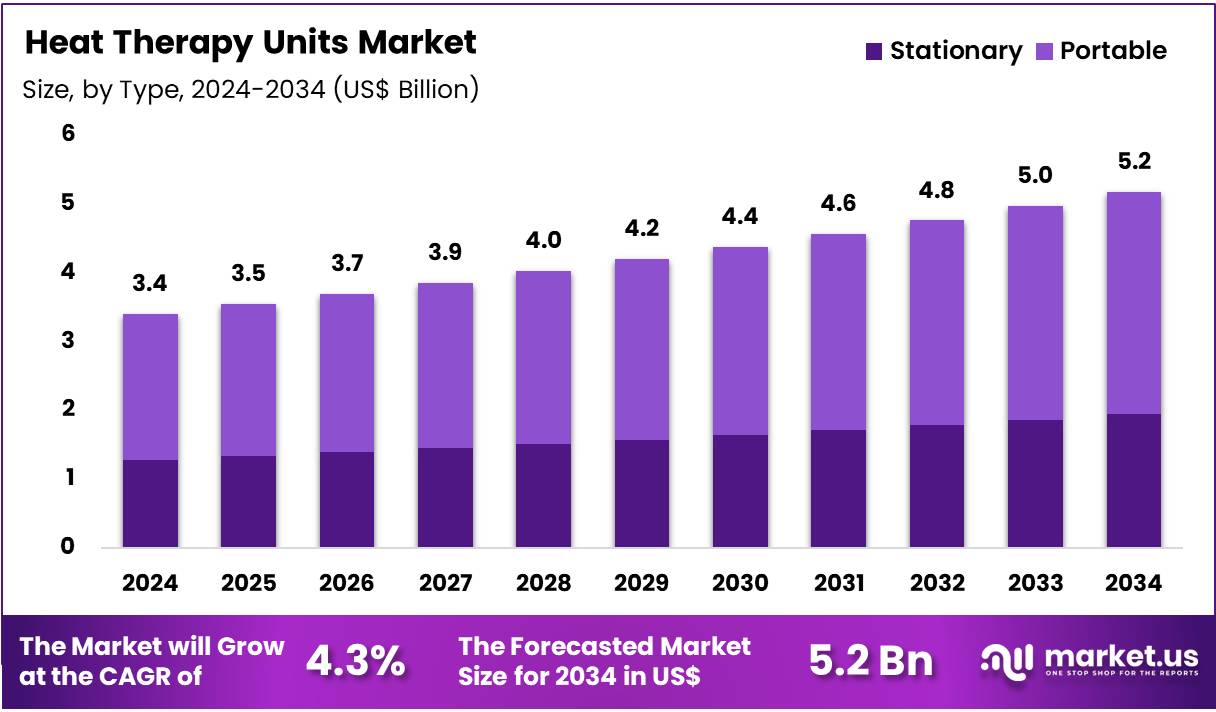
New York, NY – Sep 01, 2026 – Global Heat Therapy Units Market size is expected to be worth around US$ 5.2 Billion by 2034 from US$ 3.4 Billion in 2024, growing at a CAGR of 4.3% during the forecast period from 2025 to 2034. In 2024, North America led the market, achieving over 32.4% share with a revenue of US$1.1 billion.
The global Heat Therapy Units market is witnessing steady growth, driven by the increasing prevalence of musculoskeletal disorders, sports injuries, arthritis, and chronic back and neck pain. Heat therapy units, including electric heating pads, infrared therapy devices, moist heat packs, and portable wearable systems, are widely used to improve blood circulation, reduce muscle stiffness, and relieve pain without invasive procedures. Growing consumer preference for home-based pain management and rehabilitation is further supporting market expansion.
According to the World Health Organization (WHO), approximately 1.71 billion people worldwide are affected by musculoskeletal conditions, making them one of the leading causes of disability globally
. In addition, the Centers for Disease Control and Prevention (CDC) estimates that nearly 1 in 4 adults in the United States has arthritis, increasing the demand for convenient pain-relief solutions. The aging global population is another significant growth driver, with the United Nations projecting that people aged 65 years and older will reach 1.6 billion by 2050.
Technological advancements are also reshaping the market through smart heat therapy devices featuring adjustable temperature settings, automatic shut-off functions, rechargeable batteries, and app-enabled controls. Healthcare providers are increasingly recommending heat therapy as part of rehabilitation programs following orthopedic surgeries and sports-related injuries.
Rising awareness of drug-free pain management, expanding e-commerce distribution channels, and continuous product innovation are expected to create new opportunities for manufacturers, supporting the sustained growth of the Heat Therapy Units market over the coming years.
Key Takeaways
- Market Size: The global Heat Therapy Units Market was valued at US$ 3.4 billion in 2024 and is projected to reach US$ 5.2 billion by 2034.
- Market Growth: The market is anticipated to expand at a CAGR of 4.3% during the forecast period from 2025 to 2034.
- Product Type Analysis: Moist Heat Therapy Units emerged as the leading product segment, accounting for 33.1% of the global market share in 2024.
- Application Analysis: The Musculoskeletal and Joint Disorders segment held the largest application share, contributing 38.6% of the market in 2024.
- Type Analysis: Portable Heat Therapy Units dominated the market by type, capturing 62.5% of the total market share in 2024.
- End-Use Analysis: Physiotherapy and Rehabilitation Centers remained the largest end-use segment, representing 42.0% of the global market in 2024.
- Distribution Channel Analysis: Retail Pharmacies and Mass Retail Stores led the distribution channel segment, accounting for 49.2% of the market share in 2024.
- Regional Analysis: North America held the leading regional position in 2024, capturing 32.4% of the global market and generating approximately US$ 1.1 billion in revenue.
Market Segmentation
- Product Type Analysis: Moist Heat Therapy Units dominated the market with a 33.1% share in 2024 due to superior deep-tissue penetration and effective pain relief. Increasing adoption in physiotherapy centers, rehabilitation clinics, and homecare settings, along with growing demand for non-invasive therapies, strengthened the segment’s leading position.
- Application Analysis: Musculoskeletal and Joint Disorders led the market, accounting for 38.6% of revenue in 2024. Rising cases of arthritis, chronic pain, and mobility disorders increased demand for heat therapy, as it effectively reduces stiffness, improves circulation, and supports rehabilitation in both clinical and homecare environments.
- Type Analysis: Portable heat therapy units captured 62.5% of the market in 2024, driven by growing home-based care, lightweight designs, and user-friendly features. Rising preference for self-managed pain relief, telehealth-supported rehabilitation, and battery-powered devices significantly accelerated adoption across diverse patient populations.
- End-User Analysis: Physiotherapy and Rehabilitation Centers accounted for 42.0% of the market in 2024 due to the extensive use of heat therapy for pain management, injury recovery, and mobility improvement. Rising outpatient rehabilitation services and increasing demand for non-invasive treatments reinforced the segment’s market leadership.
- Distribution Channel Analysis: Retail Pharmacies and Mass Retail Stores held the largest 49.2% market share in 2024, supported by broad product availability, trusted pharmacist recommendations, and convenient purchasing. Expanding retail distribution networks and growing consumer demand for over-the-counter heat therapy devices further strengthened this channel.
Statistical Information
- A 2025 home-based heat therapy trial achieved 93% ± 11% treatment adherence using water-circulating heat therapy trousers worn at 42°C for 90 minutes daily over 12 weeks.
- The sham-control group in the same 2025 study also recorded 92% ± 35% adherence, demonstrating that prolonged home use of wearable heat therapy systems is operationally feasible.
- A 2026 Experimental Physiology study found that all evaluated heat therapy devices were operated continuously for 60 minutes, with Short-Wave Diathermy (SWD) and Hot-Water Immersion producing significantly greater muscle temperature increases than a water-perfused suit (P=0.00656 and P=0.00949, respectively).
- During the same 2026 comparison, Hot-Water Immersion produced significantly higher core temperatures than both Water-Perfused Suit and Short-Wave Diathermy from 20 minutes onward (P≤0.0104 and P≤0.0213).
- Short-Wave Diathermy produced an average thigh skin temperature that was 1.2°C lower than Hot-Water Immersion, while reaching a 0.7°C higher maximum local skin temperature, demonstrating more localized heating performance.
- Muscle temperature differences among heat therapy devices were highly significant, with an effect size of partial η² = 0.55 (P<0.0001), indicating substantial performance variation between heating technologies.
- A 2025 validation study evaluated wearable temperature monitoring during 8-hour heat exposure involving 38 participants (24 males and 14 females), providing operational performance data for prolonged therapeutic heat monitoring.
Regional Analysis
North America dominated the Heat Therapy Units market due to its advanced healthcare infrastructure, widespread adoption of home-use medical devices, and growing demand for non-pharmacological pain management. The region benefits from strong regulatory oversight by the U.S. Food and Drug Administration (FDA), which supports the availability of safe and effective heat therapy devices for both clinical and home settings.
The increasing prevalence of chronic musculoskeletal disorders, arthritis, sports injuries, and back pain has encouraged greater use of heat therapy across hospitals, physiotherapy centers, and households.
The expanding trend toward home-based rehabilitation has further accelerated demand for portable and wearable heat therapy units, supported by rising consumer awareness of self-care and wellness. Technological advancements, including adjustable temperature controls, water-circulating therapy systems, and ergonomic wearable designs, have improved treatment convenience and patient compliance.
Strong retail and e-commerce distribution networks, combined with high healthcare spending and early adoption of innovative therapeutic technologies, continue to reinforce North America’s leadership in the global Heat Therapy Units market.
Business opportunities
The Heat Therapy Units market presents significant business opportunities as demand for non-invasive pain management and home-based rehabilitation continues to increase worldwide. The rising prevalence of musculoskeletal disorders, arthritis, sports injuries, and chronic back pain is encouraging healthcare providers and consumers to adopt heat therapy devices as part of routine treatment.
Manufacturers can capitalize on this trend by developing smart, portable, and wearable heat therapy units with digital temperature controls, mobile app connectivity, and personalized treatment settings.
Expanding telehealth services also creates opportunities for integrating heat therapy devices into remote physiotherapy and rehabilitation programs. Growing e-commerce penetration enables companies to reach a broader consumer base through direct-to-consumer sales and subscription-based wellness products.
Emerging markets in Asia-Pacific, Latin America, and the Middle East offer untapped potential due to improving healthcare infrastructure, increasing disposable incomes, and greater awareness of self-care solutions. Strategic partnerships with hospitals, physiotherapy centers, sports medicine clinics, and wellness providers can further strengthen market expansion and long-term revenue growth.
Emerging Trends
- Smart and Wearable Heat Therapy Devices: The market is witnessing growth in smart wearable heat therapy systems with integrated sensors and digital controls. In 2025, research on wearable thermal devices focused on real-time temperature monitoring, flexible electronics, and Bluetooth-enabled control systems to improve personalized therapy and user comfort.
- Increasing Adoption of Home-Based Heat Therapy Solutions: Home-use therapeutic devices are becoming more common as patients prefer self-managed pain relief solutions. According to CDC data, 24.3% of U.S. adults experienced chronic pain in 2023, supporting demand for convenient heat therapy products used outside clinical environments.
- Advanced Temperature Control Technologies: Manufacturers are focusing on precise temperature regulation to improve safety and effectiveness. The FDA highlights that home-use medical devices require proper control of settings, operation, and environmental conditions because temperature extremes can affect device performance and user safety.
- Integration of Heat Therapy with Rehabilitation Technologies: Heat therapy units are increasingly being combined with rehabilitation programs for chronic pain and injury recovery. In 2025 studies, wearable thermal feedback systems incorporated temperature sensors and electronic control modules to deliver controlled thermal stimulation for improved therapeutic experiences.
- Focus on Safe and Patient-Friendly Device Designs: Safety-focused designs are becoming a major trend, with companies improving automatic shut-off systems, adjustable heat levels, and monitoring features. FDA guidance highlights that improper use of hot/cold therapy devices can cause injuries, increasing demand for safer designs.
Use Cases
- Chronic Pain Management Applications: Heat therapy units are widely used for managing long-term pain conditions such as arthritis, back pain, and muscle stiffness. CDC reported that 8.5% of U.S. adults experienced high-impact chronic pain in 2023, creating demand for supportive non-drug pain management approaches.
- Sports Injury Recovery and Muscle Rehabilitation: Sports medicine facilities increasingly use heat therapy devices for muscle relaxation and recovery programs. Advanced systems provide controlled heating sessions, helping athletes manage stiffness and improve rehabilitation routines through targeted thermal treatment technologies.
- Post-Surgical Recovery Support: Heat therapy units are used in rehabilitation settings after orthopedic procedures to support recovery programs. Water-circulating therapy devices deliver heated water through wraps, allowing controlled application around treated areas when used according to healthcare guidance.
- Physiotherapy and Clinical Rehabilitation Programs: Physiotherapy centers utilize heat therapy units as part of structured treatment plans. Professional systems such as diathermy and moist heat devices support therapeutic sessions by improving tissue flexibility, circulation, and mobility during rehabilitation procedures.
- Personalized Wellness and Preventive Care: Consumers are increasingly using portable heat therapy devices for daily wellness activities, including muscle relaxation and stress reduction. Wearable thermal technologies developed in 2025 demonstrated opportunities for personalized heat delivery through compact designs and sensor-based adjustments.
Recent Development
- In January 2026, Zimmer MedizinSysteme launched PhySys, a new compact physical therapy system combining electrotherapy and ultrasound therapy for physiotherapy practices and rehabilitation centers. The company continued expanding its portfolio of advanced therapeutic technologies, including heat-based physical therapy solutions such as diathermy systems.
- In July 2026, Zimmer MedizinSysteme received recognition as “Medical Device Manufacturer of the Year 2026”, highlighting its continued development of practice-oriented medical technologies used in rehabilitation and physical therapy applications.
- In 2025, DJO Global continued strengthening its rehabilitation technology portfolio under Enovis by focusing on orthopedic recovery solutions, including therapeutic products designed for pain management, injury recovery, and rehabilitation applications.
- In 2025, Performance Health continued expanding its Chattanooga rehabilitation equipment portfolio, supporting physiotherapy professionals with advanced treatment solutions across electrotherapy, rehabilitation, and therapeutic device categories. The company maintained focus on improving clinical workflow efficiency and patient recovery outcomes.
Frequently Asked Questions on Heat Therapy Units
- What factors are driving the growth of the Heat Therapy Units Market?
The Heat Therapy Units Market is growing due to rising cases of chronic pain, musculoskeletal disorders, sports injuries, and aging populations. Increasing demand for non-invasive pain management solutions, home-based healthcare, and portable therapeutic devices is further supporting market expansion. - Which product type dominates the Heat Therapy Units Market?
Moist Heat Therapy Units represent a leading product segment due to their ability to provide deeper tissue penetration and effective pain relief. These systems are widely used in physiotherapy centers, rehabilitation clinics, and outpatient facilities for managing muscle and joint conditions. - What are the major applications of Heat Therapy Units?
Heat Therapy Units are primarily used for musculoskeletal and joint disorders, chronic back pain, sports injuries, post-operative recovery, and soft tissue rehabilitation. These devices help improve flexibility, reduce stiffness, enhance circulation, and support recovery through controlled thermal treatment. - How are technological advancements influencing the Heat Therapy Units Market?
Technological advancements are improving heat therapy devices through digital temperature controls, wearable designs, smart sensors, and automated safety features. These innovations enhance user comfort, treatment accuracy, and personalization, encouraging wider adoption among healthcare professionals and individual users. - Which end users commonly utilize Heat Therapy Units?
Physiotherapy and rehabilitation centers are major users of Heat Therapy Units due to their extensive application in pain management and recovery programs. Hospitals, clinics, sports facilities, and home care users also increasingly adopt these devices for therapeutic and wellness purposes. - What are the future opportunities in the Heat Therapy Units Market?
Future opportunities include the development of smart wearable heat therapy devices, integration with digital health platforms, expansion of home-based rehabilitation solutions, and growth in emerging healthcare markets. Companies focusing on innovative, affordable, and user-friendly devices can capture increasing consumer demand.
Conclusion
The Heat Therapy Units Market is experiencing steady growth driven by rising demand for non-invasive pain management, increasing prevalence of musculoskeletal disorders, and expanding adoption of home-based rehabilitation solutions. Technological advancements such as portable designs, digital temperature controls, and wearable therapy systems are improving user convenience and treatment effectiveness.
Physiotherapy centers, hospitals, and homecare users continue to represent key demand areas as healthcare shifts toward personalized and preventive care. North America maintains a strong market position due to advanced healthcare infrastructure and early adoption of therapeutic technologies. Overall, innovation, accessibility, and growing awareness of heat-based treatments are expected to support continued market expansion.
Discuss your needs with our analyst
Please share your requirements with more details so our analyst can check if they can solve your problem(s)




