


Overview
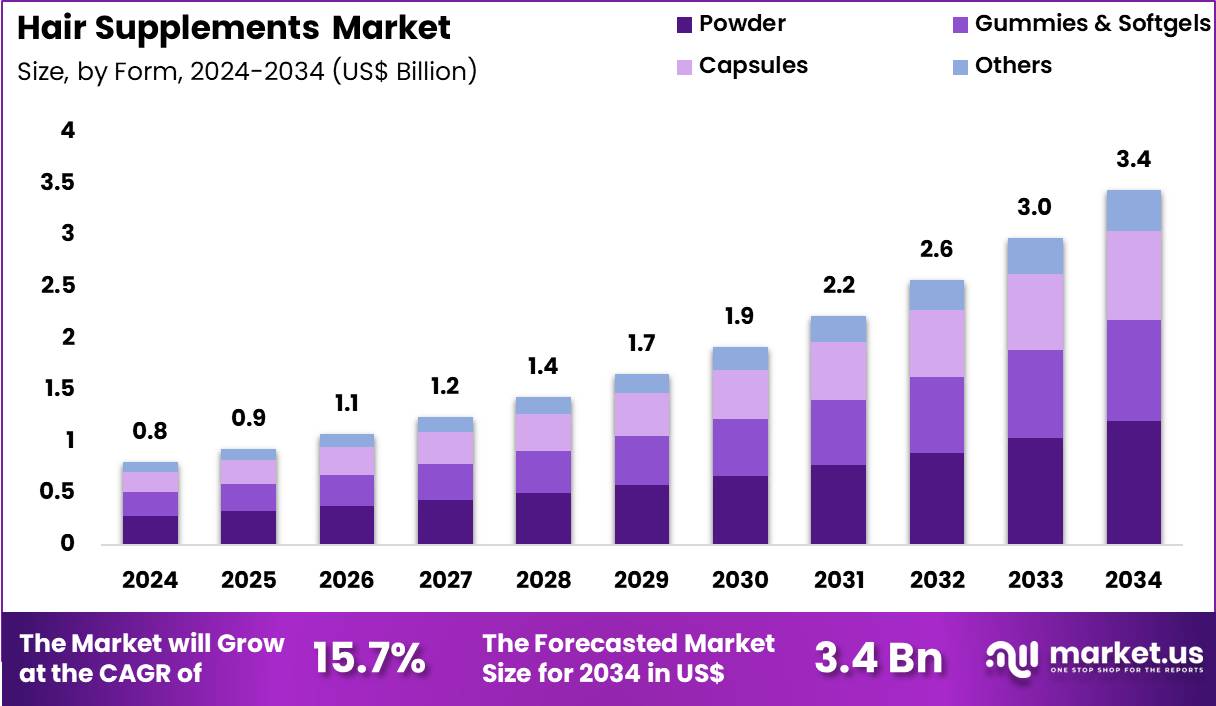
New York, NY – Oct 26, 2026 – Global Hair Supplements Market size is expected to be worth around US$ 3.4 Billion by 2034 from US$ 0.8 Billion in 2024, growing at a CAGR of 15.7% during the forecast period 2025 to 2034. In 2024, North America led the market, achieving over 43.3% share with a revenue of US$ 0.3 Billion.
The global hair supplements market is gaining attention as consumers increasingly focus on hair health, nutritional balance, and personal care. Hair supplements are dietary products formulated with vitamins, minerals, amino acids, and other nutrients that support normal hair growth and help maintain hair strength and quality. Common ingredients include biotin, zinc, iron, vitamin D, vitamin B12, and collagen.
Market growth is being supported by rising awareness of nutritional deficiencies, increasing concerns about hair thinning and hair loss, and growing demand for convenient health and beauty solutions. Changing lifestyles, stress, dietary habits, and the growing influence of beauty and wellness trends are also contributing to consumer interest in hair nutrition products.
The market offers a wide range of product formats, including capsules, tablets, gummies, powders, and liquid supplements. These products are available through pharmacies, specialty stores, supermarkets, and online retail platforms. E-commerce is further improving product accessibility and allowing brands to reach a wider consumer base.
Manufacturers are increasingly focusing on product innovation, ingredient transparency, plant-based formulations, and personalized nutrition solutions to meet changing consumer preferences. However, regulatory requirements, product quality concerns, and competition from topical hair care treatments remain important market considerations.
Going forward, the hair supplements market is expected to benefit from continued interest in preventive wellness and beauty-from-within products. Consumer education, scientifically supported formulations, and transparent product claims are likely to play an important role in shaping future market development.
Key Takeaways
- In 2024, the hair supplements market was valued at US$ 0.8 billion and is projected to reach US$ 3.4 billion by 2034, growing at a CAGR of 15.7% during the forecast period.
- By type, the market is segmented into single-ingredient and multi-ingredient supplements. The single-ingredient segment dominated the market, accounting for 57.6% of the total market share.
- By form, the market is categorized into powder, gummies and softgels, capsules, and others. The powder segment held a significant market share of 34.8%.
- By distribution channel, the market is segmented into drug and pharma stores, hypermarkets and supermarkets, online pharmacies, and specialty stores. The drug and pharma stores segment led the market, capturing the largest revenue share of 46.9%.
- Regionally, North America dominated the hair supplements market, accounting for 43.3% of the total market share.
Key Market Segments
- Type Analysis: The single-ingredient segment accounted for 57.6% of the hair supplements market, driven by growing demand for targeted nutrition and ingredient transparency. Consumers increasingly prefer standalone biotin, iron, and zinc supplements to address specific nutritional needs. Simple formulations, affordability, pharmacist recommendations, and growing interest in personalized wellness further support segment growth.
- Form Analysis: The powder segment accounted for 34.8% of the hair supplements market, supported by dosage flexibility, convenient consumption, and easy integration into daily routines. Powders can be mixed with beverages and meals, attracting wellness-focused consumers. Product innovation, flavored formulations, plant-based options, and cost efficiency are further supporting demand across consumer groups.
- Distribution Channel Analysis: Drug and pharma stores accounted for 46.9% of the hair supplements market, driven by consumer trust, product authenticity, and access to pharmacist guidance. These outlets help consumers select suitable supplements based on nutritional needs. Established purchasing habits, physician recommendations, product availability, and expanding wellness product ranges continue to support the segment’s market position.
Regional Analysis
North America Leads the Hair Supplements Market
North America accounted for 43.3% of the global hair supplements market in 2024, supported by growing consumer awareness of hair health, nutritional deficiencies, and preventive wellness. Increasing demand for biotin, collagen, and vitamin-based supplements has encouraged manufacturers to introduce innovative formulations, including gummies, capsules, and powders.
Strong retail networks, expanding e-commerce platforms, and effective digital marketing have further improved product accessibility. The growing aging population and rising concerns about hair thinning are also supporting regional demand.
Asia Pacific Expected to Record the Highest CAGR
The Asia Pacific hair supplements market is expected to register the highest CAGR during the forecast period, driven by increasing health awareness, changing dietary habits, urbanization, and growing concerns about hair loss. Demand for herbal ingredients, including ginseng, alongside vitamins, minerals, and collagen, is creating opportunities for product innovation.
Expanding online retail channels, rising disposable incomes, and growing interest in preventive healthcare are expected to accelerate market growth across countries such as India, China, Japan, and South Korea.
Emerging Trends
- Growing demand for science-backed formulations: Consumers are increasingly exposed to information about the role of nutrition in hair health. This creates opportunities for brands to develop products supported by clinical research, transparent ingredient information, and clearly explained benefits. However, evidence for supplements in people without nutritional deficiencies remains limited.
- Increased focus on personalised nutrition: Hair supplement products can be positioned around individual nutritional needs, such as low iron or zinc levels. This supports opportunities for targeted formulations and personalised wellness services. The clinical approach should prioritise identifying deficiencies rather than assuming that every case of hair loss requires supplements.
- Expansion of multi-ingredient formulations: Products combining vitamins, minerals, and other nutrients offer manufacturers opportunities to address several nutritional needs in one product. However, combining ingredients does not automatically improve effectiveness, and excessive intake can cause harm. Product development should therefore consider appropriate doses, ingredient interactions, and available clinical evidence.
- Greater demand for plant-based and natural ingredients: Interest in wellness products creates opportunities for supplements containing botanical ingredients and plant-derived nutrients. Manufacturers can differentiate products through ingredient traceability, quality testing, and clear sourcing information. However, natural ingredients should not be assumed to be safer or more effective without supporting evidence.
- Stronger focus on product safety and transparent claims: Consumers and healthcare professionals need reliable information about ingredient quantities, possible side effects, and product benefits. In the United States, the FDA generally does not approve dietary supplement claims or labels before products are marketed. This increases the importance of responsible claims and quality controls.
Use Cases
- Addressing nutrient deficiencies linked to hair loss: Supplements containing iron, zinc, or selected vitamins may be recommended when a confirmed deficiency contributes to hair loss. Correcting the deficiency can support normal hair health, while supplementation in people with adequate nutrient levels may offer little benefit.
- Supporting hair health during restrictive diets: People following highly restrictive diets or experiencing inadequate nutrient intake may need nutritional assessment. Supplements can help address identified gaps in their diets, including insufficient intake of essential nutrients. A balanced diet remains important for maintaining normal hair growth.
- Managing hair changes associated with certain life stages: Some consumers seek hair supplements during periods of hormonal change, pregnancy-related nutritional demands, or recovery from illness. The appropriate response depends on the underlying cause. Professional assessment is important because supplements cannot address every hormonal or medical cause of hair loss.
- Supporting nutritional recovery after significant weight loss: Rapid weight loss can contribute to temporary hair shedding, particularly when accompanied by inadequate nutrition. Supplements may be considered when assessment identifies nutritional deficiencies. Adequate protein and overall energy intake are also important, and supplements alone may not resolve the underlying problem.
- Complementing professional hair-loss treatment: Some consumers use supplements alongside dermatologist-recommended treatment plans. Their role is mainly to address nutritional needs rather than replace established treatments. Evidence for additional benefits varies by ingredient and condition, so combined treatment should be guided by a qualified healthcare professional.
Frequently Asked Questions About Hair Supplements
- Do hair supplements really help hair growth?
Hair supplements may help when hair loss is linked to a nutrient deficiency that the product corrects. However, strong evidence supporting routine supplementation in healthy individuals without deficiencies is limited. Results also depend on the underlying cause of hair loss. - Which vitamins are commonly used in hair supplements?
Common ingredients include biotin, vitamin D, iron, zinc, and other vitamins and minerals. These nutrients perform important functions in the body, but taking additional amounts does not guarantee improved hair growth. Supplement choices should be based on individual nutritional needs. - How long does it take for hair supplements to work?
There is no fixed timeframe for hair supplements to produce results. When a deficiency contributes to hair loss, improvement depends on correcting it and the hair-growth cycle. Persistent shedding requires medical assessment rather than simply extending supplement use. - Can hair supplements prevent hair loss?
Hair supplements cannot prevent every type of hair loss because causes include genetics, hormonal conditions, illness, and nutritional deficiencies. Correcting a deficiency may help in suitable cases, but supplements should not replace diagnosis or evidence-based treatment for underlying conditions. - What factors are driving the hair supplements market?
Market demand is supported by consumer interest in personal wellness, hair appearance, and nutritional health. Greater awareness of nutrient deficiencies and the availability of supplements through online retail may also support adoption, although the strength of these drivers varies across regions. - Which consumer groups purchase hair supplements?
Potential consumer groups include adults concerned about hair thinning, people with identified nutritional deficiencies, and individuals seeking support for normal hair health. Demand may differ by age, lifestyle, income, and health needs, making consumer segmentation important for product development and marketing. - Which distribution channels are important in the hair supplements market?
Hair supplements are sold through pharmacies, health stores, supermarkets, specialist retailers, and e-commerce platforms. Online channels allow consumers to compare ingredients and prices, while pharmacies may offer greater access to professional guidance. Channel importance varies by country and consumer purchasing behaviour. - What opportunities exist for manufacturers in the hair supplements market?
Manufacturers may explore evidence-based formulations, personalised nutritional solutions, transparent ingredient sourcing, and convenient product formats. Differentiation can be strengthened through quality assurance and responsible communication. However, commercial success depends on consumer trust, regulatory compliance, pricing, and demonstrated product value.
Conclusion
The global hair supplements market is expected to experience strong growth, supported by increasing awareness of hair health, rising demand for preventive wellness, and growing interest in beauty-from-within products. Valued at US$ 0.8 billion in 2024, the market is projected to reach US$ 3.4 billion by 2034, registering a CAGR of 15.7%.
Product innovation, convenient formats, online retail expansion, and personalised nutrition are expected to create new growth opportunities. However, regulatory compliance, product safety, and scientific validation remain essential. Manufacturers prioritising transparent claims, quality assurance, and evidence-based formulations are likely to strengthen their competitive position.
Discuss your needs with our analyst
Please share your requirements with more details so our analyst can check if they can solve your problem(s)



