


Overview
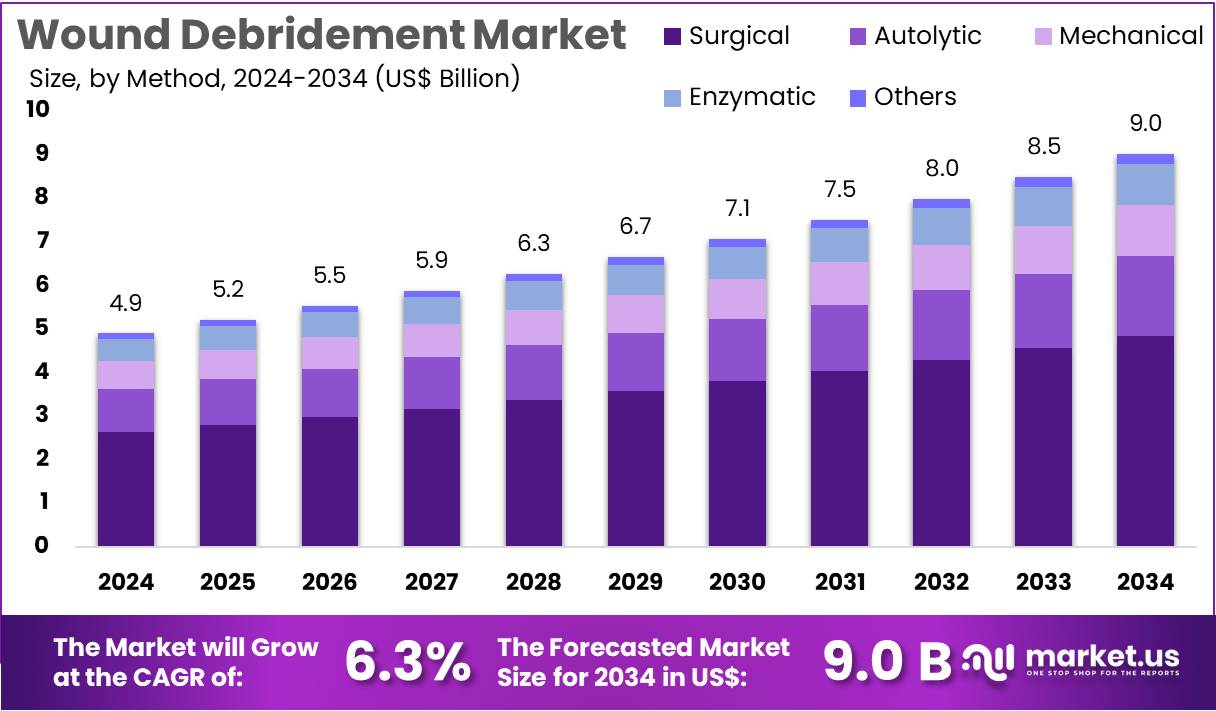
New York, NY – May 21, 2026 – The Global Wound Debridement Market Size is expected to be worth around US$ 9 Billion by 2034, from US$ 4.9 Billion in 2024, growing at a CAGR of 6.3% during the forecast period from 2025 to 2034. North America held a dominant market position, capturing more than a 43.1% share and holds US$ 2.1 Billion market value for the year.
Wound debridement is a medical procedure used to remove dead, damaged, or infected tissue from a wound to support faster healing and reduce the risk of infection. It is widely used in the treatment of chronic wounds, burns, diabetic foot ulcers, pressure ulcers, venous leg ulcers, and traumatic injuries. The procedure helps improve blood circulation in the affected area and promotes the growth of healthy tissue, which is essential for effective wound recovery.
Several wound debridement methods are available, including surgical, mechanical, enzymatic, autolytic, and biological debridement. Surgical debridement is commonly performed for severe or infected wounds, while enzymatic and autolytic techniques are preferred for less aggressive treatment. The growing prevalence of diabetes, chronic diseases, and an aging population has significantly increased the demand for advanced wound care solutions worldwide.
Healthcare providers are increasingly adopting advanced wound debridement products and technologies to improve patient outcomes and reduce hospitalization rates. Innovations such as hydrogel dressings, ultrasonic devices, and bioactive therapies are contributing to market expansion. Hospitals, clinics, and home healthcare settings remain key end users of wound debridement products and services.
The increasing focus on infection prevention, faster healing processes, and improved patient care continues to support the growth of the global wound debridement industry across developed and emerging healthcare markets.
Key Takeaways
- The global wound debridement market was valued at US$ 4.9 billion in 2024 and is projected to reach US$ 9.0 billion by 2033, expanding at a CAGR of 6.3% during the forecast period.
- Based on product type, the market is segmented into gels, ultrasonic devices, surgical devices, ointments & creams, medical gauzes, and others. Among these, medical gauzes dominated the market in 2024, accounting for a revenue share of 51.8%.
- By method, the market is categorized into autolytic, surgical, mechanical, enzymatic, and others. The surgical segment held the largest market share of 53.7% in 2024.
- In terms of application, the market is divided into pressure ulcers, venous leg ulcers, diabetic foot ulcers, burn wounds, and others. Diabetic foot ulcers emerged as the leading application segment, capturing 47.5% of the total market revenue.
- Based on end user, the market is segmented into hospitals, homecare, and others. Hospitals accounted for the highest revenue share of 59.4% in 2024.
- North America dominated the global wound debridement market, securing a market share of 43.1% in 2024.
Regional Analysis
North America dominated the global wound debridement market in 2024, accounting for a revenue share of 43.1%. The regional market growth is primarily driven by the increasing prevalence of chronic wounds, rising diabetic foot ulcer cases, and growing adoption of advanced wound care technologies.
According to healthcare data, diabetes-related foot ulcers and hospital-acquired pressure injuries have shown significant growth in recent years, increasing the demand for effective debridement procedures and products. In addition, regulatory approvals for advanced enzymatic debridement solutions and rising reimbursement claims for wound care treatments are supporting market expansion across hospitals and home healthcare settings. Government investments in chronic wound management programs are also contributing to the region’s strong market position.
Asia Pacific is expected to register the fastest CAGR during the forecast period due to the rising burden of diabetes, expanding healthcare infrastructure, and increasing awareness regarding advanced wound care management. Countries such as China, India, Japan, Australia, and South Korea are witnessing growing adoption of innovative wound debridement technologies.
Government healthcare initiatives, increasing reimbursement support, and investments in wound care research are further accelerating regional market growth. The rising aging population and increasing chronic wound incidences are also expected to create significant growth opportunities across Asia Pacific healthcare systems.
Emerging Trends
- Growing Demand for Advanced Wound Care Products: Advanced wound care products such as enzymatic gels, hydrogel dressings, and ultrasonic devices are increasingly replacing traditional saline and gauze methods. These solutions improve wound cleaning, reduce infections, minimize pain, and support faster healing, leading to wider adoption across hospitals and clinics globally.
- Rising Focus on Minimally Invasive Debridement: Minimally invasive debridement methods, including hydrosurgical and enzymatic techniques, are gaining popularity due to reduced patient discomfort and shorter recovery periods. These methods lower infection risks and scarring while improving patient outcomes, making them increasingly preferred in hospitals, clinics, and homecare environments.
- Integration of Digital Tools and AI: Digital technologies and artificial intelligence are transforming wound care management through real-time monitoring and improved clinical decision-making. Smart sensors, imaging systems, and AI-based platforms help healthcare professionals track healing progress, optimize debridement timing, and deliver more accurate and efficient wound treatments.
- Increasing Use in Home Healthcare: The growing preference for home healthcare is increasing demand for portable and easy-to-use wound debridement products. Elderly and diabetic patients benefit from convenient home treatments that reduce hospital visits, lower healthcare costs, and support continuous wound management with caregiver assistance and remote supervision.
- Personalized Treatment Approaches: Personalized wound care treatments are becoming increasingly important in modern healthcare. Physicians tailor debridement methods according to patient age, medical history, and wound condition, helping improve healing outcomes, minimize complications, and provide more effective treatment strategies for chronic and complex wound management.
- Rise in Chronic Conditions: The increasing prevalence of diabetes, obesity, and vascular diseases is contributing to rising cases of chronic wounds globally. These conditions require continuous wound management and effective debridement procedures, driving demand for advanced wound care technologies, specialized healthcare services, and long-term treatment solutions.
- Eco-Friendly and Biocompatible Materials: Manufacturers are increasingly developing biodegradable and biocompatible wound care materials to support environmental sustainability and patient safety. These products reduce skin irritation, improve comfort, and minimize medical waste, encouraging healthcare providers to adopt safer and eco-friendly wound debridement solutions across clinical settings.
Use Cases
- Treating Diabetic Foot Ulcers: Wound debridement plays a critical role in treating diabetic foot ulcers by removing infected and dead tissue that delays healing. The procedure supports healthy tissue growth, lowers infection risks, improves circulation, and helps prevent severe complications such as lower-limb amputations among diabetic patients.
- Managing Pressure Ulcers (Bedsores): Pressure ulcers commonly affect elderly and bedridden patients, requiring regular wound cleaning and tissue removal. Debridement eliminates damaged tissue, reduces infection risks, relieves discomfort, and promotes faster healing, making it an essential treatment method in hospitals, nursing homes, and long-term care facilities.
- Post-Surgical Wound Care: Post-surgical wounds may develop infections or dead tissue that slow recovery and increase complications. Wound debridement removes unhealthy tissue, supports healthy skin regeneration, and improves healing outcomes, particularly among high-risk patients with diabetes, weakened immunity, or chronic health conditions requiring specialized care.
- Burn Injury Management: Burn injuries often produce dead tissue that can increase infection risks and delay recovery. Debridement helps remove damaged skin layers, promotes healthy tissue development, reduces pain, and improves healing efficiency, making it an important procedure in burn care units and emergency treatment settings.
- Infection Control in Trauma Wounds: Trauma wounds caused by accidents or injuries often contain bacteria, debris, and damaged tissue. Debridement cleans the wound effectively, lowers infection risks, and supports faster recovery. It also enables healthcare professionals to assess wound severity and deliver more accurate emergency medical treatment.
- Veterinary Wound Care: Veterinary professionals use wound debridement to treat cuts, infections, and traumatic injuries in animals. The procedure removes dead tissue, reduces inflammation, prevents infection spread, and supports faster healing. It is widely applied in pet clinics, livestock care, and wildlife rehabilitation treatment programs.
- Home Use by Trained Caregivers: Home-based debridement solutions allow trained caregivers and nurses to manage chronic wounds safely outside hospitals. User-friendly gels, dressings, and pads help remove dead tissue gently, improve patient comfort, reduce healthcare visits, and support continuous wound management for elderly and diabetic individuals at home.
Frequently Asked Questions on Wound Debridement
- What are the major types of wound debridement methods?
The major wound debridement methods include surgical, autolytic, enzymatic, mechanical, and biological debridement. Surgical debridement is widely preferred for severe wounds, while autolytic and enzymatic methods are commonly used for less invasive and controlled wound treatment procedures. - What factors are driving the growth of the wound debridement market?
The market growth is mainly driven by the increasing prevalence of diabetes, chronic wounds, pressure ulcers, and burn injuries. Rising healthcare expenditure, technological advancements in wound care products, and growing awareness regarding infection prevention are also supporting market expansion globally. - Which region dominates the wound debridement market?
North America currently dominates the wound debridement market due to advanced healthcare infrastructure, higher adoption of advanced wound care technologies, and increasing chronic wound cases. Strong reimbursement policies and government support for wound management programs further contribute to regional market leadership. - Which application segment holds the largest market share?
The diabetic foot ulcers segment accounts for the largest share in the wound debridement market. The rising global diabetic population and increasing incidence of chronic diabetic wounds are significantly driving demand for advanced debridement products and treatment procedures worldwide. - Who are the key end users in the wound debridement market?
Hospitals represent the leading end-user segment in the wound debridement market due to high patient admissions, availability of advanced treatment facilities, and increasing surgical procedures. Homecare settings are also witnessing growing demand with the rise in chronic wound management services. - What are the commonly used wound debridement products?
Commonly used wound debridement products include medical gauzes, gels, surgical devices, ultrasonic devices, ointments, and creams. Medical gauzes hold a significant market share due to their wide usage in hospitals, clinics, and home healthcare wound management applications. - Why is Asia Pacific considered a high-growth market for wound debridement?
Asia Pacific is expected to witness strong market growth due to increasing diabetes prevalence, improving healthcare infrastructure, and rising awareness regarding advanced wound care solutions. Government healthcare initiatives and expanding medical investments are also supporting regional market development significantly.
Conclusion
The global wound debridement market is witnessing steady growth due to the increasing prevalence of chronic wounds, diabetes, burn injuries, and pressure ulcers. Advancements in wound care technologies, rising adoption of minimally invasive procedures, and growing awareness regarding infection prevention are supporting market expansion worldwide.
North America currently leads the market, while Asia Pacific is expected to register the fastest growth owing to improving healthcare infrastructure and increasing healthcare investments. The integration of digital tools, personalized treatments, and home healthcare solutions is further transforming the industry. Continuous innovation and rising demand for effective wound management are expected to create significant future growth opportunities globally.
Discuss your needs with our analyst
Please share your requirements with more details so our analyst can check if they can solve your problem(s)




