


Overview
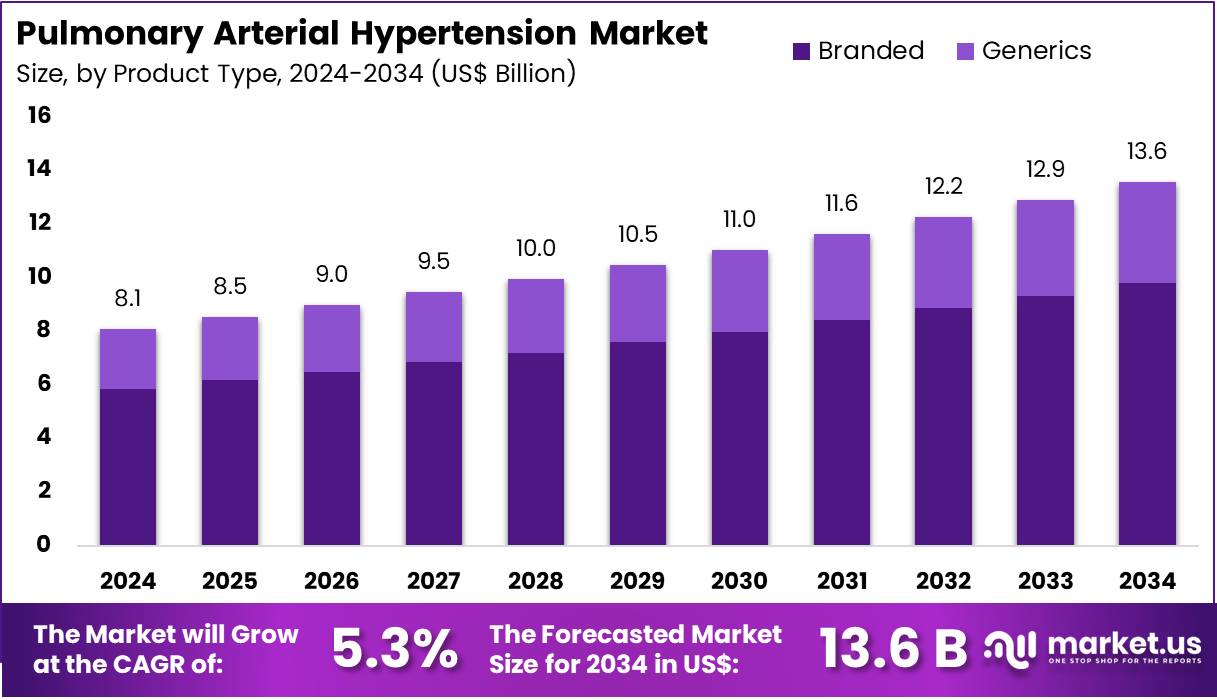
New York, NY – May 11, 2026 – The Pulmonary Arterial Hypertension Market Size is expected to be worth around US$ 13.6 billion by 2034 from US$ 8.1 billion in 2024, growing at a CAGR of 5.3% during the forecast period 2025 to 2034.
Pulmonary Arterial Hypertension (PAH) is a rare, progressive disorder characterized by elevated blood pressure in the pulmonary arteries, which are responsible for carrying blood from the heart to the lungs. The condition occurs due to narrowing, thickening, or stiffening of these blood vessels, resulting in increased resistance to blood flow and placing excessive strain on the right side of the heart. Over time, untreated PAH may lead to heart failure and other severe complications.
Common symptoms associated with PAH include shortness of breath, fatigue, chest pain, dizziness, fainting episodes, and swelling in the ankles or legs. The disease may develop idiopathically or in association with underlying conditions such as connective tissue disorders, congenital heart disease, chronic liver disease, or genetic mutations.
The prevalence of PAH remains relatively low compared to other cardiovascular diseases; however, growing awareness, advancements in diagnostic technologies, and improvements in targeted therapies have contributed to earlier diagnosis and better disease management outcomes. Current treatment approaches include vasodilators, endothelin receptor antagonists, phosphodiesterase inhibitors, prostacyclin therapies, and supportive oxygen therapy aimed at improving pulmonary blood flow and patient quality of life.
Ongoing research activities and increasing investments in rare disease therapeutics are expected to support innovation in PAH treatment and management strategies globally.
Key Takeaways
- In 2024, the Pulmonary Arterial Hypertension market generated revenue of US$ 8.1 billion and is projected to reach US$ 13.6 billion by 2033, expanding at a CAGR of 5.3% during the forecast period.
- Based on product type, the market is categorized into branded and generic drugs. The branded segment dominated the market in 2024, accounting for a revenue share of 72.3%.
- By route of administration, the market is segmented into oral, intravenous/subcutaneous, and inhalational therapies. Among these, the oral segment held the largest market share of 59.6% in 2024.
- In terms of drug class, the market is divided into endothelin receptor antagonists, SGC stimulators, prostacyclin and prostacyclin analogs, and PDE-5 inhibitors. The prostacyclin and prostacyclin analogs segment emerged as the leading category, capturing 52.4% of the total market revenue.
- North America dominated the global pulmonary arterial hypertension market in 2024, securing a market share of 37.2%.
Regional Analysis
North America held the leading position in the Pulmonary Arterial Hypertension market in 2024, accounting for a revenue share of 37.2%. The region’s dominance can be attributed to the increasing prevalence of pulmonary arterial hypertension (PAH), strong healthcare infrastructure, and the growing adoption of advanced treatment options. Studies indicate that the prevalence of PAH in North America ranges between 0.4 and 1.4 cases per 100,000 individuals, while the incidence rate is estimated at 0.5 to 1.0 cases per 100,000 person-years.
Rising disease awareness and early diagnosis have further supported market expansion. In addition, pharmaceutical companies are actively investing in research and development activities to introduce innovative therapies. The approval of advanced drugs, including Merck’s Winrevair by the FDA, has strengthened treatment availability and improved patient outcomes across the region.
Asia Pacific is anticipated to register the fastest CAGR during the forecast period due to increasing disease prevalence, expanding healthcare infrastructure, and rising healthcare spending. Countries such as Japan, China, and India are witnessing greater adoption of advanced PAH therapies and increasing clinical research activities. Government initiatives supporting early diagnosis and collaborations between healthcare providers and pharmaceutical companies are expected to further accelerate market growth in the region.
Emerging Trends
- Broader Diagnostic Criteria: Doctors are adopting updated guidelines to diagnose pulmonary arterial hypertension earlier than before. Patients with slightly elevated lung pressure are now monitored and treated sooner. This broader diagnostic approach supports timely intervention, reduces complications, and improves long term disease management and patient outcomes.
- Artificial Intelligence in Diagnosis: Artificial intelligence is improving pulmonary arterial hypertension diagnosis by analyzing heart and lung imaging with greater speed and accuracy. AI tools help doctors assess disease severity, monitor progression, and reduce dependence on invasive procedures, supporting faster clinical decisions and better patient management strategies.
- Earlier and Combined Treatments: Healthcare providers are increasingly using combination therapies immediately after pulmonary arterial hypertension diagnosis. Multiple drugs targeting different biological pathways help stabilize patients faster, improve breathing capacity, reduce heart strain, and lower hospitalization risks, particularly among individuals with moderate to severe disease symptoms.
- Stem Cell and Regenerative Therapies: Stem cell and regenerative therapies are emerging as promising treatment options for pulmonary arterial hypertension. These therapies aim to repair damaged lung blood vessels and restore pulmonary function. Early research findings indicate potential benefits for patients who respond poorly to conventional treatment approaches.
Use Cases
- Non Invasive Monitoring: Doctors are increasingly using ultrasound imaging and artificial intelligence tools to monitor pulmonary arterial hypertension without invasive procedures. These technologies help track heart and lung performance safely, detect complications earlier, and improve follow up care, particularly for elderly patients and high risk individuals.
- Early Dual Treatment Approach: The early dual treatment approach involves starting pulmonary arterial hypertension patients on two medications immediately after diagnosis. This strategy helps control symptoms more effectively, slows disease progression, and improves overall treatment response by targeting multiple disease pathways at the same time from onset.
- Genetic Testing for Risk Assessment: Genetic testing is becoming an important tool for identifying individuals at higher risk of developing severe pulmonary arterial hypertension. It supports earlier monitoring, personalized treatment planning, and preventive care, especially among families with inherited disease history or known genetic mutations linked to PAH.
- Innovative Therapies for Children: Innovative therapies such as gene therapy and cell based treatments are expanding treatment possibilities for children with pulmonary arterial hypertension. These advanced approaches may improve outcomes for pediatric patients who do not respond well to standard medications and require more specialized therapeutic interventions.
Frequently Asked Questions on Pulmonary Arterial Hypertension
- What are the major symptoms of Pulmonary Arterial Hypertension?
Common symptoms of pulmonary arterial hypertension include shortness of breath, dizziness, fatigue, chest pain, swelling in the ankles, and rapid heartbeat. Symptoms usually worsen gradually and may significantly affect physical activity, exercise capacity, and overall quality of daily life. - What causes Pulmonary Arterial Hypertension?
Pulmonary arterial hypertension can develop due to genetic mutations, connective tissue diseases, congenital heart disorders, liver disease, or prolonged exposure to certain drugs and toxins. In several cases, the exact underlying cause remains unknown and is classified as idiopathic PAH. - How is Pulmonary Arterial Hypertension diagnosed?
Diagnosis of pulmonary arterial hypertension involves echocardiography, right heart catheterization, pulmonary function testing, blood analysis, and imaging studies. Early diagnosis is considered essential because timely treatment initiation may help slow disease progression and improve long-term patient outcomes. - What treatment options are available for Pulmonary Arterial Hypertension?
Treatment options for pulmonary arterial hypertension include endothelin receptor antagonists, phosphodiesterase inhibitors, prostacyclin therapies, oxygen supplementation, and lifestyle modifications. In severe cases, lung transplantation may be recommended to manage advanced disease progression and improve survival rates. - Which regions dominate the Pulmonary Arterial Hypertension market?
North America dominates the pulmonary arterial hypertension market due to advanced healthcare infrastructure, strong reimbursement systems, and higher diagnosis rates. Europe also holds a substantial share, while Asia-Pacific is witnessing rapid growth supported by improving healthcare access and investments. - Which drug classes are widely used in the Pulmonary Arterial Hypertension market?
Major drug classes in the pulmonary arterial hypertension market include endothelin receptor antagonists, prostacyclin analogs, soluble guanylate cyclase stimulators, and phosphodiesterase type-5 inhibitors. Combination therapy approaches are increasingly adopted to enhance treatment effectiveness and improve patient survival outcomes. - What are the future trends in the Pulmonary Arterial Hypertension market?
Future trends in the pulmonary arterial hypertension market include development of personalized medicine, expansion of combination therapies, increasing adoption of biologics, and integration of digital monitoring technologies. Strategic collaborations among pharmaceutical companies are also expected to accelerate innovation and commercialization activities.
Conclusion
The global Pulmonary Arterial Hypertension market is expected to witness steady growth due to rising disease awareness, advancements in diagnostic technologies, and the increasing availability of targeted therapies. Expanding adoption of combination treatments, regenerative medicine, and artificial intelligence-based diagnostic tools is improving patient management and treatment outcomes.
North America continues to dominate the market owing to strong healthcare infrastructure and ongoing drug innovations, while Asia Pacific is projected to experience the fastest growth driven by improving healthcare access and rising investments in rare disease treatment. Continuous research activities and supportive government initiatives are expected to further accelerate innovation and long-term market expansion globally.
Discuss your needs with our analyst
Please share your requirements with more details so our analyst can check if they can solve your problem(s)




