


Overview
New York, NY – Aug 05, 2026 –The Global Recording Chart Paper for Healthcare Market size is expected to be worth around US$ 1241.3 Million by 2034, from US$ 784.2 Million in 2024, growing at a CAGR of 4.7% during the forecast period from 2025 to 2034. North America held a dominant market position, capturing more than a 39% share and a US$305.8 million market value for the year.
The global Recording Chart Paper Market continues to experience stable demand, supported by the widespread use of paper-based diagnostic records in hospitals, clinics, and diagnostic laboratories. Recording chart paper is an essential consumable used in electrocardiographs (ECG), electroencephalographs (EEG), fetal monitors, and patient monitoring systems, where accurate printed data remains critical for clinical interpretation and medical documentation. Despite increasing healthcare digitalisation, many healthcare facilities continue to operate hybrid systems that require reliable paper outputs.
The growing prevalence of cardiovascular diseases is a major factor supporting market growth. According to the World Health Organization (WHO), cardiovascular diseases caused 19.8 million deaths in 2022, accounting for nearly 32% of all global deaths, driving consistent demand for ECG monitoring and recording paper. Additionally, the United Nations estimates that 1 in 6 people worldwide will be aged 65 years or older by 2050, increasing the need for routine cardiac, neurological, and fetal monitoring.
Hospital admissions also contribute significantly to market demand. OECD data indicates approximately 130 hospital discharges per 1,000 population in 2021, with many inpatient procedures requiring continuous physiological monitoring. Furthermore, the World Bank reported that 92% of the global population had access to electricity in 2023, leaving nearly 660 million people without reliable power, where paper-based recording systems remain practical and dependable. Rising healthcare expenditure, expanding diagnostic services, and long-term medical record retention requirements continue to strengthen the demand for recording chart paper across both developed and emerging healthcare markets.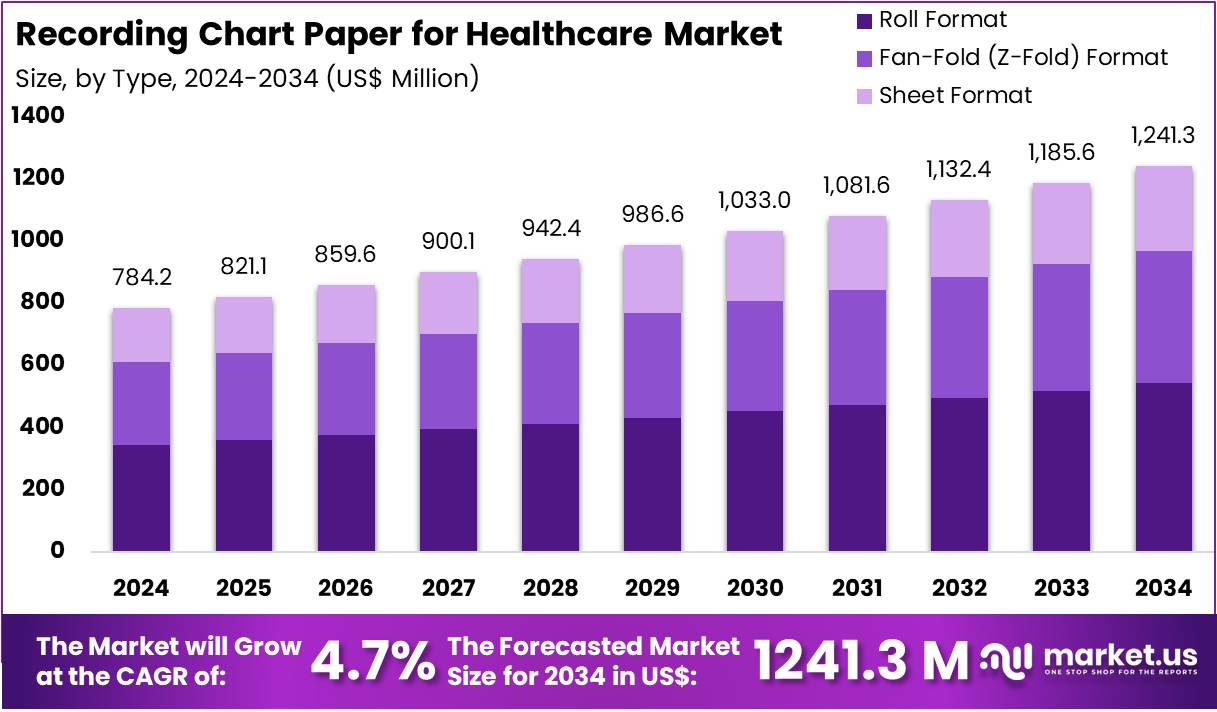
Key Takeaways
- The global recording chart paper market is expected to reach US$ 1,241.3 million by 2034, expanding at a CAGR of 4.7% during the forecast period.
- In 2024, the Roll Format segment accounted for the largest share of the type category, holding 43.8% of the global market due to its extensive use in healthcare monitoring applications.
- The Cardiology Monitoring segment led the medical specialty category in 2024, capturing 38.1% of the market, driven by the widespread use of ECG and cardiac diagnostic procedures.
- Hospitals and Clinics remained the leading end-user segment in 2024, contributing 51.4% of the global market, supported by high patient volumes and continuous diagnostic monitoring needs.
- In the distribution channel segment, Direct Sales held the dominant position in 2024, representing 48.5% of the market, reflecting the strong preference for direct purchasing from manufacturers and suppliers.
- North America dominated the global recording chart paper market in 2024, accounting for 39.0% of the total market and generating approximately US$ 305.8 million in revenue.
Statistical Information
- Rising Cardiovascular Disease Burden is Increasing ECG Monitoring Demand: Cardiovascular diseases (CVDs) remain the leading cause of death globally. According to the World Health Organization (WHO), 19.8 million people died from CVDs in 2022, representing approximately 32% of all global deaths. Around 85% of these deaths were caused by heart attacks and strokes, making ECG monitoring one of the most commonly used diagnostic procedures in hospitals and emergency departments. This directly supports steady demand for recording chart paper used in ECG systems.
- Ageing Population is Increasing Cardiac and Neurological Monitoring: The global ageing population continues to expand, increasing demand for continuous patient monitoring. The United Nations estimates that 1 in every 6 people worldwide will be aged 65 years or older by 2050, compared with 1 in 11 in 2019. Older adults undergo more frequent ECG, EEG, and bedside monitoring, many of which still rely on printed recording chart paper in hospitals using hybrid documentation systems.
- Hospital Activity Drives High Consumption of Recording Chart Paper: Healthcare utilization remains strong across developed countries. According to the OECD Health at a Glance 2023, OECD countries recorded an average of 130 hospital discharges per 1,000 population in 2021. Hospital admissions frequently involve cardiac monitoring, surgery recovery, intensive care monitoring, and fetal monitoring, all of which consume recording chart paper for documentation and clinical review.
- Reliable Hospital Monitoring Remains Essential Despite Digitalization: According to the OECD, cardiovascular diseases continue to be among the leading causes of hospitalization and mortality across developed countries. In 2021, approximately 25% of heart failure patients died within one year of hospital discharge, while 32% were readmitted, highlighting the need for continuous monitoring and accurate diagnostic documentation throughout patient care.
- Infrastructure Gaps Continue to Support Paper-Based Monitoring: The World Bank reported that approximately 92% of the world’s population had access to electricity in 2023, leaving nearly 660 million people without reliable electricity access. In healthcare facilities facing unstable power infrastructure, paper-based recording remains a dependable solution for preserving patient diagnostic information during monitoring procedures.
- Emergency Departments Depend Heavily on ECG Testing: According to the U.S. Centers for Disease Control and Prevention (CDC), there were approximately 139.8 million emergency department visits in the United States during 2022. Patients presenting with chest pain, arrhythmias, or suspected heart attacks routinely undergo ECG examinations, many of which continue to generate printed recordings for diagnosis and patient records.
- Heart Disease Remains the Leading Cause of Death in the United States: The CDC reported that heart disease caused 702,880 deaths in the United States in 2022, accounting for about 1 in every 5 deaths. The high burden of cardiovascular disease sustains frequent ECG monitoring across hospitals and outpatient facilities, supporting continuous demand for recording chart paper.
- Stroke Burden Continues to Increase Demand for ECG Monitoring: According to the World Stroke Organization, approximately 12.2 million people experience a first stroke each year, while 101 million people are living with the effects of stroke globally. ECG monitoring is routinely performed to detect atrial fibrillation and other cardiac abnormalities associated with stroke, supporting continued demand for recording chart paper.
- Coronary Heart Disease Causes Hundreds of Thousands of Deaths Annually: The U.S. Centers for Disease Control and Prevention (CDC) reports that about 371,506 people died from coronary heart disease in the United States in 2022. Patients with coronary heart disease frequently undergo ECG examinations during diagnosis, treatment, and follow-up, resulting in regular use of ECG recording paper.
- Aging Population in Europe Requires More Diagnostic Monitoring: According to Eurostat, 21.6% of the European Union population was aged 65 years and over in 2024. Older adults require more frequent cardiovascular and neurological assessments, increasing the utilization of ECG, EEG, and patient monitoring systems that often use recording chart paper.
Regional Analysis
North America led the global market with a 39% share in 2024
In 2024, North America accounted for more than 39% of the global recording chart paper market, with a market value of approximately US$ 305.8 million. The region’s leadership is supported by a highly developed healthcare system, widespread use of diagnostic monitoring equipment, and strong regulatory standards for patient documentation. Hospitals and diagnostic centers across the United States and Canada continue to rely on recording chart paper for electrocardiography (ECG), electroencephalography (EEG), fetal monitoring, and critical care applications.
Cardiovascular disease remains the leading cause of death globally, while emergency departments perform millions of patient evaluations requiring ECG monitoring each year. Although electronic health records are widely implemented across North America, printed diagnostic outputs remain essential for clinical workflows, audits, and medico-legal documentation. OECD reports show that many hospitals operate advanced electronic record systems while maintaining documentation practices that include printed diagnostic records for quality assurance and compliance.
Additionally, continued investment in healthcare infrastructure, advanced medical technologies, and patient monitoring equipment by healthcare providers and medical device manufacturers supports consistent demand for recording chart paper. These factors are expected to sustain North America’s leading position throughout the forecast period.
Emerging Trends
- Hybrid Digital–Paper Workflows Continue to Grow: Hospitals are increasingly using electronic health records while retaining printed ECG and monitoring reports for compliance and clinical review. The U.S. FDA continues to regulate ECG devices with printing functions, supporting ongoing demand for recording chart paper.
- Rising Cardiovascular Disease Increases ECG Monitoring: According to the World Health Organization (WHO), cardiovascular diseases caused 19.8 million deaths in 2022, representing 32% of global deaths. This continues to drive the use of ECG systems that require recording chart paper.
- Growing Elderly Population Supports Monitoring Demand: The United Nations projects that by 2050, 1 in 6 people globally will be aged 65 years or older. Older adults require more frequent cardiac and neurological monitoring, increasing demand for recording chart paper.
- Expansion of Hospital Monitoring Systems: The U.S. FDA recognizes cardiac telemetry devices used for continuous patient monitoring. Increasing use of bedside monitoring in ICUs and emergency departments supports consistent consumption of recording chart paper.
- Greater Focus on Standardized ECG Quality: The FDA recognizes IEC 60601-2-27 standards for ECG monitoring equipment, encouraging hospitals to use high-quality recording chart paper that delivers clear, accurate, and durable printed waveforms.
Use Cases
- Electrocardiography (ECG) Recording: Recording chart paper is widely used for printing ECG waveforms to diagnose heart attacks, arrhythmias, and other cardiac disorders. Millions of ECG tests are performed annually, making it one of the largest applications.
- Fetal Monitoring During Labor: The UK National Institute for Health and Care Excellence (NICE) recommends continuous cardiotocography (CTG) for high-risk pregnancies. CTG equipment produces continuous printed strips for fetal assessment and medical records.
- Intensive Care Unit (ICU) Monitoring: Hospitals use recording chart paper to print cardiac rhythm strips and vital sign trends from bedside monitors. These records support rapid clinical decisions and long-term patient documentation.
- Electroencephalography (EEG) Documentation: Recording chart paper is used in EEG systems to print brain wave patterns for diagnosing epilepsy, sleep disorders, and neurological diseases. Printed reports remain valuable for physician review and patient record retention.
- Medical Record Retention and Legal Documentation: Healthcare organizations continue using printed diagnostic records to meet long-term documentation requirements. The NHS Records Management Code requires maternity records to be retained for at least 25 years, supporting ongoing use of durable recording chart paper.
Frequently Asked Questions on Recording Chart Paper for Healthcare
- What are the major applications of recording chart paper?
Recording chart paper is mainly used in electrocardiography (ECG), electroencephalography (EEG), cardiotocography (CTG), anesthesia monitoring, and bedside patient monitoring. Cardiology is the largest application because ECG testing is routinely performed for heart disease diagnosis and patient monitoring. - Why do hospitals continue using recording chart paper?
Hospitals continue using recording chart paper because printed diagnostic reports provide immediate clinical reference, support medico-legal documentation, assist during audits, and serve as reliable backup records even when healthcare facilities adopt electronic medical record systems. - Which end users consume the most recording chart paper?
Hospitals and clinics are the largest users of recording chart paper due to their high patient volumes and frequent diagnostic procedures. Diagnostic laboratories, emergency departments, and specialty care centers also contribute significantly to market demand. - Which region dominates the recording chart paper market?
North America leads the recording chart paper market due to its advanced healthcare infrastructure, widespread adoption of patient monitoring systems, high diagnostic testing volumes, and strict regulatory standards requiring accurate medical documentation. - What is driving the growth of the recording chart paper market?
The market is driven by increasing cardiovascular diseases, a growing elderly population, rising hospital admissions, expanding healthcare infrastructure, and continued reliance on ECG, EEG, and fetal monitoring devices that generate printed diagnostic records. - Which product type holds the largest market share?
Roll-format recording chart paper holds the largest share because it is widely compatible with ECG, CTG, and patient monitoring equipment. Its continuous printing capability and ease of use make it the preferred choice in healthcare facilities. - What opportunities exist in the recording chart paper market?
Market opportunities are supported by healthcare infrastructure expansion, rising investments in diagnostic services, increasing patient monitoring, and growing demand from emerging economies where paper-based documentation remains an essential part of clinical practice. - What is the future outlook for the recording chart paper market?
The recording chart paper market is expected to witness steady growth as hospitals continue using hybrid digital-paper systems, chronic disease monitoring increases, and healthcare providers maintain printed records for compliance, quality assurance, and long-term patient documentation.
Conclusion
The global recording chart paper market is expected to maintain steady growth, supported by the increasing prevalence of cardiovascular and neurological disorders, rising hospital admissions, and expanding patient monitoring activities. Although healthcare providers are adopting digital technologies, recording chart paper remains an essential component of hybrid clinical workflows due to its reliability, regulatory importance, and medico-legal value.
Strong demand from hospitals, clinics, and diagnostic centers, particularly for ECG, EEG, and fetal monitoring applications, continues to drive market expansion. Growing healthcare investments, an aging population, and ongoing infrastructure development in emerging economies are expected to sustain long-term demand for high-quality recording chart paper worldwide.
Discuss your needs with our analyst
Please share your requirements with more details so our analyst can check if they can solve your problem(s)




