


Overview
New York, NY – Aug 06, 2026 – The Global Contact Lens Solution Market size is expected to be worth around US$ 5.2 Billion by 2034 from US$ 3.8 Billion in 2024, growing at a CAGR of 3.2% during the forecast period 2025 to 2034. In 2024, North America led the market, achieving over 39.2% share with a revenue of US$ 1.5 Billion.
The global contact lens solution market is witnessing steady growth due to the increasing prevalence of vision impairment, rising contact lens adoption, and growing awareness about eye hygiene. Contact lens solutions play a critical role in maintaining lens performance, preventing microbial contamination, and improving user comfort. The increasing preference for contact lenses as an alternative to eyeglasses is creating sustained demand for cleaning, disinfecting, and storage solutions.
According to the World Health Organization (WHO), more than 2.2 billion people globally experience vision impairment, with uncorrected refractive errors representing one of the major causes. This large patient population is supporting the need for vision correction products, including contact lenses and related maintenance solutions. Additionally, the growing number of daily and reusable contact lens users is encouraging demand for advanced multi-purpose solutions and hydrogen peroxide-based cleaning systems.
Eye health awareness is becoming a major market trend, as improper lens care can increase the risk of infections. The Centers for Disease Control and Prevention (CDC) highlights that nearly 99% of contact lens wearers report at least one hygiene-related behavior associated with increased infection risk, emphasizing the importance of effective lens care products and consumer education.
Manufacturers are focusing on innovation, sustainability, and specialized solutions for advanced lenses. For example, Bausch Lomb’s recycling initiative collected more than 84 million used contact lens products by April 2024, reflecting increasing environmental responsibility in the eye care industry.
Furthermore, the formation of Wave Eye Care in January 2025 through the merger of Advanced Vision Technologies, EyePrint Prosthetics, and Wave Contact Lens System highlights the rising demand for specialty lenses and compatible care solutions. These developments are expected to strengthen market expansion by improving safety, convenience, and patient outcomes.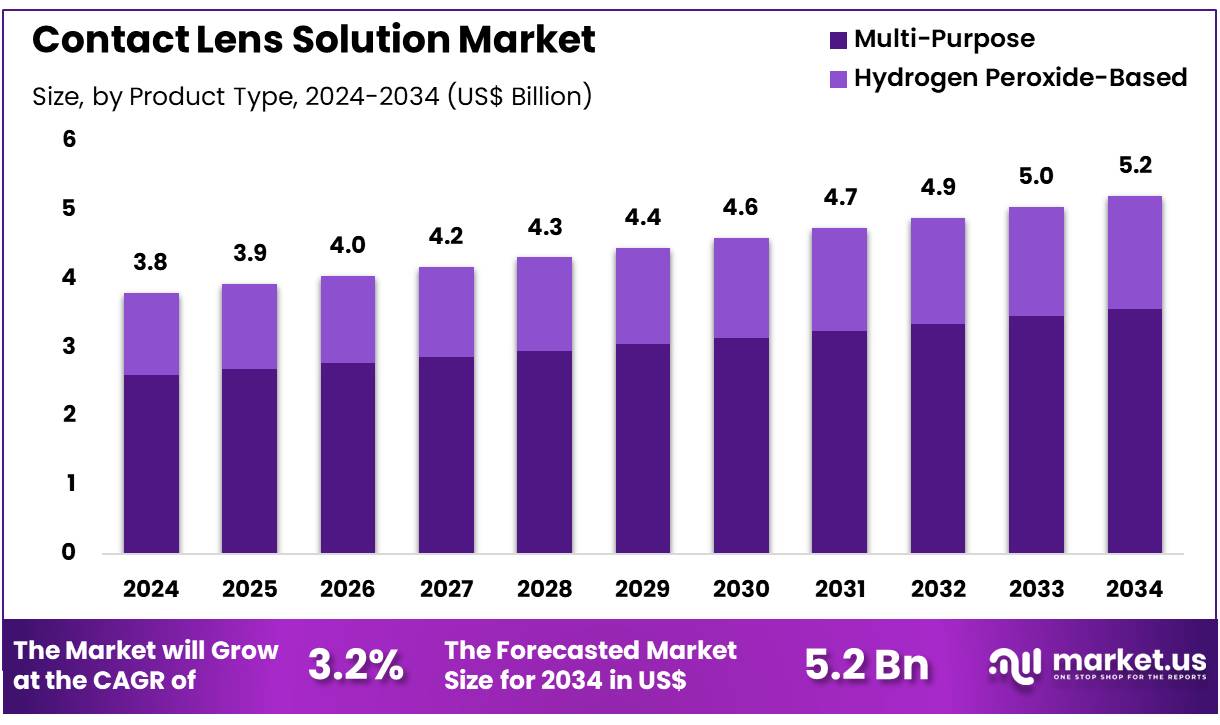
Key Takeaways
- In 2024, the contact lens solution market generated US$ 3.8 billion in revenue and is projected to grow at a CAGR of 3.2%, reaching approximately US$ 5.2 billion by 2034.
- Based on product type, the market is segmented into multi-purpose solutions and hydrogen peroxide-based solutions. The multi-purpose solution segment dominated in 2023, accounting for a market share of 68.5%.
- By usage volume, the market is categorized into 480ml, 360ml, and 120ml solutions. The 480ml segment held the largest share in 2023, capturing 55.4% of the market.
- According to distribution channel, the market is divided into retail, e-commerce, and eye care professionals. The retail segment emerged as the leading channel, holding the highest revenue share of 52.8%.
- Based on lens material, the market is segmented into hybrid lenses, SMES gas permeable lenses, and silicone hydrogel lenses. The hybrid lens segment accounted for the largest revenue share of 47.1%.
- Regionally, North America dominated the contact lens solution market in 2023, securing a significant market share of 39.2% due to strong adoption of contact lenses and advanced eye care infrastructure.
Statistical Information
- Growing Vision Impairment Creates Long-Term Demand for Vision Correction Products: The global burden of vision impairment continues to increase the need for corrective solutions such as contact lenses and lens care products. According to the World Health Organization (WHO), at least 2.2 billion people worldwide have vision impairment or blindness, and at least 1 billion cases could have been prevented or remain unaddressed. Uncorrected refractive errors account for approximately 123.7 million cases, supporting continued demand for vision correction and maintenance products.
- Contact Lens Adoption Drives Need for Safe Cleaning and Disinfection Solutions: Contact lenses are widely used for vision correction, but proper cleaning and storage are essential to reduce infection risks. The U.S. Centers for Disease Control and Prevention (CDC) reports that approximately 45 million people in the United States wear contact lenses, highlighting a large consumer base requiring regular lens care solutions.
- Poor Hygiene Practices Increase Demand for Advanced Lens Care Products: Consumer behavior studies conducted by the CDC found that nearly 99% of contact lens wearers reported at least one risky hygiene behavior that could increase infection risk. The survey also showed that 82.3% kept lens cases longer than recommended and 55.1% topped off old solution instead of replacing it completely, demonstrating the need for improved cleaning solutions and consumer education.
- Sustainability Initiatives Are Increasing in the Contact Lens Care Industry: Environmental responsibility is becoming an important factor in eye care product development. Bausch + Lomb reported that its recycling programs collected more than 84.3 million units of used contact lenses, lens care products, and eye care materials, equivalent to more than 510,000 pounds of collected materials, by April 2024.
- Millions of Consumers Depend on Contact Lenses for Daily Vision Correction: Contact lenses remain an important vision correction option worldwide. According to the Centers for Disease Control and Prevention (CDC), approximately 45 million people in the United States wear contact lenses, including teenagers, adults, and older consumers. This large user base creates continuous demand for disinfecting, cleaning, and storage solutions.
- Women Represent a Major Share of Contact Lens Users in Consumer Surveys: CDC-supported research indicates that contact lens use is more common among women compared with men in the United States. Women account for approximately 63% of contact lens wearers, while men represent around 37%, showing important consumer demographic trends for eye care product manufacturers.
- Consumers Frequently Replace Solutions Incorrectly, Increasing Need for Better Education: CDC survey findings revealed that 55.1% of contact lens wearers reported topping off old solution with fresh solution, a practice that can reduce disinfecting effectiveness. This behavior supports demand for improved product instructions and safer lens care practices.
- Global Aging Population Supports Continued Demand for Vision Correction: The United Nations reports that the global population aged 60 years and older reached more than 1 billion people in 2020 and continues to grow. Aging populations experience higher rates of vision problems, increasing demand for corrective eye care solutions.
- Environmental Programs Are Expanding Across the Contact Lens Industry: Bausch + Lomb’s ONE by ONE Recycling Program collected more than 84 million contact lenses, blister packs, and lens care materials by 2024, demonstrating increasing industry focus on reducing waste from disposable eye care products.
Regional Analysis
North America led the market by securing a market share of 39.2% in 2023.
North America remains a major region for the contact lens solution market due to high contact lens adoption, advanced eye care infrastructure, and strong awareness regarding lens hygiene. According to the CDC, approximately 45 million people in the United States wear contact lenses, creating consistent demand for cleaning, disinfecting, and storage solutions.
The region also faces a significant burden of refractive errors, with myopia and other vision conditions increasing the need for corrective products. Strong retail networks, online pharmacies, and eye care professional channels further support product accessibility. Increasing adoption of specialty lenses and advanced care formulations is also contributing to market expansion.
Asia Pacific is expected to witness significant growth due to the rising prevalence of myopia, increasing healthcare awareness, and expanding access to vision correction products. The World Health Organization highlights myopia as a growing global eye health concern, particularly among younger populations in Asian countries. Rising disposable incomes and increased acceptance of cosmetic and corrective contact lenses are encouraging consumers to adopt lens care solutions.
Emerging Trends
- Growing Focus on Advanced Lens Hygiene and Infection Prevention: ncreasing awareness about eye infections is driving demand for effective contact lens cleaning and disinfecting solutions. The CDC reports that around 45 million people in the United States wear contact lenses, and improper cleaning practices can increase the risk of microbial keratitis. Manufacturers are focusing on safer multi-purpose solutions and improved user education.
- Rising Adoption of Hydrogen Peroxide-Based Cleaning Solutions: Hydrogen peroxide-based solutions are gaining popularity due to their strong disinfecting performance and preservative-free benefits. The FDA updated guidance in 2023 to improve safety labeling and reduce misuse risks. These solutions are increasingly preferred by users seeking advanced cleaning options for sensitive eyes.
- Sustainability Becomes a Key Trend in Lens Care Products: Environmental responsibility is influencing product development in the contact lens industry. Bausch + Lomb reported that its recycling initiatives collected more than 84 million units of used contact lenses, lens care products, and related materials by April 2024, supporting eco-friendly practices.
- Increasing Demand for Solutions Compatible with Specialty Lenses: Growth in specialty contact lenses for complex vision conditions is increasing demand for compatible care products. The FDA highlights that different lens materials require suitable cleaning and storage methods to maintain safety, comfort, and performance, encouraging innovation in lens care formulations.
- Consumer Education and Digital Eye Health Programs Drive Awareness: Healthcare organizations are increasing awareness campaigns focused on proper contact lens handling, replacement schedules, and hygiene practices. CDC programs target millions of users to reduce preventable eye infections and encourage safer lens care habits through improved consumer education.
Use Cases
- Daily Cleaning and Disinfection of Reusable Contact Lenses: Contact lens solutions are widely used for cleaning, disinfecting, rinsing, and storing reusable lenses. According to the CDC, approximately 45 million Americans use contact lenses, creating continuous demand for effective care solutions that help reduce infection risks and maintain lens quality.
- Sensitive Eye Care Through Preservative-Free Formulations: Hydrogen peroxide-based solutions are used by consumers who require alternatives to traditional preserved solutions. The FDA recognizes these products as effective disinfecting options when used correctly with proper neutralization systems, helping improve comfort for sensitive contact lens users.
- Supporting Growing Myopia Management and Vision Correction Needs: Rising cases of refractive errors are increasing demand for contact lenses and related maintenance products. WHO reports that more than 2.2 billion people globally experience vision impairment, highlighting the continued need for corrective vision solutions and proper lens care products.
- Improving Consumer Access Through Retail and Online Channels: Contact lens solutions are increasingly available through optical stores, pharmacies, and e-commerce platforms. Wider availability supports regular lens replacement and hygiene practices among users, especially as contact lens adoption continues to grow across developed and emerging regions.
- Sustainable Disposal and Recycling of Lens Care Products: Recycling initiatives are becoming an important use case in the contact lens care industry. Bausch + Lomb’s recycling program collected more than 84 million units by 2024, including lenses, blister packs, and care materials, promoting environmentally responsible disposal practices.
Frequently Asked Questions on Contact Lens Solution
- What factors are driving the growth of the contact lens solution market?
The contact lens solution market is driven by rising vision impairment cases, increasing contact lens adoption, growing awareness about eye hygiene, and demand for advanced cleaning products. The increasing use of specialty lenses also supports the need for compatible care solutions. - Which type of contact lens solution is most commonly used?
Multi-purpose solutions are among the most widely used contact lens care products because they provide cleaning, disinfecting, rinsing, and storage functions in a single formulation. Their convenience makes them popular among reusable contact lens users globally. - How do hydrogen peroxide-based contact lens solutions work?
Hydrogen peroxide-based solutions disinfect lenses by eliminating microorganisms and breaking down deposits. These solutions require a neutralization process before lens insertion to avoid irritation. They are often preferred by users seeking preservative-free cleaning options for sensitive eyes. - What are the major applications of contact lens solutions?
Contact lens solutions are mainly used for cleaning, disinfecting, rinsing, and storing reusable contact lenses. They support daily lens maintenance for corrective, cosmetic, specialty, and therapeutic lenses by improving hygiene, comfort, and reducing risks associated with improper lens handling. - Which region dominates the contact lens solution market?
North America represents a leading region due to high contact lens adoption, advanced eye care infrastructure, and strong awareness regarding lens hygiene. The presence of millions of contact lens users and established retail channels supports regional market growth. - How are e-commerce platforms influencing contact lens solution sales?
E-commerce platforms are improving consumer access to contact lens solutions by offering convenient purchasing options, wider product availability, and home delivery services. Online channels allow users to easily purchase preferred brands and maintain regular lens care routines. - What is the future outlook for the contact lens solution market?
The contact lens solution market is expected to grow with increasing vision correction needs, rising consumer awareness, and technological advancements. Demand for safer formulations, sustainable products, and customized care solutions will continue shaping future market development.
Conclusion
The contact lens solution market is experiencing steady growth due to rising vision impairment cases, increasing contact lens adoption, and growing awareness about eye hygiene. The demand for advanced cleaning formulations, including multi-purpose and hydrogen peroxide-based solutions, continues to expand as consumers prioritize safer lens care practices.
North America maintains a strong market position due to high contact lens usage and established eye care infrastructure, while Asia Pacific shows significant growth potential driven by rising myopia cases and increasing healthcare awareness. Sustainability initiatives, specialty lens adoption, and innovative care solutions are expected to shape the future development of the contact lens solution market.
Discuss your needs with our analyst
Please share your requirements with more details so our analyst can check if they can solve your problem(s)




