


Overview
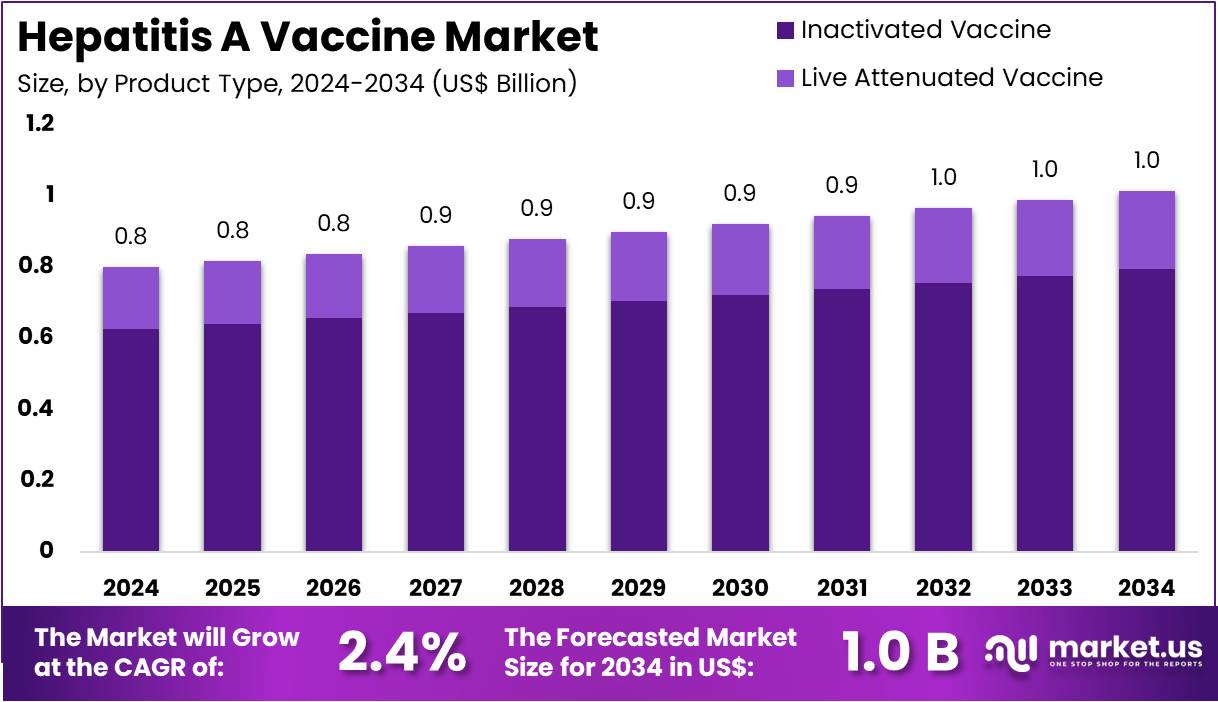
New York, NY – June 30, 2026 – The Hepatitis A Vaccine Market Size is expected to be worth around US$ 1.0 billion by 2034 from US$ 0.8 billion in 2024, growing at a CAGR of 2.4% during the forecast period 2025 to 2034.
The Hepatitis A vaccine is a preventive vaccine designed to protect individuals against hepatitis A, a highly contagious viral liver infection caused by the hepatitis A virus (HAV). The virus is primarily transmitted through the consumption of contaminated food or water or through close contact with an infected person. Hepatitis A can cause symptoms such as fever, fatigue, nausea, abdominal pain, loss of appetite, and jaundice. Although most individuals recover completely, the infection can result in severe complications, particularly among older adults and individuals with chronic liver disease.
The vaccine works by stimulating the body’s immune system to produce protective antibodies against the virus without causing the disease. It is administered as an inactivated (killed) vaccine and is typically given in two doses, with the second dose provided 6 to 12 months after the first to ensure long-term protection. The vaccine has demonstrated high effectiveness and a strong safety profile in both children and adults.
The Hepatitis A vaccine is recommended for children, travelers to regions with high hepatitis A prevalence, healthcare workers, people with chronic liver disease, and other high-risk populations. Widespread vaccination programs have significantly reduced the incidence of hepatitis A infections in many countries, contributing to improved public health outcomes. Increasing awareness, expanding immunization coverage, and ensuring timely vaccination remain essential strategies for preventing hepatitis A transmission and reducing the global burden of the disease.
Key Takeaways
- In 2024, the global hepatitis A vaccine market was valued at US$ 0.8 billion and is projected to reach US$ 1.0 billion by 2034, expanding at a CAGR of 2.4% during the forecast period.
- Based on product type, the market is segmented into inactivated vaccines and live attenuated vaccines. The inactivated vaccine segment dominated the market, accounting for a 78.3% share.
- By application, the market is categorized into government institutions, private sectors, and others. Among these, government institutions represented the largest segment, capturing a 68.5% market share.
- Asia Pacific emerged as the leading regional market, holding a 37.4% share of the global hepatitis A vaccine market.
Regional Analysis
Asia Pacific Leads the Hepatitis A Vaccine Market
Asia Pacific accounted for the largest share of the hepatitis A vaccine market, representing 37.4% of global revenue. This leadership is driven by expanding immunization programs, increasing public awareness of vaccine-preventable diseases, and improving access to healthcare services. Governments across the region continue to strengthen routine vaccination initiatives to reduce the incidence of hepatitis A and improve public health outcomes.
China has incorporated the hepatitis A vaccine into its national immunization schedule, achieving consistently high vaccine coverage rates that support steady demand. In India, updated recommendations from the Indian Academy of Pediatrics (IAP) continue to encourage hepatitis A vaccination among children, contributing to growing adoption in both public and private healthcare sectors. Additionally, the strong regional presence of major vaccine manufacturers, including GSK and Sanofi, supports broad vaccine availability through established distribution networks and public health collaborations.
North America Expected to Register the Fastest Growth
North America is projected to record the highest CAGR during the forecast period, supported by continued investments in public health and disease prevention initiatives. Despite a decline in reported hepatitis A cases in the United States in 2023 compared with 2022, infection levels remain above pre-outbreak figures, highlighting the ongoing need for vaccination.
In Canada, periodic foodborne hepatitis A outbreaks have reinforced the importance of rapid immunization responses. Continued vaccination efforts, combined with strong healthcare infrastructure and the presence of leading vaccine manufacturers, are expected to drive sustained market growth across the region.
Emerging Trends
- Growing Focus on Preventive Healthcare: Healthcare systems are increasingly emphasizing disease prevention instead of treatment, encouraging hepatitis A vaccination through awareness campaigns and immunization programs. Greater public understanding of vaccine benefits is increasing proactive vaccination, lowering disease burden, reducing healthcare costs, and strengthening long-term public health outcomes across populations.
- Rising Use of Combination Vaccines: Combination vaccines protecting against hepatitis A and other diseases, such as hepatitis B, are gaining widespread acceptance. They reduce injection frequency, improve patient convenience, simplify healthcare delivery, increase compliance, and support broader immunization coverage among children, adults, and high-risk populations worldwide.
- Public Immunization Campaigns in Developing Countries: Developing countries are expanding public immunization campaigns to reduce hepatitis A infections, particularly in regions with poor sanitation. Free or subsidized vaccines, awareness initiatives, and improved healthcare access are increasing vaccination rates while reducing disease outbreaks and improving community health outcomes significantly.
- Steady Demand for Travel Vaccines: Growing international travel continues supporting demand for hepatitis A vaccines, especially among travelers visiting regions with limited sanitation. Healthcare professionals increasingly recommend vaccination before departure, making hepatitis A immunization a routine travel precaution and sustaining demand across travel medicine and private healthcare sectors.
- Improved Cold Chain Infrastructure: Advancements in cold chain infrastructure are improving vaccine storage, transportation, and distribution efficiency worldwide. Better logistics and temperature-controlled systems ensure vaccine quality, reduce wastage, expand access in remote communities, strengthen immunization programs, and improve public confidence in vaccination services across developing regions.
- Support from Non-Profit and Global Health Organizations: Global organizations including WHO and UNICEF continue supporting hepatitis A vaccination through funding, technical assistance, education, and distribution programs. Their initiatives strengthen national immunization efforts, improve vaccine accessibility in underserved regions, increase awareness, and contribute to higher vaccination coverage worldwide.
Use Cases
- Routine Childhood Immunization: Hepatitis A vaccination is widely included in childhood immunization schedules to protect children before exposure. Early vaccination reduces infection risks, prevents future outbreaks, supports long-term immunity, complements routine pediatric vaccines, and strengthens national disease prevention strategies while lowering future healthcare expenses significantly.
- Outbreak Control in Communities: During hepatitis A outbreaks, targeted vaccination campaigns help contain virus transmission by immunizing exposed individuals in affected communities. Rapid response programs, combined with hygiene awareness initiatives, reduce new infections, limit outbreak severity, protect vulnerable populations, and minimize healthcare resource requirements effectively.
- Pre-Travel Vaccination: Travelers visiting regions with higher hepatitis A prevalence are advised to receive vaccination before departure. Pre-travel immunization provides protective immunity, reduces infection risks during international travel, supports safer tourism, and remains an essential preventive measure recommended by healthcare professionals and travel clinics.
- Vaccination for Food Handlers and Restaurant Workers: Food handlers and restaurant employees receive hepatitis A vaccination to reduce foodborne transmission risks. Workplace immunization improves food safety, protects customers, minimizes employee illness, supports regulatory compliance, enhances business reputation, and reduces operational disruptions caused by disease outbreaks within food service industries.
- Protection for People with Liver Problems: Individuals with chronic liver diseases face greater complications from hepatitis A infection, making vaccination highly recommended. Immunization reduces severe illness risks, prevents hospitalization, protects liver function, supports better patient outcomes, and forms an important component of preventive care in specialized liver clinics.
- Emergency Response After Natural Disasters: Natural disasters often increase hepatitis A transmission risks due to poor sanitation and contaminated water supplies. Emergency vaccination programs protect vulnerable populations in shelters, prevent disease outbreaks, support disaster response efforts, reduce healthcare burdens, and improve public health resilience during recovery operations.
- Workplace Vaccination Programs: Organizations increasingly include hepatitis A vaccination within employee wellness programs, particularly for international travelers and food industry workers. Workplace immunization improves workforce health, reduces absenteeism, minimizes operational disruptions, protects employees against infection, and demonstrates commitment to occupational health and safety standards.
Frequently Asked Questions on Hepatitis A Vaccine
- Who should receive the Hepatitis A vaccine?
The Hepatitis A vaccine is recommended for all children, travelers visiting regions with high hepatitis A prevalence, healthcare workers, people with chronic liver disease, men who have sex with men, and individuals at increased risk of exposure. Vaccination helps reduce disease transmission and provides long-term immunity against infection. - How effective is the Hepatitis A vaccine?
The Hepatitis A vaccine is highly effective, providing protective immunity in more than 95% of vaccinated individuals after completing the recommended dosage schedule. Protection generally lasts for at least 20 years and may extend throughout a person’s lifetime, making it one of the most reliable preventive vaccines available. - What factors are driving the growth of the Hepatitis A Vaccine Market?
The Hepatitis A Vaccine Market is expanding due to increasing vaccination awareness, rising government immunization initiatives, higher international travel, growing healthcare expenditure, and periodic hepatitis A outbreaks. Improvements in vaccine accessibility and national immunization programs are also supporting sustained market growth across developed and developing economies. - Which region dominates the Hepatitis A Vaccine Market?
Asia Pacific holds the largest share of the Hepatitis A Vaccine Market due to extensive immunization programs, large population base, increasing public health investments, and expanding healthcare infrastructure. Strong government support for routine vaccination and the presence of leading vaccine manufacturers further contribute to the region’s market leadership. - What are the major segments of the Hepatitis A Vaccine Market?
The Hepatitis A Vaccine Market is segmented by product type into inactivated vaccines and live attenuated vaccines, with inactivated vaccines accounting for the largest market share. By application, the market includes government institutions, private sectors, and other healthcare settings, with government institutions representing the leading end-user segment. - What challenges does the Hepatitis A Vaccine Market face?
The Hepatitis A Vaccine Market faces challenges such as high vaccine development costs, uneven immunization coverage across low-income regions, limited public awareness in certain countries, and complex regulatory approval processes. Additionally, fluctuations in government healthcare budgets and vaccine procurement policies may influence overall market expansion. - What is the future outlook for the Hepatitis A Vaccine Market?
The Hepatitis A Vaccine Market is expected to witness steady growth over the coming decade, supported by expanding routine immunization programs, increasing investments in preventive healthcare, and rising awareness of vaccine-preventable diseases. Technological advancements in vaccine production and stronger public-private collaborations are also expected to create new growth opportunities.
Conclusion
The hepatitis A vaccine market is expected to experience steady growth over the forecast period, supported by expanding immunization programs, increasing awareness of preventive healthcare, and rising vaccination coverage across both developed and developing economies. Government-led initiatives, stronger healthcare infrastructure, and support from global health organizations continue to improve vaccine accessibility and adoption.
The growing use of combination vaccines, sustained travel-related demand, and advancements in cold chain logistics further strengthen market expansion. With Asia Pacific maintaining market leadership and North America demonstrating strong growth potential, continued investments in public health, innovation, and immunization strategies will support long-term market development and disease prevention worldwide.
Discuss your needs with our analyst
Please share your requirements with more details so our analyst can check if they can solve your problem(s)




