


Overview
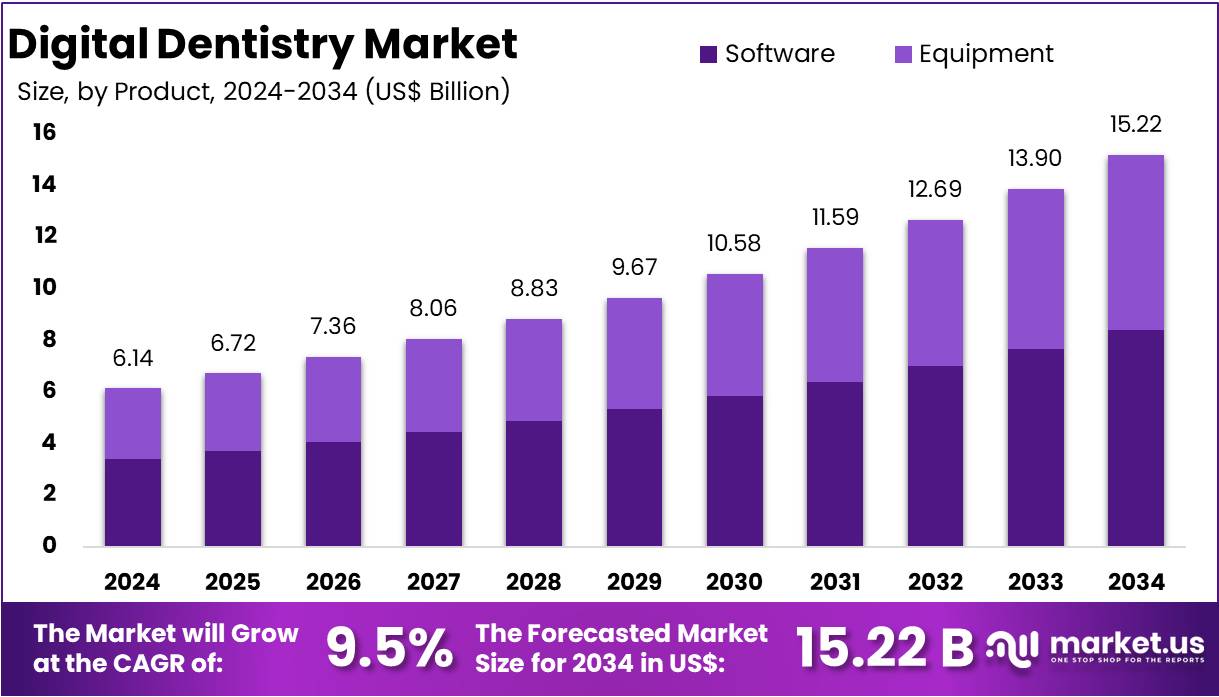
New York, NY – May 14, 2026 – The Global Digital Dentistry Market Size is expected to be worth around US$ 15.22 Billion by 2034, from US$ 6.14 Billion in 2024, growing at a CAGR of 9.5% during the forecast period from 2025 to 2034. North America held a dominant market position, capturing more than a 39.2% share and holds US$ 2.40 Billion market value for the year.
The global digital dentistry market is witnessing steady growth due to the increasing adoption of advanced dental technologies, rising demand for cosmetic dentistry, and the growing need for accurate and efficient dental procedures. Digital dentistry refers to the use of digital technologies and devices to perform dental procedures rather than traditional mechanical or electrical tools. These technologies include computer-aided design and computer-aided manufacturing (CAD/CAM), 3D imaging systems, intraoral scanners, digital radiography, and 3D printing solutions.
The integration of digital workflows in dental clinics and laboratories has significantly improved precision, reduced treatment time, and enhanced patient outcomes. The technology enables dentists to design restorations such as crowns, bridges, veneers, and aligners with improved accuracy and faster turnaround times. In addition, digital impressions and imaging systems provide greater comfort for patients compared to conventional methods.
Growing awareness regarding oral healthcare, increasing dental tourism, and continuous technological advancements are further supporting market expansion. The demand for minimally invasive and customized dental treatments is also contributing to the adoption of digital dentistry solutions across developed and emerging economies.
North America currently holds a significant share of the market due to the strong presence of advanced healthcare infrastructure and leading industry participants. Meanwhile, the Asia-Pacific region is expected to witness notable growth owing to increasing healthcare investments and rising adoption of modern dental technologies.
Key Takeaways
- The global digital dentistry market was valued at USD 6.14 billion in 2024.
- By product type, the software segment accounted for the largest revenue share of 55.2%.
- Based on specialty area, the orthodontics segment dominated the market with a 37.5% share.
- Among end users, dental hospitals and clinics held the largest and fastest-growing market share at 66.8%.
- North America led the global market, contributing over 39.2% of the total market share.
Regional Analysis
North America accounted for the largest share of the global digital dentistry market, representing 39.2% of the market, supported by advanced healthcare infrastructure, strong adoption of AI-enabled dental technologies, and continuous investments in research and development. The United States contributes significantly to regional growth due to increasing demand for precision-based dental solutions and the widespread use of advanced digital systems in dental practices.
The presence of established dental professionals, supportive reimbursement policies, and rising healthcare expenditure further strengthens the market position of the region. According to the American Dental Association, inflation-adjusted dental spending increased by 2.5% in 2023 compared with 2022, largely supported by higher Medicare dental expenditures. In addition, growing demand for cosmetic and aesthetic dentistry continues to accelerate the adoption of digital dental technologies across North America.
Meanwhile, the Asia-Pacific region is projected to register the highest CAGR during the forecast period. Rapid economic development, expanding healthcare infrastructure, and increasing awareness regarding oral health are driving regional market growth. Countries such as China and India are witnessing rising adoption of advanced dental technologies due to growing disposable income and demand for efficient treatment solutions. Government healthcare initiatives and increasing investments in digital healthcare are further supporting the expansion of the digital dentistry market across the region.
Emerging Trends
- Increased Use of Artificial Intelligence (AI): Artificial intelligence is increasingly being adopted in dentistry to improve diagnostic accuracy and treatment planning. AI tools analyze X-rays and 3D scans to identify oral health issues quickly and efficiently. These systems help automate workflows, reduce errors, and enhance patient care outcomes.
- More Clinics Using Intraoral Scanners: Intraoral scanners are replacing traditional dental molds by creating accurate digital impressions of patients’ teeth. These handheld devices improve patient comfort, reduce procedure time, and support precise restorative treatments. Their growing affordability and efficiency are encouraging widespread adoption across dental clinics globally.
- Rise of CAD/CAM Systems in Clinics: CAD/CAM systems are transforming restorative dentistry by enabling dentists to design and manufacture crowns, veneers, and bridges digitally. These systems improve precision, reduce turnaround time, and support same-day dental restorations. Growing demand for efficient and customized treatments continues to drive their adoption.
- 3D Printing is Gaining Ground: 3D printing technology is becoming increasingly important in dentistry for producing aligners, dentures, surgical guides, and dental models. It enables faster production, improved customization, and cost-effective manufacturing. Dental clinics and laboratories are rapidly investing in advanced 3D printing systems to improve treatment efficiency.
- Growth of Tele-dentistry and Online Consultations: Tele-dentistry is expanding access to dental care by enabling remote consultations through digital communication platforms. Patients can share scans, images, and reports online for professional advice. This approach reduces travel requirements, improves convenience, and supports better patient engagement, particularly in underserved areas.
- Shift to Cloud-Based Systems: Dental clinics are increasingly adopting cloud-based platforms for storing patient records, treatment plans, and digital images securely online. These systems improve accessibility, collaboration, and workflow efficiency. Enhanced data management and secure information sharing are supporting the digital transformation of modern dental practices.
Use Cases
- Same-Day Crowns with CAD/CAM: CAD/CAM technology enables dentists to design and manufacture dental crowns directly within the clinic during a single appointment. This process eliminates the need for temporary crowns and multiple visits. Patients benefit from faster treatment, improved comfort, and highly accurate restorative solutions.
- Clear Aligners for Teeth Straightening: Digital dentistry supports the development of customized clear aligners through advanced 3D scanning and treatment planning technologies. These removable aligners provide a comfortable and nearly invisible alternative to traditional braces. Improved precision and personalization are increasing their popularity among adult patients globally.
- Digital Smile Design: Digital Smile Design allows dentists to create virtual previews of cosmetic dental treatments before procedures begin. Using advanced imaging software, patients can visualize expected outcomes and provide feedback. This technology improves communication, treatment planning accuracy, and patient confidence in cosmetic dentistry procedures.
- Implant Planning with 3D Imaging: 3D imaging technologies help dentists plan dental implant procedures with greater precision and safety. Detailed digital images allow accurate assessment of jawbone structure and implant positioning. This approach reduces surgical risks, improves treatment outcomes, and supports faster recovery for dental implant patients.
- Virtual Dental Consultations: Virtual dental consultations enable patients to communicate with dentists remotely through video calls and digital platforms. This solution supports follow-up appointments, treatment reviews, and preliminary assessments without requiring clinic visits. It improves accessibility, convenience, and operational efficiency for both patients and healthcare providers.
- Digital Dentures: Digital dentures are produced using advanced scanning and manufacturing technologies instead of conventional impression methods. Digital workflows improve denture accuracy, comfort, and appearance while reducing production time. The ability to store digital records also simplifies future replacements and enhances long-term patient care.
- Automated Treatment Planning: Artificial intelligence-driven treatment planning systems analyze dental scans and recommend suitable treatment options efficiently. These tools improve consistency, reduce manual workload, and enhance diagnostic precision. Automated planning supports faster decision-making and helps dental clinics manage increasing patient volumes more effectively.
Frequently Asked Questions on Digital Dentistry
- What are the major benefits of digital dentistry?
Digital dentistry improves treatment precision, reduces procedure time, enhances patient comfort, and supports faster diagnosis. It also enables dentists to create customized dental restorations with improved accuracy, leading to better clinical outcomes and more efficient dental workflows. - Which technologies are commonly used in digital dentistry?
Common technologies used in digital dentistry include digital radiography, CAD/CAM systems, intraoral scanners, cone beam computed tomography (CBCT), and 3D printing. These technologies help dentists streamline treatment planning, improve diagnostic capabilities, and deliver high-quality restorative solutions. - What factors are driving the growth of the digital dentistry market?
The digital dentistry market is growing due to increasing demand for cosmetic dentistry, rising adoption of advanced dental technologies, and growing awareness regarding oral healthcare. Technological advancements, increasing healthcare investments, and demand for minimally invasive treatments are also supporting market expansion. - Which region dominates the digital dentistry market?
North America currently dominates the digital dentistry market due to advanced healthcare infrastructure, strong technological adoption, and significant investments in dental innovation. The presence of leading market players and growing demand for aesthetic dental procedures further contribute to regional market growth. - Why is the Asia-Pacific region growing rapidly in the digital dentistry market?
The Asia-Pacific region is experiencing rapid growth due to expanding healthcare infrastructure, increasing disposable income, and rising awareness regarding oral health. Growing investments in advanced dental technologies and supportive government healthcare initiatives are further accelerating market development across the region. - How does digital dentistry improve patient experience?
Digital dentistry enhances patient experience by reducing discomfort associated with traditional dental procedures and shortening treatment durations. Digital impressions and imaging technologies provide more accurate diagnoses while enabling customized treatment solutions that improve patient satisfaction and clinical efficiency. - What is the future outlook for the digital dentistry market?
The future outlook for the digital dentistry market remains positive due to continuous technological advancements and increasing demand for precision-based dental treatments. The integration of artificial intelligence, 3D printing, and digital workflow systems is expected to create significant growth opportunities globally.
Conclusion
The global digital dentistry market is expected to witness sustained growth driven by the increasing adoption of advanced dental technologies, rising demand for cosmetic and minimally invasive procedures, and continuous improvements in digital healthcare infrastructure. Technologies such as CAD/CAM systems, intraoral scanners, AI-powered diagnostics, and 3D printing are transforming dental workflows by improving precision, efficiency, and patient outcomes.
North America remains a leading market due to strong technological adoption, while Asia-Pacific is emerging as a high-growth region supported by healthcare investments and rising oral health awareness. Ongoing innovation and growing acceptance of digital solutions are expected to create significant long-term opportunities for market expansion globally.
Discuss your needs with our analyst
Please share your requirements with more details so our analyst can check if they can solve your problem(s)




