


Overview
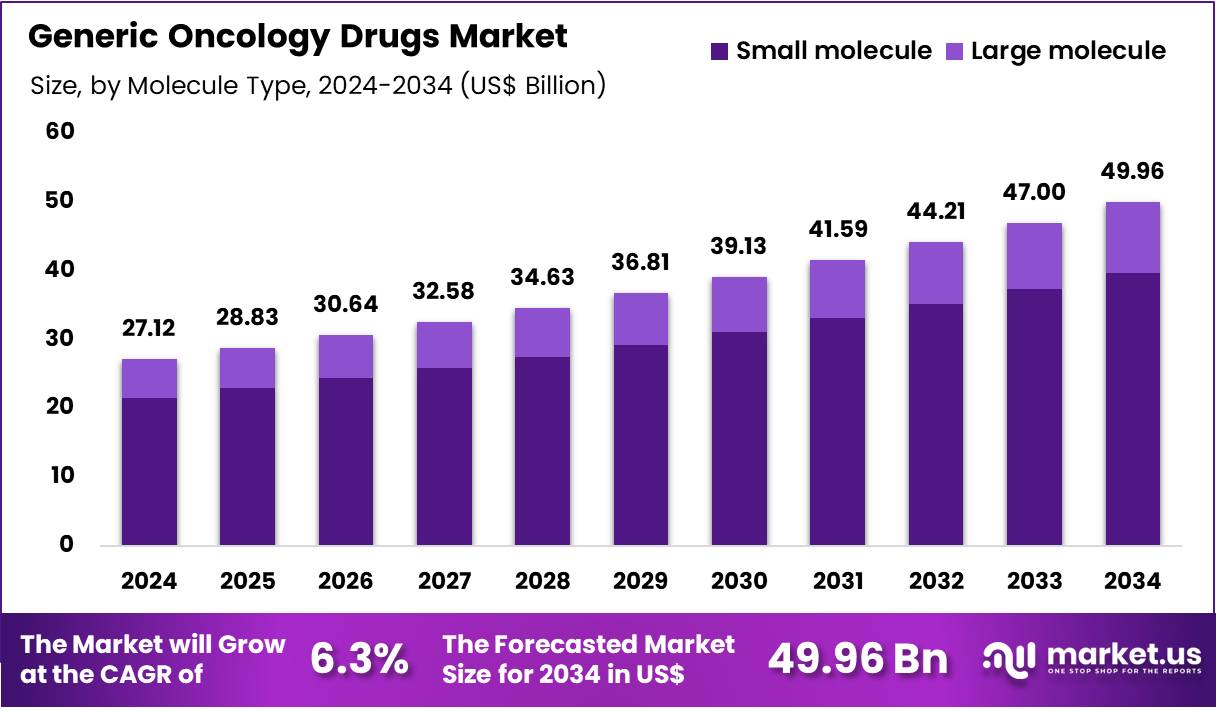
New York, NY – Aug 31, 2026 – The Global Generic Oncology Drugs Market size is expected to be worth around US$ 49.96 Billion by 2034 from US$ 27.12 Billion in 2024, growing at a CAGR of 6.3% during the forecast period from 2025 to 2034. In 2024, North America led the market, achieving over 33.3% share with a revenue of US$ 9.3 Billion.
Generic oncology drugs are cost-effective versions of branded cancer medicines introduced after patent expiry. These drugs contain the same active ingredients, strength, dosage form, and therapeutic effect as their branded counterparts, making cancer treatment more affordable while maintaining established quality and safety standards. They are widely used in hospitals, oncology clinics, and retail pharmacies for treating breast, lung, colorectal, prostate, blood, and other cancers.
The increasing global burden of cancer continues to drive demand for affordable treatment options. According to the World Health Organization (WHO), nearly 20 million new cancer cases and 9.7 million cancer-related deaths were recorded worldwide in 2022.
The International Agency for Research on Cancer (IARC) projects that annual cancer cases could exceed 35 million by 2050, representing an increase of around 77% compared with 2022 levels. This growing patient population is encouraging healthcare systems to expand access to lower-cost generic oncology medicines.
Generic oncology drugs help reduce healthcare spending while improving treatment accessibility, particularly in low- and middle-income countries. Regulatory agencies such as the U.S. Food and Drug Administration (FDA) and the European Medicines Agency (EMA) require generic medicines to demonstrate bioequivalence with branded products before approval.
Continuous patent expirations of major cancer drugs, rising adoption of oral oncology therapies, expanding government reimbursement programs, and increasing investments in generic pharmaceutical manufacturing are expected to support the broader availability and use of generic oncology drugs across global healthcare markets.
Key Takeaways
- Market Size: The global Generic Oncology Drugs Market is projected to grow from US$27.12 billion in 2024 to approximately US$49.96 billion by 2034.
- Market Growth: The market is anticipated to expand at a CAGR of 6.3% during the forecast period 2025 to 2034.
- Molecule Type Analysis: In 2024, the small-molecule segment dominated the market, capturing an estimated 79.5% share.
- Drug Class Analysis: The targeted therapy generics segment emerged as the leading drug class in 2024, accounting for an estimated 28.4% market share.
- Route of Administration Analysis: Parenteral therapy led the market in 2024, representing approximately 49.8% of the total market share.
- Target Indication Analysis: The breast cancer segment held the largest share in 2024, contributing 49.8% of the global market revenue.
- Distribution Channel Analysis: Hospital pharmacies remained the dominant distribution channel in 2024, accounting for an estimated 61.2% share of the global market.
- Regional Analysis: North America dominated the global market in 2024, capturing more than 33.3% of the total market and generating US$9.3 billion in revenue.
Statistical Information
- As of 2025, 62% of drugs experiencing shortages in the U.S. had approved generic versions, but 84% of those had at least one approved generic that had not yet launched, delaying patient access to oncology and other essential medicines.
- The same 2025 IQVIA analysis found that 21% of drugs in shortage with approved generic products still had no generic product commercially launched, highlighting operational gaps between FDA approval and market availability.
- According to the 2025 IQVIA report, 75% of injectable drug shortages involved products with unlaunched approved generics, an important issue because many chemotherapy medicines are sterile injectable generics.
- IQVIA reported in 2025 that it typically takes more than 4 years for 70% of approved generic drugs to reach the U.S. market after FDA approval, reducing the speed at which lower-cost oncology medicines become available.
- The U.S. FDA announced in October 2025 that 76 biosimilars had been approved, supporting wider adoption of lower-cost biologic alternatives used in cancer treatment.
- The FDA also reported in 2025 that biologic medicines account for only 5% of U.S. prescriptions but represent 51% of total drug spending, underscoring the importance of biosimilar competition in oncology.
- Despite regulatory progress, the FDA noted in 2025 that biosimilars still represent less than 20% market uptake, indicating significant room for greater adoption of lower-cost oncology biologics.
- During June 2026, the hospital fill rate for the generic chemotherapy drug cisplatin dropped to 66%, demonstrating continuing supply-chain pressure affecting oncology treatment availability.
- The FDA approved the first interchangeable biosimilar to Perjeta (pertuzumab) on 13 November 2025, expanding competitive options for HER2-positive breast cancer treatment and improving substitution capability./
Regional Analysis
North America dominated the generic oncology drugs market in 2024, accounting for more than 33.3% of the global market and generating approximately US$ 9.3 billion in revenue. The region’s leadership is supported by a well-established healthcare system, broad access to cancer screening, and a high number of patients requiring long-term cancer treatment.
The growing incidence of cancer has increased demand for affordable therapies, encouraging greater use of generic oncology medicines across hospitals and specialty clinics. Favorable reimbursement policies and strong acceptance of generic drugs by healthcare providers have further strengthened market growth.
Regulatory agencies continue to support timely approvals of high-quality generic medicines, improving patient access to lower-cost treatment options. In addition, North America benefits from advanced pharmaceutical manufacturing capabilities and a reliable supply chain, ensuring consistent product availability.
Rising healthcare expenditure, expanding oncology care programs, and ongoing patent expirations of branded cancer drugs are expected to support the region’s continued leadership in the generic oncology drugs market over the coming years.
Emerging Trends
- Faster approvals for generic cancer medicines: Regulatory agencies are increasing support for generic medicines to improve affordability. The U.S. FDA continues to prioritize first generic drug approvals in 2025, helping manufacturers introduce lower-cost alternatives more quickly and increasing patient access to essential oncology treatments.
- Growing focus on affordable cancer care: Healthcare systems are adopting more cost-effective treatment strategies as cancer cases rise globally. The 2025 WHO Essential Medicines update expanded access to important cancer medicines, while more than 150 countries now use the WHO Essential Medicines Lists to guide medicine procurement and reimbursement.
- Patent expirations are expanding generic opportunities: As patents for several branded oncology therapies expire, pharmaceutical companies are increasing investments in generic product development. This trend is improving competition, reducing treatment costs, and creating wider availability of cancer medicines through regulated approval pathways.
- Improved manufacturing quality and supply reliability: Manufacturers are investing in advanced production technologies and quality systems to ensure the uninterrupted availability of oncology medicines. Stronger compliance with Good Manufacturing Practices (GMP) is helping reduce supply risks and improve confidence in generic cancer drug production.
- Expansion of hospital and public procurement programs: Governments and healthcare organizations are increasing bulk purchasing of generic oncology medicines to reduce healthcare spending. Larger procurement programs encourage broader generic adoption while improving treatment access for cancer patients through public health systems. The WHO Model List now includes over 520 medicines.
Use Cases
- Hospital-based chemotherapy treatment: Hospitals widely prescribe generic chemotherapy medicines to reduce treatment expenses while maintaining therapeutic effectiveness. Generic oncology drugs are increasingly used for breast, lung, colorectal, and blood cancers, allowing hospitals to manage larger patient populations within limited healthcare budgets.
- National cancer treatment programs: Public healthcare systems use generic oncology drugs to expand access to cancer care. WHO reports that over 150 countries use its Essential Medicines List to support medicine purchasing, reimbursement, and national treatment policies, improving the availability of affordable cancer therapies.
- Long-term maintenance therapy: Patients requiring prolonged cancer treatment benefit from generic medicines because they lower overall treatment costs and improve medication adherence. Affordable generic products support continuous therapy for chronic oncology conditions without significantly increasing healthcare expenditure.
- Cancer treatment in emerging healthcare systems: Developing countries increasingly rely on generic oncology medicines to expand access to life-saving therapies. Lower-priced generics help hospitals and government programs treat more patients despite limited healthcare resources while supporting universal health coverage initiatives.
- Support for value-based healthcare models: Healthcare providers increasingly include generic oncology medicines in value-based care programs to improve clinical outcomes while controlling costs. Wider availability of FDA-approved generic medicines enables providers to deliver high-quality cancer treatment with better financial sustainability.
Conclusion
The Generic Oncology Drugs Market is expected to witness steady growth over the coming years as healthcare systems increasingly prioritize affordable cancer treatment and wider patient access. Rising patent expirations of branded oncology drugs, expanding approvals for generic medicines and biosimilars, and supportive government pricing policies are strengthening market demand.
Hospital pharmacies remain the leading distribution channel, while targeted therapy generics continue to gain traction. Improvements in manufacturing capabilities, regulatory support, and investments in oncology care are further driving adoption. As cancer incidence continues to rise globally, generic oncology drugs will play a vital role in reducing treatment costs and improving access to high-quality cancer therapies worldwide.
Discuss your needs with our analyst
Please share your requirements with more details so our analyst can check if they can solve your problem(s)




