


Overview
New York, NY – Sep 08, 2026 – The Global Antigen Skin Test Market size is expected to be worth around US$ 3.8 Billion by 2034 from US$ 2.3 Billion in 2024, growing at a CAGR of 5.1% during the forecast period 2025 to 2034. In 2024, North America led the market, achieving over 38.2% share with a revenue of US$ 0.9 Billion.
The Antigen Skin Test market is gaining momentum due to the rising prevalence of allergic disorders, increasing demand for rapid diagnostic solutions, and growing adoption of point-of-care testing methods.
Antigen skin tests are minimally invasive diagnostic procedures used to identify immune reactions against specific allergens or antigens. These tests are widely applied for detecting allergic rhinitis, asthma-related allergies, food allergies, and infectious diseases such as tuberculosis.
The global burden of allergic diseases is driving demand for accurate testing solutions. According to the World Health Organization (WHO), allergic conditions affect hundreds of millions of people worldwide, with allergic rhinitis alone impacting nearly 400 million individuals globally.
Skin prick testing provides results rapidly, usually within 15–30 minutes, making it a preferred diagnostic approach in allergy clinics and hospitals. The increasing prevalence of respiratory diseases further supports market growth.
Data from the Centers for Disease Control and Prevention (CDC) indicates that approximately 25 million Americans have asthma, including around 5 million children, creating continuous demand for allergy assessment and antigen-based testing.
Technological advancements are improving antigen skin test performance through purified allergen extracts, standardized testing materials, and digital patient record integration. Healthcare providers are adopting these tests because they offer faster results, lower costs, and reduced patient discomfort compared with several conventional diagnostic methods.
Rising healthcare expenditure, increased awareness about early disease detection, and expansion of diagnostic facilities are expected to accelerate Antigen Skin Test market development. Future innovations in multiplex antigen testing and personalized allergy diagnostics will further enhance clinical applications and market opportunities.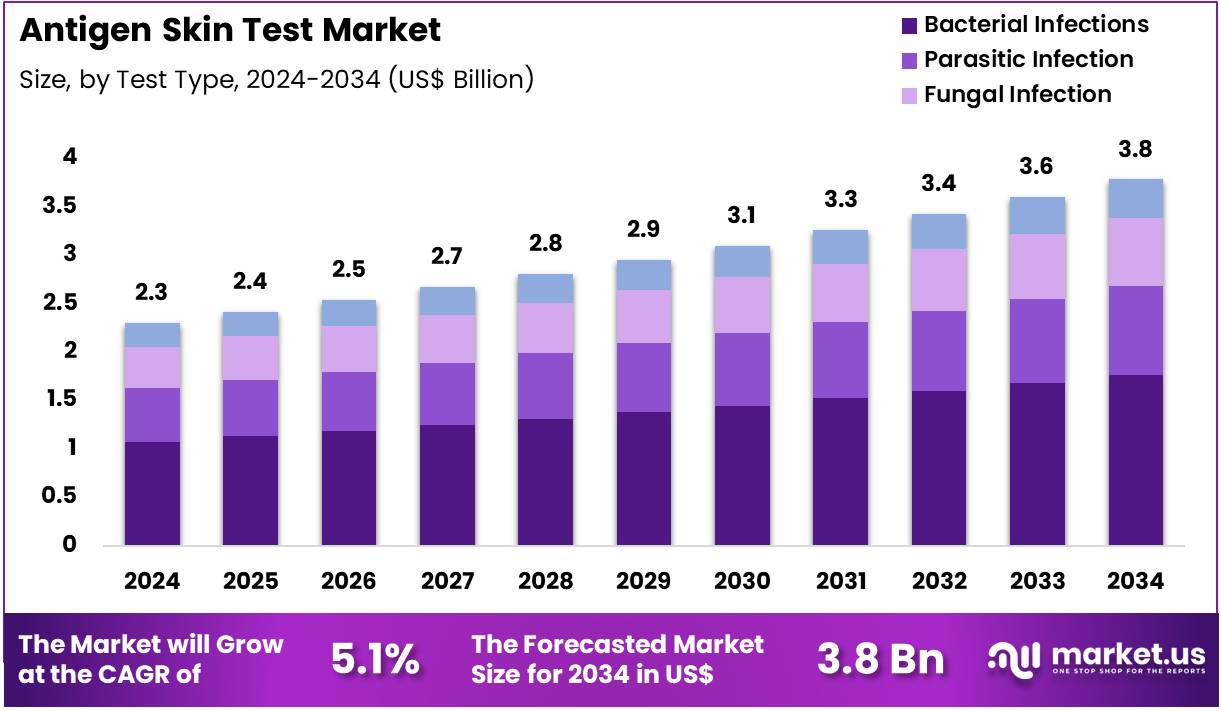
Key Takeaways
- In 2024, the market recorded revenue of US$ 2.3 Billion and is projected to grow at a CAGR of 5.1%, reaching approximately US$ 3.8 Billion by 2034.
- Based on test type, the market is segmented into bacterial infections, parasitic infections, fungal infections, and others. The bacterial infections segment dominated in 2024, accounting for a market share of 46.7%.
- By end-user, the market is categorized into hospitals, clinics, ambulatory surgical centres, and others. The hospitals segment held the leading position in 2024, capturing a market share of 49.4%.
- Regionally, North America emerged as the dominant market in 2024, holding a significant share of 38.2% due to increased adoption of advanced diagnostic technologies and healthcare infrastructure development.
Statistical Information
- Rising Allergy Burden Increasing Demand for Antigen Skin Testing: The increasing prevalence of allergic diseases is driving the need for antigen skin tests. According to the CDC National Center for Health Statistics, in 2024, 31.7% of U.S. adults had at least one diagnosed allergic condition, including seasonal allergy, eczema, or food allergy. Seasonal allergies affected 25.2% of adults, while food allergies affected 6.7% of adults.
- High Prevalence of Allergic Conditions Among Children Supports Testing Demand: Consumer health data shows that allergic disorders are also common among children. In 2024, approximately 29.5% of U.S. children aged 0–17 years had at least one diagnosed allergic condition. Seasonal allergies affected 20.6% of children, highlighting the importance of early allergy identification through diagnostic methods such as skin testing.
- Food Allergy Prevalence Supports Expansion of Antigen Skin Testing Applications: Food allergy diagnosis represents an important application area for antigen skin tests. CDC data indicates that food allergy affects 6.7% of U.S. adults and 5.3% of U.S. children. This represents millions of individuals requiring accurate allergen identification and clinical evaluation.
- Asthma Burden Increases Need for Allergy Identification: Asthma is closely associated with allergic triggers, creating demand for allergen testing. According to CDC asthma data, approximately 25.8 million people in the United States currently have asthma, including around 4.5 million children aged 0–17 years. Allergy identification helps physicians develop personalised management strategies.
- Tuberculosis Skin Testing Supports Antigen Test Adoption in Infectious Disease Screening: Tuberculin skin testing remains an important antigen-based diagnostic approach for tuberculosis infection screening. CDC recommends evaluating the skin reaction 48–72 hours after injection. In 2023, the United States reported 9,615 tuberculosis cases, showing continued demand for TB screening technologies.
- Asthma Population Requires Identification of Allergy Triggers: Asthma is frequently associated with allergic sensitivity, creating demand for antigen testing. According to CDC asthma statistics, approximately 25.8 million people in the United States had asthma, including about 4.5 million children. Allergy testing helps physicians identify environmental triggers linked with asthma symptoms.
- Allergy Testing Market Adoption Is Supported by Growing Patient Awareness: Increasing awareness of allergy symptoms is influencing consumer healthcare behavior. CDC findings indicate that 31.7% of adults and 29.5% of children had diagnosed allergic conditions in 2024, encouraging more patients to seek professional diagnosis instead of only symptom-based treatment.
- Seasonal Allergy Remains the Largest Allergy Category Driving Testing Demand: Seasonal allergies are among the most common conditions evaluated through antigen skin testing. CDC data for 2024 reported that 25.2% of U.S. adults had seasonal allergies. Among children aged 0–17 years, 20.6% were affected by seasonal allergies, increasing the need for allergen identification.
- Eczema Cases Increase Need for Allergy and Immune Response Evaluation: Eczema and atopic dermatitis are associated with increased sensitivity to environmental and food allergens. CDC reported that in 2024, eczema affected 7.7% of U.S. adults and 12.7% of U.S. children. These conditions often require evaluation of possible allergen triggers through diagnostic testing.
Regional Analysis
North America led the market by securing a market share of 38.2% in 2024.
North America held a significant position in the Antigen Skin Test market due to strong healthcare infrastructure, advanced diagnostic facilities, and increasing adoption of allergy and tuberculosis screening procedures. The United States continues to support demand for skin-based testing as tuberculosis surveillance and allergy diagnosis remain important public health priorities.
According to the CDC, the U.S. reported 9,615 tuberculosis cases in 2023, highlighting the continued need for effective TB screening methods. Growth in allergy clinics, hospitals, and specialized diagnostic centers has further increased the use of antigen skin tests for hypersensitivity and immune response evaluation.
Asia Pacific is expected to witness significant growth due to rising infectious disease screening programs, increasing allergy prevalence, and expanding healthcare access. According to the WHO, the region carries a high tuberculosis burden, requiring improved diagnostic coverage and early detection strategies. Growing investments in healthcare infrastructure and laboratory networks are supporting wider adoption of antigen skin testing.
Emerging Trends
- Rising Adoption for Allergy Diagnosis: Increasing prevalence of allergic conditions is driving demand for antigen skin tests. CDC reported that 31.7% of U.S. adults had at least one diagnosed allergic condition in 2024, supporting greater use of skin-based allergen identification methods.
- Growing Tuberculosis Screening Programs: Antigen skin tests are increasingly used for TB infection screening among high-risk populations. The CDC reported 9,615 tuberculosis cases in the U.S. in 2023, increasing the need for reliable latent TB detection methods.
- Expansion of Pediatric Allergy Testing: Rising childhood allergy cases are increasing demand for early diagnostic testing. CDC data shows 29.5% of U.S. children aged 0–17 years had at least one allergic condition in 2024, encouraging wider pediatric skin testing adoption.
- Development of Standardized Allergen Extracts: FDA-regulated allergenic extracts are improving test reliability, safety, and consistency. Standardized antigen preparations help healthcare professionals identify specific allergens and support accurate diagnosis of respiratory, food, and environmental allergies.
- Increasing Use of Personalized Allergy Management: Antigen skin testing is becoming an important step before allergen immunotherapy. AI reports that allergy shots are used for allergic rhinitis, asthma, and insect allergies, with treatment commonly lasting 3–5 years.
- Integration of Digital Technologies in Skin Testing: Healthcare providers are exploring artificial intelligence and digital imaging tools to improve skin reaction measurement. These technologies aim to reduce interpretation differences and improve accuracy in allergy diagnosis.
Use Cases
- Allergy Diagnosis and Allergen Identification: Antigen skin tests are widely used to identify triggers responsible for allergic reactions, including pollen, dust mites, animal dander, and mold. CDC data shows 25.2% of U.S. adults experienced seasonal allergies in 2024, increasing the need for accurate allergy testing.
- Food Allergy Assessment: Skin testing helps healthcare providers evaluate sensitivity to food allergens such as peanuts, milk, eggs, and shellfish. CDC reported that food allergies affected 6.7% of U.S. adults and 5.3% of children in 2024, supporting demand for food allergy diagnostic procedures.
- Tuberculosis Infection Screening: Tuberculin skin testing is used to detect immune responses associated with TB infection. CDC reported 9,615 tuberculosis cases in the United States in 2023, highlighting continued demand for skin-based TB screening among high-risk groups.
- Asthma Trigger Identification: Antigen skin tests help identify environmental allergens linked with asthma symptoms. CDC estimates approximately 25.8 million people in the U.S. have asthma, including 4.5 million children, creating demand for allergy-based asthma evaluation.
- Allergen Immunotherapy Planning: Physicians use antigen skin test results to select allergens for immunotherapy treatments. AAAAI states allergy shots are used for allergic rhinitis, allergic asthma, and insect allergy, with treatment often continuing for 3–5 years.
- Environmental Allergy Testing: Skin tests are used to detect sensitivity to airborne allergens such as pollen, dust, and mold. Increasing urbanization and environmental exposure contribute to rising allergy evaluations in hospitals and specialty clinics.
Frequently Asked Questions on Antigen Skin Test
- What are the major applications of Antigen Skin Tests?
Major applications include allergy identification, food allergy testing, asthma trigger detection, tuberculosis screening, environmental allergen evaluation, occupational allergy assessment, and selection of suitable allergens for immunotherapy treatments. - What factors are driving the Antigen Skin Test Market?
Market growth is supported by increasing allergic disorders, rising demand for early diagnosis, improved healthcare infrastructure, expansion of allergy clinics, development of standardized allergen extracts, and increasing adoption of personalized treatment approaches. - What role do hospitals play in the Antigen Skin Test Market?
Hospitals contribute significantly by offering allergy diagnosis, TB screening, and immune response evaluation services. Their specialized departments, healthcare professionals, and emergency response capabilities support safe and effective antigen skin testing procedures. - What are the latest trends in the Antigen Skin Test Market?
Emerging trends include digital skin reaction analysis, artificial intelligence-based interpretation, multiplex allergen testing, improved antigen formulations, personalized allergy management, and integration of diagnostic data into electronic healthcare systems. - How are technological advancements improving Antigen Skin Tests?
New technologies are improving testing accuracy through standardized allergen extracts, automated measurement systems, digital imaging tools, and advanced data management solutions. These developments help reduce interpretation errors and improve clinical decision-making. - What is the role of Antigen Skin Tests in allergy treatment?
Antigen skin tests help identify specific allergens responsible for symptoms. Physicians use results to recommend allergen avoidance strategies and immunotherapy options, enabling more personalized treatment plans for patients with allergic conditions. - What is the future outlook for the Antigen Skin Test Market?
The market is expected to benefit from rising allergy cases, increasing healthcare access, improved diagnostic technologies, and growing demand for personalized medicine. Future opportunities include advanced allergen panels, digital testing platforms, and expanded clinical applications.
Conclusion
The Antigen Skin Test market is witnessing steady growth due to increasing allergy prevalence, rising tuberculosis screening requirements, and growing demand for rapid and accurate diagnostic solutions. Expanding healthcare infrastructure, increasing adoption in hospitals and allergy clinics, and advancements in allergen testing technologies are supporting market development.
The growing focus on personalized medicine and early disease detection is further strengthening the role of antigen skin tests in clinical practice. Future opportunities are expected from digital diagnostic tools, improved antigen formulations, and advanced testing methods that enhance accuracy, safety, and patient outcomes across healthcare systems.
Discuss your needs with our analyst
Please share your requirements with more details so our analyst can check if they can solve your problem(s)




