


Overview
New York, NY – Sep 11, 2026 –The Global Anti-aging Supplements Market size is expected to be worth around US$ 9.5 Billion by 2034 from US$ 4.6 Billion in 2024, growing at a CAGR of 7.5% during the forecast period 2025 to 2034. In 2024, North America led the market, achieving over 37.2% share with a revenue of US$ 1.7 Billion.
Anti-aging Supplements is expanding as consumers increasingly prioritize preventive healthcare, longevity, and healthy aging solutions. The market includes dietary supplements formulated with collagen, vitamins, minerals, antioxidants, omega-3 fatty acids, coenzyme Q10, NAD+ boosters, probiotics, and botanical ingredients designed to support skin health, cognitive wellness, bone strength, joint mobility, and cellular function.
The growth of this market is strongly linked to demographic changes. According to the United Nations, the number of people aged 60 years and older is expected to increase from 1 billion in 2020 to 1.4 billion by 2030 and reach 2.1 billion by 2050.
This expanding aging population is increasing demand for products that support healthy longevity and age-related wellness. In addition, the World Health Organization (WHO) highlights that by 2030, 1 in 6 people globally will be aged 60 years or older, creating greater demand for preventive nutrition and wellness solutions.
Consumer interest in beauty and wellness supplements is also accelerating market opportunities. The global burden of chronic diseases continues to rise, with WHO reporting that noncommunicable diseases account for approximately 74% of all deaths worldwide, encouraging consumers to adopt healthier lifestyles and nutritional interventions. Collagen-based supplements have gained significant popularity due to increasing awareness of skin elasticity, hydration, and joint support benefits.
The market is further supported by rising supplement consumption trends, digital healthcare adoption, and personalized nutrition approaches. According to the U.S. National Institutes of Health (NIH), dietary supplements are widely used among adults, with millions of consumers incorporating vitamins, minerals, and specialty supplements into daily routines.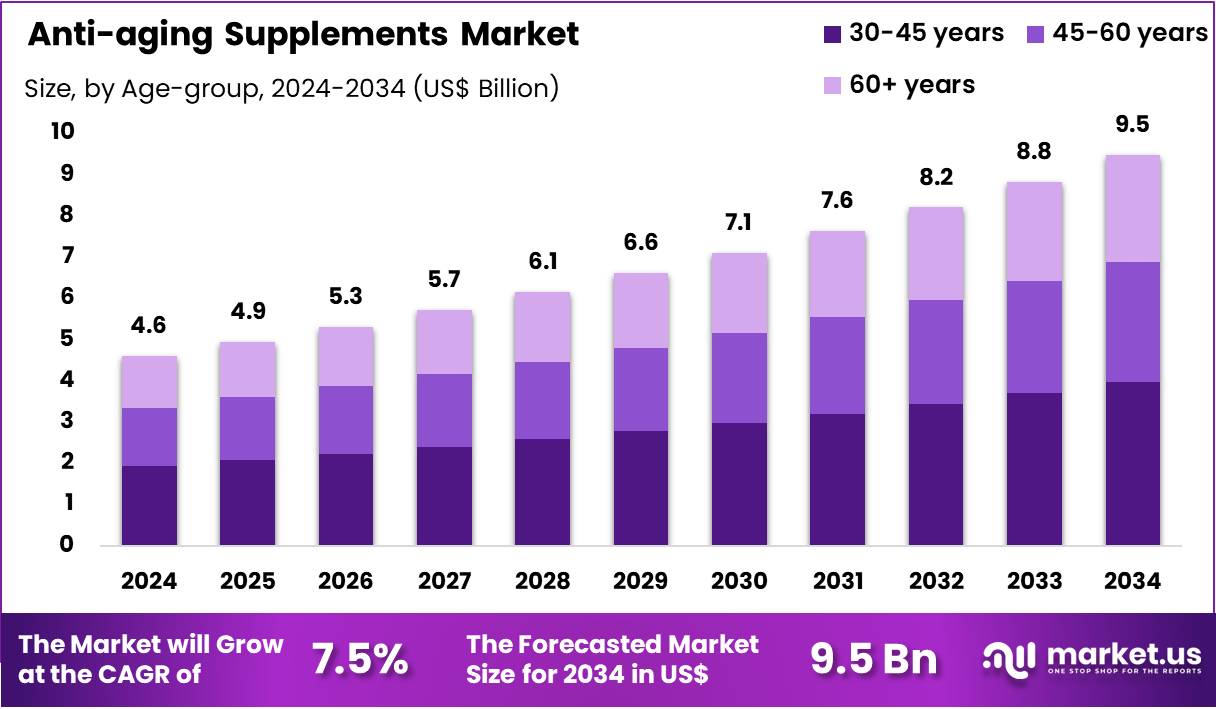
Key Takeaways
- In 2024, the Anti-aging Supplements Market generated a revenue of US$ 4.6 Billion and is projected to grow at a CAGR of 7.5%, reaching approximately US$ 9.5 Billion by 2034.
- Based on ingredient type, the market is segmented into collagen & collagen peptides, vitamins, minerals, coenzyme Q10, hyaluronic acid, omega-3 fatty acids, amino acids & proteins, resveratrol, curcumin, and others. Among these, collagen & collagen peptides dominated the market in 2024, accounting for a 32.1% revenue share.
- By application, the market is categorized into skin, hair & nail health, joint & bone strength, immune health & anti-inflammation, cognitive & brain support, and others. The skin, hair & nail health segment held the leading position, capturing a 35.7% market share in 2024.
- According to form type, the market is segmented into tablets & capsules, powder, liquid, softgels, and others. The tablets & capsules segment emerged as the largest contributor, holding a 48.3% revenue share in 2024.
- Based on age group, the market is divided into 30–45 years, 45–60 years, and 60+ years. The 30–45 years segment led the market, accounting for a 42.0% revenue share due to increasing interest in preventive aging solutions.
- By ingredient source, the market is classified into plant-based, marine-based, animal-based, and synthetic sources. The animal-based ingredient segment maintained a significant market position, representing a 34.2% share in 2024.
- Based on distribution channel, the market is segmented into pharmacies/drugstores, supermarkets & hypermarkets, specialty stores, online/e-commerce stores, and others. The pharmacies/drugstores segment dominated the market, holding a 35.5% revenue share.
- Regionally, North America emerged as the leading market in 2024, accounting for a 37.2% share due to high consumer awareness, strong supplement adoption, and growing demand for healthy aging products.
Market Segmentation Overview
- Ingredient Analysis: Collagen and collagen peptides held a 32.1% market share in 2024 and are expected to remain the leading ingredient segment due to growing consumer awareness regarding skin elasticity, wrinkle reduction, and connective tissue support. Scientific evidence on collagen benefits, improved hydrolyzed formulations, beauty industry promotions, and increasing preventive wellness practices are encouraging daily supplementation among younger and older consumers.
- Application Analysis: Skin, hair, and nail health accounted for 35.7% of the market in 2024 and is expected to maintain dominance as consumers prioritize visible anti-aging benefits. Growing demand for improved complexion, reduced hair thinning, and stronger nails is driving adoption. Beauty-from-within trends, social media awareness, dermatologist recommendations, and personalized beauty supplements are further increasing consumer interest.
- Form Analysis: Tablets and capsules represented 48.3% of the market in 2024 and are projected to remain the preferred form due to convenience, portability, and precise dosage delivery. Consumers increasingly choose easy-to-consume formats that integrate into daily routines. Longer shelf stability, advanced capsule technologies, wide pharmacy availability, and subscription-based supplement models are supporting continued growth of this segment.
- Age-group Analysis: The 30–45 years age group captured 42.0% of the market in 2024 and is expected to dominate due to rising awareness of preventive aging solutions. Individuals in this category increasingly adopt supplements before visible aging signs appear. Higher disposable income, active lifestyles, beauty consciousness, digital health information, and fitness trends are encouraging regular consumption patterns.
- Ingredient Source Analysis: Animal-based ingredients accounted for 34.2% of the market in 2024 and are expected to maintain leadership due to their high bioavailability, established scientific support, and widespread use in collagen supplements. Manufacturers benefit from reliable sourcing and scalable production methods. Consumer familiarity, healthcare professional acceptance, and proven formulation performance continue strengthening demand for animal-derived ingredients.
- Distribution Channel Analysis: Pharmacies and drugstores held a 35.5% market share in 2024 and are projected to remain the dominant distribution channel due to consumer trust, product authenticity, and professional guidance. Pharmacist recommendations influence purchasing decisions, especially among new users. Strong retail networks, regulatory confidence, brand availability, and personalized health consultations continue supporting pharmacy-based supplement sales.
Statistical Information
- Collagen & Collagen Peptides: Consumer Preference and Clinical Evidence: Collagen supplements have gained strong consumer interest because collagen is widely associated with skin structure, elasticity, hydration, and connective tissue support. A randomized clinical study involving 100 women aged 30–60 years found that daily intake of 1,650 mg collagen peptides for 12 weeks improved skin hydration, elasticity, and wrinkle-related parameters
- Dietary Supplement Adoption and Consumer Behavior: Consumer adoption of supplements continues to increase, supporting demand for anti-aging nutrition products. The U.S. National Health and Nutrition Examination Survey reported that 60.2% of adults aged 20 years and older used dietary supplements during 2021–2023, while 38.7% of adults used two or more supplements.
- Aging Population Driving Preventive Health Demand: The global increase in older adults is creating greater interest in healthy aging solutions. According to the United Nations, the number of people aged 60 years and above reached approximately 1 billion in 2020 and is projected to increase to 1.4 billion by 2030. This demographic shift supports demand for supplements targeting healthy aging, mobility, and wellness.
- Skin Health Remains a Major Motivation for Supplement Use: Clinical research supports consumer interest in beauty-focused supplements. A placebo-controlled study of 69 women aged 35–55 years found that collagen hydrolysate supplementation for 8 weeks significantly improved skin elasticity compared with placebo groups, supporting growing demand for supplements targeting visible aging concerns.
- Combination Formulations Increase Product Value: Multi-ingredient anti-aging supplements combining collagen with vitamins, antioxidants, and other bioactive compounds are gaining attention. A clinical trial involving 120 participants reported that a collagen-based formulation improved skin elasticity by 40%, reduced joint pain by 43%, and improved joint mobility by 39% after supplementation.
- Younger Adults Increasingly Adopt Preventive Aging Practices: Adults are increasingly using supplements for proactive health management rather than only addressing deficiencies. CDC data shows supplement usage increases with age, with 56.4% of adults aged 60 years and older using two or more supplements, indicating strong adoption among consumers focused on long-term health maintenance.
- Collagen Supplementation Supports Multiple Anti-aging Benefits: Research indicates that collagen peptides are being studied for benefits beyond skin appearance, including hydration, elasticity, and wrinkle reduction. A controlled clinical study with 100 women aged 30–60 years showed that consuming 1,650 mg collagen peptides daily for 12 weeks improved skin hydration, elasticity, wrinkles, and surface conditions compared with placebo.
- Growth of Healthy Aging Research and Clinical Trials: Scientific interest in collagen-based anti-aging solutions continues to expand. A registered clinical trial evaluated the impact of 2.5 grams of bioactive collagen peptides daily for 8 weeks among healthy women aged 35–55 years, measuring skin hydration, elasticity, firmness, and wrinkle appearance. Such studies increase consumer confidence in evidence-based formulations.
- Low-Molecular-Weight Collagen Supports Skin Moisture and Wrinkle Reduction: A clinical trial involving 70 healthy adults assessed daily intake of 1,650 mg low-molecular-weight collagen peptides for 8 weeks. Researchers evaluated wrinkle depth, skin moisture, and elasticity using dermatological measurements. Results showed improvements in multiple skin parameters, supporting demand for collagen peptide formulations targeting age-related skin changes.
Regional Analysis
North America led the market by securing a market share of 37.2% in 2024.
North America dominated the Anti-aging Supplements Market due to rising consumer focus on healthy aging, preventive healthcare, and wellness nutrition. Increasing demand for collagen, antioxidants, vitamins, and functional supplements for skin health, joint support, and longevity is supporting regional growth. The U.S. Census Bureau reported that the population aged 65 years and older reached 58.9 million in 2022, representing 17.3% of the U.S. population, creating strong demand for age-supportive products.
Growing supplement adoption, expanding e-commerce platforms, pharmacy availability, and healthcare awareness are further strengthening market expansion. The FDA highlights increasing consumer use of dietary supplements and the importance of quality and safety standards.
Additionally, Asia Pacific is expected to show strong growth due to rapid aging, rising disposable income, and increasing wellness awareness. The United Nations reported that Asia’s population aged 65 years and above exceeded 414 million in 2023, supporting future demand.
Business Opportunities
The anti-aging supplements market presents strong business opportunities as consumers increasingly shift toward preventive health, longevity, and wellness-focused lifestyles. Companies can capitalize on rising demand for supplements containing collagen peptides, antioxidants, omega-3 fatty acids, vitamins, minerals, and cellular health ingredients that support skin quality, joint function, cognitive health, and healthy aging.
Growing interest among younger consumers in proactive aging prevention creates opportunities for brands to develop age-supportive products targeting different life stages. Personalized nutrition is emerging as a major opportunity, with companies offering customized supplement solutions based on lifestyle, genetics, dietary patterns, and wellness goals. E-commerce expansion, subscription-based models, and direct-to-consumer platforms provide opportunities to improve accessibility and build long-term customer relationships.
Clean-label formulations, plant-based ingredients, sustainable sourcing, and clinically supported claims can help brands differentiate products in a competitive environment. Partnerships with healthcare professionals, wellness centers, fitness platforms, and pharmacies can increase consumer trust. Additionally, innovations in delivery formats such as gummies, powders, beverages, and functional foods create new growth avenues for companies seeking to expand beyond traditional capsules and tablets.
Emerging Trends
- Rising Demand for Healthy Aging and Preventive Nutrition: Consumers are increasingly adopting anti-aging supplements as part of preventive wellness routines rather than waiting for visible aging signs. In the U.S., 60.2% of adults aged 20 years and above used dietary supplements during 2021–2023, showing strong acceptance of nutrition-based health solutions. This trend supports demand for products targeting longevity, skin health, and overall wellness.
- Growth of Collagen-Based Beauty Supplements: Collagen peptides are becoming a major focus in anti-aging nutrition due to their association with skin hydration, elasticity, and wrinkle reduction. A 2025 systematic review analyzed 23 randomized controlled trials involving 1,474 participants and evaluated collagen supplements for skin aging outcomes, increasing scientific attention toward collagen-based formulations.
- Expansion of Multi-Ingredient Anti-aging Formulations: Manufacturers are increasingly developing combination supplements that include collagen, vitamins, minerals, antioxidants, and other functional ingredients. Consumers prefer multifunctional products supporting multiple benefits such as skin appearance, immunity, and joint wellness. The FDA reports that dietary supplements are available in various forms and are widely used to support different health goals.
- Increasing Preference for Convenient Supplement Formats: Tablets, capsules, softgels, and powders are gaining popularity because consumers prefer easy-to-use products that fit daily lifestyles. According to CDC data, 38.7% of U.S. adults used two or more dietary supplements during 2021–2023, indicating growing acceptance of regular supplement routines. Convenient formats support improved compliance and repeated usage.
- Growing Focus on Scientific Validation and Product Transparency: Consumers are becoming more interested in evidence-supported anti-aging supplements and ingredient transparency. The FDA highlights that supplement users should understand product information, safety considerations, and consult healthcare professionals before use. Since 1994, the number of dietary supplement products has expanded nearly 20 times, increasing the importance of quality standards and reliable labeling.
Use Cases
- Skin Health and Beauty Enhancement: Anti-aging supplements are widely used for improving skin hydration, elasticity, firmness, and reducing visible aging signs. Collagen peptides and hyaluronic acid products are popular beauty-from-within solutions. A clinical study involving 100 women aged 30–60 years reported improvements in skin hydration, elasticity, and wrinkle-related parameters after collagen supplementation.
- Joint Mobility and Bone Support: Anti-aging supplements containing collagen peptides, calcium, vitamin D, and amino acids are used to support joint flexibility, cartilage health, and bone strength. The National Institute on Aging highlights that maintaining mobility and physical function is essential for healthy aging, especially among older adults.
- Cognitive Health and Brain Wellness: Supplements containing omega-3 fatty acids, antioxidants, and essential nutrients are increasingly used to support brain health and cognitive wellness. The National Institute on Aging states that nutrition and lifestyle factors contribute to maintaining cognitive health as people age.
- Cellular Health and Antioxidant Protection: Anti-aging supplements with vitamin C, vitamin E, coenzyme Q10, and plant-based antioxidants are used to support cellular protection against oxidative stress. NIH recognizes antioxidants as compounds that help protect cells from damage caused by free radicals.
- Healthy Aging and Preventive Wellness: Consumers use anti-aging supplements as part of preventive health routines to maintain vitality, appearance, and overall wellness. The United Nations reported that the global population aged 60 years and older reached nearly 1 billion in 2020 and is expected to reach 1.4 billion by 2030, increasing demand for healthy aging products.
Recent development
- In May 2026, GELITA AG unveiled its new CURADERM Bioactive Collagen Peptide at Vitafoods Europe 2026, developed to support skin barrier health and gum health repair, targeting anti-aging supplement and nutraceutical brand institutional buyers seeking clinically substantiated collagen peptide ingredients for healthy aging formulations.
- In March 2026, GELITA AG showcased its expanded Bioactive Collagen Peptides portfolio at Natural Products Expo West 2026, highlighting collagen peptides for mobility, connective tissue health, muscle recovery, and healthy aging beyond traditional beauty benefits, targeting supplement manufacturers developing science-backed multi-benefit anti-aging ingredient solutions.
- In March 2026, Nu Skin Enterprises launched Prysm iO, an intelligent nutritional wellness platform using advanced skin-scanning technology to measure carotenoid levels and track antioxidant nutritional status, integrating with its ageLOC anti-aging and Pharmanex supplement portfolio including Beauty Focus Collagen+ and ageLOC Youth.
- In July 2026, Blackmores (Kirin Group) launched Blackmores Cognition Ultra in Australia and Blackmores Ultra Brain Care in New Zealand, its first cognitive performance supplement formulated with Cognizin Citicoline, targeting aging consumers seeking science-backed brain health and cognitive performance support through retail pharmacy and e-commerce channels.
- In February 2026, Herbalife announced a strategic review of its anti-aging and wellness supplement portfolio as part of a comprehensive management restructuring program, increasing focus on clinical evidence investment and expanding its personalized nutrition supplement platform through new acquisitions including a digital health platform and a personalized supplement manufacturer.
- In February 2026, GELITA AG expanded its Bioactive Collagen Peptides and tailored gelatin portfolio under its “BE ACTIVE!” platform, targeting beauty, sports nutrition, healthy aging, and better-for-you supplement manufacturers seeking versatile anti-aging collagen ingredient solutions across global nutraceutical markets, with new ready-to-market supplement concepts developed through its GELITA Health subsidiary.
Frequently Asked Questions on Anti-aging Supplements
- What factors are driving the growth of the anti-aging supplements market?
The anti-aging supplements market is growing due to increasing interest in preventive healthcare, rising aging populations, growing wellness awareness, and demand for products supporting skin, brain, joint, and immune health through nutrition-based solutions. - Which ingredients are commonly used in anti-aging supplements?
Common ingredients in anti-aging supplements include collagen peptides, hyaluronic acid, vitamin C, vitamin E, coenzyme Q10, omega-3 fatty acids, antioxidants, probiotics, and plant-based compounds that support skin appearance, metabolism, and healthy aging processes. - How do collagen supplements support anti-aging benefits?
Collagen supplements provide amino acids that support the body’s collagen production, which may help maintain skin elasticity, hydration, and firmness. They are also used to support joint comfort, connective tissues, and overall structural health as people age. - Are anti-aging supplements scientifically supported?
Some anti-aging supplement ingredients have clinical research supporting specific benefits, such as collagen for skin health and antioxidants for cellular protection. However, effectiveness depends on ingredients, dosage, individual health conditions, and consistent usage over time. - Which product formats are popular in the anti-aging supplements market?
Popular formats include capsules, tablets, powders, gummies, liquids, and functional drinks. Gummies and beverage-based supplements are gaining attention because of convenience, improved consumer experience, and their ability to attract younger customers seeking easy wellness solutions. - How is personalization influencing the anti-aging supplements market?
Personalized nutrition is creating new opportunities by allowing companies to develop supplements based on individual lifestyles, dietary needs, age groups, and wellness goals. Customized recommendations can improve consumer engagement and encourage long-term supplement usage. - What role does e-commerce play in the anti-aging supplements market?
E-commerce platforms help supplement brands reach global consumers through direct-to-consumer models, subscription services, and digital marketing. Online channels provide opportunities for personalized recommendations, customer education, product reviews, and stronger brand relationships. - What is the future outlook for the anti-aging supplements market?
The future of the anti-aging supplements market is expected to focus on preventive wellness, scientific research, personalized nutrition, and multifunctional products. Increasing consumer investment in longevity and healthy lifestyles will continue creating new growth opportunities for businesses.
Conclusion
The anti-aging supplements market is experiencing significant growth due to rising consumer focus on preventive healthcare, longevity, and wellness-oriented lifestyles. Increasing demand for collagen, antioxidants, vitamins, and personalized nutrition solutions is creating new opportunities for manufacturers and brands. Innovations in clean-label formulations, plant-based ingredients, digital sales channels, and convenient delivery formats are further supporting market expansion.
As consumers become more aware of healthy aging, companies are focusing on scientifically supported products and targeted solutions for skin, cognitive, and physical health. The market is expected to continue evolving with advancements in nutrition science and personalized wellness approaches.
Discuss your needs with our analyst
Please share your requirements with more details so our analyst can check if they can solve your problem(s)




