


Overview
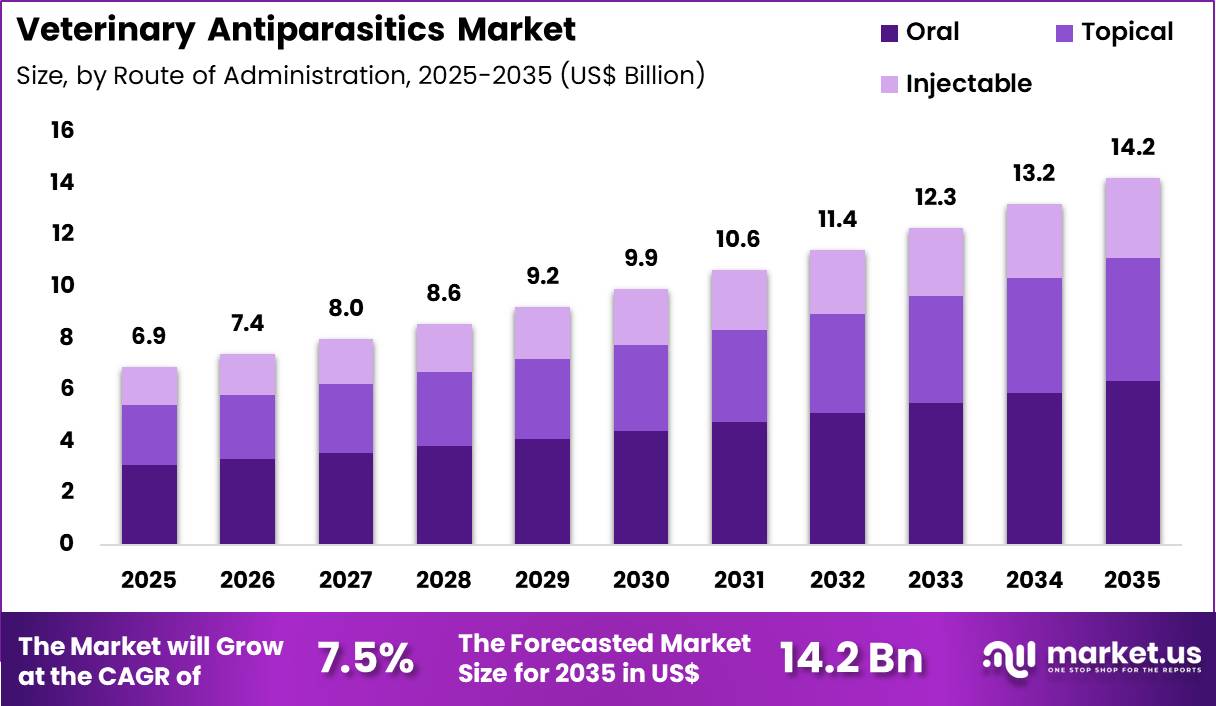
New York, NY – Nov 19 2026 – The Global Veterinary Antiparasitics Market size is expected to be worth around US$ 14.2 Billion by 2035 from US$ 6.9 Billion in 2025, growing at a Veterinary Antiparasitics Market during the forecast period 2026-2035. In 2025, North America led the market, achieving over 38.6% share with a revenue of US$ 2.7 Billion.
Veterinary antiparasitics are pharmaceutical products used to prevent, control, and treat parasitic infections in animals. These products play an important role in maintaining animal health, improving livestock productivity, and supporting companion animal well-being. They are designed to target various parasites, including fleas, ticks, mites, lice, worms, and protozoa.
The veterinary antiparasitics market includes several product categories, such as ectoparasiticides, endoparasiticides, and endectocides. These products are available in different formulations, including oral tablets, injectables, topical solutions, sprays, and medicated feed additives. They are widely used across companion animals, including dogs and cats, as well as livestock such as cattle, poultry, sheep, and pigs.
The growth of the market is primarily driven by increasing pet ownership, rising awareness of animal health, growing livestock production, and the increasing prevalence of parasitic infections. Furthermore, advancements in veterinary pharmaceuticals, the development of long-acting formulations, and increasing expenditure on animal healthcare are supporting market expansion.
With growing emphasis on animal welfare, food safety, and disease prevention, veterinary antiparasitics are expected to remain an essential component of the global animal healthcare industry.
Key Takeaways
- In 2025, the global veterinary antiparasitics market was valued at US$ 6.9 billion and is projected to grow at a CAGR of 7.5%, reaching US$ 14.2 billion by 2035.
- Based on product type, the market is segmented into ectoparasiticides, endoparasiticides, endectocides, and others. Among these, ectoparasiticides dominated the market, accounting for a 42.6% share.
- By animal type, the market is categorized into companion animals and livestock animals. The companion animals segment held the leading position, capturing a 64.8% market share.
- Based on the route of administration, the market is divided into oral, injectable, and topical products. The oral segment emerged as the dominant category, accounting for 44.6% of the total market revenue.
- By end user, the market is classified into veterinary hospitals and clinics, animal farms, and home care settings. The veterinary hospitals and clinics segment led the market with a 64.0% revenue share.
- Regionally, North America dominated the global veterinary antiparasitics market, accounting for a significant share of 38.6%.
Key Market Segments
- Product Type Analysis: Ectoparasiticides held a dominant 42.6% market share due to the widespread prevalence of fleas, ticks, mites, and lice among animals. Rising awareness of parasite-borne diseases and increasing adoption of preventive treatments are supporting segment growth. Furthermore, advancements in long-acting formulations are improving treatment compliance and strengthening market demand.
- Animal Type Analysis: Companion animals accounted for the largest share of 64.8%, driven by rising pet ownership and increasing expenditure on veterinary healthcare. Growing awareness of parasite prevention among pet owners is supporting product adoption. Additionally, increasing veterinary visits and demand for routine preventive treatments are expected to strengthen segment growth.
- Route of Administration Analysis: Oral administration dominated the market with a 44.6% revenue share, primarily due to convenient dosing, improved palatability, and better treatment compliance. Increasing preference for chewable tablets and broad-spectrum oral medications is supporting segment expansion. Furthermore, innovations in long-acting oral formulations are expected to create additional growth opportunities.
- End-User Analysis: Veterinary hospitals and clinics held the leading position, accounting for 64.0% of the market, owing to their critical role in diagnosing and treating parasitic infections. Increasing veterinary visits, growing preventive healthcare practices, and professional recommendations for routine parasite control are driving demand for veterinary antiparasitic products through these facilities.
Regional Analysis
North America is Leading the Veterinary Antiparasitics Market
North America dominated the veterinary antiparasitics market in 2025, accounting for 38.6% of the global market share. The region’s leadership is attributed to high pet ownership, advanced veterinary healthcare infrastructure, and widespread adoption of preventive parasite control programs. Increasing awareness of parasite-borne diseases and growing expenditure on companion animal healthcare are further supporting market demand.
Additionally, established livestock farming practices across the United States and Canada are driving the adoption of antiparasitic treatments to maintain animal health and productivity. Veterinary pharmaceutical companies are also introducing advanced formulations, including long-acting and combination therapies, to improve treatment effectiveness and compliance. Strong regulatory frameworks and increasing veterinary consultations are further strengthening the regional market.
Asia Pacific is Expected to Register the Highest CAGR
Asia Pacific is projected to record the highest CAGR during the forecast period, driven by expanding livestock production, rising pet ownership, and increasing awareness of animal healthcare. Countries such as China, India, and Australia represent significant growth opportunities due to their large livestock populations.
Government initiatives, improving veterinary healthcare infrastructure, and increasing availability of antiparasitic medications are expected to accelerate market adoption. Furthermore, rising disposable incomes and growing investments in animal healthcare are supporting demand across the region.
Emerging Trends
- Development of Long-Acting Antiparasitic Treatments: The development of long-acting antiparasitic products is gaining attention as pet owners and livestock producers seek treatments that reduce the frequency of administration. In July 2025, the US FDA approved Bravecto Quantum, the first injectable flea and tick treatment for dogs providing protection for 8–12 months.
- Growing Focus on Antiparasitic Drug Resistance: Increasing parasite resistance to commonly used treatments is encouraging the development of new medicines and responsible treatment practices. The US FDA has introduced its Antiparasitic Resistance Management Strategy to promote sustainable dewormer use and help preserve the effectiveness of existing veterinary medicines.
- Increasing Adoption of Combination Antiparasitic Products: Combination products containing multiple active ingredients are becoming an important product development area. These treatments can address different parasite groups through a single formulation, including fleas, ticks, heartworms, roundworms, and tapeworms, depending on the approved product and its indications.
- Greater Emphasis on Diagnosis-Based Parasite Treatment: Veterinary treatment practices are increasingly focusing on identifying the specific parasite before selecting an appropriate medicine. Diagnostic testing, including microscopic examination and advanced molecular methods, can help improve treatment selection, monitor effectiveness, and reduce unnecessary antiparasitic drug use.
- Expansion of One Health-Based Parasite Management: The One Health approach is receiving greater attention because certain parasites can affect animals, humans, and the environment. Veterinary professionals are increasingly considering zoonotic transmission, responsible medicine use, and environmental safety when developing parasite prevention and treatment programmes.
Use Cases
- Flea and Tick Control in Companion Animals: Veterinary antiparasitics are widely used to prevent and manage flea and tick infestations in dogs and cats. These treatments help control external parasites, reduce skin irritation, and limit exposure to certain tick-borne diseases. Products are available in oral, topical, and injectable formulations.
- Prevention of Heartworm Disease in Dogs: Antiparasitic medicines are used to prevent heartworm infections caused by Dirofilaria immitis. Preventive treatments are particularly important in regions where mosquitoes transmit the parasite. Veterinary professionals use approved preventive medicines and appropriate testing protocols to support long-term heartworm management.
- Gastrointestinal Worm Management in Livestock: Antiparasitic products are used in cattle, sheep, goats, and other livestock to control gastrointestinal worms. These treatments help reduce parasite-related health problems, support animal growth, improve productivity, and maintain the overall health of commercial livestock populations.
- Control of Mites and Lice in Farm Animals: External antiparasitic treatments are applied to manage mites, lice, and other skin parasites affecting cattle, poultry, sheep, and goats. Controlling these infestations helps reduce skin damage, irritation, animal stress, and productivity losses across livestock farming operations.
- Prevention and Treatment of Poultry Parasite Infections: Veterinary antiparasitics are used in poultry farming to manage parasitic infections, including coccidiosis and certain mite infestations. These treatments help protect bird health, reduce disease-related mortality, and support better production performance in commercial poultry operations.
Frequently Asked Questions About Veterinary Antiparasitics
- What are the different types of veterinary antiparasitics?
The major types include endoparasiticides, ectoparasiticides, and antiprotozoal medicines. Endoparasiticides target internal worms, ectoparasiticides control external parasites such as fleas and ticks, while antiprotozoal medicines target protozoan infections. - Which animals require antiparasitic treatments?
Antiparasitic treatments are used in companion animals and livestock, including dogs, cats, cattle, sheep, goats, horses, and poultry. The selection of medicines depends on the animal species, parasite type, infection risk, and veterinary recommendations. - What are the common formulations of veterinary antiparasitic medicines?
Veterinary antiparasitics are available in several formulations, including tablets, oral suspensions, topical solutions, pour-on treatments, injectable medicines, and medicated feed products. Formulation selection depends on the animal species, treatment requirements, and product approval. - Why is parasite resistance a concern in veterinary medicine?
Parasite resistance develops when parasites become less responsive to medicines that previously controlled them. Repeated or inappropriate treatment can contribute to this problem, reducing treatment effectiveness and increasing the need for alternative medicines and responsible parasite management. - Which animal segment dominates the veterinary antiparasitics market?
The market is broadly divided into companion animals and livestock. Dogs and cats represent important demand segments due to regular parasite prevention, while cattle, sheep, goats, and poultry require treatments to manage parasitic infections. - How is technological development influencing the veterinary antiparasitics market?
Technological development is supporting longer-lasting formulations, combination medicines, improved diagnostic methods, and more targeted treatments. These developments are helping veterinary professionals improve parasite management, reduce treatment frequency in suitable cases, and support responsible medicine use. - What is the future outlook for the veterinary antiparasitics market?
The market is expected to benefit from continued demand for animal healthcare, preventive parasite control, and improved veterinary medicines. Innovation in long-acting treatments, combination formulations, and resistance management is likely to remain important for future market development.
Conclusion
The global veterinary antiparasitics market is expected to witness significant growth, driven by increasing pet ownership, expanding livestock production, and rising awareness of animal health and parasite prevention. The growing adoption of preventive treatments, long-acting formulations, and combination therapies is further supporting market expansion.
While North America is expected to maintain its leading position, Asia Pacific is anticipated to emerge as a high-growth region due to improving veterinary healthcare infrastructure and increasing investments in animal health.
Additionally, advancements in diagnostics and rising concerns regarding drug resistance are expected to create new opportunities, supporting the market’s growth through 2035.
Discuss your needs with our analyst
Please share your requirements with more details so our analyst can check if they can solve your problem(s)



