
Overview
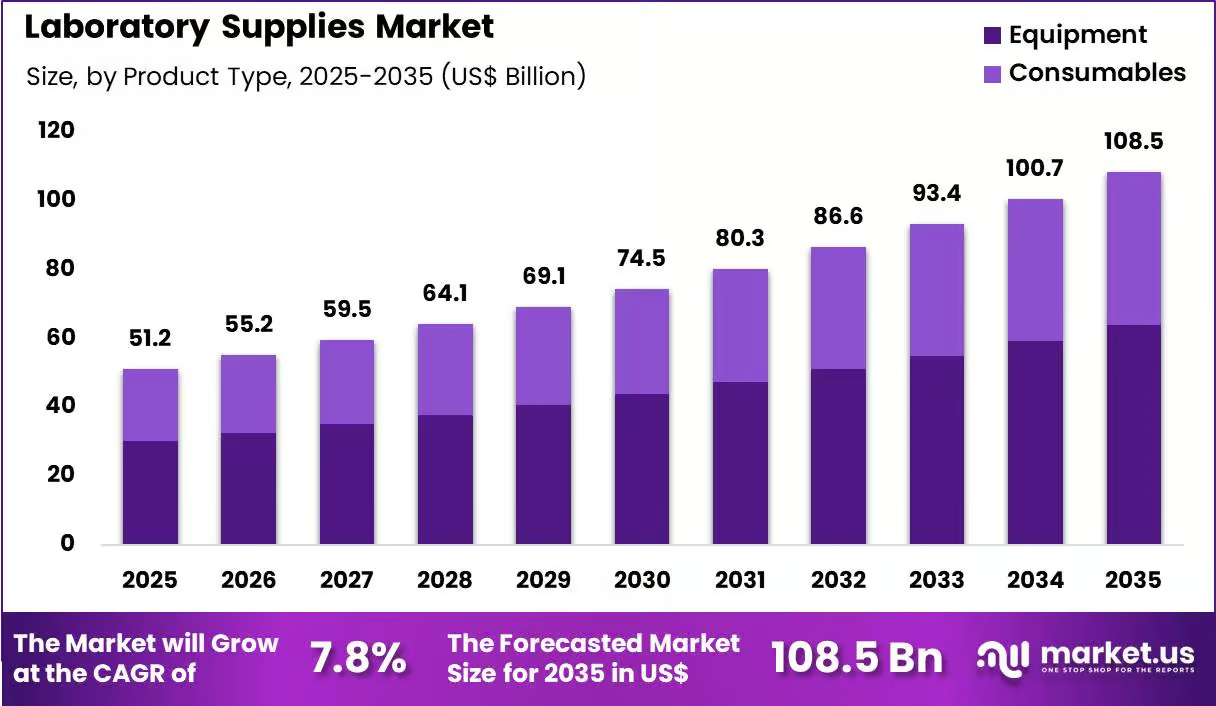
New York, NY – Nov 10 2026 – Global Laboratory Supplies Market size is expected to be worth around US$ 108.5 Billion by 2035 from US$ 51.2 Billion in 2025, growing at a CAGR of 7.8% during the forecast period 2026-2035. In 2025, North America led the market, achieving over 39.7% share with a revenue of US$ 20.3 Billion.
The Laboratory Supplies Market plays an important role in supporting scientific research, medical testing, pharmaceutical development, and industrial quality control. Laboratory supplies include a wide range of products such as glassware, plasticware, test tubes, pipettes, centrifuge tubes, reagents, chemicals, safety equipment, and sample collection materials. These products are widely used in hospitals, diagnostic laboratories, research institutes, pharmaceutical companies, biotechnology firms, and academic institutions.
Growing demand for accurate diagnostic testing, rising investments in life sciences research, and increasing pharmaceutical and biotechnology activities are supporting market growth. Laboratories are increasingly adopting advanced equipment, disposable supplies, and specialized consumables to improve testing accuracy, maintain hygiene, and reduce contamination risks. The expansion of clinical research, drug discovery, molecular biology, and personalized medicine is also creating new opportunities for laboratory supply manufacturers.
Furthermore, growing awareness of laboratory safety, stricter quality standards, and increasing demand for reliable testing solutions are encouraging the use of high-quality laboratory products. Technological advancements and the development of innovative laboratory materials are further strengthening market expansion.
Overall, rising research activities, healthcare requirements, and industrial testing applications are expected to support the continued growth of the global laboratory supplies market.
Key Takeaways
- In 2025, the Laboratory Supplies Market was valued at US$ 51.2 Billion and is projected to reach US$ 108.5 Billion by 2035, growing at a CAGR of 7.8% during the forecast period.
- Based on product type, the market is segmented into equipment and consumables, with the equipment segment dominating with a 58.9% market share.
- By end-user, the market is categorized into academic institutions, pharmaceutical & biotechnology companies, and clinical & diagnostic laboratories. Academic institutions accounted for the largest share at 44.7%.
- North America dominated the global Laboratory Supplies Market, accounting for a leading market share of 39.7%.
Key Market Segments
- Product Type Analysis: The equipment segment dominated the product type category, accounting for 58.9% of the market. Growth is supported by increasing laboratory investments, strict safety standards, and demand for reliable equipment. Universities and research centers are adopting automated, energy-efficient, and advanced laboratory systems to improve operational efficiency and support research activities.
- End-User Analysis: Academic institutions held the leading position in the end-user segment, accounting for 44.7% of the market. Growth is driven by increasing laboratory-based education, scientific research, and biotechnology programs. Government funding, research grants, and infrastructure upgrades encourage institutions to purchase modern laboratory equipment for practical training and experimental activities.
Regional Analysis
North America is leading the Laboratory Supplies Market
North America dominated the laboratory supplies market in 2024, accounting for 39.7% of the global market share. Growth is supported by strong demand from clinical diagnostics, biotechnology research, pharmaceutical companies, and industrial laboratories. Increasing investments in laboratory infrastructure across the United States and Canada are driving demand for consumables, glassware, safety equipment, and analytical instruments.
Growing adoption of automation, digital laboratory systems, and advanced testing technologies further supports regional expansion. Additionally, government research funding and rising clinical trial activities are encouraging laboratories to upgrade their facilities and purchase modern supplies.
Asia Pacific is expected to register the highest CAGR during the forecast period
Asia Pacific is projected to experience the fastest growth due to rising healthcare investments, expanding pharmaceutical manufacturing, and increasing research activities. Countries such as China, India, and Japan are strengthening laboratory infrastructure through government funding and research initiatives.
Growing clinical trials, biotechnology development, and university research programs are increasing demand for laboratory equipment and consumables. Moreover, improvements in scientific facilities and quality testing capabilities are expected to create significant regional growth opportunities.
Emerging Trends
- Growing Adoption of Laboratory Automation: Laboratories are increasingly adopting automated equipment, robotic systems, and digital tools to improve testing efficiency. Automated pipettes, sample handlers, and analytical instruments help reduce manual work, improve accuracy, and process larger sample volumes. These technologies are becoming important in clinical and research laboratories.
- Increasing Focus on Laboratory Safety and Biosafety: Laboratory safety is becoming a major priority due to the growing use of biological samples and hazardous materials. Laboratories are investing in protective equipment, biological safety cabinets, sterilization products, and contamination-control supplies. WHO and CDC guidelines are encouraging better safety practices and risk management.
- Rising Demand for Eco-Friendly Laboratory Supplies: Environmental concerns are encouraging laboratories to adopt sustainable products and reduce waste. Demand is growing for reusable glassware, energy-efficient equipment, recyclable packaging, and products with lower plastic content. The US Environmental Protection Agency also promotes sustainable purchasing standards for laboratory and healthcare products.
- Growing Use of Digital Laboratory Systems: Laboratories are increasingly using digital systems to manage samples, testing procedures, inventory, and research data. Laboratory information management systems (LIMS), barcode tracking, and connected instruments help improve recordkeeping and reduce identification errors. These technologies also support better coordination between laboratory departments.
- Increasing Demand for Specialized Laboratory Consumables: Growing research in biotechnology, molecular biology, genomics, and pharmaceutical development is increasing demand for specialized laboratory consumables. Products such as sterile tubes, microplates, filters, reagents, and sample preparation materials are becoming important for accurate testing and advanced research activities.
Use Cases
- Clinical and Diagnostic Testing: Laboratory supplies are widely used in hospitals and diagnostic centers for routine blood tests, urine analysis, infection detection, and disease screening. Test tubes, reagents, pipettes, sample containers, and protective equipment help healthcare professionals perform reliable tests and support timely medical decisions.
- Pharmaceutical Research and Drug Development: Pharmaceutical companies use laboratory supplies during drug discovery, formulation, and quality testing. Chemicals, glassware, analytical instruments, filters, and sterile containers help researchers study drug properties, test product quality, and maintain controlled conditions during development and manufacturing.
- Biotechnology and Genetic Research: Biotechnology laboratories depend on specialized supplies for DNA analysis, genetic testing, protein studies, and molecular research. PCR tubes, pipette tips, centrifuge tubes, reagents, and microplates support sample preparation and laboratory experiments used in developing new diagnostic and therapeutic solutions.
- Academic Education and Scientific Training: Universities and educational institutions use laboratory supplies to support practical learning in chemistry, biology, microbiology, and biotechnology. Microscopes, glassware, chemicals, slides, and safety equipment allow students to conduct experiments, understand scientific concepts, and develop practical laboratory skills.
- Public Health and Infectious Disease Monitoring: Public health laboratories use laboratory supplies to identify infectious diseases, monitor outbreaks, and study disease-causing organisms. Sample collection kits, diagnostic reagents, protective clothing, and sterilization products support safe sample handling and testing during disease surveillance and public health investigations.
Frequently Asked Questions About Laboratory Supplies
- What are laboratory supplies?
Laboratory supplies are products and materials used in scientific research, medical testing, and industrial experiments. They include glassware, plasticware, chemicals, reagents, pipettes, test tubes, protective equipment, and sample collection products. - What are the most commonly used laboratory supplies?
Commonly used laboratory supplies include test tubes, beakers, flasks, pipettes, centrifuge tubes, microscopes, gloves, reagents, and petri dishes. These products support sample preparation, testing, measurement, analysis, and scientific experiments. - Why are laboratory supplies important in healthcare?
Laboratory supplies support medical testing, disease detection, and clinical research. They help healthcare professionals collect, prepare, and examine patient samples, allowing laboratories to deliver reliable test results and support accurate medical decisions. - What factors should laboratories consider when purchasing supplies?
Laboratories should consider product quality, accuracy, durability, safety standards, compatibility, and cost before purchasing supplies. Choosing reliable products helps maintain testing consistency, reduce contamination risks, and improve daily laboratory operations. - Which product type dominates the Laboratory Supplies Market?
Equipment dominates the product type segment, accounting for 58.9% of the market. Growing laboratory infrastructure investments, increasing research activities, and demand for advanced testing and processing solutions support equipment adoption. - Which factors are creating opportunities in the Laboratory Supplies Market?
Increasing investments in biotechnology, pharmaceutical research, clinical diagnostics, and academic laboratories are creating new opportunities. Growing adoption of automated testing systems, specialized consumables, and sustainable laboratory products is further supporting market development.
Conclusion
The global Laboratory Supplies Market is expected to experience strong growth, driven by increasing demand for diagnostic testing, scientific research, and pharmaceutical development. Rising investments in laboratory infrastructure and the adoption of advanced equipment are creating new growth opportunities. Equipment remains the leading product segment, while academic institutions represent the largest end-user category.
North America continues to dominate the market, whereas Asia Pacific is expected to register the fastest growth. Furthermore, automation, digital laboratory systems, and sustainable supplies are shaping industry developments. Overall, technological advancements and expanding healthcare and research activities will support market growth through 2035.
Discuss your needs with our analyst
Please share your requirements with more details so our analyst can check if they can solve your problem(s)