


Overview
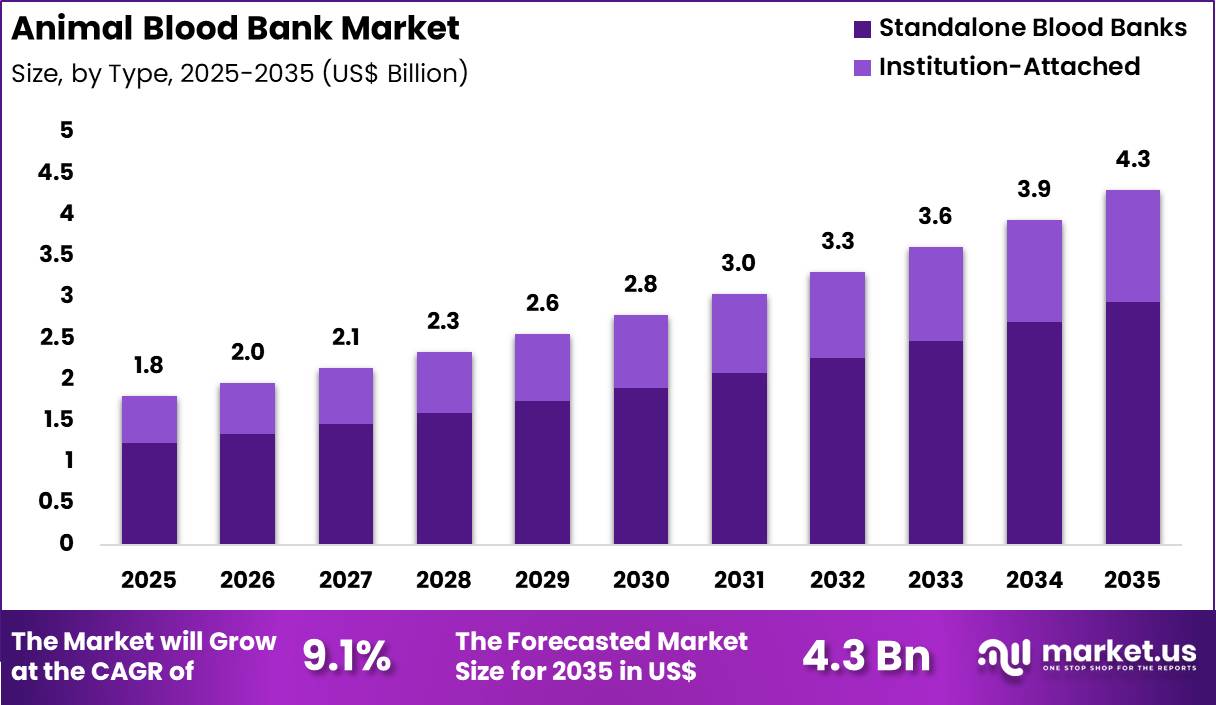
New York, NY – Nov 11 2026 – The Global Animal Blood Bank Market size is expected to be worth around US$ 4.3 Billion by 2035 from US$ 1.8 Billion in 2025, growing at a CAGR of 9.1% during the forecast period 2026-2035. In 2025, North America led the market, achieving over 51.2% share with a revenue of US$ 0.9 Billion.
An Animal Blood Bank is a specialized facility established to collect, screen, store, and distribute blood and blood components for animals requiring emergency medical treatment. Similar to human blood banks, these facilities play an important role in veterinary healthcare by ensuring the timely availability of safe and compatible blood for transfusions.
Animal blood banks primarily support dogs, cats, and other eligible animal species. Donated blood is used to treat animals suffering from severe injuries, road accidents, surgical complications, anaemia, blood loss, poisoning, and certain infectious diseases.
The blood donation process involves health screening of donor animals, blood collection under veterinary supervision, blood grouping, compatibility testing, and appropriate storage. Depending on clinical requirements, whole blood or specific blood components such as red blood cells, plasma, and platelets may be provided.
With increasing awareness of animal welfare and advancements in veterinary healthcare, the demand for organized animal blood banking services is gaining importance. These facilities help veterinary hospitals, clinics, and animal rescue organizations respond more effectively to critical medical emergencies.
An organized animal blood bank can significantly strengthen veterinary infrastructure, promote responsible pet care, and improve the chances of survival and recovery among animals in need.
Key Takeaways
- In 2025, the global animal blood bank market was valued at US$ 1.8 Billion, registering a CAGR of 9.1%. The market is projected to reach US$ 4.3 Billion by 2035.
- Based on product, the market is segmented into packed red blood cells (pRBCs), whole blood, plasma, and others. Among these, packed red blood cells dominated the market, accounting for a 45.8% share.
- By species, the market is categorized into canine, feline, and others. The canine segment emerged as the leading category, capturing a market share of 48.2%.
- Based on type, the market is divided into standalone blood banks and institution-attached blood banks. The standalone blood bank segment dominated the market, accounting for the largest revenue share of 68.4%.
- By end user, the market is classified into hospitals & clinics, academic & research institutions, and others. The hospitals & clinics segment held the leading position, with a revenue share of 51.4%.
- Regionally, North America dominated the global animal blood bank market, accounting for the largest market share of 51.2%.
Key Market Segments
- Product Analysis: Packed red blood cells dominated the product segment with a 45.8% market share, driven by their widespread use in treating anemia, trauma, and surgical blood loss in animals. Growing adoption of component-based transfusion therapy, increasing veterinary surgical procedures, and rising demand for emergency care are further supporting segment growth.
- Species Analysis: The canine segment dominated the species category with a 48.2% market share, supported by the large dog population and increasing demand for transfusions during surgeries, trauma treatment, and chronic disease management. Growing awareness of canine blood donation programs, improved transfusion protocols, and expanding emergency veterinary services are further driving segment growth.
- Type Analysis: Standalone blood banks accounted for the largest share of 68.4%, driven by their specialized infrastructure, centralized donor programs, and efficient blood collection, processing, and storage capabilities. Increasing collaboration with veterinary hospitals, improved cold chain logistics, and growing demand for standardized blood component management are further strengthening the segment’s market position.
- End-User Analysis: Hospitals & clinics dominated the end-user segment with a 51.4% market share, driven by the increasing need for blood transfusions during emergency treatments and surgical procedures. Rising pet healthcare expenditure, expanding veterinary infrastructure, and greater adoption of advanced transfusion therapies are supporting demand across veterinary hospitals and clinical facilities.
Regional Analysis
North America is Leading the Animal Blood Bank Market
North America dominated the animal blood bank market in 2025, accounting for 51.2% of the global market share. Regional growth is driven by increasing pet ownership, rising veterinary surgical procedures, and growing demand for advanced transfusion services.
According to the American Pet Products Association, 66% of US households owned a pet in 2023–2024, supporting demand for veterinary healthcare services. Additionally, the expansion of specialty veterinary hospitals, emergency care facilities, and in-house blood donor programs is strengthening regional market growth. Increasing awareness of canine and feline blood typing, rising pet insurance coverage, and greater adoption of critical care treatments are further supporting the development of organized animal blood banking services.
Asia Pacific is Expected to Register the Highest CAGR
Asia Pacific is expected to record the highest CAGR during the forecast period, supported by increasing pet adoption and improvements in veterinary healthcare infrastructure. Countries such as China, Japan, South Korea, and Australia are witnessing growing investments in specialty veterinary hospitals and emergency care services.
Additionally, expanding blood donor programs, improved storage facilities, and increasing awareness of transfusion medicine are expected to accelerate market adoption.
Emerging Trends
- Development of Organized Veterinary Blood Bank Networks: The establishment of dedicated veterinary blood banks is emerging as an important trend. India’s Department of Animal Husbandry and Dairying released its first national guidelines in August 2025, providing a framework for donor selection, blood collection, storage, and transfusion.
- Growing Adoption of Blood Component Separation: Veterinary blood banks are increasingly focusing on separating collected blood into red blood cells, plasma, and platelets. This approach allows different blood components to be used for specific medical conditions, improves resource utilization, and supports more targeted veterinary treatments.
- Increasing Focus on Blood Typing and Donor Screening: Blood typing, cross-matching, and infectious disease screening are becoming important parts of veterinary transfusion services. These procedures help identify compatible donors, reduce transfusion-related complications, and improve the safety of blood supplies for dogs, cats, and other animals.
- Introduction of Digital Donor Registries and Inventory Management: Digital donor registration and real-time blood inventory management are emerging as important developments. India’s proposed National Veterinary Blood Bank Network includes digital registries and real-time inventory systems to improve donor identification and support faster access to suitable blood during emergencies.
- Advancement in Mobile Collection and Blood Preservation Technologies: Mobile blood collection units and improved preservation techniques are receiving attention in veterinary healthcare. These developments could help reach underserved locations, maintain supplies of rare blood types, and improve the availability of blood products during emergency situations.
Use Cases
- Management of Severe Anaemia and Blood Disorders: Blood banks provide essential blood components for animals experiencing severe anaemia and other blood-related conditions. Red blood cell transfusions can help improve oxygen delivery to body tissues when an animal’s own red blood cell levels become critically low.
- Support During Veterinary Surgical Procedures: Veterinary blood banks provide blood products for animals undergoing major surgical procedures. These products are particularly useful when substantial blood loss occurs during complex operations, helping veterinary professionals manage blood replacement and support patient recovery.
- Treatment of Infectious Diseases and Related Complications: Certain infectious diseases can cause severe anaemia, destruction of red blood cells, or bleeding complications in animals. Blood transfusion services can provide supportive treatment by replacing required blood components under veterinary supervision.
- Emergency Care for Livestock and Large Animals: Animal blood banks can support the treatment of cattle, horses, goats, sheep, and other livestock requiring transfusions. These services are relevant for managing serious injuries, surgical blood loss, and other critical conditions affecting animal health and livestock productivity.
Frequently Asked Questions About Animal Blood Bank
- Which animals can donate blood to animal blood banks?
Dogs, cats, horses, cattle, and other suitable animals can serve as blood donors, depending on the facility’s requirements. Donors must meet health, age, weight, vaccination, and infectious disease screening criteria. - Why do animals require blood transfusions?
Animals may require blood transfusions due to accidents, severe anaemia, surgical complications, infectious diseases, and serious bleeding disorders. Transfusions help replace lost blood or specific blood components and support the treatment of critical conditions. - How is blood stored in an animal blood bank?
Animal blood banks use controlled refrigeration and freezing facilities to preserve different blood components. Red blood cells are generally refrigerated, while plasma can be frozen for longer storage, depending on established veterinary protocols. - Are animal blood transfusions safe?
Animal blood transfusions can be performed safely when appropriate donor screening, blood typing, cross-matching, and monitoring procedures are followed. Veterinary professionals must also observe patients for possible allergic or other transfusion-related reactions. - What factors are driving the growth of the animal blood bank market?
Market development is supported by increasing demand for advanced veterinary treatment, rising companion animal healthcare expenditure, growing awareness of animal welfare, and greater availability of specialized veterinary hospitals offering emergency and critical care services. - Which animal blood products are commonly used in veterinary healthcare?
Common veterinary blood products include whole blood, packed red blood cells, plasma, and platelets. Each product serves different medical requirements, including blood replacement, oxygen delivery, clotting support, and the management of specific bleeding conditions. - Which regions offer opportunities for the animal blood bank market?
North America and Europe have established veterinary transfusion services, while Asia-Pacific offers development opportunities through expanding veterinary healthcare infrastructure. India is also receiving attention following its national animal blood transfusion guidelines introduced in 2025.
Conclusion
The global animal blood bank market is expected to witness significant growth, driven by increasing pet ownership, rising veterinary healthcare expenditure, and growing demand for advanced transfusion services. Valued at US$ 1.8 Billion in 2025, the market is projected to reach US$ 4.3 Billion by 2035, registering a CAGR of 9.1%.
Growing adoption of blood component separation, improved donor screening, digital inventory management, and organized veterinary blood bank networks are further supporting market development. While North America currently leads the market, Asia Pacific is expected to offer substantial growth opportunities through expanding veterinary infrastructure and increasing awareness of animal transfusion services.
Discuss your needs with our analyst
Please share your requirements with more details so our analyst can check if they can solve your problem(s)



