


Overview
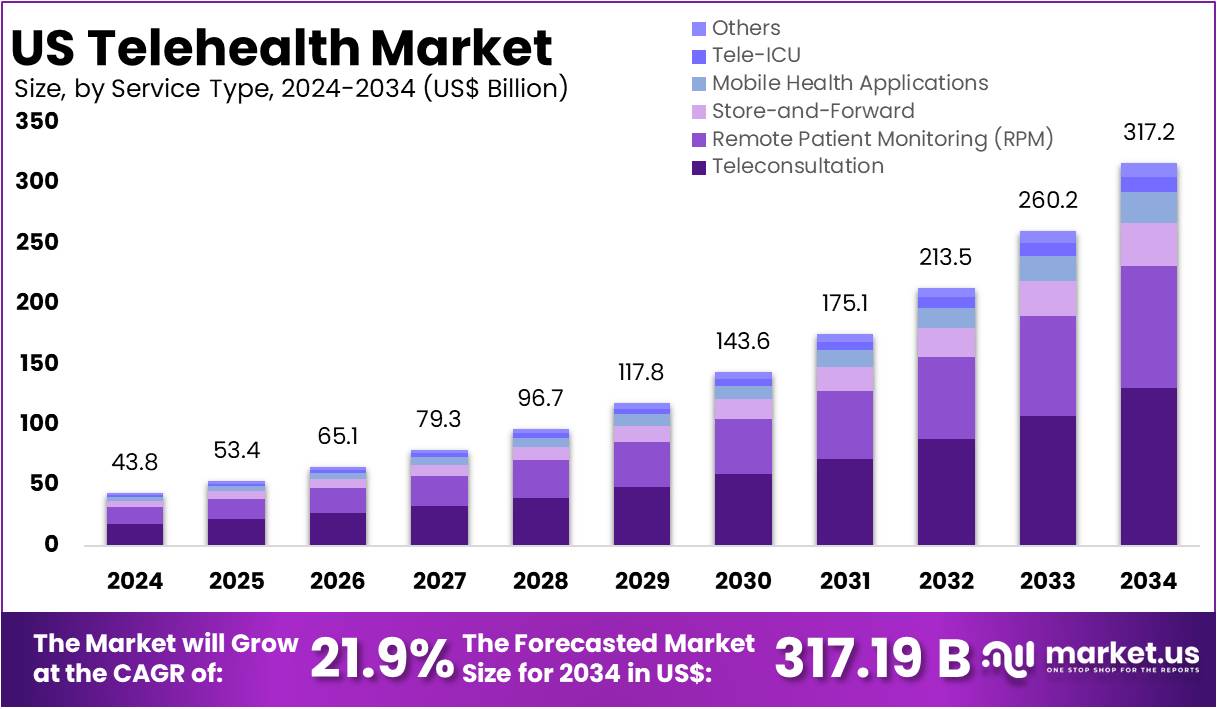
New York, NY – June 12, 2026 – The US Telehealth Market Size is projected to reach USD 43.8 billion by 2024. The market is anticipated to grow at a CAGR of 21.9% between 2024 and 2034, reaching USD 317.2 billion by 2034.
The U.S. telehealth market has emerged as a vital component of the healthcare ecosystem, enabling patients to access medical services remotely through digital communication technologies. Telehealth encompasses a wide range of healthcare services, including virtual consultations, remote patient monitoring, mental health counseling, chronic disease management, and digital prescription services.
The growing adoption of smartphones, high-speed internet connectivity, and digital health platforms has significantly supported the expansion of telehealth services across the United States. Healthcare providers are increasingly leveraging telemedicine solutions to improve patient engagement, enhance care accessibility, and reduce healthcare delivery costs. The technology has proven particularly valuable for individuals residing in rural and underserved regions, where access to healthcare facilities may be limited.
The market experienced substantial growth following the COVID-19 pandemic, which accelerated the acceptance of virtual healthcare among patients, providers, and payers. Favorable regulatory reforms, expanding reimbursement coverage, and increasing investments in digital health infrastructure continue to strengthen market development. In addition, the rising prevalence of chronic diseases and growing demand for convenient healthcare services are contributing to sustained adoption.
Key market participants are focusing on technological innovations, including artificial intelligence-enabled diagnostics, remote monitoring devices, and integrated healthcare platforms, to enhance service quality and patient outcomes. As healthcare systems continue to prioritize accessibility and efficiency, the U.S. telehealth market is expected to maintain strong growth momentum in the coming years.
Key Takeaways
- The U.S. telehealth market is projected to increase from USD 43.78 billion in 2024 to USD 317.19 billion by 2034.
- The market is anticipated to register a CAGR of 21.9% during the forecast period from 2024 to 2034.
- Teleconsultation emerged as the leading service segment, accounting for 41.2% of the total market share.
- Cloud-based deployment held a dominant 64.3% share, supported by its flexibility, scalability, and secure data management capabilities.
- Telepsychiatry represented the largest application segment with a market share of 29.6%, reflecting growing demand for remote mental healthcare services.
- Healthcare providers accounted for 45.6% of the market, driven by increasing adoption of telehealth solutions to enhance patient access and operational efficiency.
Segmentation Analysis
- Service Type Analysis: Teleconsultation dominates the U.S. Telehealth Market with a 41.2% share. Growing demand for convenient virtual healthcare, especially in rural regions, has accelerated adoption. Its broad use across primary care, mental health, follow-ups, and urgent care continues to strengthen market leadership.
- Deployment Mode Analysis: Cloud-based deployment leads the market with a 64.3% share due to its scalability, flexibility, and secure data management capabilities. Healthcare organizations increasingly prefer cloud solutions for seamless system integration, lower infrastructure costs, improved accessibility, and efficient handling of expanding telehealth operations.
- Application Analysis: Telepsychiatry holds the largest application share at 29.6%, supported by rising mental health awareness and provider shortages. Virtual psychiatric services offer accessible, convenient care while reducing geographic and social barriers. Expanding insurance coverage and digital therapy platforms continue driving segment growth.
- End User Analysis: Healthcare providers account for 45.6% of the U.S. Telehealth Market, making them the leading end-user segment. Hospitals, clinics, and specialty centers leverage telehealth to improve patient access, support chronic disease management, enhance operational efficiency, and reduce dependence on in-person consultations.
Emerging Trends
- Telehealth Is Now a Daily Healthcare Option: Telehealth has become a routine healthcare service across the United States. Patients increasingly use virtual consultations for checkups, follow-ups, chronic disease management, and minor illnesses. The convenience of receiving medical care from home continues to drive adoption among both urban and rural populations.
- Strong Government Support Is Helping Telehealth Grow: Government initiatives are accelerating telehealth adoption across the country. Expanded Medicare and Medicaid coverage, along with extended pandemic-era policies, have improved access to virtual care. Continued legislative support is expected to strengthen telehealth services, particularly for underserved and low-income communities.
- More Clinics and Hospitals Are Offering Telehealth: Healthcare providers of all sizes are integrating telehealth into their services. Small clinics, rural healthcare centers, and independent practitioners increasingly offer virtual consultations. This approach improves patient access, reduces operational costs, and enables healthcare organizations to deliver more efficient and connected care.
- Mental Health Care Goes Virtual: Virtual mental health services have experienced significant growth in recent years. Online therapy, counseling, and psychiatric consultations provide convenient and private treatment options. Increased demand, particularly among younger individuals and working professionals, continues to encourage providers to expand digital mental healthcare offerings.
Use Cases
- Everyday Illnesses and Minor Problems: Telehealth is widely used for treating common health concerns such as colds, flu symptoms, coughs, fevers, and digestive issues. Virtual consultations allow patients to receive medical advice, treatment recommendations, and prescriptions quickly while avoiding unnecessary clinic visits and long waiting times.
- Care for Chronic Conditions: Patients with chronic conditions such as diabetes, heart disease, asthma, and hypertension benefit from regular virtual monitoring. Telehealth enables continuous communication with healthcare providers, supports early intervention, and improves treatment adherence through convenient follow-up appointments and remote health tracking.
- Mental Health and Therapy: Telehealth has transformed access to mental health services by making therapy more convenient and accessible. Individuals experiencing anxiety, depression, stress, or trauma can attend counseling sessions remotely. Flexible scheduling and greater privacy have contributed to increased utilization of virtual mental healthcare.
- Support in Rural and Remote Areas: Telehealth helps address healthcare access challenges in rural and remote communities. Patients can consult healthcare professionals without extensive travel, reducing costs and missed appointments. Virtual care also enables local facilities to connect with specialists, improving healthcare quality and outcomes in underserved regions.
Frequently Asked Questions on US Telehealth
- What factors are driving the growth of the US telehealth market?
The growth of the US telehealth market is being driven by increasing demand for convenient healthcare access, rising adoption of digital health technologies, growing prevalence of chronic diseases, and favorable reimbursement policies. Expanding internet connectivity and smartphone usage are also supporting market expansion nationwide. - How does telehealth improve healthcare accessibility?
Telehealth improves healthcare accessibility by connecting patients with healthcare professionals regardless of geographic location. Rural and underserved populations particularly benefit from remote consultations, enabling faster medical support and reducing barriers associated with transportation, provider shortages, and appointment availability. - What role does remote patient monitoring play in telehealth?
Remote patient monitoring enables healthcare providers to track patient health data through connected medical devices outside traditional clinical settings. This approach supports continuous monitoring of chronic conditions, early intervention, improved treatment outcomes, and reduced hospital admissions among high-risk patient groups. - How does telehealth benefit patients with chronic diseases?
Telehealth enables patients with chronic conditions to receive regular medical supervision, medication management, and health monitoring from home. This continuous care model improves treatment adherence, facilitates early detection of complications, and enhances long-term health outcomes. - What is the future outlook for the US telehealth market?
The future outlook for the US telehealth market remains positive due to continued technological advancements, growing consumer preference for virtual healthcare, and expanding integration of digital health solutions. Increasing investments and supportive healthcare policies are expected to sustain long-term market growth. - Who are the major participants in the US telehealth market?
Major participants in the US telehealth market include healthcare providers, telehealth platform companies, health insurers, technology vendors, and remote monitoring solution providers. Strategic partnerships and innovation initiatives among these stakeholders continue to strengthen market competitiveness and service offerings. - Why is telehealth becoming an important part of the US healthcare system?
Telehealth is becoming an essential component of the US healthcare system because it improves care accessibility, enhances patient convenience, supports chronic disease management, and increases healthcare efficiency. Its ability to deliver quality care remotely aligns with evolving patient expectations and healthcare modernization efforts.
Conclusion
The U.S. telehealth market is undergoing rapid transformation, driven by increasing digital healthcare adoption, supportive government policies, and growing demand for accessible medical services. The expansion of teleconsultation, telepsychiatry, cloud-based platforms, and remote patient monitoring has strengthened the role of virtual care across the healthcare ecosystem.
Telehealth is improving access to healthcare for patients in rural and underserved areas while enhancing convenience for chronic disease management and mental health treatment. With continued technological innovation, favorable reimbursement frameworks, and rising consumer acceptance, the market is expected to sustain strong growth and remain a critical component of the future U.S. healthcare system.
Discuss your needs with our analyst
Please share your requirements with more details so our analyst can check if they can solve your problem(s)




