


Overview
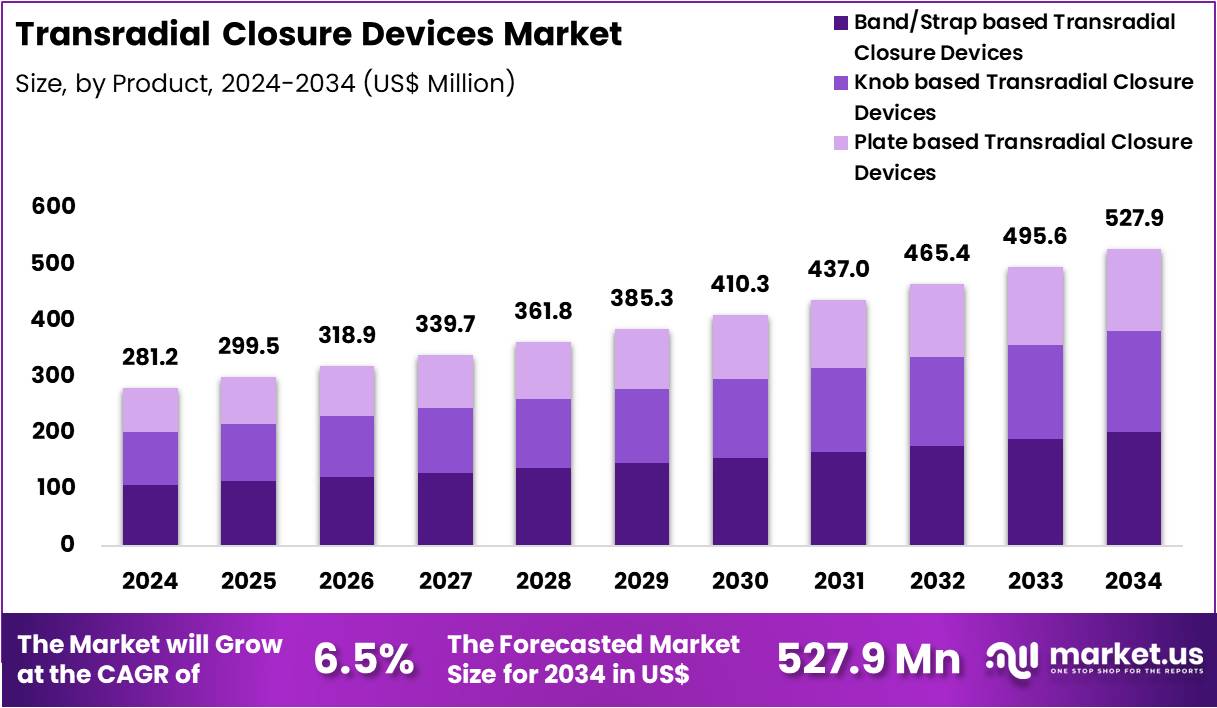
New York, NY – Sep 07, 2026 – Global Transradial Closure Devices Market size is expected to be worth around US$ 527.9 Million by 2034 from US$ 281.2 Million in 2024, growing at a CAGR of 6.5% during the forecast period 2025 to 2034. In 2024, North America led the market, achieving over 39.6% share with a revenue of US$ 111.4 Million.
The global Transradial Closure Devices market is witnessing steady growth as healthcare providers increasingly prefer transradial access for cardiovascular interventions due to its lower complication rates, reduced bleeding risk, and faster patient recovery compared to femoral access.
The growing volume of coronary angiography and percutaneous coronary intervention (PCI) procedures, combined with continuous innovation in vascular closure technologies, is supporting market expansion. These devices help achieve rapid hemostasis after radial artery procedures while improving patient comfort and reducing hospital stays.
According to industry estimates, the market is projected to register a healthy CAGR of over 7% during the forecast period, driven by the increasing prevalence of cardiovascular diseases and expanding use of minimally invasive procedures.
The cardiovascular disease burden remains significant, with approximately 20.5 million deaths reported each year globally, highlighting the growing demand for effective interventional solutions. In addition, more than 4 million PCI procedures are performed worldwide annually, with radial access becoming the preferred approach in many advanced healthcare systems.
North America continues to lead the market due to high adoption of transradial interventions, favorable reimbursement policies, and the presence of major medical device manufacturers. Europe follows closely with widespread clinical acceptance, while the Asia-Pacific region is expected to record the fastest growth owing to expanding healthcare infrastructure, rising cardiac procedure volumes, and increasing investments in advanced interventional cardiology.
Ongoing product innovations, improved compression technologies, and growing physician preference for radial access are expected to create significant opportunities for the Transradial Closure Devices market over the coming years.
Key Takeaways
- The global Transradial Closure Devices market was valued at US$ 281.2 million in 2024 and is projected to reach US$ 527.9 million by 2034, expanding at a CAGR of 6.5% during the forecast period.
- By Product, the market is segmented into Band/Strap-based Transradial Closure Devices, Knob-based Transradial Closure Devices, and Plate-based Transradial Closure Devices. Among these, Band/Strap-based Transradial Closure Devices dominated the market in 2024, accounting for 38.2% of the total share.
- Based on Usage Type, the market is categorized into Disposable and Reusable devices. The Disposable segment held the largest market share of 61.4% in 2024, reflecting its widespread adoption in clinical settings
- By Application, the market is classified into Surgical Intervention and Diagnostics. The Surgical Intervention segment emerged as the leading category in 2024, capturing 55.8% of the overall market share.
- Based on End User, the market is segmented into Hospitals, Ambulatory Surgical Centers, Specialized Clinics, and Others. Hospitals remained the dominant end-user segment, contributing 58.9% of the market share in 2024.
- North America dominated the global Transradial Closure Devices market in 2024, securing the largest regional share of 39.6%, supported by advanced healthcare infrastructure and high adoption of minimally invasive cardiovascular procedures.
Market Segmentation
- Product Analysis: Band/strap-based transradial closure devices dominated the market with a 38.2% share in 2024, driven by easy application, adjustable compression, and enhanced patient comfort. Their transparent design enables bleeding monitoring, while soft materials reduce vascular injury, making them the preferred choice in high-volume catheterization laboratories and cardiovascular intervention centers.
- Usage Type Analysis: Disposable transradial closure devices captured 61.4% of the market in 2024 owing to superior infection control, single-use convenience, and compliance with hospital hygiene standards. Their ability to eliminate sterilization requirements and reduce cross-contamination risks makes them widely preferred across hospitals, cardiac catheterization laboratories, and ambulatory care settings.
- Application Analysis: Surgical intervention accounted for 55.8% of the market in 2024, supported by increasing volumes of percutaneous coronary interventions, angioplasty, and stent placement procedures. Growing preference for radial access due to lower complications, faster recovery, and shorter hospital stays continues to drive demand for transradial closure devices.
- End User Analysis: Hospitals held the leading 58.9% market share in 2024, supported by high volumes of interventional cardiology and vascular procedures. Advanced catheterization laboratories, standardized radial-access protocols, skilled healthcare professionals, and increasing adoption of minimally invasive cardiovascular treatments continue to strengthen demand for transradial closure devices in hospitals.
Statistical Information
- A 2025 prospective registry reported 100% successful radial hemostasis within 60 minutes after coronary angiography or PCI using QuikClot Radial, with no major bleeding events observed.
- In the same 2025 registry, 54.55% (6 of 11 patients) had the compression device removed within 55–60 minutes, demonstrating rapid achievement of hemostasis.
- The remaining 45.45% (5 of 11 patients) had device removal between 65 and 93 minutes, mainly because of workflow logistics rather than bleeding complications.
- The 2025 QuikClot Radial evaluation reported 0% radial artery occlusion (RAO) on post-procedure Day 1, with all patients showing a positive reverse Barbeau test.
- Only 55% of patients experienced Grade I (mild) forearm hematoma in the 2025 registry, and 0% required surgical intervention, indicating a favorable safety profile.
- A 2025 randomized hemostasis protocol applied a TR Band with an initial inflation of 16 mL of air, followed by 2 mL immediate deflation and stepwise deflation every 30 minutes to shorten compression duration without compromising safety.
- A 2025 rapid removal protocol evaluated removal beginning at 30 minutes, followed by removal of one-third of the air every 15 minutes, compared with the conventional protocol that starts at 60 minutes with 2 cc removed every 15 minutes.
- A 2026 systematic review and meta-analysis concluded that adding hemostatic agents to radial compression reduced the time required to achieve hemostasis without increasing hematoma occurrence.
- The same 2026 review noted that 120 minutes remains the commonly recommended compression duration following transradial procedures when standard mechanical compression methods are used.
- A 2025 retrospective comparison of radial compression devices evaluated 250 adult patients undergoing transradial cardiac catheterization at a 280-bed hospital, providing one of the largest recent real-world operational assessments of closure device performance.
Regional Analysis
North America dominated the Transradial Closure Devices Market, accounting for 39.6% of the global market in 2024. The region benefits from advanced cardiovascular infrastructure, widespread availability of catheterization laboratories, and strong adoption of radial-first interventional strategies.
According to the American College of Cardiology (ACC), radial access was used in 57.5% of all PCI procedures in the U.S. by 2022, up from 20.3% in 2013, reflecting a significant shift toward transradial interventions because of lower bleeding risk and improved patient outcomes.
The presence of major medical device manufacturers, favorable reimbursement systems, and continuous physician training by organizations such as the Society for Cardiovascular Angiography and Interventions (SCAI) further support demand for advanced transradial closure devices.
The Asia Pacific region is expected to register the fastest growth during the forecast period, driven by rising cardiovascular disease incidence, expanding healthcare infrastructure, and increasing adoption of minimally invasive cardiac procedures.
Countries including Japan, China, South Korea, and India continue to expand radial-access interventions, supported by government healthcare investments and growing numbers of catheterization laboratories. Japan remains a global leader in radial-access utilization, while increasing physician training and modern cardiac centers across emerging Asian economies are accelerating demand for reliable and efficient transradial closure devices.
Business Opportunities
The Transradial Closure Devices Market offers significant business opportunities as healthcare providers increasingly adopt radial artery access for coronary angiography, percutaneous coronary interventions (PCI), and peripheral vascular procedures. Growing preference for minimally invasive techniques, supported by lower bleeding complications and faster patient recovery, is driving demand for advanced radial compression and hemostasis devices.
Manufacturers can capitalize on opportunities by developing next-generation closure devices with adjustable compression mechanisms, improved patient comfort, transparent designs for easier bleeding assessment, and reduced radial artery occlusion risk. The expanding use of same-day discharge programs and outpatient cardiovascular procedures is creating strong demand for disposable, easy-to-use closure devices that improve workflow efficiency.
Emerging markets across Asia-Pacific, Latin America, and the Middle East present attractive growth prospects due to expanding catheterization laboratories, increasing cardiovascular disease burden, and rising healthcare investments. Strategic collaborations with hospitals, ambulatory surgical centers, and interventional cardiology networks can strengthen market presence.
Additionally, physician training initiatives, regulatory approvals for innovative products, and integration of digital pressure-monitoring technologies into closure systems are expected to create new revenue opportunities for manufacturers over the coming years.
Emerging Trends
- Radial-first PCI guidelines: In 2025, the ACC/AHA/SCAI guideline continued recommending radial access as the preferred approach for PCI, reporting 51% lower major bleeding, 62% fewer vascular complications, and 24% lower all-cause mortality than femoral access, increasing demand for reliable transradial closure devices.
- Focus on radial artery preservation: Healthcare providers are increasingly implementing patent hemostasis techniques and optimized compression protocols to reduce radial artery occlusion. In 2025, SCAI highlighted radial artery preservation as a key quality improvement initiative for transradial cardiovascular procedures.
- Shorter compression protocols: Clinical studies published in 2025 evaluated compression protocols beginning at 30 minutes with gradual air removal every 15 minutes, helping hospitals reduce recovery time while maintaining effective hemostasis and patient safety.
- Evidence-based device innovation: A 2025 comparative clinical evaluation involving 250 patients assessed radial compression device performance, encouraging manufacturers to develop products that improve hemostasis efficiency, patient comfort, and ease of use in interventional cardiology.
Use Cases
- Percutaneous coronary intervention (PCI): Transradial closure devices are routinely used after PCI procedures. According to the ACC CathPCI Registry, radial PCI adoption in the United States increased from 20.3% in 2013 to 57.5% in 2022, supporting continued device demand during 2025–2026.
- Diagnostic coronary angiography: Hospitals use transradial closure devices after coronary angiography to achieve rapid hemostasis and reduce bleeding complications. The 2025 ACC guideline continues recommending radial access because of its improved safety profile compared with femoral access.
- Same-day discharge programs: A 2025 clinical evaluation found that 54.55% of patients had radial compression devices removed within 55–60 minutes, supporting same-day discharge programs by reducing recovery time and improving patient throughput.
- High-volume catheterization laboratories: Large cardiac centers use transradial closure devices to manage increasing procedural workloads.
- Interventional oncology procedures: In 2026, a randomized clinical study evaluated transradial closure devices following transarterial chemoembolization (TACE), demonstrating their role in maintaining radial artery patency and achieving safe hemostasis after minimally invasive oncology interventions.
Recent Development
- In August 2025, Merit Medical Systems, Inc. announced the U.S. commercial launch of the Prelude Wave™ Hydrophilic Sheath Introducer with SnapFix™ Securement Technology, designed to improve radial vascular access stability and workflow during transradial cardiovascular procedures.
- In September 2025, Teleflex Incorporated was featured in a peer-reviewed comparative clinical study evaluating its Vasc Band® Hemostat against the Terumo TR Band® in 250 transradial cardiac catheterization patients. The study reported a median time to hemostasis of 54.5 minutes with Vasc Band versus 68.5 minutes with TR Band for diagnostic procedures, supporting the clinical performance of Teleflex’s radial compression technology.
- In September 2025, Terumo Corporation’s TR Band® Radial Compression Device was evaluated in the same peer-reviewed study comparing it with Teleflex’s Vasc Band®. The publication provides recent real-world clinical evidence on the device’s performance in transradial cardiac catheterization practice.
Frequently Asked Questions on Transradial Closure Devices
- Which product type dominates the Transradial Closure Devices Market?
Band and strap-based transradial closure devices hold the largest market share because they offer adjustable compression, simple application, transparent monitoring, and improved patient comfort. Their widespread use in catheterization laboratories continues to support strong market demand. - Why are disposable transradial closure devices widely preferred?
Disposable devices are preferred because they reduce infection risks, eliminate sterilization requirements, and improve workflow efficiency. Their single-use design supports hospital hygiene protocols and makes them suitable for high-volume cardiovascular procedures performed in modern healthcare facilities. - Which end users contribute the most to market demand?
Hospitals represent the largest end-user segment due to their high volume of coronary angiography, percutaneous coronary intervention, and other vascular procedures. Advanced catheterization laboratories and experienced healthcare professionals continue to drive consistent demand for transradial closure devices. - Which region leads the Transradial Closure Devices Market?
North America leads the market because of its advanced cardiovascular care infrastructure, widespread adoption of radial-first procedures, favorable reimbursement policies, and the strong presence of leading medical device manufacturers focused on interventional cardiology technologies. - What are the major applications of transradial closure devices?
Transradial closure devices are mainly used after percutaneous coronary intervention, coronary angiography, peripheral vascular procedures, and other catheter-based interventions. They help achieve effective hemostasis, reduce bleeding complications, and enable earlier patient mobility and discharge. - What innovations are shaping the future of the Transradial Closure Devices Market?
Manufacturers are developing advanced closure devices with adjustable compression systems, enhanced patient comfort, transparent monitoring designs, and improved pressure control. These innovations aim to reduce complications, shorten recovery time, and improve procedural outcomes in cardiovascular interventions. - What is the future outlook for the Transradial Closure Devices Market?
The market is expected to experience steady growth as radial artery access becomes the preferred approach for cardiovascular procedures worldwide. Expanding healthcare infrastructure, increasing cardiac intervention volumes, and continuous product innovation will create long-term growth opportunities for industry participants.
Conclusion
The Transradial Closure Devices Market is poised for sustained growth as healthcare systems continue shifting toward radial-access cardiovascular procedures that improve patient safety, reduce bleeding complications, and support faster recovery.
Increasing adoption of minimally invasive interventions, coupled with technological advancements in compression devices and expanding catheterization laboratory infrastructure, is strengthening market demand.
Hospitals remain the primary end users, while disposable and band/strap-based closure devices continue to gain preference for their convenience and clinical effectiveness. North America maintains market leadership due to advanced cardiovascular care, while Asia-Pacific offers significant growth opportunities driven by expanding healthcare investments and rising cardiac procedure volumes.
Ongoing product innovation, physician training, and wider implementation of radial-first clinical protocols are expected to further enhance adoption, positioning the market for steady long-term expansion.
Discuss your needs with our analyst
Please share your requirements with more details so our analyst can check if they can solve your problem(s)




