


Overview
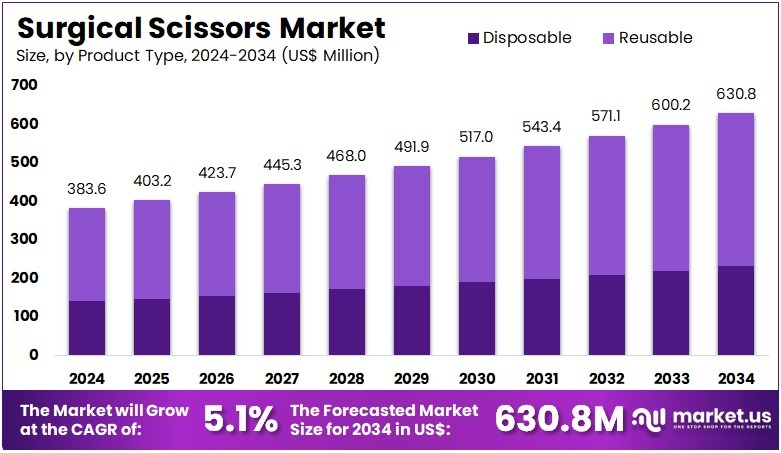
New York, NY – Sep 01, 2026 – The Global Surgical Scissors Market size is expected to be worth around US$ 630.8 Million by 2034, from US$ 383.6 Million in 2024, growing at a CAGR of 5.1% during the forecast period from 2025 to 2034. North America held a dominant market position, capturing more than a 34.4% share and holds US$ 133.1 Million market value for the year.
The Surgical Scissors Market is witnessing steady growth due to the rising volume of surgical procedures, increasing healthcare infrastructure investments, and continuous advancements in surgical instrument design.
Surgical scissors are essential medical devices used for cutting tissues, sutures, dressings, and other materials during general, orthopedic, cardiovascular, ophthalmic, and minimally invasive surgeries. Growing demand for precision-based instruments is encouraging manufacturers to developer gonomic, lightweight, and reusable as well as disposable surgical scissors.
Globally, surgical procedures continue to increase with the expansion of healthcare access and the rising burden of chronic diseases requiring operative treatment. According to the World Health Organization (WHO), approximately 310 million major surgical procedures are performed worldwide every year, creating significant demand for reliable surgical instruments. The increasing adoption of minimally invasive surgeries, which require specialized scissors with enhanced precision, is further supporting market expansion.
Technological improvements such as titanium-coated scissors, electrosurgical scissors, laser-sharpened blades, and antimicrobial-coated instruments are transforming surgical workflows by improving durability, accuracy, and infection control. Hospitals and ambulatory surgical centers are increasingly upgrading their operating room equipment to improve patient outcomes and procedural efficiency.
North America remains a significant market due to advanced healthcare infrastructure, high surgical procedure volumes, and strong adoption of technologically advanced medical devices. Meanwhile, the Asia-Pacific is expected to experience strong growth driven by expanding hospital networks, rising healthcare expenditure, and increasing surgical capacity in countries such as India and China.
Key players are focusing on product innovation, strategic partnerships, and the development of specialized surgical scissors to meet the evolving requirements of surgeons. The market outlook remains positive as healthcare systems worldwide prioritize safe, efficient, and precision-driven surgical solutions.
Key Takeaways
- The global Surgical Scissors Market was estimated to reach US$ 630.8 million by 2034, growing from US$ 383.6 million in 2024 at a CAGR of 5.1% during the forecast period.
- The reusable surgical scissors segment emerged as the leading product type in 2024, accounting for more than 63.3% of the total market share due to their cost efficiency and widespread adoption in healthcare facilities.
- Stainless steel was identified as the dominant material segment in 2024, contributing over 32.1% of the overall market share owing to its durability, corrosion resistance, and suitability for sterilization.
- General surgery represented the leading application segment in 2024, capturing more than 26.8% market share due to the extensive use of surgical scissors in routine surgical procedures.
- Hospitals remained the largest end-user segment in 2024, accounting for over 49.4% of market demand as they perform a high volume of surgical procedures requiring specialized instruments.
- North America held the leading regional position in the Surgical Scissors Market in 2024, representing more than 34.4% share, with a market value of approximately US$ 133.1 million
Market segmentation
- Product Type Analysis: In 2024, reusable surgical scissors dominated the Product Type Segment with over 63.3% market share due to durability, precision, sterilization capability, and long-term cost benefits. Hospitals preferred reusable instruments because of improved material quality, consistent performance, and compliance with surgical standards.
- Material Analysis: In 2024, stainless steel led the Material Segment with more than 32.1% share due to corrosion resistance, durability, affordability, and sharp edge retention. Titanium and tungsten-carbide gained demand for lightweight performance, biocompatibility, and enhanced cutting efficiency in specialized surgical procedures.
- Surgical Specialty Analysis: In 2024, general surgery dominated the Surgical Specialty Segment with over 26.8% share, supported by high procedure volumes and extensive use in abdominal, trauma, and routine surgeries. Increasing surgical access, precision requirements, and advancements in surgical techniques continued driving demand across specialties.
- End-User Analysis: In 2024, hospitals led the End-User Segment with more than 49.4% market share due to high surgical volumes, advanced infrastructure, and continuous investment in surgical instruments. Ambulatory surgical centers and specialty clinics also contributed through growing outpatient procedures and specialized care services.
Statistical Information
- In 2025, surgical scissors manufactured from surgical-grade stainless steel commonly use hardness levels ranging from approximately 40–55 HRC (Rockwell hardness scale), supporting blade durability and repeated surgical use.
- In 2025, premium tungsten-carbide insert surgical scissors were reported to provide approximately 2–3 times longer edge retention compared with conventional stainless-steel scissors due to enhanced cutting surface hardness.
- In 2025, surgical instruments, including reusable scissors, were commonly processed through steam sterilization cycles operating at approximately 121°C–134°C, depending on sterilization protocols and device compatibility.
- In 2025, healthcare sterilization guidelines recommended exposure times of approximately 4 minutes at 132°C–135°C for certain pre-vacuum steam sterilization cycles used for surgical instruments.
- In 2025, reusable surgical instruments such as surgical scissors were evaluated under automated cleaning processes involving approximately 5–10 cleaning stages, including pre-rinsing, washing, rinsing, and drying steps.
- In 2025, global healthcare systems continued performing more than 300 million major surgical procedures annually, creating ongoing demand for surgical instruments, including scissors.
- In 2025, approximately 11% of hospital patients worldwide were estimated to experience healthcare-associated infections, increasing emphasis on sterile surgical instruments and infection-control practices.
- In 2025, titanium surgical instruments were approximately 40% lighter than comparable stainless-steel instruments, supporting reduced hand fatigue during delicate procedures.
Regional Analysis
North America maintained a leading position in the Surgical Scissors Market in 2024, supported by advanced healthcare infrastructure, high surgical activity, and strong adoption of precision-based surgical instruments. The region’s hospitals and surgical centers increasingly relied on durable and high-quality scissors for general, orthopedic, cardiovascular, and minimally invasive procedures.
The United States continues to generate significant demand due to its large healthcare system and extensive operating room capacity. A recent analysis of 251 U.S. healthcare facilities covering 2,618 operating rooms identified 6.7 million surgical instruments and approximately 236 million annual instrument reprocessing events, highlighting the scale of surgical instrument utilization.
The adoption of reusable surgical scissors has also been supported by established sterilization and quality-control practices. North American healthcare facilities processed approximately 4 billion reusable instrument reprocessing events annually, reflecting strong operational demand for reliable surgical tools. Continuous innovation in stainless steel, tungsten-carbide, and specialty scissors, combined with rising surgical procedure volumes, is expected to support regional growth.
Business opportunities
The Surgical Scissors Market offers significant business opportunities driven by increasing surgical procedures, rising demand for precision instruments, and continuous improvements in healthcare infrastructure. Manufacturers can focus on developing advanced reusable scissors with enhanced durability, ergonomic designs, and superior cutting performance to meet the requirements of hospitals and surgical professionals. Growing emphasis on cost-effective surgical solutions creates opportunities for companies producing high-quality instruments with longer service life and improved sterilization compatibility.
The expansion of minimally invasive surgeries presents another major opportunity, as surgeons require specialized scissors designed for laparoscopic, microsurgical, cardiovascular, and ophthalmic procedures. Companies investing in lightweight materials such as titanium alloys, tungsten-carbide inserts, and advanced coatings can gain competitive advantages by offering instruments with improved handling, sharpness retention, and reduced surgeon fatigue.
Digital healthcare transformation also creates opportunities for smart surgical instrument tracking systems that monitor sterilization history, usage cycles, and inventory management. Integration of surgical scissors into automated instrument management platforms can improve hospital efficiency and support regulatory compliance.
Additionally, companies can explore opportunities through customized surgical scissors for specialty procedures, including neurosurgery, plastic surgery, orthopedic surgery, and ophthalmology. Strategic collaborations with hospitals, surgeons, and medical device distributors can accelerate product adoption and strengthen market positioning.
Emerging Trends
- Increasing Adoption of Precision Surgical Instruments: The demand for precision surgical scissors is increasing as hospitals perform more complex procedures requiring accurate tissue cutting. Minimally invasive surgeries, microsurgery, and ophthalmic procedures require lightweight and highly controlled instruments. According to the World Health Organization, millions of surgical procedures are performed each year globally, increasing the need for reliable surgical tools.
- Growth of Disposable Surgical Scissors Usage: Disposable surgical scissors are gaining popularity due to rising infection-control requirements and the need for efficient operating room workflows. Healthcare facilities are adopting single-use instruments to reduce sterilization workload and cross-contamination risks. The U.S. FDA regulates surgical scissors as medical devices, ensuring compliance with safety and manufacturing standards.
- Development of Advanced Materials and Coatings: Manufacturers are focusing on advanced stainless-steel alloys, titanium materials, and protective coatings to improve the durability and cutting performance. Modern instruments are designed to withstand repeated sterilization cycles while maintaining sharpness. These improvements support long-term usage in hospitals, ambulatory surgical centers, and specialty clinics.
- Integration with Robotic and Minimally Invasive Surgery Systems: Robotic-assisted and computer-guided surgeries are creating demand for specialized surgical scissors with enhanced precision. The global expansion of robotic surgery platforms is encouraging manufacturers to develop compatible cutting instruments. These scissors support delicate procedures by enabling controlled movements, reducing tissue damage, and improving surgical outcomes.
- Rising Importance of Ergonomic Surgical Designs: Ergonomic design is becoming a key focus in surgical scissors development as surgeons require instruments that reduce hand fatigue during long procedures. Manufacturers are introducing lightweight handles, improved grips, and balanced structures. These features enhance surgeon comfort, improve control, and support efficiency during complex operations.
Use Cases
- General Surgery Procedures: Surgical scissors are widely used in general surgeries for cutting tissues, sutures, and surgical materials. Hospitals use different types, including Mayo and Metzenbaum scissors, depending on tissue thickness and procedure requirements. Their application covers abdominal surgeries, wound management, and routine operating room procedures worldwide.
- Cardiovascular and Thoracic Surgeries: Cardiovascular surgeons use specialized surgical scissors for precise cutting of blood vessels, tissues, and sutures during heart and chest procedures. Fine-tip scissors help surgeons perform delicate operations with better control. Increasing cardiovascular disease cases globally are supporting demand for advanced surgical instruments in specialized hospitals.
- Ophthalmic and Microsurgical Applications: Ophthalmic surgeries require extremely precise scissors due to the delicate nature of eye tissues. Micro scissors are used in cataract procedures, retinal surgeries, and other vision-related treatments. The World Health Organization estimates that billions of people experience vision impairment, increasing the need for advanced ophthalmic surgical tools.
- Plastic and Reconstructive Surgery: Plastic and reconstructive surgeons use surgical scissors for tissue shaping, trimming, and wound closure procedures. Fine and curved scissors support accurate cosmetic and reconstructive operations. Growing demand for aesthetic procedures and trauma-related reconstruction is increasing the use of specialized surgical scissors in clinics and hospitals.
- Veterinary and Animal Surgical Procedures: Surgical scissors are also used in veterinary medicine for animal surgeries, including soft tissue procedures, wound treatment, and emergency care. Increasing global spending on animal healthcare is encouraging veterinary clinics to adopt high-quality surgical instruments. Durable and reusable scissors remain important tools in veterinary operating environments.
Recent development
- In June 2025, Arthrex launched the Synergy Power™ System, a powered surgical instrument platform designed for orthopedic procedures, including sports medicine, arthroplasty, trauma, and extremity surgeries. The launch strengthened Arthrex’s advanced surgical tool ecosystem and supported demand for precision surgical instruments.
- In 2025, B. Braun continued expanding its surgical instrument portfolio through its Aesculap product range, offering thousands of surgical instruments, including scissors, laparoscopic tools, and specialty instruments. The company focused on improving instrument availability, sterile supply solutions, and workflow efficiency for hospitals.
- In 2025, Integra LifeSciences continued strengthening its surgical technology portfolio through investments in neurosurgery and tissue technology solutions. The company’s focus remained on developing advanced surgical products that support precision procedures, creating opportunities for specialized instruments used in delicate surgeries.
- In 2025, Alcon continued advancing ophthalmic surgical technologies with innovations supporting cataract and vision-care procedures. These developments increased demand for highly precise ophthalmic instruments, including microsurgical scissors used in delicate eye surgeries requiring controlled cutting performance.
Frequently Asked Questions on Surgical Scissors
- What are the different types of surgical scissors?
Common types of surgical scissors include Mayo scissors, Metzenbaum scissors, Iris scissors, operating scissors, dissecting scissors, and microsurgical scissors. Each type has unique blade structures and sizes, allowing surgeons to select instruments based on tissue type and specific procedure requirements. - What is driving the growth of the Surgical Scissors Market?
The Surgical Scissors Market is expanding due to increasing surgical procedures, rising adoption of minimally invasive techniques, growing healthcare infrastructure, and demand for advanced surgical instruments. Hospitals are investing in high-quality scissors to improve precision, safety, and operating room efficiency. - How are minimally invasive surgeries impacting surgical scissors demand?
The growth of minimally invasive surgeries is increasing demand for specialized surgical scissors with smaller designs and enhanced precision. These instruments help surgeons perform delicate procedures through smaller incisions, supporting faster recovery, reduced tissue damage, and improved patient outcomes. - What materials are used to manufacture surgical scissors?
Surgical scissors are primarily manufactured using stainless steel, titanium, and advanced metal alloys. These materials provide durability, corrosion resistance, and strength required for repeated sterilization. Premium scissors may include special coatings to improve sharpness, performance, and instrument lifespan. - Why are disposable surgical scissors becoming popular?
Disposable surgical scissors are gaining attention because they help reduce infection risks and eliminate the need for repeated sterilization. Healthcare facilities use these instruments in emergency procedures, outpatient surgeries, and infection-sensitive environments where maintaining strict hygiene standards is essential. - What are the major applications of surgical scissors?
Surgical scissors are used in general surgery, cardiovascular surgery, orthopedic procedures, ophthalmic surgery, plastic surgery, gynecology, and veterinary medicine. Different designs support specific applications, enabling surgeons to perform precise cutting, tissue separation, and wound management during complex procedures. - Which companies are key players in the Surgical Scissors Market?
Major companies operating in the Surgical Scissors Market include IndoSurgical Private Limited, RUDOLF Medical GmbH, KLS Martin Group, B. Braun Melsungen AG, BD, Arthrex Inc., Integra LifeSciences, Scanlan International, Geister Medizintechnik, Alcon, Richard Wolf, and Stryker.
Conclusion
The global Surgical Scissors Market is expected to experience steady growth, supported by rising surgical procedures, increasing adoption of minimally invasive techniques, and continuous improvements in surgical instrument design. Demand is increasing for reusable, durable, and precision-based scissors made from advanced materials such as stainless steel and titanium.
Hospitals, ambulatory surgical centers, and specialty clinics are adopting innovative instruments to improve surgical accuracy, safety, and workflow efficiency. Future growth will be supported by ergonomic designs, robotic surgery integration, and expanding healthcare infrastructure worldwide.
Discuss your needs with our analyst
Please share your requirements with more details so our analyst can check if they can solve your problem(s)




