
Overview
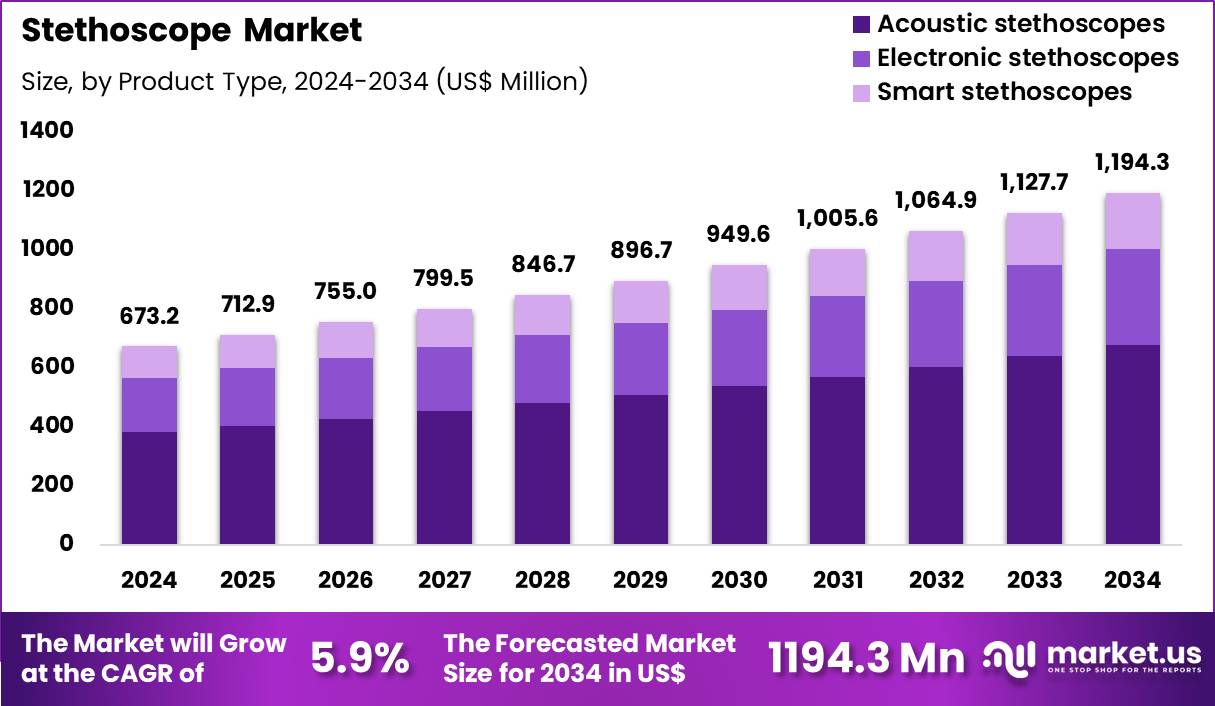
New York, NY – Oct 16, 2026 – The Global Stethoscope Market size is expected to be worth around US$ 1194.3 Million by 2034 from US$ 673.2 Million in 2024, growing at a CAGR of 5.9% during the forecast period 2025 to 2034. In 2024, North America led the market, achieving over 34.4% share with a revenue of US$ 231.6 Million.
A stethoscope is an essential medical instrument used by healthcare professionals to listen to internal body sounds, particularly those produced by the heart, lungs, and digestive system. It plays an important role in routine physical examinations, disease assessment, and patient monitoring. The device helps doctors and nurses identify abnormal sounds that may indicate underlying medical conditions.
A conventional stethoscope consists of a chest piece, tubing, earpieces, and a headset. The chest piece generally includes a diaphragm and, in some models, a bell to detect sounds at different frequencies. Advances in medical technology have led to the development of electronic and digital stethoscopes, which can amplify sounds, reduce background noise, and support digital recording and analysis.
Stethoscopes are widely used in hospitals, clinics, diagnostic centers, emergency care units, and home healthcare settings. Their portability, ease of use, and cost-effectiveness make them valuable tools in both developed and emerging healthcare markets.
Growing demand for efficient diagnostic equipment, increasing healthcare access, and technological advancements are supporting innovation in the stethoscope industry. Manufacturers are focusing on improved acoustic performance, ergonomic designs, durable materials, and smart features to meet evolving clinical requirements. As healthcare systems continue to emphasize early diagnosis and patient-centered care, stethoscopes are expected to remain a fundamental component of modern medical practice.
Key Takeaways
- In 2024, the stethoscope market was valued at US$ 673.2 million and is projected to reach US$ 1,194.3 million by 2034, growing at a CAGR of 5.9% during the forecast period.
- By product type, the market is segmented into acoustic, smart, and electronic stethoscopes. Acoustic stethoscopes dominated the market, accounting for a share of 56.7%.
- Based on distribution channel, the market is categorized into hospital pharmacies, retail stores, and online stores. Hospital pharmacies held a significant market share of 44.3%.
- By end user, the market is segmented into hospitals & clinics, home healthcare, and others. Hospitals & clinics emerged as the leading segment, accounting for 61.8% of the total market revenue.
- North America dominated the stethoscope market, accounting for the largest regional market share of 34.4%.
Key Market Segments
- Product Type Analysis: Acoustic stethoscopes dominated the product type segment, accounting for 56.7% of the market. Their affordability, reliability, ease of use, and independence from batteries make them essential for routine examinations. Widespread clinical adoption and medical student demand continue to support segment growth.
- Distribution Channel Analysis: Hospital pharmacies accounted for 44.3% of the distribution channel segment. Institutional procurement, bulk purchasing agreements, quality control, and reliable product availability support their leading position. Hospitals increasingly rely on centralized sourcing to maintain equipment standards and ensure timely replacement of stethoscopes.
- End-User Analysis: Hospitals and clinics dominated the end-user segment, accounting for 61.8% of the market. High patient volumes, frequent physical examinations, and growing demand for cardiovascular and respiratory assessments sustain product adoption. Continuous clinical use and regular equipment replacement further support segment growth.
Regional Analysis
North America is Leading the Stethoscope Market
In 2024, North America accounted for a significant share of the global stethoscope market, supported by advanced healthcare infrastructure, high diagnostic activity, and widespread adoption of medical equipment. Hospitals and clinics increasingly rely on stethoscopes for routine examinations, cardiovascular assessments, and respiratory monitoring.
Technological advancements in electronic and smart stethoscopes are further supporting regional market development. Growing healthcare expenditure, established medical device manufacturers, and increasing emphasis on early disease detection are also contributing to sustained demand.
Asia Pacific is Expected to Register the Highest CAGR
The Asia Pacific stethoscope market is expected to record the highest CAGR during the forecast period, driven by healthcare infrastructure expansion, rising patient populations, and improving access to medical services. Government investments in hospitals, diagnostic centers, and primary healthcare facilities are supporting equipment procurement.
Increasing awareness of early disease diagnosis and the growing burden of cardiovascular and respiratory conditions are strengthening demand. Furthermore, expanding medical education, rising healthcare expenditure, and growing adoption of digital diagnostic technologies are expected to create additional growth opportunities across emerging economies, particularly India and China.
Emerging Trends
- AI-enabled sound analysis: Artificial intelligence (AI) is being integrated with digital stethoscopes to help healthcare professionals identify unusual heart sounds, murmurs, and possible breathing problems. This trend creates opportunities for manufacturers developing software-supported diagnostic devices, subject to clinical validation and regulatory requirements.
- Growth in telemedicine-compatible devices: Stethoscopes that support sound recording and remote sharing are becoming relevant to telemedicine services. These devices can help clinicians assess patients who live far from hospitals and support remote consultations, provided that sound quality, connectivity, and clinical workflows are adequate.
- Better sound amplification and recording: Digital stethoscopes can amplify body sounds and allow recordings to be reviewed later. These features may benefit healthcare professionals examining patients with difficult-to-hear heart or lung sounds, while creating demand for products with improved audio performance and convenient recording functions.
- Integration with digital healthcare systems: Healthcare providers are increasingly exploring digital tools that support information sharing and connected care. Stethoscopes that can transfer recorded sounds into compatible clinical systems may improve documentation, case review, and communication between healthcare professionals, subject to data security and system compatibility.
- Expansion of smart and connected stethoscopes: Smart stethoscopes combine traditional listening functions with digital features, such as wireless connectivity, electronic sound processing, and software-based analysis. This product development creates opportunities for manufacturers to serve hospitals, specialist clinics, and technology-enabled healthcare services seeking more advanced examination tools.
Use Cases
- Routine physical examinations: Stethoscopes are used during routine medical check-ups to listen to heartbeats, breathing sounds, and bowel sounds. General practitioners and nurses use them as part of physical examinations to identify unusual findings and determine whether further assessment may be needed.
- Cardiovascular assessment: Cardiologists and other healthcare professionals use stethoscopes to assess heart rate, rhythm, and heart sounds. Listening may help identify murmurs or other abnormalities that require further investigation, although a stethoscope alone cannot confirm many cardiovascular conditions.
- Respiratory assessment: Stethoscopes are used to listen to lung sounds when patients experience coughing, breathlessness, or other respiratory symptoms. Healthcare professionals may identify wheezing, crackles, or reduced breath sounds, which can guide further assessment alongside symptoms, examination findings, and other diagnostic tests.
- Emergency and critical care: Emergency departments and intensive care units use stethoscopes for rapid bedside assessments. Clinicians can listen to heart and lung sounds during initial examinations and ongoing monitoring, helping them identify concerning findings and decide whether additional tests or immediate treatment are required.
- Remote patient assessment and medical education: Digital stethoscopes can support remote consultations by allowing recorded body sounds to be shared with healthcare professionals. They are also useful in medical education, where students can review recorded heart and lung sounds to develop listening skills and compare clinical findings.
Frequently Asked Questions About Stethoscope
- What are the main types of stethoscopes?
The main types include acoustic, electronic, digital, and specialised models such as paediatric and cardiology stethoscopes. Acoustic devices transmit body sounds mechanically, while electronic and digital models can provide amplification, sound processing, recording, or additional connected features. - Who uses stethoscopes?
Stethoscopes are used by doctors, nurses, medical students, paramedics, and other trained healthcare professionals. Their applications range from routine examinations and emergency assessments to specialist cardiac and respiratory care, depending on the user’s training and the device’s intended purpose. - Are digital stethoscopes better than traditional stethoscopes?
Digital stethoscopes may offer better sound amplification, recording, and connectivity, making them useful in selected clinical settings. Traditional acoustic models remain practical, require no batteries, and are often less expensive. The most suitable choice depends on clinical needs, budget, and training. - What are the major trends in the stethoscope market?
Major trends include AI-supported sound analysis, digital recording, wireless connectivity, telemedicine compatibility, and improved sound amplification. These developments are encouraging manufacturers to expand product features, although adoption depends on clinical evidence, affordability, regulatory requirements, and healthcare provider needs. - Which factors influence purchasing decisions in the stethoscope market?
Purchasing decisions are influenced by sound quality, price, durability, comfort, ease of cleaning, and intended clinical use. For digital models, battery life, recording functions, software compatibility, data protection, and evidence supporting clinical performance may also affect selection. - What opportunities exist for stethoscope manufacturers?
Manufacturers may find opportunities in digital examination devices, telemedicine-compatible products, specialist clinical applications, and affordable equipment for primary care. Product innovation, clinician training, dependable distribution, and evidence-based performance improvements can help companies address different healthcare needs and purchasing requirements. - What is the future outlook for the stethoscope market?
The market outlook is supported by continuing demand for physical examination equipment and interest in digitally enabled diagnostics. Growth will depend on healthcare spending, product affordability, clinical acceptance, and the ability of manufacturers to demonstrate practical benefits in everyday patient care.
Conclusion
The stethoscope market is expected to experience steady growth, supported by increasing healthcare demand, rising diagnostic activity, and continuous advancements in medical technology. Acoustic stethoscopes continue to maintain a strong market position due to their affordability and reliability, while digital and smart devices are creating new opportunities through sound amplification, recording, and AI-enabled analysis.
Hospitals and clinics remain the primary end users, supported by expanding healthcare infrastructure and routine diagnostic requirements. North America currently leads the market, while Asia Pacific offers promising growth potential. Continued product innovation, improved healthcare access, and greater emphasis on early diagnosis are expected to support long-term market development.
Discuss your needs with our analyst
Please share your requirements with more details so our analyst can check if they can solve your problem(s)