


Overview
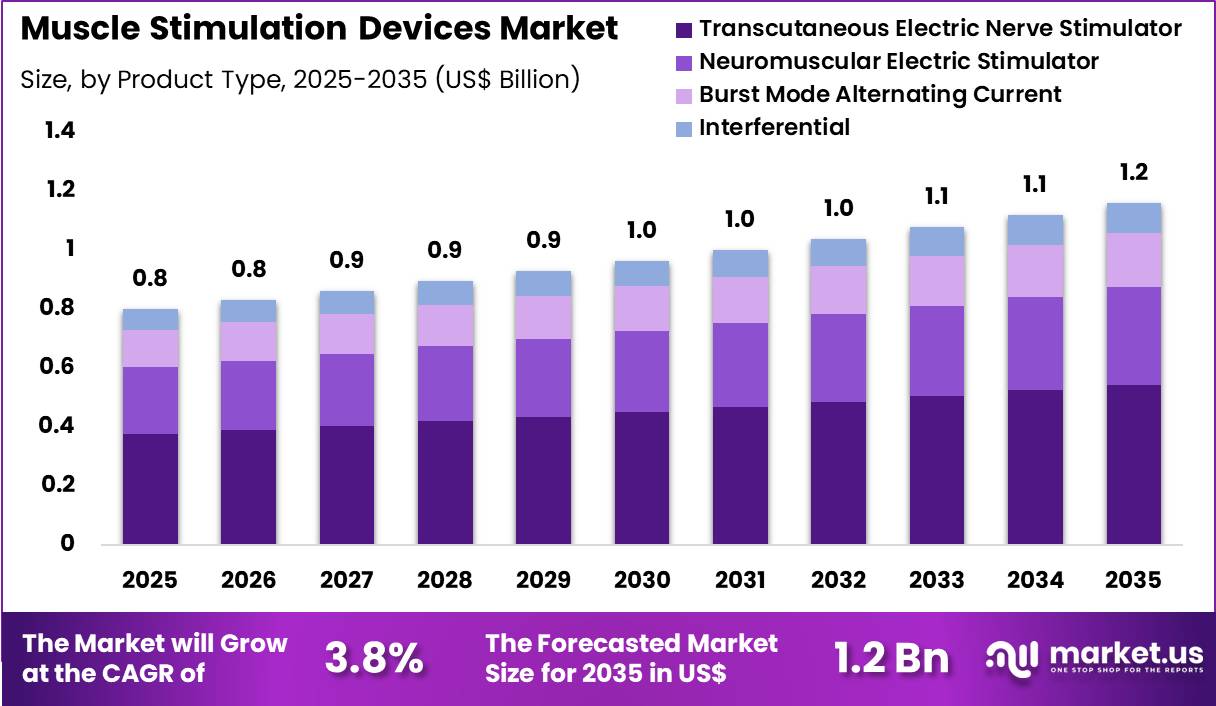
New York, NY – Nov 11 2026 –The Global Muscle Stimulation Devices Market size is expected to be worth around US$ 1.2 Billion by 2035 from US$ 0.8 Billion in 2025, growing at a CAGR of 3.8% during the forecast period 2026-2035. In 2025, North America led the market, achieving over 38.8% share with a revenue of US$ 0.3 Billion.
The global Muscle Stimulation Devices Market is gaining attention due to the increasing demand for advanced rehabilitation solutions, pain management therapies, and muscle recovery technologies. Muscle stimulation devices use controlled electrical impulses to stimulate nerves and muscles, resulting in muscle contractions without requiring conventional physical movement. These devices are widely used in physiotherapy, sports medicine, rehabilitation centers, hospitals, and home healthcare settings.
The market includes various technologies, such as Electrical Muscle Stimulation (EMS), Neuromuscular Electrical Stimulation (NMES), and Transcutaneous Electrical Nerve Stimulation (TENS). These devices are used to support muscle strengthening, improve blood circulation, reduce muscle atrophy, manage pain, and assist recovery following injuries or surgical procedures.
Market growth is primarily driven by the rising prevalence of musculoskeletal disorders, increasing sports-related injuries, growing geriatric populations, and expanding awareness of non-invasive treatment options. Additionally, technological advancements, including portable devices, wireless connectivity, wearable stimulation systems, and smart rehabilitation solutions, are creating new growth opportunities.
With increasing adoption across clinical and homecare environments, the muscle stimulation devices market is expected to witness significant development. Continuous product innovation and expanding healthcare applications are anticipated to support the market’s long-term growth.
Key Takeaways
- In 2025, the global muscle stimulation devices market was valued at US$ 0.8 Billion and is projected to grow at a CAGR of 3.8%, reaching US$ 1.2 Billion by 2035.
- Based on product type, the market is segmented into transcutaneous electric nerve stimulators, neuromuscular electric stimulators, burst mode alternating current, and interferential devices. Among these, transcutaneous electric nerve stimulators dominated the market, accounting for 46.8% of the total market share.
- By application, the market is categorized into pain management, musculoskeletal disorder management, and neurological and movement disorder management. Pain management emerged as the leading segment, capturing 49.3% of the market share.
- Based on end users, the market is classified into hospitals, sports clinics, physiotherapy clinics, and home care settings. Hospitals represented the largest segment, accounting for 42.7% of the total market revenue.
- Regionally, North America dominated the global muscle stimulation devices market, accounting for the largest revenue share of 38.8%.
Key Market Segments
- Product Type Analysis: Transcutaneous electric nerve stimulators dominated the product type segment, accounting for 46.8% of the market share. Their effectiveness, portability, and ease of use support widespread adoption across hospitals and physiotherapy clinics. Growing demand for non-invasive pain relief, home-based treatments, and technological advancements in wearable devices is expected to drive segment growth.
- Application Analysis: Pain management emerged as the leading application segment, accounting for 49.3% of the market share. Rising cases of chronic pain, arthritis, back pain, and post-surgical discomfort are driving adoption. Increasing preference for non-pharmacological treatments, combined with technological advancements and integration with physiotherapy programs, is expected to support segment expansion.
- End-User Analysis: Hospitals dominated the end-user segment, accounting for 42.7% of the market share. Their advanced healthcare infrastructure, high patient volumes, and specialized rehabilitation facilities support widespread device adoption. Increasing integration of muscle stimulation devices into post-operative care, pain management, and neuromuscular rehabilitation programs is expected to drive continued segment growth.
Regional Analysis
North America Regional Analysis
North America dominated the muscle stimulation devices market, accounting for 38.8% of the market share in 2024. Regional growth is driven by the increasing adoption of electrical stimulation technologies for chronic pain management, rehabilitation, and post-injury recovery. The rising prevalence of musculoskeletal disorders and age-related mobility issues has further strengthened demand.
Additionally, the expansion of outpatient physiotherapy services, sports medicine clinics, and home-based rehabilitation programs is supporting device adoption. Technological advancements, including wearable designs and app-enabled controls, along with favorable reimbursement policies for non-pharmacological pain treatments, are further contributing to regional market growth.
Asia Pacific Regional Analysis
Asia Pacific is expected to register the highest CAGR during the forecast period, driven by increasing healthcare expenditure, rising musculoskeletal disorders, and growing awareness of non-invasive treatment options. Expanding physiotherapy clinics, sports rehabilitation facilities, and home healthcare services are improving access to muscle stimulation technologies.
Furthermore, government initiatives to strengthen healthcare infrastructure, rising disposable incomes, and increasing demand for home-based rehabilitation devices are supporting market expansion. Growing sports participation, affordable products from regional manufacturers, and advancements in electrical stimulation technologies are also expected to create significant growth opportunities across the region.
Emerging Trends
- Growing Adoption of Wearable Muscle Stimulation Devices: The development of wearable electrical stimulation devices is creating new opportunities in physical rehabilitation. Portable designs are enabling muscle stimulation outside traditional clinical settings, including home-based rehabilitation. These devices are being explored for patients recovering from neurological and musculoskeletal conditions.
- Increasing Use of Functional Electrical Stimulation (FES): Functional electrical stimulation is gaining importance in neurological rehabilitation, particularly for patients with spinal cord injuries and movement difficulties. These systems stimulate selected muscles in a controlled sequence to support functional activities such as standing, walking and grasping.
- Integration of Sensors and Performance Monitoring Technologies: Muscle stimulation systems are increasingly being developed alongside sensors that measure muscle responses and physical performance. These technologies can support the evaluation of exercise capacity and provide useful information for rehabilitation and athletic training programmes.
- Greater Focus on Patient Safety and Device Standardisation: Manufacturers are placing greater importance on electrical safety, device performance and product quality. Regulatory requirements and recognised standards, including IEC 60601-2-10, are supporting the development of safer nerve and muscle stimulation equipment.
- Expansion of Rehabilitation Applications Beyond Hospitals: Muscle stimulation technology is being explored for rehabilitation in non-traditional healthcare settings. Wearable devices and portable systems may support treatment outside hospitals, although further clinical research is required to establish their effectiveness across different medical conditions.
Use Cases
- Prevention of Muscle Atrophy: Muscle stimulation devices are used to prevent or reduce muscle wasting caused by prolonged inactivity, immobilisation or certain medical conditions. Electrical impulses produce muscle contractions, helping maintain muscle activity when normal movement or exercise is limited.
- Neurological Rehabilitation After Stroke or Spinal Cord Injury: Neuromuscular electrical stimulation supports rehabilitation among patients experiencing impaired muscle control following neurological injuries. Functional stimulation can activate selected muscles to assist movement training and improve the performance of activities such as walking and grasping.
- Muscle Spasm Management: Electrical muscle stimulation is used in selected medical applications to help relax muscle spasms. Controlled electrical impulses are delivered through electrodes placed on the skin, supporting muscle relaxation as part of a prescribed physical therapy or rehabilitation programme.
- Post-Surgical Rehabilitation and Blood Circulation Support: Muscle stimulation devices can be used after surgery to activate calf muscles and support local blood circulation. This application is particularly relevant to immediate post-surgical stimulation intended to help prevent venous thrombosis, under appropriate medical supervision.
- Improving Muscle Movement and Range of Motion: These devices are used in rehabilitation programmes to support muscle re-education and maintain or increase joint range of motion. They can assist patients experiencing movement limitations following injuries, surgery or conditions affecting normal muscle function.
Frequently Asked Questions About Muscle Stimulation Devices
- How do muscle stimulation devices work?
These devices generate electrical signals that travel through electrodes attached to targeted body areas. The signals stimulate underlying nerves, producing muscle contractions that can help maintain muscle activity and support physical rehabilitation under appropriate supervision. - What are the different types of muscle stimulation devices?
Common categories include neuromuscular electrical stimulation (NMES), functional electrical stimulation (FES), electrical muscle stimulation (EMS) and certain transcutaneous stimulation systems. They differ in their intended applications, stimulation methods and regulatory classifications. - Who can benefit from muscle stimulation devices?
Patients experiencing muscle weakness, disuse atrophy, movement difficulties or reduced muscle function following injuries, neurological conditions and surgery may benefit from selected devices. Treatment suitability depends on individual medical conditions and professional assessment. - Are muscle stimulation devices safe to use?
Muscle stimulation devices can be used safely when appropriately designed, regulated and operated according to medical instructions. However, incorrect usage may cause burns, skin irritation or electrical interference with implanted devices such as pacemakers. - What are the major factors driving the muscle stimulation devices market?
Market development is supported by increasing rehabilitation requirements, demand for technologies addressing muscle weakness, and advancements in wearable stimulation systems. Greater adoption of functional electrical stimulation in neurological rehabilitation is also creating additional application opportunities. - What is the future outlook for the muscle stimulation devices market?
The market outlook is supported by developments in wearable rehabilitation, neurological treatment and home-based healthcare technologies. However, sustained adoption will depend on clinical evidence, device safety, affordability and successful integration into healthcare systems. - Which factors should manufacturers consider when developing muscle stimulation devices?
Manufacturers should prioritise electrical safety, product reliability, comfortable electrode designs, treatment effectiveness and regulatory compliance. Device usability, appropriate stimulation settings and clinical validation are also important considerations for improving acceptance among healthcare professionals and patients.
Conclusion
The global muscle stimulation devices market is expected to experience steady growth, driven by the rising prevalence of musculoskeletal disorders, increasing rehabilitation requirements, and growing demand for non-invasive pain management solutions. Technological advancements in wearable devices, wireless connectivity, and functional electrical stimulation are further expanding clinical and homecare applications.
While North America continues to dominate the market, Asia Pacific is anticipated to emerge as a high-growth region due to improving healthcare infrastructure and increasing awareness. Going forward, product innovation, clinical validation, patient safety, and expanding rehabilitation applications are expected to create significant opportunities for manufacturers and support long-term market development.
Discuss your needs with our analyst
Please share your requirements with more details so our analyst can check if they can solve your problem(s)



