
Overview
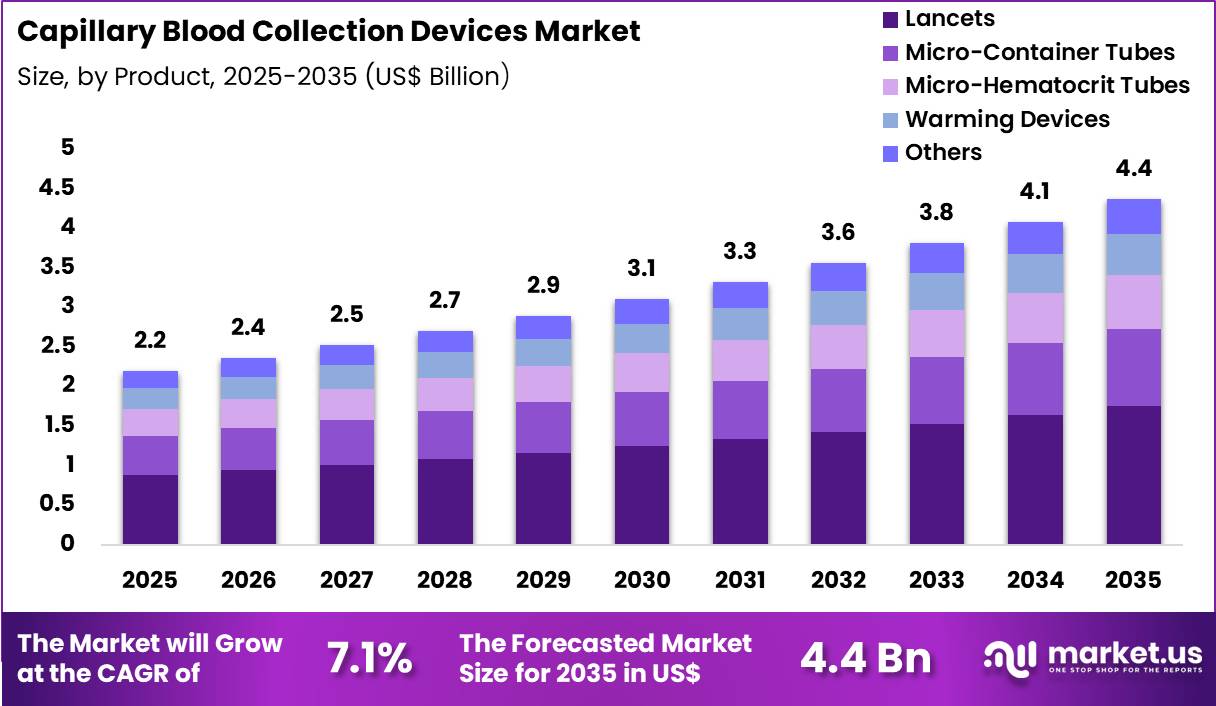
New York, NY – Nov 10 2026 – The Global Capillary Blood Collection Devices Market size is expected to be worth around US$ 4.4 Billion by 2035 from US$ 2.2 Billion in 2025, growing at a CAGR of 7.1% during the forecast period 2026-2035. In 2025, North America led the market, achieving over 35.6% share with a revenue of US$ 783.2 Million.
The Capillary Blood Collection Devices Market is gaining attention due to the growing demand for convenient, minimally invasive, and patient-friendly blood sampling methods. Capillary blood collection devices are medical tools used to collect small blood samples from capillaries, usually through a finger prick, heel prick, or other suitable skin puncture site. These devices include lancets, micro-collection tubes, blood collection containers, safety lancets, and related accessories.
These devices are widely used in hospitals, diagnostic laboratories, clinics, blood testing centers, and home healthcare settings. They support various diagnostic applications, including blood glucose monitoring, hemoglobin testing, infectious disease screening, and routine blood analysis. Their ability to collect small blood volumes makes them useful for newborns, elderly patients, and individuals who require frequent blood testing.
Growing awareness of early disease detection and the increasing use of point-of-care testing are supporting market growth. Healthcare providers are increasingly adopting safety-engineered lancets and disposable collection systems to improve sample collection and reduce the risk of accidental needlestick injuries. According to FDA guidance, blood lancets should be used for a single patient to reduce the risk of bloodborne infection transmission.
Key Takeaways
- In 2025, the Capillary Blood Collection Devices Market generated US$ 2.2 Billion in revenue and is projected to reach US$ 4.4 Billion by 2035, growing at a CAGR of 7.1% during the forecast period.
- By product, the market includes lancets, micro-container tubes, micro-hematocrit tubes, warming devices, and others. Lancets dominated the segment with a market share of 40.1%.
- Based on material, the market is categorized into plastic, glass, stainless steel, ceramic, and others. Plastic emerged as the leading material, accounting for 56.5% of the market.
- By application, the market is segmented into whole blood tests, plasma/serum protein tests, comprehensive metabolic panel tests, liver function tests, dried blood spot tests, and others. Whole blood tests dominated with a revenue share of 39.2%.
- By end user, the market covers hospitals and clinics, blood donation centers, diagnostic centers, home diagnosis, and pathology laboratories. Hospitals and clinics held the largest share at 35.8%.
- Regionally, North America dominated the market, accounting for a significant market share of 35.6%.
Key Market Segments
- Product Analysis: Lancets dominated the product segment with a 40.1% market share, driven by their affordability, convenience, and minimally invasive design. They are widely used in hospitals, clinics, and home healthcare for routine blood sampling. Growing demand for safety lancets, single-use devices, and point-of-care testing further supports segment growth.
- Technology Analysis: Plastic led the material segment with a 56.5% market share due to its lightweight nature, affordability, and easy disposal. Healthcare facilities prefer plastic collection devices for single-use applications and infection control. Increasing demand for recyclable materials, portable testing kits, and cost-effective medical supplies supports segment expansion.
- Application Analysis: Whole blood tests dominated the application segment with a 39.2% market share, supported by their widespread use in routine diagnostics and patient monitoring. These tests help assess blood cell counts, hemoglobin, and hematocrit levels. Rising demand for rapid diagnostics, preventive screening, and point-of-care testing further drives growth.
- End-User Analysis: Hospitals and clinics accounted for the largest end-user share at 35.8%, driven by high patient volumes and established diagnostic facilities. These healthcare settings widely use capillary collection devices for routine testing, pediatric care, and patient monitoring. Growing investments in point-of-care diagnostics and minimally invasive procedures support segment growth.
Regional Analysis
North America is leading the Capillary Blood Collection Devices Market
North America dominated the capillary blood collection devices market with a 35.6% share in 2024, driven by rising chronic disease screening and preventive healthcare demand. In the U.S., 76.4% of adults reported at least one chronic condition in 2023, increasing the need for regular blood testing.
Growing adoption of outpatient care, home healthcare, and point-of-care diagnostics further supported regional demand. Healthcare providers increasingly use finger-prick collection devices for convenient sampling and faster diagnosis. Investments in digital health platforms, remote patient monitoring, and advanced diagnostic infrastructure also strengthened market growth.
Asia Pacific is expected to register the highest CAGR during the forecast period
Asia Pacific is projected to record the fastest growth due to improving healthcare infrastructure and rising awareness of early disease detection. Countries such as China, India, and Japan are expanding diagnostic services and point-of-care testing facilities.
Government healthcare initiatives, growing chronic disease monitoring, and increasing demand for affordable diagnostic solutions are supporting adoption. Additionally, expanding telemedicine services, rural healthcare access, and local manufacturing are expected to create significant growth opportunities across the region.
Emerging Trends
- Growing Demand for Minimally Invasive Blood Collection: Healthcare providers are increasingly adopting capillary blood collection devices because they require only a small skin puncture. Finger-prick and heel-prick methods reduce the need for conventional venous blood collection. These methods are particularly useful for children, newborns, and patients requiring frequent testing.
- Increasing Adoption of Safety Lancets/: Manufacturers are focusing on single-use, auto-disabling lancets to improve patient and healthcare worker safety. These devices help prevent accidental needlestick injuries and reduce infection risks. The CDC recommends single-use fingerstick devices in assisted blood glucose monitoring settings.
- Rising Use of Point-of-Care Testing: The growing use of point-of-care testing is increasing demand for convenient blood collection solutions. Capillary collection devices support rapid testing in hospitals, clinics, and community healthcare facilities. They help healthcare professionals collect small samples for faster diagnostic assessment.
- Expansion of Dried Blood Spot Technology: Dried blood spot collection is gaining importance in newborn screening and laboratory testing. This method uses small blood drops collected on special filter paper cards. Healthcare laboratories use these samples to identify several inherited and metabolic conditions in newborns.
- Development of Advanced Micro-Sampling Technologies: Manufacturers and researchers are exploring advanced microsampling technologies that collect very small blood volumes. Volumetric absorptive microsampling and improved micro-collection systems can support pharmaceutical research and specialized testing while reducing the amount of blood required.
Use Cases
- Blood Glucose Monitoring: Capillary blood collection devices are widely used for checking blood glucose levels in people with diabetes. Finger-prick lancets provide small blood samples that can be tested using glucose meters. This supports regular monitoring and helps patients manage their blood sugar levels.
- Newborn Screening Programs: Hospitals use heel-prick collection devices to obtain blood samples from newborn babies. The samples are placed on filter paper cards and sent to specialized laboratories. These tests help identify serious inherited and metabolic conditions at an early stage.
- Hemoglobin and Hematocrit Testing: Diagnostic centers and healthcare facilities use capillary blood collection devices for hemoglobin and hematocrit testing. These tests help evaluate blood-related conditions, including anemia. Small-volume sampling is useful in settings where frequent blood testing is required.
- Infectious Disease and Laboratory Screening: Capillary blood samples can support selected infectious disease screening and laboratory testing applications. Dried blood spot methods are used in certain infectious disease testing programs and research studies. They also help simplify sample collection and transportation.
- Home-Based Diagnostic Testing: Capillary blood collection devices support home-based testing by allowing individuals to collect small blood samples using suitable collection kits. These solutions are useful for selected health monitoring and screening applications. They can improve testing convenience while reducing the need for frequent clinic visits.
Frequently Asked Questions About Capillary Blood Collection Devices
- What are the common types of capillary blood collection devices?
Common types include safety lancets, standard lancets, micro-container tubes, micro-hematocrit tubes, warming devices, and blood collection accessories. Each device supports specific sampling requirements across clinical testing, diagnostic laboratories, and healthcare applications. - How are capillary blood samples collected?
Capillary blood samples are generally collected through a small puncture in the fingertip or heel. A healthcare professional uses a suitable sterile lancet and transfers the blood into a collection tube or testing device. - What are the major applications of capillary blood collection devices?
These devices are commonly used for blood glucose monitoring, newborn screening, hemoglobin testing, hematocrit analysis, and selected laboratory investigations. Their small-volume collection method makes them useful for routine testing and frequent patient monitoring. - What are the benefits of capillary blood collection devices?
Capillary blood collection devices require smaller blood volumes and offer convenient sampling with minimal invasiveness. They are particularly useful for newborns, children, and patients requiring repeated testing, while supporting faster collection in suitable diagnostic settings. - Which material segment holds the largest market share?
Plastic dominates the material segment with a 56.5% market share. Its lightweight structure, affordability, and easy disposal make it suitable for manufacturing single-use blood collection devices used across healthcare facilities and diagnostic laboratories. - Which application segment leads the market?
Whole blood tests lead the application segment with a 39.2% market share. Their widespread use in routine blood analysis, hemoglobin measurement, and patient monitoring supports demand across hospitals, clinics, and diagnostic laboratories. - Which end-user segment dominates the market?
Hospitals and clinics hold the leading position in the end-user segment with a 35.8% market share. High patient volumes, routine diagnostic procedures, pediatric testing, and increasing point-of-care services support their adoption. - Which region dominates the capillary blood collection devices market?
North America dominates the capillary blood collection devices market with a 35.6% market share. Strong diagnostic infrastructure, increasing chronic disease screening, advanced healthcare facilities, and growing adoption of minimally invasive testing support regional demand.
Conclusion
The Capillary Blood Collection Devices Market is expected to experience steady growth, reaching US$ 4.4 Billion by 2035, at a CAGR of 7.1%. Rising demand for minimally invasive blood sampling, increasing chronic disease screening, and growing adoption of point-of-care testing are driving market expansion.
Lancets, plastic materials, and whole blood testing remain key market segments, while hospitals and clinics represent the leading end users. North America currently dominates the market, whereas Asia Pacific is expected to grow fastest. Technological advancements, improved patient safety, and expanding home healthcare services will create new opportunities for market growth.
Discuss your needs with our analyst
Please share your requirements with more details so our analyst can check if they can solve your problem(s)