


Overview
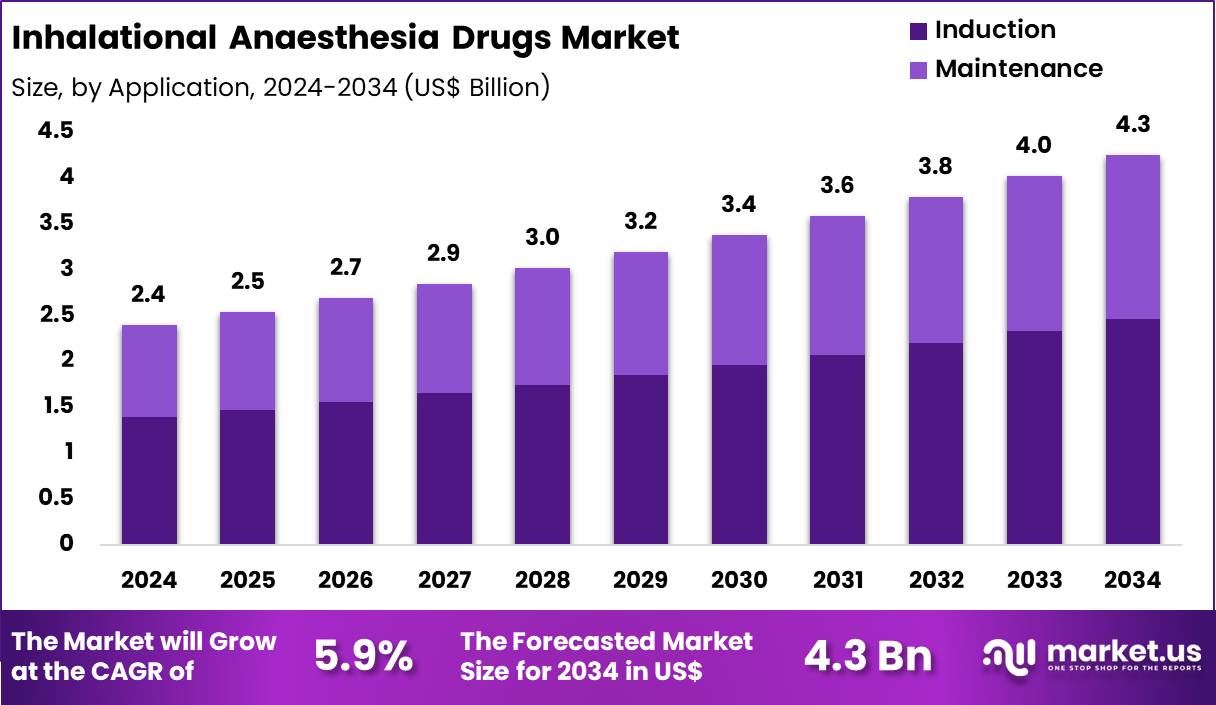
New York, NY – Oct 09, 2026 – The Global Inhalational Anaesthesia Drugs Market size is expected to be worth around US$ 4.3 Billion by 2034 from US$ 2.4 Billion in 2024, growing at a CAGR of 5.9% during the forecast period 2025 to 2034. In 2024, North America led the market, achieving over 38.8% share with a revenue of US$ 0.9 Billion.
Inhalational anaesthesia drugs are pharmaceutical agents administered through the respiratory system to induce and maintain general anaesthesia during surgical procedures. These drugs are widely used in hospitals, ambulatory surgical centres, and speciality healthcare facilities due to their rapid onset of action, controllable anaesthetic depth, and predictable recovery profiles.
Common inhalational anaesthetics include sevoflurane, desflurane, isoflurane, and nitrous oxide. Among these, sevoflurane is widely used for the induction and maintenance of anaesthesia, particularly in paediatric and adult patients. Desflurane and isoflurane are also used in surgical settings, while nitrous oxide is often administered in combination with other anaesthetic agents.
The market is influenced by the increasing number of surgical procedures, rising demand for advanced anaesthesia techniques, improvements in healthcare infrastructure, and the growing adoption of minimally invasive surgeries. Technological advancements in anaesthesia delivery systems and patient monitoring equipment are also supporting market development.
However, concerns regarding the environmental impact of certain inhalational anaesthetics, stringent regulatory requirements, and the availability of alternative intravenous anaesthetic drugs may influence market dynamics.
Going forward, the market is expected to benefit from continued improvements in surgical care, greater emphasis on patient safety, and the development of anaesthetic agents with improved clinical and environmental profiles.
Key Takeaways
- In 2024, the market was valued at US$ 2.4 billion and is projected to grow at a CAGR of 5.9%, reaching US$ 4.3 billion by 2034.
- By product type, the market is segmented into sevoflurane, desflurane, isoflurane, and nitrous oxide, with sevoflurane dominating in 2023, accounting for 41.6% of the market share.
- By application, the market is categorized into induction and maintenance, with induction holding a significant share of 57.9%.
- By end user, the market is divided into hospitals, ambulatory surgical centers, and others, with hospitals leading the segment with a revenue share of 64.3%.
- Regionally, North America dominated the market in 2024, accounting for 38.8% of the total market share.
Key Market Segments
- Product Type Analysis: Sevoflurane dominated the product type segment, accounting for 41.6% of the market share in 2023. Its rapid onset, smooth induction, low airway irritation, and faster recovery make it suitable for adult and pediatric patients. Growing surgical volumes, increasing outpatient procedures, and demand for efficient operating room workflows support its adoption. Its compatibility with modern anesthesia equipment and broad clinical applicability further strengthen its market position. Sevoflurane is expected to maintain its leading position due to favorable clinical characteristics and widespread preference among anesthesiologists.
- Application Analysis: Induction accounted for 57.9% of the application segment in 2023. Its dominance is supported by the essential role of anesthesia induction in surgical procedures, particularly pediatric and outpatient surgeries. Rapid onset, predictable anesthetic depth, and improved patient comfort contribute to its adoption. Increasing surgical volumes and demand for efficient anesthesia practices are expected to sustain segment growth.
- End-User Analysis: Hospitals held 64.3% of the end-user market share in 2023. High surgical volumes, advanced anesthesia infrastructure, emergency procedures, and centralized procurement support their dominance. Expanding healthcare facilities and increasing surgical demand are expected to maintain hospitals’ leading position.
Regional Analysis
North America Dominates the Inhalational Anaesthesia Drugs Market
In 2024, North America accounted for 38.8% of the global inhalational anaesthesia drugs market, driven by increasing ambulatory surgeries and elective procedures. The use of sevoflurane and isoflurane supports rapid induction and recovery, improving surgical efficiency.
Growing demand for orthopedic, cardiovascular, and bariatric procedures, advancements in vaporizer technology, and improved dosing precision further supported regional market growth. Adoption of low-flow anaesthesia techniques also increased to reduce costs and environmental impact. The U.S. recorded over 92.3 million surgical procedures in 2024, highlighting substantial demand.
Asia Pacific Expected to Register the Highest CAGR
Asia Pacific is projected to experience the highest CAGR during the forecast period, supported by expanding healthcare infrastructure, rising surgical volumes, and increasing chronic disease prevalence.
Investments in public hospitals, localized pharmaceutical manufacturing, and anesthesiologist training are improving access to inhalational anaesthesia drugs. Growing adoption of sevoflurane and isoflurane, alongside enhanced surgical capabilities, is expected to accelerate regional market expansion.
Emerging Trends
- Growing preference for lower-emission anaesthetic agents: Hospitals are increasingly considering the environmental impact of anaesthetic drugs when selecting products. NHS England has promoted sevoflurane as an alternative to desflurane where clinically appropriate, creating opportunities for lower-emission product portfolios and sustainable anaesthesia practices.
- Increasing adoption of low-flow anaesthesia: Low-flow anaesthesia reduces the volume of fresh gas supplied during surgery and can reduce anaesthetic gas consumption when appropriately managed. This approach is encouraging hospitals to improve equipment efficiency, control drug use and reduce operating costs without compromising patient safety.
- Development of anaesthetic gas capture technologies: New approaches to collecting and managing waste anaesthetic gases are receiving greater attention. Research has identified gas capture systems as a possible way to reduce atmospheric emissions, creating potential demand for compatible equipment, specialised filters and improved operating theatre infrastructure.
- Greater focus on patient-specific anaesthesia selection: Anaesthesiologists increasingly consider procedure requirements, patient characteristics, recovery needs and the properties of individual anaesthetic agents. This supports continued demand for different inhalational drugs, particularly where flexibility in anaesthesia management is important for specialised surgical procedures.
- Shift towards integrated and sustainable anaesthesia management: Healthcare providers are assessing anaesthetic drugs alongside delivery equipment, gas monitoring, waste management and alternative anaesthesia methods. This broader approach is encouraging hospitals to evaluate total treatment costs and environmental performance rather than relying solely on the purchase price of individual drugs.
Use Cases
- General anaesthesia during major surgery: Inhalational agents such as sevoflurane and isoflurane are used to induce or maintain general anaesthesia in appropriate patients. They help maintain unconsciousness during procedures, supporting demand from hospitals and surgical centres performing complex and routine operations.
- Anaesthesia for paediatric procedures: Sevoflurane is commonly used in paediatric anaesthesia because of its suitability for inhalational induction in appropriate patients. This application supports demand from children’s hospitals and surgical departments treating young patients, subject to clinical assessment and established anaesthesia protocols.
- Maintenance of anaesthesia during outpatient surgery: Inhalational anaesthetics can be used to maintain general anaesthesia during selected day-care and outpatient procedures. Their use supports surgical centres seeking effective anaesthesia management and timely patient recovery, depending on the drug selected and the patient’s clinical condition.
- Anaesthesia in specialised surgical procedures: Inhalational agents may be selected for procedures requiring careful control of anaesthetic depth, including certain neurological and other specialised operations. NHS England guidance recognises limited clinical circumstances in which desflurane may remain appropriate, demonstrating the importance of procedure-specific drug selection.
- Combined anaesthesia and pain-management approaches: Nitrous oxide may be used as part of selected anaesthesia or analgesia protocols, including situations where additional pain relief is required. Its use depends on clinical suitability, available facilities and safety protocols, creating demand beyond conventional maintenance of general anaesthesia.
Frequently Asked Questions About Inhalational Anaesthesia Drugs
- What are the major types of inhalational anaesthesia drugs?
Major agents include sevoflurane, isoflurane and desflurane, along with nitrous oxide, which also has analgesic applications. These medicines differ in their clinical properties, delivery requirements, environmental impact and suitability for individual patients and procedures. - What is sevoflurane used for?
Sevoflurane is a volatile anaesthetic used to induce or maintain general anaesthesia in appropriate patients. Its clinical applications include selected adult and paediatric procedures, while its comparatively lower environmental impact than desflurane has increased interest in its use. - How do inhalational anaesthesia drugs work?
Inhalational anaesthetics enter the body through the lungs and reach the brain through the bloodstream. They alter nervous system activity to produce anaesthesia, while trained clinicians monitor breathing, circulation and anaesthetic depth throughout the procedure. - What factors determine the selection of an inhalational anaesthetic?
Drug selection depends on the patient’s condition, procedure type, expected recovery, clinical effectiveness, safety requirements and available equipment. Anaesthesia professionals also consider medicine costs, environmental effects and applicable guidelines when choosing an appropriate agent for treatment. - Which factors are challenging the inhalational anaesthesia drugs market?
Key challenges include environmental concerns associated with anaesthetic gas emissions, regulatory requirements, drug procurement costs and competition from intravenous anaesthesia. Hospitals must also maintain specialised equipment, train personnel and follow appropriate procedures for managing waste anaesthetic gases. - How are environmental regulations affecting the market?
Environmental policies are influencing anaesthetic purchasing and clinical practice, particularly in markets seeking to reduce healthcare emissions. NHS England restricted routine desflurane use from 2024, allowing limited clinical exceptions, while promoting suitable alternatives and more sustainable anaesthesia practices. - What is the future outlook for the inhalational anaesthesia drugs market?
The market outlook will depend on surgical demand, healthcare investment, product availability and clinical preferences. Sustainable anaesthesia practices are likely to influence product selection, while manufacturers will need to balance clinical effectiveness, affordability, patient safety and environmental performance.
Conclusion
The inhalational anaesthesia drugs market is expected to experience steady growth, supported by increasing surgical procedures, expanding healthcare infrastructure, and advancements in anaesthesia delivery systems. Sevoflurane is likely to maintain a strong market position due to its clinical suitability, while hospitals will continue to represent a major end-user segment.
North America currently leads the market, whereas Asia Pacific is expected to offer significant growth opportunities. However, environmental concerns, regulatory requirements, and competition from intravenous anaesthetics may influence market development.
Going forward, sustainable anaesthesia practices, improved patient safety, and technological innovation are expected to shape the market’s long-term growth prospects.
Discuss your needs with our analyst
Please share your requirements with more details so our analyst can check if they can solve your problem(s)




