


Overview
New York, NY – Sep 09, 2026 – The Global Home Blood Testing Devices Market size is expected to be worth around US$ 51.2 Billion by 2034 from US$ 19.2 Billion in 2024, growing at a CAGR of 10.3% during the forecast period 2025 to 2034. In 2024, North America led the market, achieving over 42.3% share with a revenue of US$ 8.1 Billion.
Home Blood Testing Devices are experiencing significant growth as healthcare moves toward decentralized diagnostics, self-monitoring, and personalized disease management. These devices enable individuals to perform blood-based tests at home for monitoring glucose levels, cholesterol, ketones, coagulation parameters, and other biomarkers.
Increasing prevalence of chronic diseases, rising healthcare expenditure, aging populations, and growing adoption of digital health solutions are creating strong demand for convenient and cost-effective home testing technologies.
The global rise in diabetes is one of the major factors driving market expansion. According to the International Diabetes Federation (IDF), around 537 million adults worldwide were living with diabetes in 2021, with the number projected to increase to 643 million by 2030 and 783 million by 2045.
In the United States, the Centers for Disease Control and Prevention (CDC) estimates that more than 38 million people have diabetes, highlighting the increasing need for continuous glucose monitoring and home blood testing solutions.
Cardiovascular disease monitoring is also contributing to market growth. The World Health Organization (WHO) reports that cardiovascular diseases account for approximately 17.9 million deaths annually, representing nearly 32% of all global deaths. This has increased demand for home-based testing solutions that support regular monitoring of cholesterol levels and other cardiovascular risk indicators.
Technological advancements are transforming the industry with smart blood testing devices integrated with mobile applications, cloud platforms, and artificial intelligence-based health analytics. Modern glucose monitoring devices can provide results within 5–10 seconds, while connected systems allow healthcare providers to remotely monitor patient conditions and improve treatment decisions. The growing adoption of telemedicine, which expanded rapidly after the COVID-19 pandemic, is further supporting demand for remote diagnostic technologies.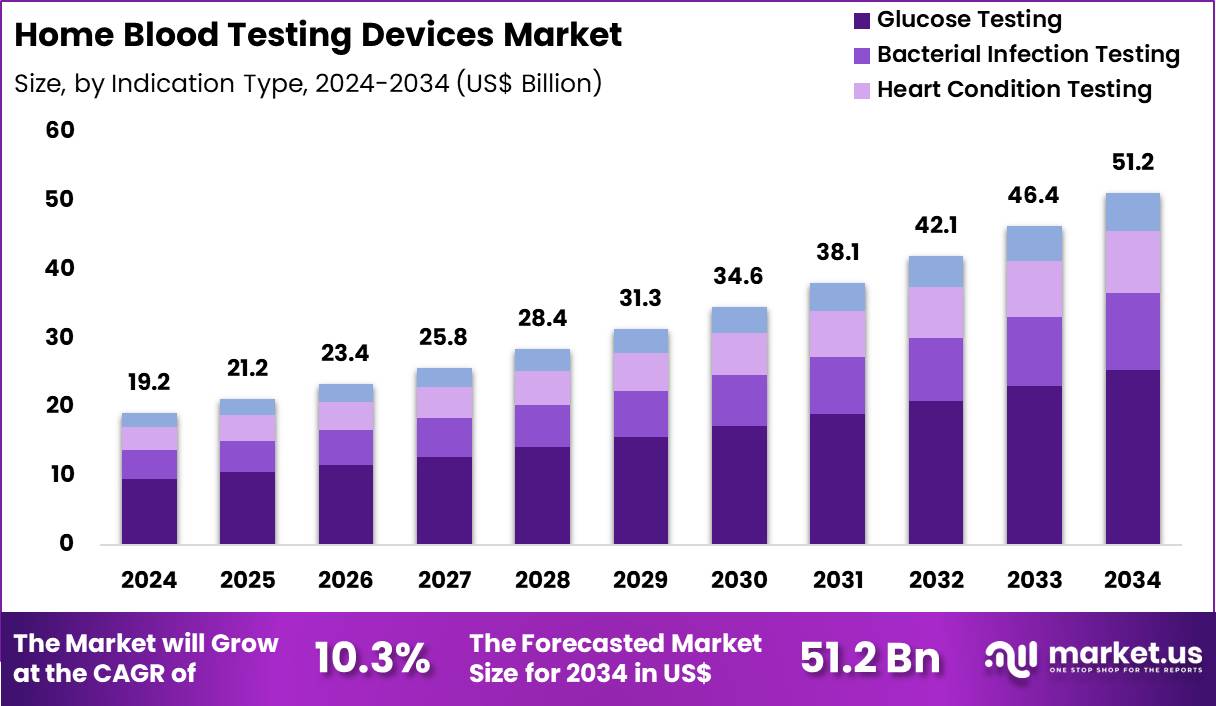
Key Takeaways
- In 2024, the Home Blood Testing Devices Market generated revenue of US$ 19.2 Billion and is projected to expand at a CAGR of 10.3%, reaching approximately US$ 51.2 Billion by 2034.
- Based on indication type, the market is segmented into glucose testing, bacterial infection testing, heart condition testing, and others. Among these, glucose testing dominated the market in 2024, accounting for a 49.8% market share.
- By distribution channel, the market is categorized into online stores, hospital pharmacies, drug stores, and retail stores. Among these, online stores captured a leading share of 45.2% in 2024.
- North America emerged as the leading regional market in 2024, securing a significant 42.3% share due to high adoption of home healthcare technologies and advanced diagnostic solutions.
Statistical Information
- Increasing Diabetes Prevalence Driving Glucose Home Testing Adoption: Diabetes remains the largest application area for home blood testing devices. According to the Centers for Disease Control and Prevention (CDC), approximately 38.4 million people in the United States had diabetes in 2021, representing around 11.6% of the total U.S. population. Additionally, about 97.6 million U.S. adults had prediabetes, creating a large population requiring regular blood glucose monitoring and preventive healthcare management.
- Global Diabetes Growth Supporting Long-Term Demand for Glucose Monitoring Devices: The International Diabetes Federation (IDF) reported that approximately 537 million adults aged 20–79 years were living with diabetes globally in 2021. The number is projected to increase to 643 million by 2030 and 783 million by 2045, increasing the need for affordable and convenient home glucose testing technologies.
- Growing Burden of Cardiovascular Diseases Supporting Heart Monitoring Devices: Cardiovascular conditions are increasing demand for home health monitoring solutions. The World Health Organization (WHO) reported that cardiovascular diseases caused approximately 19.8 million deaths globally in 2022, accounting for nearly 32% of all deaths worldwide. Monitoring biomarkers linked with cardiovascular risks supports earlier detection and disease management.
- North America Demand Supported by High Chronic Disease Burden: North America remains a major adoption region due to high diabetes prevalence, advanced healthcare infrastructure, and strong availability of FDA-cleared monitoring devices. In the United States, diabetes affects more than 38 million people, while approximately 1 in 5 adults with diabetes are unaware they have the condition, increasing the importance of accessible testing solutions.
- Older Population Growth Increasing Demand for Home Healthcare Devices: The aging population is increasing the need for convenient home monitoring technologies. According to the U.S. Census Bureau, the number of Americans aged 65 years and older reached 55.8 million in 2020, representing approximately 16.8% of the U.S. population. Older adults commonly require regular monitoring for chronic diseases, increasing demand for home diagnostic devices.
- Home Blood Testing Supports Telehealth Expansion: The U.S. Department of Health and Human Services (HHS) reported that telehealth usage increased significantly during the COVID-19 pandemic. Medicare telehealth visits increased from approximately 840,000 visits in 2019 to 52.7 million visits in 2020, demonstrating increased acceptance of remote healthcare services that support connected home monitoring.
Regional Analysis
North America led the market by securing a market share of 42.3% in 2024.
North America held a leading position in the Home Blood Testing Devices Market due to high adoption of self-monitoring technologies, advanced healthcare infrastructure, and increasing demand for remote patient care solutions.
The United States has a large chronic disease burden, with the CDC reporting that 38.4 million Americans were living with diabetes in 2021, creating strong demand for glucose monitoring and home diagnostic devices. The expansion of telehealth services, digital health platforms, and FDA-cleared home testing solutions has further supported regional adoption.
Asia Pacific is expected to record significant growth due to rising awareness of preventive healthcare, increasing chronic disease prevalence, and improving access to digital health technologies. The International Diabetes Federation (IDF) reported that the Western Pacific region had approximately 206 million adults living with diabetes in 2021, highlighting the need for affordable monitoring solutions.
Growing smartphone penetration, healthcare digitization, and expansion of home-based diagnostic services are supporting adoption across countries such as Japan, China, and Southeast Asian nations.
Emerging Trends
- Increasing Adoption of Continuous Glucose Monitoring (CGM) Devices: Continuous glucose monitoring systems are becoming more popular as diabetes patients seek real-time blood sugar tracking at home. The CDC reports that more than 38 million people in the U.S. have diabetes, increasing demand for advanced glucose monitoring solutions.
- Integration of Artificial Intelligence and Digital Health Platforms: Home blood testing devices are increasingly connected with mobile applications, cloud platforms, and AI-based analytics to provide personalized health insights. Digital health tools help healthcare providers remotely analyze patient data and improve disease management.
- Expansion of Remote Patient Monitoring Programs: Healthcare providers are increasingly using connected home testing devices to monitor patients outside hospitals. HHS reported that Medicare telehealth visits increased from 840,000 in 2019 to 52.7 million in 2020, accelerating adoption of remote healthcare technologies.
- Growing Demand for Preventive Healthcare Testing: Consumers are adopting home blood testing solutions for early detection and regular monitoring of health conditions. The FDA highlights that home-use diagnostic tests provide convenience and allow individuals to track health conditions without frequent clinical visits.
- Rising Use of Smartphone-Connected Testing Devices: Manufacturers are developing Bluetooth-enabled blood testing devices that connect with smartphones for easier tracking and data sharing. Companies such as Abbott and Dexcom provide connected glucose monitoring solutions supporting real-time health management.
Use Cases
- Diabetes Management and Blood Glucose Monitoring: Home blood testing devices are widely used by diabetes patients to measure glucose levels, track daily changes, and support medication adjustments. The International Diabetes Federation reported 537 million adults worldwide were living with diabetes in 2021, increasing demand for convenient glucose monitoring solutions.
- Continuous Glucose Monitoring for Personalized Care: Continuous glucose monitoring devices help patients receive real-time glucose information without repeated laboratory visits. The FDA recognises CGM systems as important tools that measure glucose levels continuously and support improved diabetes management.
- Cardiovascular Health Monitoring: Home blood testing devices are used to monitor cholesterol and other cardiovascular risk indicators. The WHO reported that cardiovascular diseases cause approximately 17.9 million deaths annually worldwide, increasing the need for early detection and regular health tracking.
- Remote Patient Monitoring Programs: Connected home blood testing devices allow healthcare providers to monitor patients remotely by collecting and sharing health data digitally. CMS supports remote patient monitoring services for chronic conditions using connected medical devices.
- Elderly Patient Health Management: Older adults use home blood testing devices to manage chronic diseases while reducing frequent hospital visits. The U.S. Census Bureau reported 55.8 million people aged 65 years and older in 2020, increasing demand for home healthcare solutions.
Frequently Asked Questions on Home Blood Testing Devices
- How does diabetes prevalence impact the Home Blood Testing Devices Market?
Increasing diabetes cases worldwide are creating higher demand for home glucose monitoring devices. According to the International Diabetes Federation, 537 million adults were living with diabetes in 2021, increasing the need for convenient and continuous monitoring solutions. - How are smart technologies transforming home blood testing devices?
Smart technologies such as Bluetooth connectivity, mobile applications, cloud platforms, and AI-based analytics are improving patient monitoring. These features allow users to track health data digitally and enable healthcare professionals to provide remote guidance and personalized treatment support. - What are the major applications of home blood testing devices?
Major applications include diabetes management, cardiovascular risk monitoring, cholesterol testing, preventive health screening, chronic disease management, and remote patient care. These devices help individuals monitor health conditions and support timely medical decisions. - Why is North America a leading region in this market?
North America leads due to advanced healthcare infrastructure, high adoption of digital health technologies, strong regulatory support, and increasing chronic disease burden. The availability of FDA-cleared home testing devices and expanding remote healthcare programs further support regional growth. - How are telehealth services influencing demand for home testing devices?
Telehealth expansion is increasing demand for connected home testing devices because healthcare providers require remote patient data for monitoring. Digital healthcare platforms allow physicians to review test results and provide treatment recommendations without requiring frequent in-person consultations. - What is the future outlook for the Home Blood Testing Devices Market?
The market is expected to grow with increasing adoption of connected diagnostics, wearable monitoring technologies, and personalized healthcare solutions. Rising chronic disease cases and demand for convenient healthcare services will continue supporting innovation and expansion in home-based testing technologies.
Conclusion
The Home Blood Testing Devices Market is experiencing strong growth as healthcare shifts toward self-monitoring, preventive care, and remote disease management. Rising diabetes prevalence, increasing chronic disease burden, and growing adoption of digital health technologies are driving demand for convenient testing solutions. Glucose monitoring remains the leading application, while connected devices, smartphone integration, and telehealth platforms are transforming patient care.
North America continues to lead due to advanced healthcare infrastructure and technology adoption, while Asia Pacific shows significant growth potential. With continuous innovation, regulatory support, and increasing consumer awareness, home blood testing devices are expected to become an essential part of future healthcare systems.
Discuss your needs with our analyst
Please share your requirements with more details so our analyst can check if they can solve your problem(s)




