
Overview
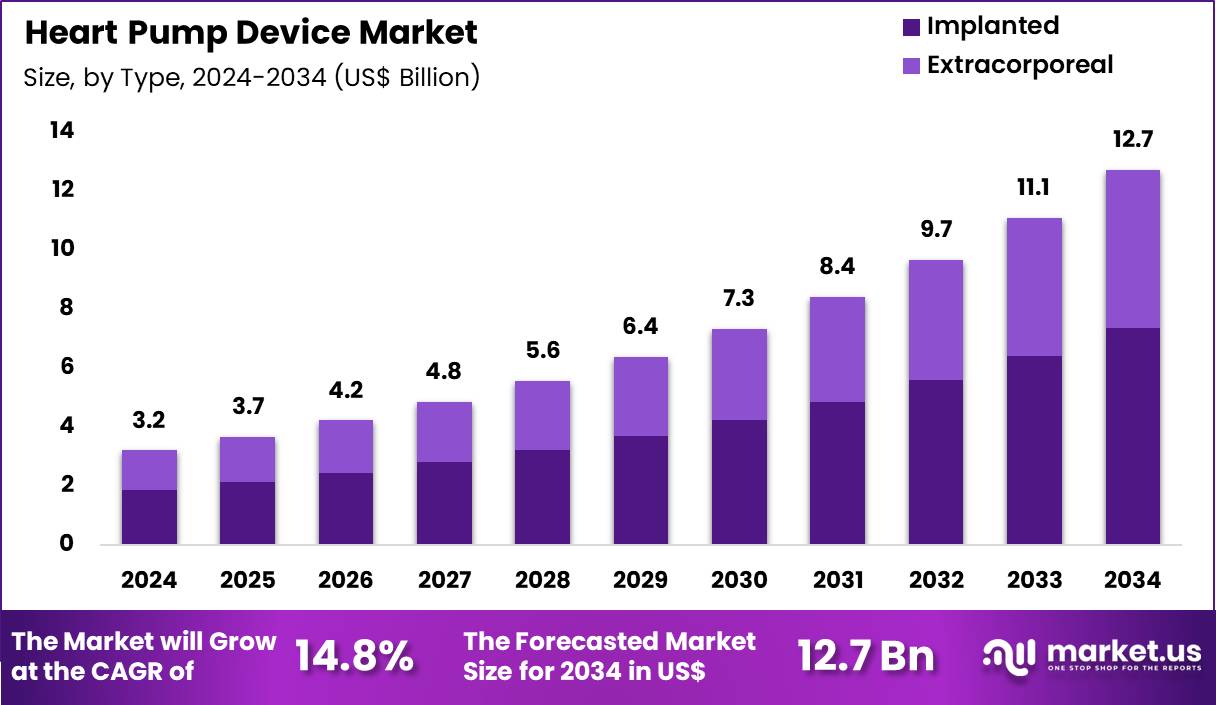
New York, NY – Oct 14, 2026 – The Global Heart Pump Device Market size is expected to be worth around US$ 12.7 Billion by 2034 from US$ 3.2 Billion in 2024, growing at a CAGR of 14.8% during the forecast period 2025 to 2034. In 2024, North America led the market, achieving over 48.3% share with a revenue of US$ 1.5 Billion.
The heart pump device market is gaining importance due to the increasing prevalence of cardiovascular diseases, the growing demand for advanced cardiac care, and continuous improvements in medical technology. Heart pump devices are mechanical systems designed to support or replace the pumping function of a weakened heart, helping maintain adequate blood circulation throughout the body.
These devices include ventricular assist devices (VADs), intra-aortic balloon pumps (IABPs), and other mechanical circulatory support systems. They are used in hospitals and specialized cardiac care centers for patients experiencing severe heart failure or other critical heart conditions. Depending on the device type and clinical need, heart pumps may serve as temporary circulatory support, a bridge to heart transplantation, or long-term support for eligible patients.
Market growth is supported by the rising burden of heart failure, an aging population, increased awareness of advanced treatment options, and ongoing research into smaller, more efficient, and durable devices. Technological advancements, including improved battery systems, remote monitoring capabilities, and enhanced device designs, are also contributing to market development.
However, high treatment costs, surgical risks, device-related complications, and limited access to specialized healthcare facilities remain key challenges. North America and Europe represent established markets, while Asia-Pacific offers growth opportunities through improving healthcare infrastructure and expanding access to cardiac treatment.
As innovation continues, heart pump devices are expected to remain an important component of advanced heart failure management and mechanical circulatory support.
Key Takeaways
- In 2024, the heart pump device market was valued at US$ 3.2 billion and is projected to grow at a CAGR of 14.8%, reaching US$ 12.7 billion by 2034.
- By product, the market is segmented into ventricular assist devices (VADs), extracorporeal membrane oxygenation (ECMO), and intra-aortic balloon pumps (IABPs). Ventricular assist devices (VADs) dominated the market, accounting for 61.4% of the total market share.
- Based on type, the market is categorized into implanted and extracorporeal devices, with the implanted segment holding a significant market share of 57.8%.
- By therapy, the market is segmented into bridge-to-transplant (BTT), destination therapy (DT), bridge-to-candidacy (BTC), and others. The bridge-to-transplant (BTT) segment led the market, accounting for the largest revenue share of 46.9%.
- Regionally, North America dominated the heart pump device market, accounting for 48.3% of the total market share.
Key Market Segments
- By Product Analysis: Ventricular assist devices (VADs) dominated the product segment with a 61.4% market share, driven by rising end-stage heart failure cases and demand for long-term circulatory support. Technological advancements, improved device durability, enhanced patient mobility, and expanding transplant waiting lists continue to support segment growth.
- By Type Analysis: Implanted devices held a leading 57.8% market share in the type segment, supported by their suitability for long-term circulatory assistance. Improved patient comfort, reduced external hardware, advancements in implantation techniques, remote monitoring, and increasing destination therapy adoption are strengthening demand for implanted heart pump devices.
- By Therapy Analysis: Bridge-to-transplant (BTT) dominated the therapy segment with a 46.9% market share, driven by organ donor shortages and prolonged transplant waiting periods. Increasing use of ventricular assist devices to stabilize eligible patients, improve organ perfusion, and maintain clinical stability before transplantation continues to support segment growth.
Regional Analysis
North America Market Analysis
In 2024, North America accounted for 39.9% of the global heart pump device market, supported by increasing adoption of ventricular assist devices (VADs) and intra-aortic balloon pumps (IABPs). Favorable reimbursement policies, advanced healthcare infrastructure, and specialized cardiac care centers have strengthened market development.
Growing demand for long-term circulatory support, technological advancements, and improved patient monitoring are further supporting regional growth. Additionally, the rising prevalence of heart failure is increasing the need for advanced cardiac treatment. Approximately 6.7 million Americans aged 20 years and older have heart failure, with the number projected to reach 8.7 million by 2030.
Asia Pacific Market Analysis
Asia Pacific is expected to register the highest CAGR during the forecast period, driven by increasing cardiovascular disease prevalence, healthcare infrastructure improvements, and expanding access to advanced cardiac treatments. Government investments, growing awareness, and technological advancements are supporting the adoption of heart pump devices.
Additionally, training programs, clinical research collaborations, and rising demand for temporary and long-term circulatory support are creating significant growth opportunities across the region.
Emerging Trends
- Adoption of magnetically levitated pump technology: Magnetic levitation is being used in advanced ventricular assist devices to reduce mechanical contact within the pump. In the MOMENTUM 3 clinical trial, the HeartMate 3 showed better two-year outcomes free from disabling stroke or pump replacement compared with HeartMate II, supporting continued development of improved pump designs.
- Greater focus on patient mobility and daily living: Device developers and healthcare teams are focusing on making long-term support easier to manage outside hospitals. Improvements in controllers, power supplies, and wearable components can help selected patients perform everyday activities while maintaining continuous pump support.
- Improved blood compatibility and complication control: Research is directed toward reducing complications such as blood clots, bleeding, and stroke. Pump design and blood-flow management are important areas of development because these complications can affect patient survival, hospital admissions, and the long-term use of implanted devices.
- Expansion of long-term support beyond transplant waiting: Ventricular assist devices are increasingly important as a treatment option for carefully selected patients who cannot receive a heart transplant. This long-term treatment approach, known as destination therapy, broadens device use beyond temporary support while awaiting donor organs.
- More evidence-based patient selection and follow-up: Clinical teams are using patient characteristics, complication risks, functional status, and treatment goals to guide device selection and follow-up. Better selection and continued monitoring are important for balancing expected benefits against surgical risks and long-term care requirements.
Use Cases
- Treatment of advanced heart failure: Durable ventricular assist devices are used in selected patients whose severe heart failure continues despite medical treatment. The pump helps maintain blood circulation and may improve survival and daily functioning when other treatment options are insufficient.
- Support while waiting for a heart transplant: A ventricular assist device can maintain circulation in eligible patients waiting for a donor heart. This approach is called bridge-to-transplant therapy and can provide continued support while the patient awaits transplantation.
- Temporary support during cardiogenic shock: Temporary heart pumps can assist blood circulation in selected patients experiencing cardiogenic shock, a serious condition in which the heart cannot supply enough blood to the body. Certain devices are designed for short-term support while doctors treat the underlying problem.
- Support when both heart ventricles fail: A total artificial heart may replace the heart’s two lower chambers in selected patients with severe, advanced disease. It can maintain circulation as a bridge to transplantation when other treatment options, including a ventricular assist device, are unsuitable.
- Circulatory support for children with severe heart disease: Specialized pediatric ventricular assist devices can support children with serious heart failure, including some who are waiting for transplantation. Device selection depends on body size, heart condition, and the level of circulatory support needed.
Frequently Asked Questions About Heart Pump Device
- Who needs a heart pump device?
Heart pump devices may be considered for patients with advanced heart failure whose symptoms remain severe despite treatment. Eligibility depends on heart function, other medical conditions, expected benefits, surgical risks, and whether transplantation or long-term mechanical support is appropriate. - What are the main types of heart pump devices?
Major types include left ventricular assist devices, right ventricular assist devices, biventricular assist devices, temporary circulatory support pumps, and total artificial hearts. These devices differ in their placement, duration of use, and ability to support or replace heart function. - What are the risks associated with heart pump devices?
Potential complications include bleeding, blood clots, stroke, infection, device malfunction, and failure of the unsupported side of the heart. Patients require specialist follow-up, careful medication management, and ongoing monitoring to reduce risks and identify complications early. - Can patients live at home with a heart pump device?
Some patients with durable ventricular assist devices can return home after surgery and recovery. They must manage power supplies, follow care instructions, take prescribed medicines, attend regular appointments, and receive support from trained caregivers and specialist healthcare teams. - Which technological developments are influencing the market?
Important developments include magnetically levitated pumps, improved blood-flow management, enhanced device reliability, and better control systems. Clinical evidence from the MOMENTUM 3 trial demonstrated improved two-year outcomes with HeartMate 3 compared with HeartMate II, supporting continued innovation. - Which patient groups represent important demand segments?
Important patient groups include adults with advanced heart failure, patients awaiting heart transplantation, individuals requiring long-term circulatory support, and selected children with severe heart disease. Clinical suitability varies by age, body size, disease severity, and the device’s approved indications. - What is the future outlook for the Heart Pump Device Market?
The outlook will depend on improvements in device safety, durability, patient quality of life, and access to specialist treatment. Long-term clinical evidence, healthcare funding, regulatory decisions, and the ability to manage complications will influence future adoption across healthcare systems.
Conclusion
The heart pump device market is poised for significant growth, driven by the rising prevalence of heart failure, an aging population, and continuous advancements in mechanical circulatory support technologies. Valued at US$ 3.2 billion in 2024, the market is projected to reach US$ 12.7 billion by 2034, growing at a CAGR of 14.8%.
Ventricular assist devices, implanted systems, and bridge-to-transplant therapy remain key market segments. North America maintains a strong market position, while Asia Pacific presents substantial growth opportunities. Despite high treatment costs and clinical risks, ongoing innovation, improved device safety, and expanding healthcare access are expected to support long-term market development.
Discuss your needs with our analyst
Please share your requirements with more details so our analyst can check if they can solve your problem(s)