
Overview
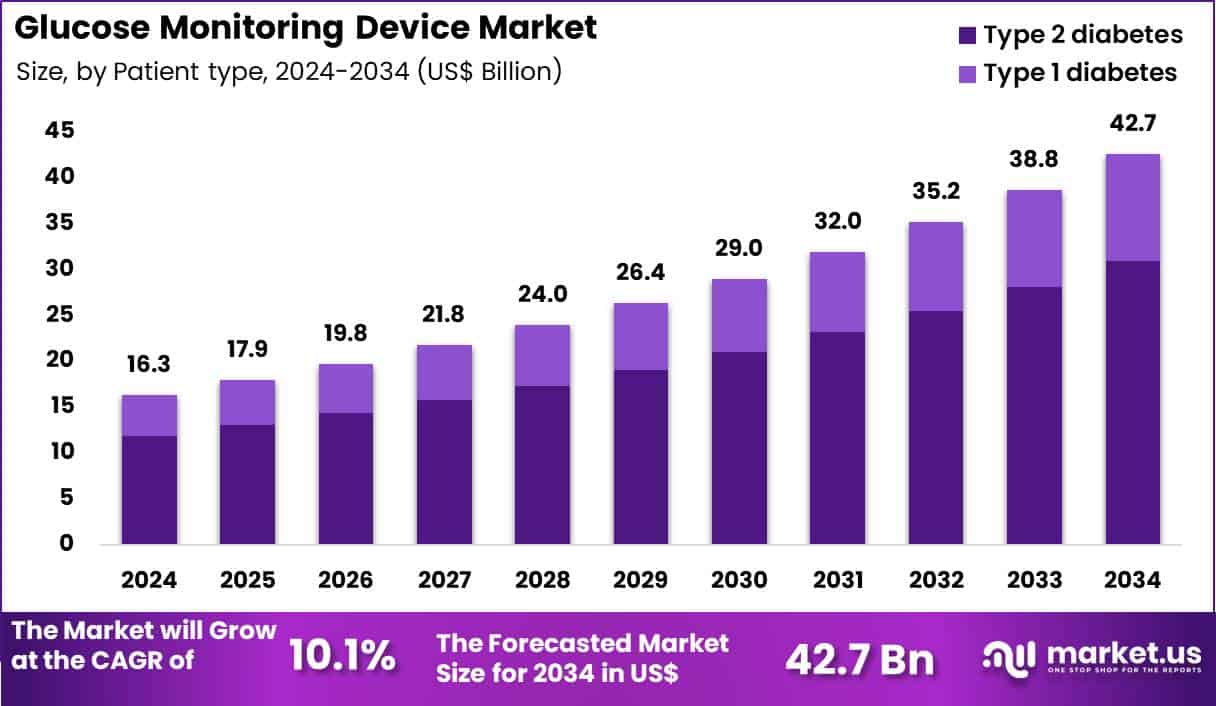
New York, NY – Oct 13, 2026 – The Global Glucose Monitoring Device Market size is expected to be worth around US$ 42.7 Billion by 2034 from US$ 16.3 Billion in 2024, growing at a CAGR of 10.1% during the forecast period 2025 to 2034. In 2024, North America led the market, achieving over 42.5% share with a revenue of US$ 6.9 Billion.
Glucose monitoring devices are medical instruments used to measure and track blood glucose levels, primarily among individuals with diabetes. These devices play an important role in diabetes management by helping patients and healthcare professionals monitor glucose fluctuations, make informed treatment decisions, and reduce the risk of diabetes-related complications.
The market includes blood glucose meters, continuous glucose monitoring (CGM) systems, and related testing supplies, such as test strips, lancets, and sensors. Technological advancements have improved device accuracy, convenience, connectivity, and real-time monitoring capabilities. Continuous glucose monitoring systems are gaining attention due to their ability to provide ongoing glucose readings, identify trends, and support timely interventions.
The growth of the glucose monitoring device market is driven by the rising prevalence of diabetes, increasing awareness of early disease management, growing adoption of home-based healthcare, and advancements in wearable medical technology. Integration with smartphones, digital health platforms, and insulin delivery systems is further supporting market development.
North America represents an important market due to established healthcare infrastructure and technology adoption, while Asia-Pacific offers growth opportunities through its large patient population, expanding healthcare access, and increasing awareness of diabetes management.
However, high device costs, reimbursement limitations, and affordability challenges in developing regions may restrict market expansion. Continued innovation, improved accessibility, and growing demand for personalized diabetes care are expected to create new opportunities for market participants.
Key Takeaways
- In 2024, the glucose monitoring device market was valued at US$ 16.3 billion and is projected to grow at a CAGR of 10.1%, reaching US$ 42.7 billion by 2034.
- By device type, the market is segmented into blood glucose meters, flash glucose monitoring systems, continuous glucose monitoring systems, and smartphone apps and wearables. Blood glucose meters dominated the market, accounting for 46.8% of the total share.
- Based on patient type, the market is categorized into type 1 and type 2 diabetes. Type 2 diabetes held the leading position, accounting for 72.5% of the market share.
- By end user, the market is divided into hospitals and clinics, home care settings, and other end users. Hospitals and clinics accounted for the largest revenue share of 49.7%.
- Regionally, North America dominated the glucose monitoring device market, capturing a market share of 42.5%.
Key Market Segments
- Device Analysis: Blood glucose meters held a 46.8% share of the device segment, supported by affordability, ease of use, and widespread clinical acceptance. Their portability, rapid results, and compatibility with routine testing make them essential for diabetes management across hospitals, clinics, and home care settings.
- Patient Type Analysis: Type 2 diabetes accounted for 72.5% of the patient type segment, driven by its widespread prevalence and growing need for long-term disease management. Regular glucose monitoring supports treatment adjustments, glycemic control, complication prevention, and ongoing care among patients managing this chronic condition.
- End-User Analysis: Hospitals and clinics captured 49.7% of the end-user segment, supported by high patient volumes and the need for rapid glucose assessment. Routine diagnosis, inpatient monitoring, emergency care, and outpatient follow-ups continue to strengthen demand for glucose monitoring devices across healthcare facilities.
Regional Analysis
North America is Leading the Glucose Monitoring Device Market
North America accounted for 42.5% of the global glucose monitoring device market in 2024, driven by increasing adoption of continuous glucose monitoring (CGM) systems and connected healthcare solutions.
Improved sensor accuracy, longer wear duration, and real-time glucose tracking have enhanced patient convenience. Wider insurance coverage, physician recommendations, retail pharmacy networks, and telehealth services have further supported device adoption. According to the CDC, 38.4 million people in the United States were living with diabetes in 2022, sustaining demand for glucose monitoring technologies.
Asia Pacific is Expected to Register the Highest CAGR
Asia Pacific is projected to record the highest CAGR during the forecast period, supported by rising diabetes prevalence, expanding healthcare access, and growing awareness of disease management.
Government screening initiatives, smartphone-integrated monitoring applications, and affordable devices are improving adoption across emerging economies. The International Diabetes Federation estimated that over 260 million adults in the region were living with diabetes in 2023, highlighting substantial demand potential. Expanding distribution networks and local manufacturing are expected to further accelerate regional market growth.
Emerging Trends
- Growth in continuous glucose monitoring (CGM) technology: Continuous glucose monitoring devices are becoming an important option for diabetes care. Unlike traditional meters that measure blood glucose from a blood sample at a specific time, CGM systems track glucose levels throughout the day and night. This supports better visibility into glucose changes and can help users and healthcare professionals adjust treatment plans.
- Expansion of over-the-counter glucose monitoring: Access to selected glucose monitoring devices is expanding through over-the-counter sales. In March 2024, the US Food and Drug Administration (FDA) cleared the first over-the-counter CGM, Dexcom Stelo, for eligible adults aged 18 and older who do not use insulin. This development creates new opportunities in consumer-focused glucose monitoring.
- Integration with smartphones and digital health platforms: Glucose monitoring systems increasingly connect with smartphones and compatible digital devices to display readings, glucose trends and historical data. This connectivity can make information easier to review and share with healthcare professionals or caregivers, supporting remote diabetes management and more informed treatment discussions.
- Greater focus on personalised diabetes management: Glucose monitoring is increasingly used to understand how meals, physical activity, medication and daily routines affect glucose levels. The resulting data can help healthcare professionals develop treatment plans suited to individual needs, moving diabetes management beyond occasional measurements toward more informed, ongoing monitoring.
- Increased attention to device accuracy and regulatory compliance: As glucose monitoring technologies become more widely available, device accuracy, safety, clear instructions and appropriate regulatory clearance remain important market priorities. The FDA has also warned against smartwatches and smart rings that claim to measure glucose independently without piercing the skin, highlighting the need for reliable medical technology.
Use Cases
- Daily diabetes management at home: Blood glucose meters allow people with diabetes to check their glucose levels using a small blood sample. Regular measurements help users understand their current glucose levels and support decisions about food, physical activity and medication in line with their healthcare plan.
- Monitoring glucose changes during the day and night: CGM devices provide repeated glucose estimates throughout the day and night. They help users identify rising or falling glucose levels, observe changes during sleep and recognise patterns that may require attention. This is particularly useful for people whose diabetes treatment requires frequent monitoring.
- Supporting insulin delivery systems: CGM technology can be connected to compatible insulin pumps and automated insulin delivery systems. These systems use glucose readings and software to help adjust insulin delivery. Their use can support glucose management, particularly for people with type 1 diabetes, under appropriate clinical guidance.
- Reducing the risk of unnoticed low glucose levels: Some CGM devices provide alerts when glucose levels fall below or rise above set limits. These warnings can help users respond to potentially dangerous changes, including during sleep. Such features are especially relevant for people who experience frequent low glucose levels or have difficulty recognising symptoms.
- Supporting clinical reviews and treatment adjustments: Stored glucose readings and trend reports can be reviewed during healthcare appointments. Clinicians can use this information alongside symptoms, medication records and other clinical measures to assess diabetes management and discuss treatment changes. This application also supports remote consultations when suitable digital systems are available.
Frequently Asked Questions About Glucose Monitoring Device
- What are the main types of glucose monitoring devices?
The main types are self-monitoring blood glucose meters, continuous glucose monitoring systems, flash glucose monitors and professional glucose monitoring systems. They differ in measurement frequency, sensor design, data display and intended use, allowing healthcare professionals to recommend suitable options for different monitoring needs. - How does a continuous glucose monitoring device work?
A continuous glucose monitoring device uses a small sensor placed under the skin to estimate glucose levels in the fluid between cells. Depending on the model, readings are sent automatically to a smartphone, receiver or insulin pump for review. - Who can use glucose monitoring devices?
Glucose monitoring devices are commonly used by people with type 1 or type 2 diabetes and may be recommended for other diabetes-related needs. Device selection depends on the person’s treatment, clinical condition, age, ability to use the device and applicable product instructions. - What are the benefits of using a glucose monitoring device?
Glucose monitoring devices help users understand their glucose levels, identify changes and review patterns over time. Continuous monitors may also provide alerts and reduce the need for frequent finger-prick tests, depending on the model and individual monitoring requirements. - How does technology influence market development?
Technology is supporting the development of connected sensors, mobile applications, automated alerts and systems that communicate with compatible insulin pumps. These features can improve access to glucose information and support more personalised diabetes management, creating opportunities for differentiated monitoring products. - What role does government regulation play in this market?
Government regulation helps establish requirements for device safety, performance, intended use and marketing authorisation. In the United States, the FDA regulates glucose monitoring products, while coverage policies from agencies such as the Centers for Medicare and Medicaid Services influence reimbursement for eligible devices. - What is the future outlook for the glucose monitoring device market?
The market outlook is supported by the continuing need for diabetes management, growing interest in continuous monitoring and improvements in connected healthcare. Future opportunities will depend on product affordability, clinical suitability, regulatory approval, reimbursement, sensor performance and adoption across different regions.
Conclusion
The glucose monitoring device market is expected to experience strong growth, supported by rising diabetes prevalence, technological advancements, and increasing demand for effective disease management. Valued at US$ 16.3 billion in 2024, the market is projected to reach US$ 42.7 billion by 2034, growing at a CAGR of 10.1%. Continuous glucose monitoring, connected healthcare solutions, and personalised diabetes management are expected to create significant growth opportunities.
North America will likely maintain its leading position, while Asia Pacific offers considerable expansion potential. However, affordability, reimbursement limitations, and regulatory requirements remain key challenges. Continued innovation and improved accessibility will support long-term market development.
Discuss your needs with our analyst
Please share your requirements with more details so our analyst can check if they can solve your problem(s)