


Overview
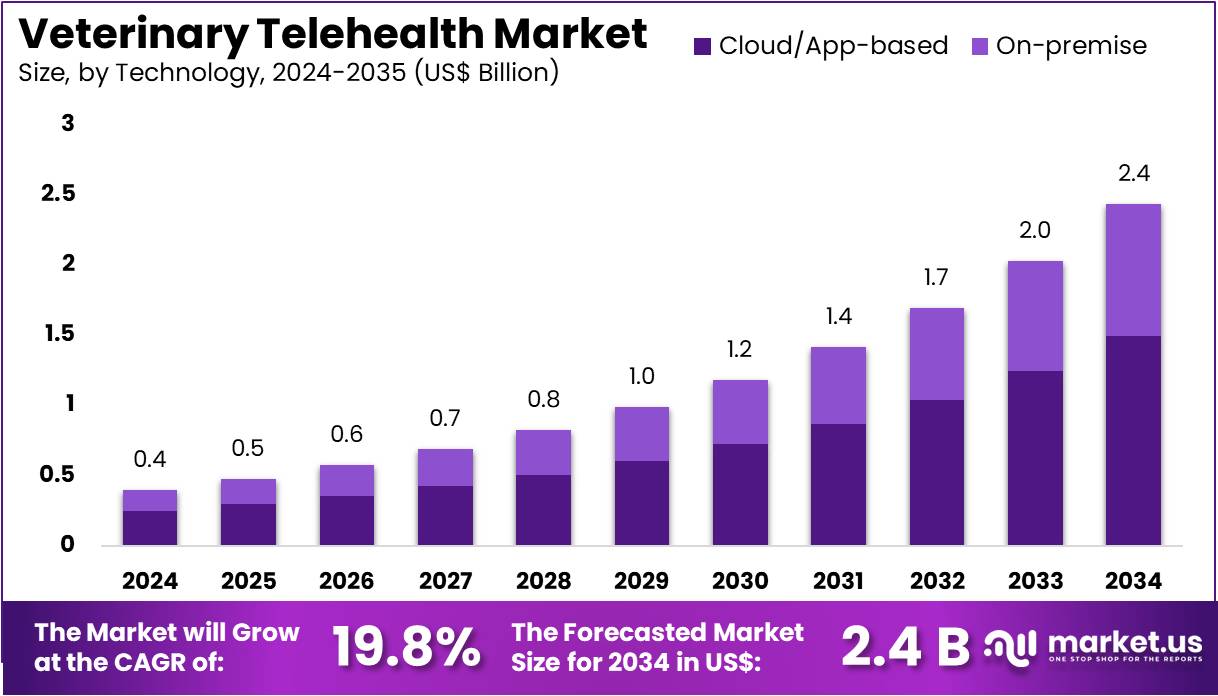
New York, NY – June 09, 2026 – The Veterinary Telehealth Market Size is expected to be worth around US$ 2.4 billion by 2034 from US$ 0.4 billion in 2024, growing at a CAGR of 19.8% during the forecast period 2025 to 2034.
Veterinary telehealth is transforming animal healthcare by enabling remote consultations, monitoring, and follow-up care through digital communication technologies. The growing adoption of smartphones, internet connectivity, and telemedicine platforms has supported the expansion of veterinary telehealth services across companion animal, livestock, and equine healthcare segments.
The market is experiencing steady growth due to increasing pet ownership, rising expenditure on animal health, and the demand for convenient access to veterinary professionals. Veterinary telehealth solutions help improve healthcare accessibility, particularly in rural and underserved regions where veterinary services may be limited. These platforms facilitate virtual consultations, prescription management, behavioral assessments, chronic disease monitoring, and post-treatment follow-up care.
Technological advancements, including artificial intelligence, cloud-based healthcare platforms, wearable animal monitoring devices, and digital health records, are further enhancing the effectiveness of telehealth services. In addition, growing awareness regarding preventive animal healthcare and the need for timely medical intervention are supporting market expansion.
North America currently represents a significant share of the veterinary telehealth market due to advanced digital healthcare infrastructure and high pet adoption rates. Meanwhile, Europe and Asia-Pacific are witnessing increased adoption driven by expanding veterinary services and digital transformation initiatives.
As veterinary practices continue to embrace digital healthcare solutions, veterinary telehealth is expected to play an increasingly important role in improving animal health outcomes, enhancing veterinary efficiency, and supporting accessible, cost-effective care delivery worldwide.
Key Takeaways
- The veterinary telehealth market was valued at US$ 0.4 billion in 2024 and is projected to reach US$ 2.4 billion by 2034, expanding at a CAGR of 19.8% during the forecast period.
- Based on product type, the market is categorized into teleradiology, telemonitoring, teleconsulting, and others. Among these, teleconsulting emerged as the leading segment, accounting for 43.9% of the market share in 2024.
- By technology, the market is segmented into on-premise and cloud/app-based solutions. The cloud/app-based segment dominated the market with a revenue share of 61.4% in 2024.
- In terms of application, the market is classified into canine, bovine, equine, feline, and others. The canine segment held the largest share, contributing 38.7% of the total market revenue in 2024.
- Based on end user, the market is divided into providers and patients. The patients segment led the market, representing 59.5% of the overall revenue share in 2024.
- North America accounted for the largest regional share of the veterinary telehealth market, capturing 43.1% of total revenue in 2024.
Regional Analysis
North America held the largest share of the veterinary telehealth market in 2024, accounting for 43.1% of total revenue. The region’s dominance is primarily driven by the widespread adoption of digital veterinary services, favorable regulatory support, and growing awareness among pet owners and veterinary professionals.
Professional organizations have played an important role in encouraging the use of telehealth by establishing guidelines and best practices for virtual veterinary care. The increasing integration of telehealth platforms into veterinary clinics has improved access to care, enhanced patient monitoring, and streamlined consultations. Rising demand for convenient and accessible animal healthcare services has further strengthened market growth across the region.
Asia Pacific is anticipated to register the fastest growth rate during the forecast period. Market expansion is being supported by increasing pet ownership, rapid urbanization, and significant improvements in digital infrastructure across emerging economies. The growing availability of mobile internet and smartphone connectivity has expanded access to remote veterinary services, particularly in underserved and rural areas.
In addition, increasing awareness regarding animal health and the convenience of virtual consultations is encouraging the adoption of telehealth solutions. Continuous advancements in telecommunications networks and digital healthcare technologies are expected to create favorable conditions for market growth, positioning Asia Pacific as a key growth region for the veterinary telehealth industry over the coming years.
Emerging Trends
- Standardized Professional Guidelines: The introduction of standardized veterinary telehealth guidelines has improved confidence among veterinary professionals by establishing clear protocols for virtual consultations, patient management, and remote care delivery, encouraging broader adoption of telehealth solutions across veterinary practices.
- Relaxation of In-Person VCPR Requirements: Regulatory changes allowing veterinarians to establish veterinarian–client–patient relationships through telemedicine are expanding access to care. These developments reduce dependence on initial in-person visits and support greater utilization of remote veterinary healthcare services.
- Rise of Direct-to-Consumer Telemedicine: Direct-to-consumer veterinary telemedicine services have gained significant traction, enabling pet owners to access virtual consultations directly. Growing consumer demand for convenience and accessibility continues to support the expansion of standalone telehealth offerings.
- Integration with Practice Management Systems: Veterinary telehealth platforms are increasingly integrated with practice management systems, combining scheduling, video consultations, secure messaging, billing, and electronic medical records into unified solutions that enhance operational efficiency and patient management.
- Artificial Intelligence for Diagnostic Support: Artificial intelligence is becoming an important component of veterinary telehealth, supporting symptom assessment, clinical decision-making, and diagnostic accuracy. AI-powered tools help veterinarians analyze data more efficiently and improve remote patient evaluation outcomes.
- Deep Learning Applications in Imaging: Deep learning technologies are advancing veterinary diagnostic imaging by enabling automated interpretation of radiographs and medical images. These solutions enhance diagnostic speed, improve accuracy, and support earlier identification of fractures and internal abnormalities.
- Regulatory Clarity on Remote Monitoring Devices: Favorable regulatory developments for animal monitoring devices have accelerated the adoption of wearable technologies. Remote monitoring solutions allow veterinarians to track health metrics continuously, supporting preventive care and improving chronic disease management.
- Pet Owner Attitudes Shifting Post-Pandemic: Consumer perceptions toward virtual veterinary services have evolved significantly since the pandemic. Pet owners increasingly recognize telehealth as a convenient complement to traditional care, particularly for routine consultations, follow-ups, and non-emergency situations.
- Economic Pressures Driving Virtual Care: Rising healthcare costs and growing price sensitivity among pet owners are encouraging the adoption of telehealth services. Virtual consultations provide a cost-effective alternative that helps maintain continuity of care while reducing overall treatment expenses.
- Uniform Adoption Across Regions: Veterinary telehealth adoption is expanding across both urban and rural regions, reflecting widespread acceptance of virtual care. Improved digital connectivity and growing awareness have enabled broader access to veterinary services regardless of geographic location.
Use Cases
- Virtual Triage and Teleadvice: Veterinary telehealth enables rapid assessment of minor health concerns through teleadvice and teletriage services. Pet owners can receive professional guidance on symptoms, preventive care, and first-aid measures without requiring immediate clinic visits.
- Post-Operative Follow-Up: Remote follow-up consultations allow veterinarians to monitor recovery after surgical procedures through video calls and image sharing. This approach improves convenience, reduces unnecessary clinic visits, and supports effective post-operative patient management.
- Chronic Disease Monitoring: Telehealth solutions support continuous monitoring of chronic conditions through wearable devices and remote data collection. Veterinarians can track health indicators, identify potential complications early, and provide timely interventions to improve outcomes.
- Behavioral and Training Consultations: Virtual consultations are increasingly used for addressing behavioral issues such as anxiety, aggression, and training challenges. Telehealth improves access to behavioral specialists and enables customized treatment plans without geographic limitations.
- Nutrition and Wellness Coaching: Veterinary nutritionists utilize telehealth platforms to provide personalized dietary recommendations and wellness guidance. Remote consultations facilitate ongoing monitoring of weight management programs and nutritional adjustments while reducing routine clinic visits.
- Emergency Stabilization Advice: In emergency situations, telehealth enables veterinarians to provide immediate stabilization guidance before patients reach medical facilities. Rapid access to professional advice can help manage critical conditions and improve the likelihood of positive outcomes.
- Delegated Telecare by Veterinary Technicians: The delegation of selected telehealth tasks to certified veterinary technicians enhances service capacity and operational efficiency. Technicians can assist with follow-up monitoring, data collection, and routine assessments under veterinary supervision.
- Interstate Health Certificates (CVIs): Telehealth supports the management and renewal of health documentation required for animal transportation. Remote consultations streamline compliance processes, reduce administrative burdens, and facilitate the efficient movement of animals across jurisdictions.
Frequently Asked Questions on Veterinary Telehealth
- What factors are driving the growth of the veterinary telehealth market?
The market is driven by increasing pet ownership, growing expenditure on animal healthcare, advancements in digital technologies, and rising demand for convenient veterinary services. Improved internet connectivity and smartphone adoption are also supporting market expansion worldwide. - What are the major services offered through veterinary telehealth platforms?
Veterinary telehealth platforms provide services such as teleconsulting, telemonitoring, teleradiology, behavioral assessments, chronic disease management, prescription support, and post-treatment follow-ups. These services help veterinarians deliver efficient and accessible care to animals remotely. - Which product segment dominates the veterinary telehealth market?
Teleconsulting represents the leading product segment in the veterinary telehealth market. Its dominance is attributed to the growing demand for virtual veterinary consultations, convenience for pet owners, and the ability to provide timely medical guidance. - Why are cloud-based veterinary telehealth solutions gaining popularity?
Cloud-based platforms offer scalability, remote accessibility, data security, and seamless integration with digital veterinary records. These advantages enable veterinary professionals to manage patient information efficiently while improving communication and service delivery. - Which animal segment holds the largest share in the market?
The canine segment accounts for the largest share of the veterinary telehealth market. High dog ownership rates, increasing spending on canine healthcare, and growing awareness regarding preventive care contribute significantly to segment growth. - Which region leads the veterinary telehealth market?
North America leads the veterinary telehealth market due to advanced digital infrastructure, supportive regulatory frameworks, and high adoption of telehealth services among veterinary professionals and pet owners. Strong awareness further supports regional market growth. - Why is Asia Pacific expected to witness rapid market growth?
Asia Pacific is projected to record the fastest growth due to rising pet adoption, expanding internet penetration, improving digital healthcare infrastructure, and increasing awareness of remote veterinary services across developing and emerging economies. - What is the future outlook for the veterinary telehealth market?
The veterinary telehealth market is expected to witness substantial growth over the coming years, supported by technological advancements, increasing digitalization of veterinary practices, and rising demand for accessible, efficient, and cost-effective animal healthcare services.
Conclusion
The veterinary telehealth market is experiencing significant growth, driven by increasing pet ownership, advancements in digital healthcare technologies, and growing demand for convenient veterinary services. The integration of cloud-based platforms, artificial intelligence, wearable monitoring devices, and remote consultation tools is enhancing the accessibility and efficiency of animal healthcare.
North America continues to lead market adoption, while Asia Pacific is emerging as the fastest-growing region due to expanding digital infrastructure and rising awareness of virtual care. As regulatory frameworks evolve and telehealth becomes more integrated into veterinary practice, the market is expected to play a critical role in delivering accessible, cost-effective, and high-quality animal healthcare worldwide.
Discuss your needs with our analyst
Please share your requirements with more details so our analyst can check if they can solve your problem(s)




