


Overview
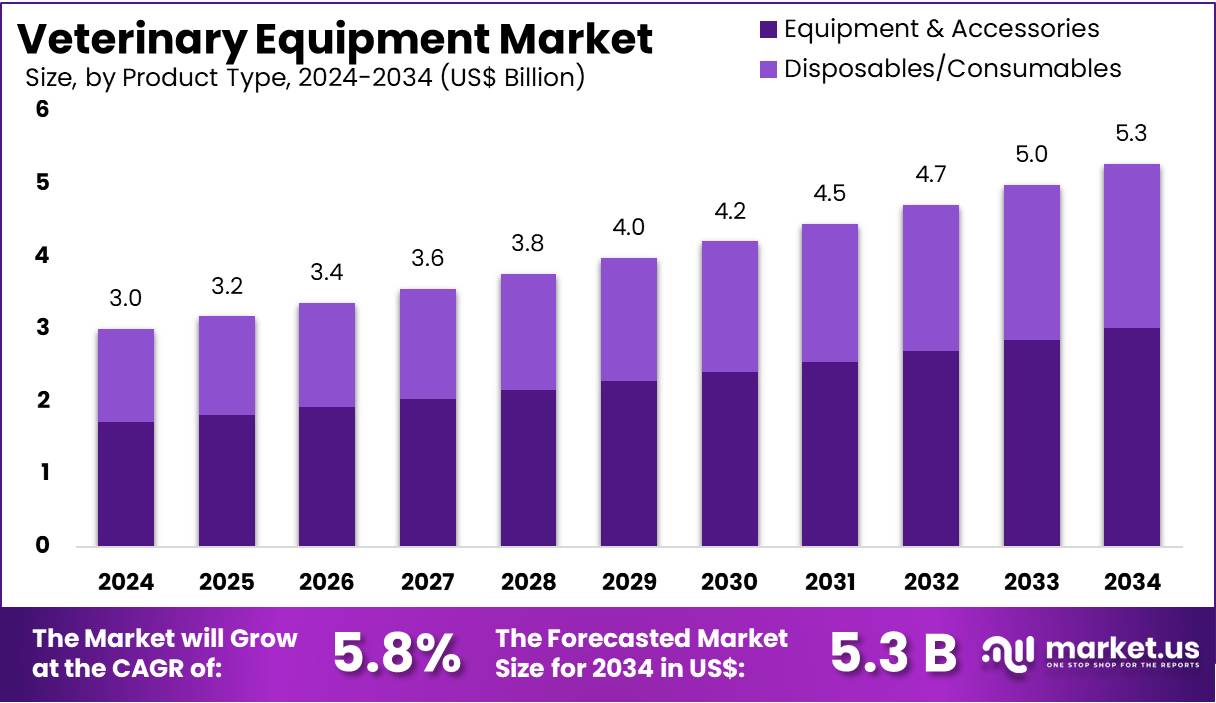
New York, NY – May 22, 2026 – The Global Veterinary Equipment Market size is expected to be worth around US$ 5.3 Billion by 2034, from US$ 3 Billion in 2024, growing at a CAGR of 5.8% during the forecast period from 2025 to 2034. North America held a dominant market position, capturing more than a 38.4% share and holds US$ 1.2 Billion market value for the year.
The global veterinary equipment market is witnessing steady growth due to the increasing adoption of advanced animal healthcare solutions, rising pet ownership, and expanding livestock management activities. Veterinary equipment includes a broad range of devices and instruments used for diagnosis, monitoring, surgery, anesthesia, imaging, and patient care in veterinary clinics and hospitals. These products play a critical role in improving the quality of animal healthcare services and supporting accurate disease diagnosis and treatment.
Growth in companion animal populations and increasing awareness regarding animal health have significantly contributed to market expansion. In addition, technological advancements in diagnostic imaging systems, patient monitoring devices, and surgical instruments are enhancing the efficiency and precision of veterinary procedures. Demand for portable and minimally invasive equipment is also increasing across veterinary practices.
The market is further supported by rising expenditure on pet healthcare, growing prevalence of zoonotic diseases, and increasing investments in veterinary infrastructure across both developed and emerging economies. Furthermore, government initiatives aimed at improving livestock productivity and animal welfare are creating favorable opportunities for industry participants.
Key Takeaways
- The veterinary equipment market was valued at US$ 3.0 billion in 2024 and is projected to reach US$ 5.3 billion by 2034, expanding at a CAGR of 5.8% during the forecast period.
- Based on product type, the market is categorized into equipment & accessories and disposables/consumables. Among these, the equipment & accessories segment dominated the market in 2024, accounting for a revenue share of 57.3%.
- By animal type, the market is segmented into small animals and large animals. The small animals segment held the largest market share of 62.5% in 2024.
- In terms of application, the market is divided into surgical, monitoring, and diagnostic segments. The surgical segment emerged as the leading category, capturing 50.2% of the overall market revenue.
- On the basis of end user, the market is segmented into veterinary hospitals & clinics, laboratories, and others. Veterinary hospitals & clinics accounted for the highest revenue share of 54.7% in 2024.
- North America dominated the global veterinary equipment market in 2024, securing a market share of 38.4%.
Regional Analysis
North America accounted for the largest share of the veterinary equipment market in 2024, driven by increasing pet ownership, rising expenditure on animal healthcare, and continuous advancements in veterinary technologies. Growing demand for advanced diagnostic and surgical equipment, including digital imaging systems and patient monitoring devices, has supported regional market growth.
The expansion of veterinary clinics and hospitals, along with increasing investments in veterinary infrastructure, has further strengthened the market. In addition, stricter regulations related to livestock health and animal welfare have accelerated the adoption of monitoring and diagnostic solutions across the region.
Meanwhile, the Asia Pacific veterinary equipment market is projected to register the fastest CAGR during the forecast period. Market growth is being supported by rising awareness regarding animal healthcare, increasing disposable income levels, and expanding investments in veterinary services. Governments across countries such as India and China are focusing on modernizing veterinary healthcare facilities and improving livestock management systems, which is increasing demand for advanced veterinary equipment.
The rapid growth of pet clinics, rising companion animal adoption, and growing focus on livestock productivity are further contributing to regional expansion. Additionally, increasing demand for portable diagnostic devices and advanced surgical equipment is expected to create significant growth opportunities across the Asia Pacific market over the coming years.
Emerging Trends
- Rise in Pet Ownership and Spending: Growing pet ownership and stronger emotional attachment toward animals are increasing spending on veterinary healthcare services. Pet owners are investing more in advanced treatment and diagnostic solutions, encouraging veterinary clinics and hospitals to adopt modern equipment and technologies for improved animal care outcomes.
- Shift Toward Advanced Technologies: Veterinary clinics are increasingly adopting advanced technologies such as digital imaging systems, ultrasound devices, and laser therapy equipment. These technologies improve diagnostic accuracy, support early disease detection, and enhance treatment efficiency, leading to higher demand for technologically advanced veterinary equipment worldwide.
- Growth of Mobile Veterinary Services: The increasing popularity of mobile veterinary services is driving demand for portable and lightweight veterinary equipment. Mobile veterinarians require compact diagnostic and surgical tools to provide effective in-home animal care, supporting the growing adoption of handheld analyzers, scanners, and portable monitoring systems.
- Telemedicine Integration: Veterinary telemedicine services are expanding rapidly due to growing demand for remote consultations and digital health monitoring. Veterinary professionals are adopting connected devices, cameras, and remote monitoring tools to improve accessibility, reduce travel requirements, and deliver efficient healthcare services for companion and livestock animals.
- Focus on Preventive Healthcare: Rising awareness regarding preventive animal healthcare is increasing demand for diagnostic and monitoring equipment. Veterinary clinics are investing in blood analyzers, wearable health monitors, and digital diagnostic tools that support early disease detection, improve treatment success rates, and reduce long-term healthcare costs.
- Sustainability and Eco-Friendly Equipment: Veterinary clinics are increasingly adopting eco-friendly and energy-efficient equipment to reduce operational costs and environmental impact. Manufacturers are developing reusable instruments, recyclable packaging, and low-energy devices, supporting sustainability goals while meeting the growing demand for environmentally responsible veterinary solutions.
Use Cases
- Routine Check-Ups and Health Monitoring: Veterinary equipment such as thermometers, stethoscopes, and monitoring systems is widely used during routine health examinations. These tools help veterinarians monitor vital signs, identify early disease symptoms, and ensure accurate health assessments for companion animals, livestock, and exotic animal species.
- Surgery and Emergency Care: Advanced surgical and emergency care equipment plays a critical role in veterinary procedures and trauma treatment. Devices such as anesthesia machines, surgical tables, and oxygen systems improve procedural safety, support emergency interventions, and enhance recovery outcomes for animals requiring urgent medical attention.
- Diagnostic Imaging: Diagnostic imaging equipment, including X-ray systems, ultrasound machines, and endoscopes, enables veterinarians to examine internal organs and detect medical conditions accurately. These technologies support early diagnosis, reduce the need for invasive procedures, and improve overall treatment planning in veterinary healthcare facilities.
- Dental Care: Veterinary dental equipment is essential for treating oral diseases and maintaining animal dental health. Dental units, polishing tools, and extraction instruments support routine cleaning procedures and complex dental surgeries, helping prevent infections and improving the long-term health and wellbeing of companion animals.
- Laboratory Testing: In-house laboratory equipment allows veterinary clinics to perform rapid diagnostic testing and obtain accurate results efficiently. Blood analyzers, microscopes, and digital testing systems help identify infections, monitor chronic diseases, and support timely treatment decisions for both routine and emergency veterinary cases.
- Animal Rehabilitation and Therapy: Veterinary rehabilitation equipment, including hydrotherapy systems and laser therapy devices, supports recovery from injuries, surgeries, and chronic conditions. These therapies improve mobility, reduce inflammation, and enhance quality of life for aging pets, working animals, and animals recovering from trauma.
- Livestock and Farm Animal Care: Veterinary equipment designed for livestock care includes portable ultrasound devices, vaccination tools, and restraint systems used in field conditions. These tools support animal health monitoring, disease prevention, reproductive management, and improved farm productivity while ensuring efficient and safe veterinary treatment procedures.
Frequently Asked Questions on Veterinary Equipment
- What factors are driving the growth of the veterinary equipment market?
The veterinary equipment market is growing due to increasing pet ownership, rising expenditure on animal healthcare, advancements in veterinary technologies, and growing awareness regarding animal welfare. Expanding livestock management activities and increasing demand for accurate diagnostic solutions also support market growth. - Which product segment dominates the veterinary equipment market?
The equipment & accessories segment holds the largest share of the veterinary equipment market owing to high demand for diagnostic imaging systems, surgical instruments, and monitoring devices. Veterinary clinics and hospitals continue to invest in technologically advanced equipment to improve treatment efficiency. - Why is the small animals segment significant in the veterinary equipment market?
The small animals segment accounts for a major market share due to increasing adoption of companion animals and rising spending on pet healthcare services. Growing awareness regarding preventive care and advanced treatment options has further increased demand for veterinary equipment for pets. - Which region leads the global veterinary equipment market?
North America dominates the veterinary equipment market due to advanced veterinary healthcare infrastructure, high pet ownership rates, and strong investment in animal healthcare technologies. The presence of leading market players and growing veterinary expenditure further contribute to regional market growth. - What are the major applications of veterinary equipment?
Veterinary equipment is widely used in surgical, diagnostic, and monitoring applications. Surgical equipment holds a significant market share due to increasing animal surgeries and the growing adoption of advanced instruments that improve precision, efficiency, and overall patient outcomes. - Who are the major end users of veterinary equipment?
Veterinary hospitals and clinics represent the leading end-user segment in the market. These facilities require advanced diagnostic and treatment equipment to manage increasing patient volumes, perform complex procedures, and provide improved healthcare services for companion and livestock animals.
Conclusion
The global veterinary equipment market is expected to witness sustained growth driven by increasing pet ownership, rising awareness regarding animal healthcare, and continuous advancements in veterinary technologies. Growing demand for diagnostic imaging, surgical equipment, monitoring devices, and portable veterinary solutions is supporting market expansion across companion and livestock animal care.
North America continues to dominate the market due to advanced healthcare infrastructure, while Asia Pacific is projected to experience the fastest growth owing to expanding veterinary investments and improving animal welfare initiatives. Additionally, trends such as telemedicine integration, preventive healthcare, and eco-friendly equipment adoption are expected to create significant opportunities for market participants over the forecast period.
Discuss your needs with our analyst
Please share your requirements with more details so our analyst can check if they can solve your problem(s)




