


Overview
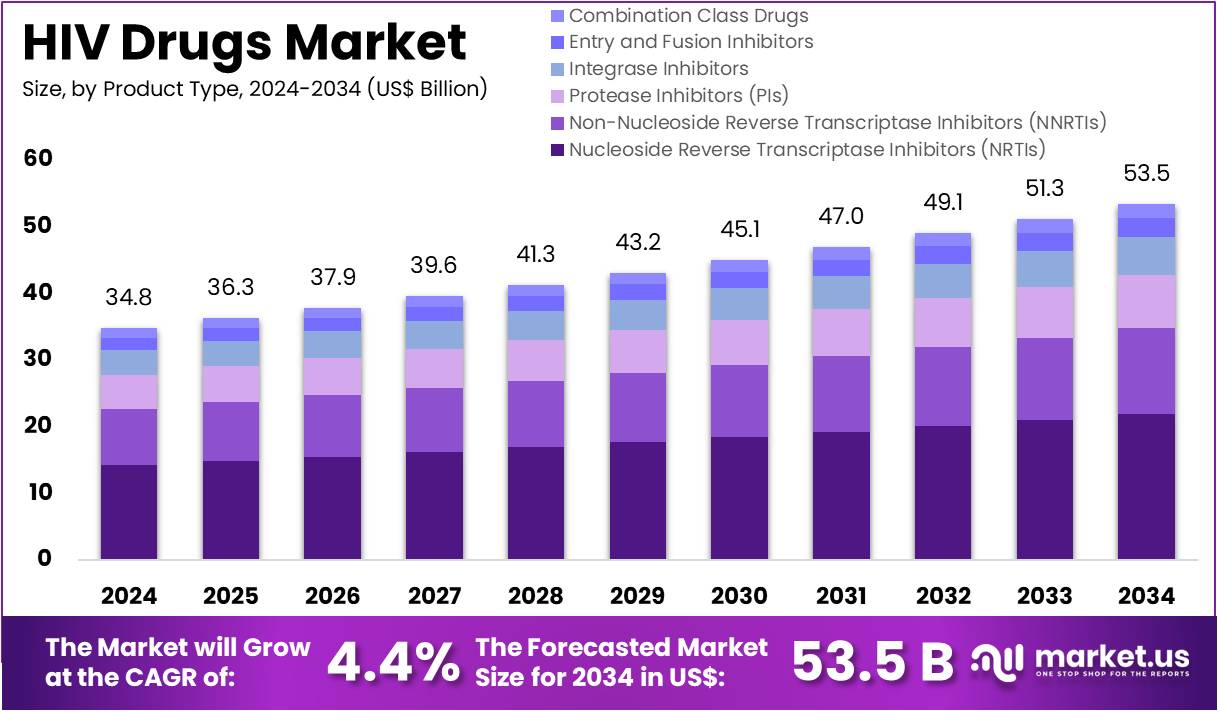
New York, NY – June 26, 2026 –The HIV Drugs Market Size is expected to be worth around US$ 53.5 billion by 2034 from US$ 34.8 billion in 2024, growing at a CAGR of 4.4% during the forecast period 2025 to 2034.
HIV drugs have transformed the management of Human Immunodeficiency Virus (HIV), enabling individuals to lead longer, healthier, and more productive lives. Modern antiretroviral therapy (ART) effectively suppresses viral replication, reduces the viral load to undetectable levels, and helps preserve immune system function. Early diagnosis and timely initiation of treatment remain critical for achieving the best clinical outcomes.
Recent advancements in HIV drug development have resulted in more effective therapies with improved safety profiles, fewer side effects, and simplified dosing regimens. Single-tablet combinations and long-acting injectable treatments have enhanced patient convenience and medication adherence, contributing to better disease management. Continuous innovation is also focused on addressing drug resistance, improving treatment durability, and expanding access to care across diverse populations.
The growing emphasis on preventive healthcare has further increased the adoption of HIV medications, including pre-exposure prophylaxis (PrEP) and post-exposure prophylaxis (PEP), which play an important role in reducing new HIV infections among high-risk populations.
Healthcare organizations, pharmaceutical companies, and research institutions continue to invest in the development of next-generation HIV therapies, supporting the global goal of ending the HIV epidemic. With ongoing clinical research and improved healthcare access, HIV treatment is expected to remain a key area of medical innovation, offering renewed hope and improved quality of life for millions of people worldwide.
Key Takeaways
- The global HIV drugs market was valued at US$ 34.8 billion in 2024 and is projected to reach US$ 53.5 billion by 2034, expanding at a CAGR of 4.4% during the forecast period.
- Based on product type, the market is segmented into nucleoside reverse transcriptase inhibitors (NRTIs), non-nucleoside reverse transcriptase inhibitors (NNRTIs), protease inhibitors (PIs), integrase inhibitors, entry and fusion inhibitors, and combination class drugs. Among these, nucleoside reverse transcriptase inhibitors (NRTIs) accounted for the largest market share of 41.0%.
- By distribution channel, the market is categorized into hospital pharmacies, retail pharmacies, and online pharmacies. Hospital pharmacies dominated the segment, capturing 55.6% of the market share.
- North America emerged as the leading regional market, accounting for 39.8% of the global HIV drugs market share.
Regional Analysis
North America dominated the HIV drugs market, accounting for 39.8% of the global revenue, supported by strong healthcare infrastructure, continuous innovation in antiretroviral therapies, and increasing adoption of pre-exposure prophylaxis (PrEP). Ongoing efforts to improve viral suppression rates and expand treatment access continue to drive regional demand.
According to the US Centers for Disease Control and Prevention (CDC), more than 1.13 million people aged 13 years and older were living with diagnosed HIV in the United States and six territories in 2023, sustaining the need for advanced treatment options. The introduction of innovative therapies, including long-acting injectable formulations, along with the strong commercial performance of leading pharmaceutical companies, further strengthens the region’s market position.
Asia Pacific is projected to register the fastest CAGR during the forecast period due to increasing HIV awareness, expanded testing programs, improved access to antiretroviral therapy (ART), and supportive government initiatives. The region has a large patient base, with 6.7 million people living with HIV in 2023, according to UNAIDS.
Countries such as China and India continue to strengthen national HIV control programs by expanding access to advanced treatment regimens and free ART services. Rising healthcare investments, favorable public health policies, and ongoing efforts to improve diagnosis and treatment coverage are expected to significantly accelerate the growth of the HIV drugs market across Asia Pacific over the coming years.
Emerging Trends
- Personalized Medicine in HIV Treatment: Personalized medicine is transforming HIV treatment through genetic testing that helps physicians select the most suitable drug regimens for individual patients. This approach improves treatment effectiveness, minimizes side effects, enhances patient satisfaction, and supports better long-term outcomes by delivering therapies tailored to each patient’s genetic profile.
- Long-Acting HIV Drugs: Long-acting HIV drugs are gaining widespread adoption as they require monthly or quarterly administration instead of daily dosing. These therapies improve treatment adherence, reduce medication burden, enhance patient convenience, and support better disease management, particularly for individuals who struggle with maintaining consistent daily treatment schedules.
- Focus on HIV Prevention: Growing emphasis on HIV prevention is increasing the adoption of pre-exposure prophylaxis (PrEP) among high-risk populations. Government programs and healthcare organizations are expanding investments in preventive care, reducing new infections while shifting healthcare strategies from treatment-focused approaches toward proactive and comprehensive HIV prevention initiatives.
- Combination HIV Therapies: Combination HIV therapies integrate antiretroviral drugs with treatments for co-existing conditions such as hepatitis or tuberculosis. These regimens simplify medication schedules, reduce pill burden, improve patient adherence, enhance treatment effectiveness, and provide comprehensive care for individuals managing multiple chronic infectious diseases simultaneously.
- Improved Access to HIV Treatments: Expanding access to HIV treatments remains a global healthcare priority, particularly across low-income and rural regions. Governments, non-profit organizations, and international health agencies are improving drug affordability, strengthening healthcare infrastructure, and increasing treatment availability to reduce HIV-related mortality and improve patient outcomes worldwide.
- Research Into an HIV Cure: Research focused on achieving an HIV cure continues to accelerate through advancements in gene editing, immune-based therapies, and innovative treatment approaches. Although a complete cure remains under development, ongoing scientific progress is expected to transform future HIV management and potentially eliminate the disease permanently.
Use Cases
- Managing HIV Infection: Antiretroviral therapy remains the primary treatment for managing HIV infection by suppressing viral replication, strengthening immune function, and preventing disease progression to AIDS. Combination drug regimens improve long-term survival, reduce complications, and enable patients to maintain healthier, more productive lives with sustained viral suppression.
- Prevention of HIV Transmission: Pre-exposure prophylaxis (PrEP) is widely used to prevent HIV transmission among individuals at high risk of infection. Regular use significantly lowers infection risk, supports global prevention strategies, protects vulnerable populations, and contributes to reducing new HIV cases through effective preventive healthcare interventions.
- Reducing Mother-to-Child Transmission: Antiretroviral therapy during pregnancy, childbirth, and breastfeeding significantly reduces the risk of mother-to-child HIV transmission. This preventive approach has lowered pediatric HIV infections worldwide, ensuring healthier outcomes for newborns while supporting maternal health through comprehensive prenatal and postnatal HIV care programs.
- Post-Exposure Prophylaxis (PEP): Post-exposure prophylaxis (PEP) provides emergency HIV prevention following potential exposure through unprotected sexual contact, needle sharing, or occupational incidents. Initiating treatment within 72 hours substantially reduces infection risk, making PEP an essential component of comprehensive HIV prevention and emergency healthcare strategies.
- Improving Quality of Life for HIV Patients: HIV medications improve patients’ quality of life by controlling viral activity, strengthening immune health, reducing symptoms, and preventing complications. Effective treatment enables individuals to remain socially active, maintain employment, achieve better physical well-being, and enjoy longer, healthier lives despite living with HIV.
- Support for Co-infected Patients: HIV treatments effectively support patients co-infected with diseases such as hepatitis B or hepatitis C by addressing multiple infections simultaneously. Integrated treatment improves overall health, minimizes complications, enhances therapeutic outcomes, simplifies disease management, and supports better long-term quality of life for affected individuals.
Frequently Asked Questions on HIV Drugs
- How do HIV drugs work?
HIV drugs work by targeting different stages of the HIV life cycle, including viral entry, reverse transcription, integration, and maturation. Combination antiretroviral therapy (ART) prevents the virus from multiplying, significantly lowering viral load, preserving immune function, and reducing the risk of HIV transmission. - What are the major types of HIV drugs?
The major classes of HIV drugs include nucleoside reverse transcriptase inhibitors (NRTIs), non-nucleoside reverse transcriptase inhibitors (NNRTIs), protease inhibitors (PIs), integrase strand transfer inhibitors (INSTIs), fusion inhibitors, CCR5 antagonists, and post-attachment inhibitors. These drug classes are often combined to maximize treatment effectiveness. - Why is the demand for HIV drugs increasing?
Demand for HIV drugs is increasing due to the growing number of diagnosed HIV cases, improved access to antiretroviral therapy, government-supported treatment initiatives, and greater awareness regarding early diagnosis. Continuous innovation in long-acting therapies and preventive medicines also contributes to expanding market demand worldwide. - What is driving the growth of the HIV drugs market?
The HIV drugs market is driven by increasing HIV prevalence, expanding healthcare infrastructure, rising investment in pharmaceutical research, favorable reimbursement policies, and strong support from public health organizations. The development of advanced treatment options with improved safety and convenience further supports market expansion. - Which regions dominate the HIV drugs market?
North America holds a leading position in the HIV drugs market because of advanced healthcare systems, strong pharmaceutical innovation, and widespread treatment availability. Europe also represents a significant market, while Asia-Pacific is expected to experience rapid growth due to improving healthcare access and increasing awareness. - What role do long-acting HIV therapies play in the market?
Long-acting HIV therapies are transforming the treatment landscape by reducing dosing frequency from daily oral tablets to monthly or less frequent injections. These therapies improve patient convenience, enhance medication adherence, and create new growth opportunities for pharmaceutical companies within the global HIV drugs market. - What is the future outlook for the HIV drugs market?
The future outlook for the HIV drugs market remains positive, supported by continued research into innovative therapies, increasing global treatment coverage, growing adoption of preventive medications, and advancements in long-acting formulations. Ongoing investments in HIV cure research and personalized medicine are expected to further support market growth.
Conclusion
The global HIV drugs market is expected to witness steady growth, supported by continuous advancements in antiretroviral therapies, increasing adoption of preventive treatments such as PrEP and PEP, and expanding access to healthcare services. Innovations including long-acting injectables, personalized medicine, and combination therapies are improving treatment outcomes and patient adherence.
North America continues to lead the market, while Asia Pacific is emerging as the fastest-growing region due to strengthened public health initiatives and broader ART coverage. Ongoing investments in research, drug development, and HIV cure programs are expected to drive sustained market expansion and improve the quality of life for people living with HIV.
Discuss your needs with our analyst
Please share your requirements with more details so our analyst can check if they can solve your problem(s)




