


Overview
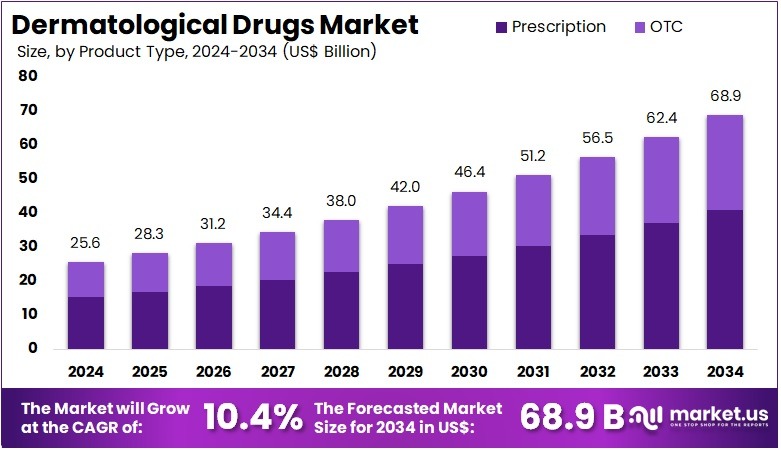
New York, NY – June 11, 2026 – The Global Dermatological Drugs Market Size is expected to be worth around US$ 68.9 Billion by 2034, from US$ 25.6 Billion in 2024, growing at a CAGR of 10.4% during the forecast period from 2025 to 2034.
Dermatological drugs are pharmaceutical products used for the prevention, treatment, and management of skin-related disorders and diseases. These medications address a wide range of conditions, including acne, psoriasis, eczema, dermatitis, fungal infections, rosacea, skin allergies, and skin cancers. Dermatological drugs are available in various formulations, such as creams, ointments, gels, lotions, foams, tablets, capsules, injectables, and biologics, allowing healthcare professionals to tailor treatment according to disease severity and patient requirements.
The increasing prevalence of chronic skin conditions, growing awareness regarding skin health, and rising demand for advanced therapeutic solutions are supporting the adoption of dermatological drugs worldwide. Technological advancements in drug development have led to the introduction of targeted therapies and biologics that offer improved efficacy, reduced side effects, and enhanced patient outcomes. In addition, expanding access to dermatology services and increasing healthcare expenditure are contributing to market growth.
The dermatological drugs landscape includes both prescription and over-the-counter products, with major pharmaceutical companies investing in research and development to introduce innovative treatment options. Emerging trends such as personalized medicine, combination therapies, and biologic treatments are expected to further transform the sector.
As skin diseases continue to affect millions of individuals globally, dermatological drugs remain essential in improving quality of life, reducing disease burden, and supporting long-term skin health management across diverse patient populations.
Key Takeaways
- The global Dermatological Drugs market was valued at US$ 25.6 billion in 2024 and is projected to reach US$ 68.9 billion by 2034, expanding at a CAGR of 10.4% during the forecast period.
- Based on product type, the market is categorized into prescription and OTC drugs. The prescription segment dominated the market in 2024, accounting for 59.3% of the total revenue share.
- By route of administration, the market is segmented into topical, oral, injectables, and transdermal formulations. Among these, the topical segment held the largest share of 58.8% in 2024.
- On the basis of application, the market is divided into acne, psoriasis, rosacea, alopecia, and others. The psoriasis segment emerged as the leading category, capturing 41.2% of the market revenue in 2024.
- According to distribution channel, the market comprises hospital & clinic pharmacies, retail pharmacies, and online pharmacies. Retail pharmacies led the market with a revenue share of 49.1% in 2024.
- Based on drug class, the market is segmented into corticosteroids, retinoids, antibiotics, antifungals, calcineurin inhibitors, antihistamines, and others. The corticosteroids segment accounted for the highest share of 26.5% in 2024.
- North America remained the dominant regional market, representing 38.5% of the global Dermatological Drugs market revenue in 2024.
Regional Analysis
North America accounted for the largest share of the Dermatological Drugs market in 2024, representing 38.5% of global revenue. The region’s leadership is supported by the high prevalence of skin disorders, including psoriasis and eczema, which affect millions of individuals across the United States.
The growing burden of chronic dermatological conditions continues to drive demand for effective treatment options. In addition, the presence of a well-established healthcare system, strong reimbursement frameworks, and ongoing product innovation contributes to market expansion.
Continuous approvals of advanced biologics and targeted therapies by regulatory authorities have further strengthened treatment availability. Significant investments by leading pharmaceutical companies in dermatology research and development are also supporting market growth across North America.
Asia Pacific is anticipated to register the fastest growth rate during the forecast period. The increasing incidence of skin diseases, combined with improving healthcare accessibility, is creating substantial demand for dermatological treatments throughout the region. Expanding healthcare infrastructure, rising public awareness regarding skin health, and greater availability of specialized dermatology services are supporting market development.
Furthermore, increasing government healthcare expenditure and investments in medical facilities are enhancing treatment access. The region’s growing middle-class population, rising disposable incomes, and willingness to adopt advanced therapies are expected to accelerate demand for innovative dermatological drugs, making Asia Pacific a key growth market over the coming years.
Emerging Trends
- Targeted and Precision-Based Therapies: Targeted and precision-based therapies are transforming dermatology by addressing the underlying immune and genetic causes of skin disorders. These advanced treatments provide improved efficacy, reduced side effects, and personalized care, particularly for chronic conditions such as psoriasis, eczema, and alopecia areata.
- Advanced Drug Delivery Systems: Advanced drug delivery technologies, including microneedles, nanocrystals, and laser-assisted systems, are enhancing treatment effectiveness by improving drug penetration into the skin. These innovations increase therapeutic outcomes, reduce adverse effects, and support better management of various dermatological conditions.
- Microbiome-Driven Treatments: Microbiome-based therapies are emerging as a promising approach in dermatology by restoring the natural balance of skin microorganisms. These treatments help manage conditions such as acne, eczema, and rosacea while reducing inflammation and supporting long-term skin health through gentler therapeutic mechanisms.
- Biotechnology and Regenerative Approaches: Biotechnology and regenerative medicine are introducing innovative solutions such as stem cell therapies, growth factors, and mRNA-based treatments. These approaches promote skin repair, tissue regeneration, scar reduction, and anti-aging benefits, creating new opportunities in medical and cosmetic dermatology.
Use Cases
- Managing Skin Cancer and Pre-Cancerous Lesions: Dermatological drugs are widely used to treat skin cancer and pre-cancerous lesions by eliminating abnormal cells and preventing disease progression. Topical and systemic therapies improve treatment precision, support early intervention, and reduce the risk of severe complications.
- Treating Chronic Inflammatory Skin Conditions: Dermatological drugs effectively manage chronic inflammatory disorders such as psoriasis, eczema, and hidradenitis suppurativa. These therapies reduce inflammation, itching, and redness while helping patients achieve long-term symptom control and improved quality of life.
- Supporting Hair Growth in Hair Loss Disorders: Dermatological treatments for hair loss disorders stimulate hair follicles, improve scalp health, and promote hair regrowth. Advanced formulations and targeted delivery systems enhance treatment effectiveness, making them valuable options for managing alopecia and other hair-thinning conditions.
- Relieving Itching and Rare Skin Disorders: Advanced dermatological drugs help control symptoms associated with rare skin disorders, including persistent itching, redness, and skin damage. Targeted therapies provide improved symptom management, enhance patient comfort, and support better long-term outcomes for individuals with complex conditions.
Frequently Asked Questions on Dermatological Drugs
- What is driving the growth of the dermatological drugs market?
The growth of the dermatological drugs market is primarily driven by the increasing prevalence of skin diseases, rising awareness regarding skin health, advancements in biologic therapies, and growing healthcare expenditure. Improved access to dermatology services is also supporting market expansion. - Which product segment dominates the dermatological drugs market?
The prescription drugs segment holds the largest share of the dermatological drugs market. This dominance is attributed to the increasing use of physician-prescribed therapies for chronic and severe skin conditions that require specialized and long-term treatment approaches. - Why are topical dermatological drugs widely used?
Topical dermatological drugs are preferred because they deliver medication directly to the affected skin area, minimize systemic side effects, and provide effective treatment outcomes. Their convenience and broad applicability contribute significantly to their widespread adoption. - Which application segment accounts for the largest market share?
The psoriasis segment represents the largest application area within the dermatological drugs market. The growing prevalence of psoriasis and the availability of advanced biologic therapies have contributed to the segment’s substantial market share. - Which distribution channel leads the dermatological drugs market?
Retail pharmacies account for the largest share of the market due to their extensive accessibility, wide product availability, and convenience for patients seeking both prescription and over-the-counter dermatological medications. - Which drug class holds a significant share of the market?
Corticosteroids hold a significant share of the dermatological drugs market owing to their effectiveness in reducing inflammation and managing conditions such as eczema, psoriasis, dermatitis, and allergic skin reactions. - Which region dominates the global dermatological drugs market?
North America leads the global dermatological drugs market due to its high prevalence of skin disorders, strong healthcare infrastructure, favorable reimbursement systems, and continuous introduction of innovative dermatological therapies. - What are the key trends shaping the dermatological drugs market?
Major trends include the growing adoption of biologics, development of targeted therapies, increasing use of personalized medicine, expansion of online pharmacy channels, and continuous investment in dermatology-focused research and development activities.
Conclusion
The global dermatological drugs market is experiencing strong growth, driven by the rising prevalence of skin disorders, increasing awareness of skin health, and continuous advancements in treatment technologies. The growing adoption of biologics, targeted therapies, and innovative drug delivery systems is improving treatment outcomes and expanding therapeutic possibilities.
North America remains the leading market, while Asia Pacific is expected to witness the fastest growth due to improving healthcare infrastructure and rising healthcare spending. With ongoing investments in research and development, personalized medicine, and regenerative therapies, the dermatological drugs market is poised for significant expansion and long-term innovation through 2034.
Discuss your needs with our analyst
Please share your requirements with more details so our analyst can check if they can solve your problem(s)




