


Overview
New York, NY – Sep 11, 2026 – The Global Eyelid Scrub Market size is expected to reach around US$ 7.00 Billion by 2034, up from US$ 3.56 Billion in 2024, growing at a CAGR of 7.0% during the forecast period 2025 to 2034. In 2024, North America led the market, achieving over 36.8% market share with revenue of US$ 1.31 Billion.
The global eyelid scrub market is witnessing consistent growth due to increasing awareness about eye hygiene, rising cases of dry eye conditions, and growing demand for specialized ophthalmic care products. Eyelid scrubs are designed to remove oil, debris, allergens, makeup residue, and microorganisms from the eyelid surface, helping improve eyelid cleanliness and comfort.
The global eyelid scrub market was valued at approximately USD 350 million in 2024 and is expected to reach around USD 550 million by 2032, expanding at a CAGR of 5.8% from 2025 to 2032. The market growth is supported by the increasing prevalence of eye disorders, with an estimated 344 million people worldwide affected by dry eye disease. Growing screen exposure, with global digital users exceeding 5.5 billion, is further increasing demand for eye care solutions.
North America held the largest market share of nearly 38% in 2024, supported by advanced healthcare infrastructure and higher adoption of ophthalmic products. Europe accounted for approximately 28%, while Asia-Pacific is projected to register the fastest growth with a CAGR of nearly 7% due to improving healthcare access and rising consumer awareness.
Manufacturers are focusing on product innovation, including preservative-free wipes, foam-based cleansers, and sterile eyelid cleaning solutions. Online sales channels are expected to contribute over 30% of market revenue by 2032, creating new opportunities for companies across retail, hospitals, and specialty eye care segments.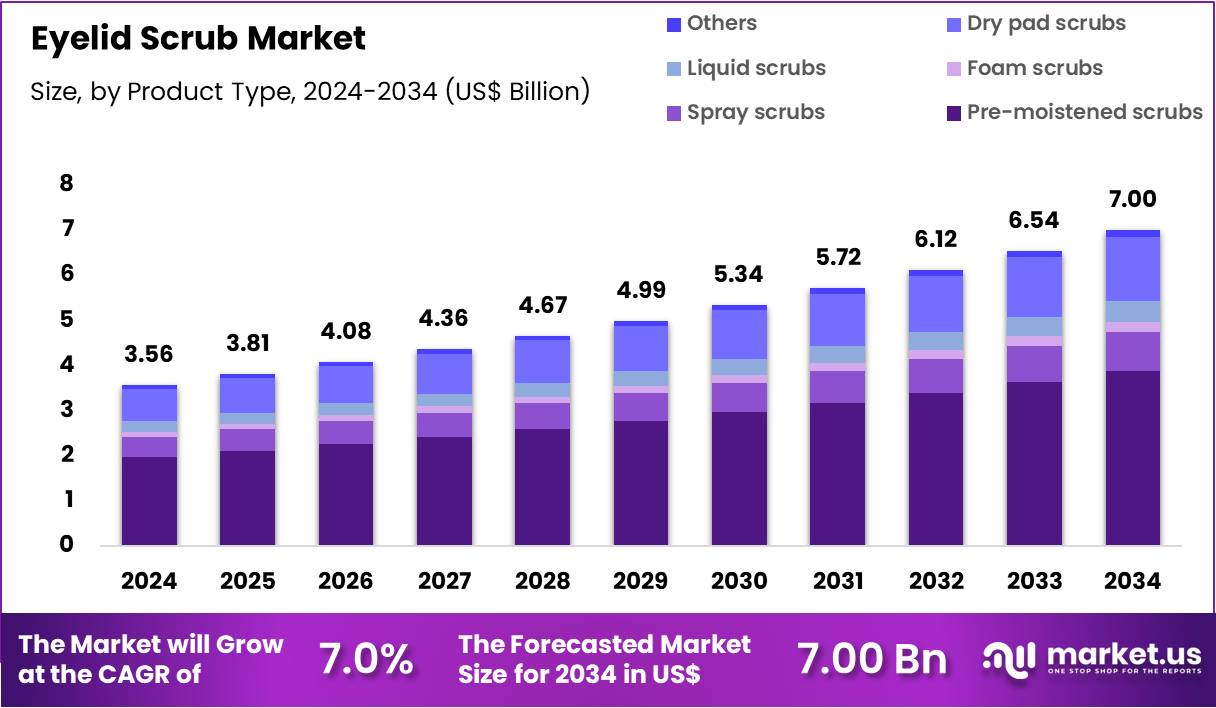
Key Takeaways
- In 2024, the eyelid scrub market generated a revenue of US$ 3.56 billion and is projected to grow at a CAGR of 7.0%, reaching approximately US$ 7.00 billion by 2034.
- Based on product type, the market is segmented into pre-moistened scrubs, spray scrubs, foam scrubs, liquid scrubs, dry pad scrubs, and others. Among these, pre-moistened scrubs dominated the market in 2024, accounting for a 55.5% market share.
- Based on application, the market is categorized into allergies, dry eyes, blepharitis treatment, Meibomian Gland Dysfunction (MGD), and others. The dry eyes segment held the leading position in 2024, capturing a 42.7% market share.
- Based on distribution channel, the market is segmented into online pharmacies, retail pharmacies, and hospital pharmacies. Online pharmacies emerged as the leading distribution channel in 2024, representing a 48.9% market share.
- North America dominated the global eyelid scrub market in 2024, holding a significant 36.8% market share, supported by increasing awareness of eye hygiene, advanced healthcare infrastructure, and rising adoption of ophthalmic care products.
Market Segmentation Overview
- Product Type Analysis: The pre-moistened scrubs segment dominated the eyelid scrub market in 2024, holding a 55.5% market share. The segment growth is driven by convenience, portability, and ease of use for routine eyelid hygiene. Increasing awareness regarding eye care, rising cases of dry eyes and blepharitis, and demand for ready-to-use cleansing solutions are further supporting the adoption of pre-moistened scrubs globally.
- Application Analysis: The dry eyes segment led the eyelid scrub market in 2024, accounting for a 42b.7% market share. The segment growth is fueled by the increasing prevalence of dry eye conditions caused by aging, prolonged screen exposure, and environmental factors. Eyelid scrubs help remove irritants, excess oils, and debris, improving eyelid hygiene, tear stability, and overall eye comfort.
- Distribution Channel Analysis: The online pharmacy segment emerged as a major distribution channel in 2024, capturing a 48.9% market share. Growth is attributed to increasing consumer preference for digital healthcare purchases, convenient ordering, home delivery services, and access to a wide range of specialized eye care products. Rising e-commerce penetration and online health platforms are expected to further drive segment expansion.
Statistical Information
- Dry Eye Disease Affects Millions of Potential Eyelid Care Consumers: A U.S. population study estimated that 16.4 million adults (6.8% of U.S. adults) had diagnosed dry eye disease. The prevalence increased with age, reaching 18.6% among adults aged 75 years and older compared with 2.7% among adults aged 18–34 years. Higher disease prevalence among older consumers supports recurring demand for eyelid hygiene products.
- Aging Population Increases the Need for Long-Term Eyelid Hygiene: Eye-related conditions requiring ongoing management become more common with age. Research on dry eye disease found prevalence increased from 2.7% in adults aged 18–34 years to 18.6% in adults aged 75+ years, representing nearly a 7-fold increase across age groups. This aging-related increase supports continued consumer usage of eyelid cleansing and eye comfort products.
- Dry Eye Patients Create a Recurring User Base for Eyelid Hygiene Products: A U.S. population study estimated that 16.4 million adults (6.8% of U.S. adults) had diagnosed dry eye disease. The condition affected 8.8% of women and 4.5% of men, with prevalence increasing to 18.6% among adults aged 75 years and older. Long-term eye discomfort management supports recurring use of eyelid hygiene products.
- Aging Population Increases the Potential Consumer Base for Eyelid Scrub Products: The U.S. Census Bureau reported that the number of adults aged 65 years and older reached 55.8 million people in 2020, representing approximately 16.8% of the total U.S. population. Older adults have higher rates of eye-related conditions, including dry eye and eyelid disorders. The increasing senior population supports long-term demand for eyelid hygiene products used in routine eye-care management.
- Women Represent a Larger Consumer Group for Dry Eye and Eyelid Hygiene Products: A U.S. population study found diagnosed dry eye disease prevalence was 8.8% among women compared with 4.5% among men. The study estimated that approximately 11.1 million women and 5.3 million men in the United States had diagnosed dry eye disease. Higher prevalence among women increases potential demand for eyelid hygiene products used for eye comfort management.
- Older Adults Have Higher Eye Care Needs Supporting Long-Term Eyelid Scrub Usage: The U.S. Census Bureau reported that the population aged 65 years and older increased to 55.8 million people in 2020, representing 16.8% of the U.S. population. Aging is associated with increased prevalence of dry eye disease and eyelid conditions. The expanding senior population supports continued consumer need for maintenance eye-care products, including eyelid cleansing solutions.
- Senior Consumers Represent a Growing Segment for Eyelid Care Products: The U.S. Census Bureau reported that the population aged 65 years and older reached 55.8 million people in 2020, representing 16.8% of the U.S. population. Older adults experience higher rates of dry eye disease and eyelid-related conditions compared with younger groups. This demographic trend supports long-term demand for eye hygiene and maintenance products.
Regional Analysis
North America led the market by securing a market share of 36.8% in 2024.
North America holds a strong position in the eyelid scrub market due to high awareness of eye health, advanced healthcare infrastructure, and a large aging population. The U.S. population aged 65 years and above reached 55.8 million in 2020, representing 16.8% of the total population, increasing demand for products supporting age-related eye-care needs. Growing concerns related to dry eye, digital eye strain, and chronic eyelid conditions support the adoption of eyelid hygiene products.
Established eye-care companies such as OCuSOFT, Alcon, and Bausch + Lomb provide a wide range of eyelid cleansing solutions, improving product availability. Asia-Pacific is expected to show strong growth potential due to rising eye-health awareness, increasing digital device usage, and expanding access to healthcare services. The WHO highlights myopia as a major public health concern, affecting an estimated 2.6 billion people globally in 2020, with significant impact in Asia-Pacific populations. Increasing focus on preventive eye care and hygiene awareness is expected to support demand for eyelid scrubs and related products.
Business Opportunities
The eyelid scrub market offers growth opportunities through rising demand for preventive eye-care products, increasing dry eye awareness, and expansion of self-care routines. Companies can focus on developing preservative-free, hypoallergenic, fragrance-free, and sensitive-skin-friendly formulations to attract consumers with eye irritation concerns.
Growing digital device usage creates opportunities for products targeting digital eye strain-related discomfort. Partnerships with ophthalmologists, optometrists, pharmacies, and online retailers can improve consumer trust and accessibility.
The expansion of e-commerce channels also provides opportunities for direct-to-consumer eyelid hygiene brands. Companies can further differentiate through convenient formats such as single-use wipes, foam cleansers, travel packs, and subscription-based refill models. Increasing demand from aging populations and contact lens users creates additional opportunities for recurring-use products.
Emerging Trends
- Growing Adoption of Daily Eyelid Hygiene: Increasing awareness of blepharitis, meibomian gland dysfunction (MGD), and dry eye management is driving regular eyelid cleansing routines. MGD affects approximately 20%–50% of adults depending on population and diagnostic criteria, creating demand for daily-use eyelid scrubs and wipes.
- Rising Demand for Sensitive-Skin and Preservative-Free Formulations: Consumers are increasingly preferring gentle eyelid cleansers designed for frequent use, including preservative-free and hypoallergenic options. This trend is supported by growing awareness of irritation risks from harsh personal-care products and increasing demand for safer eye-care solutions.
- Digital Eye Strain Driving Preventive Eye Care: Increased screen exposure is contributing to higher awareness of dry eye symptoms. The American Academy of Ophthalmology highlights that reduced blinking during digital device use can worsen eye dryness and discomfort, encouraging consumers to adopt supportive eye-care routines.
- Expansion of Convenient Eyelid Scrub Formats: Consumers are shifting toward easy-to-use formats such as pre-moistened wipes, foaming cleansers, and sprays. Companies such as OCuSOFT offer multiple formats, including 30-count eyelid pad packs, supporting portability and daily usage convenience.
- Increasing Use Among Contact Lens Wearers: Contact lens users represent a major target group for eyelid hygiene products. The CDC estimates approximately 45 million people in the United States wear contact lenses, creating demand for additional eye-care products that support cleanliness and comfort.
Use Cases
- Blepharitis Management: Eyelid scrubs are widely used as part of home-care routines for blepharitis, a condition causing eyelid inflammation, crusting, and irritation. Eye-care organizations recommend regular eyelid cleaning to remove debris, excess oil, and bacteria from the eyelid margins.
- Dry Eye Disease Support: Eyelid scrubs are used as a supportive hygiene product for people managing dry eye symptoms. A U.S. study estimated that approximately 16.4 million adults (6.8% of adults) had diagnosed dry eye disease, creating demand for products supporting ocular surface care routines.
- Meibomian Gland Dysfunction (MGD) Care: Eyelid scrubs are used to maintain eyelid cleanliness in individuals with MGD, a condition affecting oil-producing glands in the eyelids. Research from the International Workshop on MGD reports prevalence ranging from 20% to 50% among adults, making it a significant use case.
- Contact Lens Wearer Eye Hygiene: Eyelid scrubs are used by contact lens users as part of broader eye hygiene practices to reduce buildup and irritation around the eyelid area. The CDC estimates approximately 45 million Americans wear contact lenses, representing a large potential user group.
- Removal of Eyelid Debris and Lash-Line Buildup: Eyelid scrubs are used to remove oil, flakes, makeup residue, and environmental debris accumulated around eyelashes. Products such as OCuSOFT Lid Scrub are designed specifically for cleaning eyelids and lashes as part of daily hygiene routines.
Recent Development
- In 2026, OCuSOFT Inc. continued expanding its eyelid hygiene product portfolio with solutions such as Lid Scrub Original, Lid Scrub Plus, and specialized eyelid cleansing products. The company focuses on providing daily eyelid cleansing solutions for consumers managing eyelid debris, blepharitis symptoms, and ocular surface hygiene needs.
- In 2026, Prestige Consumer Healthcare, Inc. continued strengthening its consumer healthcare portfolio through OTC healthcare brands. The company focused on expanding accessible self-care solutions, supporting growing consumer demand for convenient healthcare products across personal wellness categories, including eye-care-related needs.
- In 2026, Bausch + Lomb Incorporated continued expanding its eye-care product portfolio with innovations in dry eye and ocular surface care. The company introduced preservative-free eye-care solutions, including Blink Triple Care Preservative Free lubricant eye drops, supporting consumer demand for gentle and long-term eye comfort products.
- In 2026, Eye Love (Heyedrate) continued focusing on natural and accessible eye-care solutions, including products designed for dry eye relief and daily eye wellness. The company continued targeting consumers seeking convenient, non-prescription eye-care products for maintaining comfort and supporting everyday eye hygiene.
- In 2026, Cliradex continued developing specialized eyelid hygiene products focused on Demodex-related eyelid care. The company’s products use tea tree oil-derived ingredients and are positioned for consumers seeking solutions for eyelid debris, irritation, and lash-line hygiene management.
- In 2026, Alcon Inc. continued strengthening its global eye-care portfolio through innovations across vision care and ocular health categories. The company focused on expanding solutions for eye comfort, contact lens users, and ocular surface care, supporting increasing consumer demand for comprehensive eye-health products.
- In 2026, ROHTO PHARMACEUTICAL CO., LTD. continued expanding its consumer eye-care portfolio with products targeting eye dryness, irritation, and daily eye comfort. The company leveraged its OTC healthcare expertise to meet increasing consumer demand for convenient self-care eye products.
Frequently Asked Questions on Eyelid Scrub
- What factors are driving the growth of the eyelid scrub market?
The eyelid scrub market is driven by increasing awareness of eye hygiene, rising prevalence of dry eye conditions, growing aging populations, and higher adoption of self-care products. Conditions such as blepharitis and meibomian gland dysfunction are increasing demand for eyelid cleansing solutions. - How does dry eye disease impact the eyelid scrub market?
Dry eye disease increases demand for supportive eye-care products because many consumers require ongoing management routines. A U.S. study estimated approximately 16.4 million adults had diagnosed dry eye disease, creating opportunities for products supporting eyelid hygiene and ocular comfort. - What product formats are available in the eyelid scrub market?
Eyelid scrub products are available in various formats, including pre-moistened wipes, foam cleansers, sprays, and liquid solutions. These options provide convenience for consumers seeking easy-to-use eyelid hygiene products for home care, travel, and regular daily cleansing routines. - How do contact lens users contribute to eyelid scrub demand?
Contact lens users represent an important consumer segment because proper eye hygiene helps reduce irritation and infection risks. The CDC estimates approximately 45 million people in the United States wear contact lenses, creating demand for complementary eye-care and eyelid hygiene products. - Which region dominates the eyelid scrub market?
North America holds a strong position in the eyelid scrub market due to advanced healthcare infrastructure, high awareness of eye health, and strong availability of OTC eye-care products. Presence of companies such as OCuSOFT, Alcon Inc., and Bausch + Lomb Incorporated supports regional growth. - What opportunities exist in the eyelid scrub market?
Opportunities include development of advanced formulations, expansion through online retail channels, partnerships with eye-care professionals, and products designed for specific consumer groups such as contact lens users, older adults, and individuals with sensitive eyes. - What is the future outlook for the eyelid scrub market?
The eyelid scrub market is expected to benefit from increasing focus on preventive eye health, rising dry eye awareness, and demand for convenient self-care solutions. Growth in digital device usage and aging populations will continue supporting adoption of eyelid hygiene products.
Conclusion
The eyelid scrub market is experiencing steady growth due to increasing awareness of eye hygiene, rising dry eye prevalence, aging populations, and growing demand for convenient self-care products. Conditions such as blepharitis, meibomian gland dysfunction, and digital eye strain are encouraging consumers to adopt regular eyelid cleansing routines.
Leading companies are focusing on innovative formats, including wipes, foaming cleansers, and preservative-free solutions, to meet changing consumer preferences. North America remains a key market due to strong healthcare infrastructure, while emerging regions offer future growth opportunities through improving awareness and product accessibility. The market outlook remains positive with continued focus on preventive eye care.
Discuss your needs with our analyst
Please share your requirements with more details so our analyst can check if they can solve your problem(s)




