


Overview
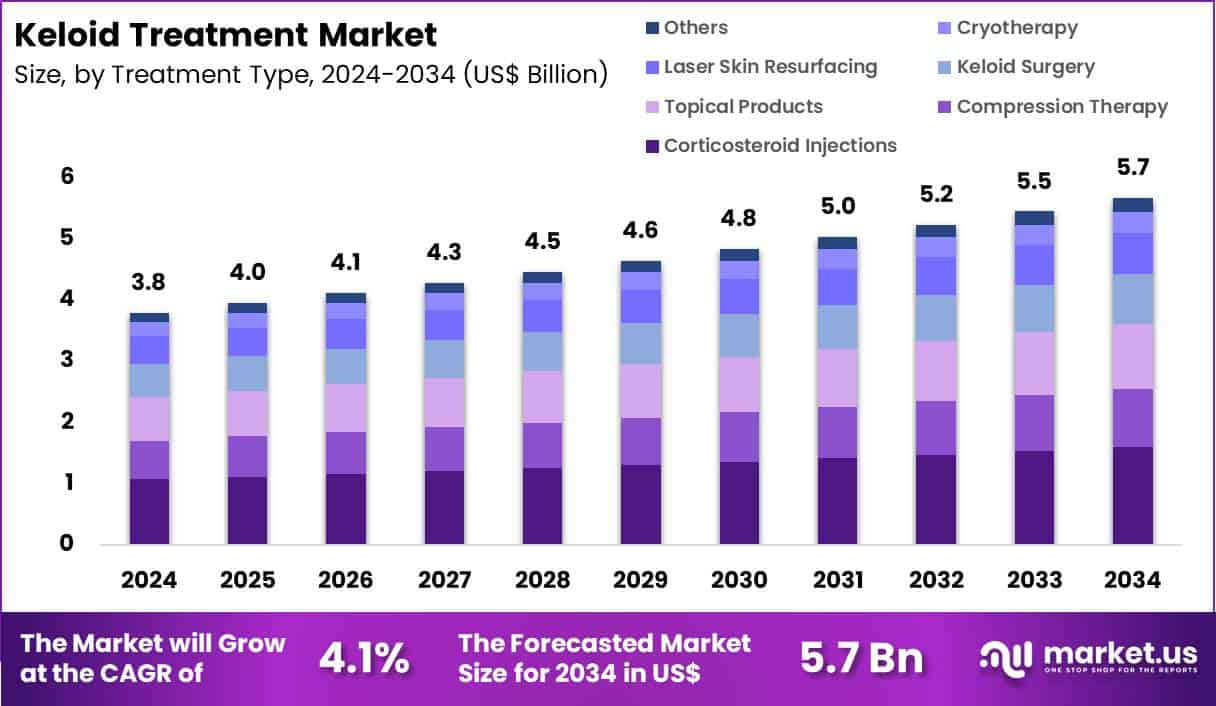
New York, NY – Oct 23, 2026 – Global Keloid Treatment Market size is expected to be worth around US$ 5.7 Billion by 2034 from US$ 3.8 Billion in 2024, growing at a CAGR of 4.1% during the forecast period 2025 to 2034. In 2024, North America led the market, achieving over 35.2% share with a revenue of US$ 1.3 Billion.
Keloid treatment is gaining attention as awareness of skin health, cosmetic appearance, and advanced dermatological care continues to increase. Keloids are raised, thickened scars that develop when the body produces excess collagen during the wound-healing process. Unlike ordinary scars, keloids can extend beyond the boundaries of the original injury and may continue to grow over time.
Keloids can develop following acne, burns, surgical procedures, piercings, minor cuts, or other skin injuries. Common symptoms include itching, tenderness, discomfort, and changes in skin appearance. Although keloids are generally harmless, they may affect an individual’s confidence and quality of life.
Treatment options include corticosteroid injections, silicone gel sheets, cryotherapy, laser therapy, surgical removal, and combination treatments. The appropriate approach depends on the size, location, severity, and duration of the keloid, as well as the patient’s skin type and medical history. Since keloids have a high risk of recurrence, surgical removal is often combined with additional therapies to improve outcomes.
Growing awareness of minimally invasive procedures and personalized dermatological treatments is supporting interest in effective keloid management. Early medical consultation can help identify suitable treatment options and reduce the risk of complications.
Dermatologists recommend avoiding unnecessary skin trauma and seeking professional advice when abnormal scar growth occurs. Continued advancements in scar treatment are expected to support improved management strategies and enhance patient care.
Key Takeaways
- In 2024, the market was valued at US$ 3.8 billion and is projected to reach US$ 5.7 billion by 2034, growing at a CAGR of 4.1% during the forecast period.
- By treatment type, the market is segmented into corticosteroid injections, compression therapy, topical products, keloid surgery, laser skin resurfacing, cryotherapy, and others. Corticosteroid injections dominated the segment, accounting for 28.1% of the market share.
- By end-user, the market is categorized into hospitals, dermatology and aesthetic clinics, and homecare. Hospitals held a significant market share of 52.6%.
- North America dominated the global market, accounting for a market share of 35.2%.
Key Market Segments
Treatment Type Analysis: Corticosteroid injections dominated the keloid treatment market, accounting for 28.1% of the segment. Their effectiveness in reducing scar thickness, inflammation, and discomfort, combined with minimally invasive administration, outpatient suitability, and use in combination therapies, supports widespread adoption.
End-User Analysis: Hospitals dominated the keloid treatment market, accounting for 52.6% of the end-user segment. Their advanced facilities, availability of dermatology and plastic surgery specialists, comprehensive treatment options, and capacity to manage complex or recurrent keloids support their leading market position.
Regional Analysis
North America Leads the Keloid Treatment Market
North America dominated the keloid treatment market in 2024, accounting for 35.2% of the global market share. Regional growth is supported by advanced dermatological infrastructure, greater awareness of scar management, and increasing adoption of minimally invasive procedures and combination therapies.
Established healthcare systems, insurance coverage, and access to specialized dermatologists encourage early diagnosis and treatment. Educational initiatives and expanding telemedicine services further improve access to professional care. Research into innovative therapies and personalized treatment approaches is also supporting regional market development.
Asia Pacific Expected to Register the Highest CAGR
The Asia Pacific keloid treatment market is expected to record the highest CAGR during the forecast period. Growth is driven by improving healthcare infrastructure, rising awareness of dermatological conditions, and expanding access to specialized treatment services.
Increasing investments in hospitals and dermatology clinics are supporting the adoption of laser therapy, corticosteroid injections, cryotherapy, and advanced topical products. Research activities, medical technology development, and growing demand for aesthetic procedures are further contributing to market expansion. Improved healthcare access across emerging economies is expected to create additional growth opportunities.
Emerging Trends
- Increasing use of combination treatments: Treatment plans increasingly combine steroid injections, cryotherapy, laser procedures, or surgery with additional therapies to reduce scar size and the risk of recurrence. This approach is important because keloids may return after treatment with a single method.
- Development of targeted drug therapies: Research is exploring medicines that control excessive collagen production and the activity of cells involved in scar formation. Agents such as 5-fluorouracil are already used in selected treatment plans, while newer molecular approaches remain under investigation.
- Advancement in laser-assisted drug delivery: Laser-assisted drug delivery is being studied as a method of helping medicines penetrate scar tissue more effectively. Combining fractional laser procedures with topical medicines may improve treatment outcomes, although larger studies are needed to establish long-term effectiveness and safety.
- Greater focus on preventing recurrence: Preventing keloids from returning is becoming a major treatment priority. For selected patients, surgery may be combined with postoperative radiation or other therapies. This creates demand for treatment plans that include follow-up care rather than focusing only on removing existing scar tissue.
- Growth of personalized treatment approaches: Treatment selection is increasingly based on scar size, location, thickness, previous treatment response, and patient characteristics. This supports more individualized care, particularly for large or recurring keloids, where a standard treatment may not provide satisfactory results.
Use Cases
- Treatment of earlobe keloids: Earlobe keloids can develop following ear piercing or minor injuries. Steroid injections, cryotherapy, and surgical removal combined with additional treatment may be considered. These cases support demand for localized procedures and follow-up services in dermatology and specialist clinics.
- Management of postsurgical scars: Keloids may develop after surgical incisions, including procedures that otherwise heal normally. Treatment may involve injections, silicone-based scar products, laser therapy, or surgery with additional recurrence-prevention measures. This use case connects the market with postoperative care and plastic surgery services.
- Care for acne-related keloids: Some patients develop raised scars after acne-related skin inflammation, particularly around the chest, shoulders, or jawline. Dermatologists may use injections, cryotherapy, or other suitable procedures to reduce scar thickness, discomfort, and visible changes in the skin.
- Management of large or recurring keloids: Large keloids and scars that return after earlier treatment may require specialist care. Surgical removal followed by radiation or other additional therapy may be considered, depending on the patient’s condition. This creates demand for advanced procedures and coordinated treatment services.
- Long-term scar care and symptom relief: Keloids can cause itching, tenderness, pain, and cosmetic concerns. Silicone sheets, pressure-based approaches in selected cases, and repeated clinical treatments may form part of ongoing care. This use case supports demand for home-care products and continued dermatology consultations.
Frequently Asked Questions About Keloid Treatment
- What is a keloid, and how does it develop?
A keloid is a raised scar that grows beyond the original wound. It develops when the body produces excess collagen during healing. Keloids may appear after surgery, acne, burns, cuts, or body piercings. - What are the most common treatments for keloids?
Common treatment options include corticosteroid injections, silicone gels or sheets, cryotherapy, and laser therapy. Surgery and radiation may be considered in selected cases. Treatment depends on scar size, location, symptoms, previous treatment, and recurrence risk. - Can keloids be removed permanently?
Keloids can be difficult to eliminate permanently because they may return after treatment. Surgery alone can increase recurrence risk. Combining removal with additional treatment may improve control, but no method guarantees permanent removal for every patient. - QAre steroid injections effective for keloid treatment?
Corticosteroid injections are commonly used to soften and flatten keloids and reduce itching or discomfort. Several sessions may be required, depending on the response. Possible side effects include skin thinning and changes in skin colour. - Can silicone gel or sheets treat keloids?
Silicone gels and sheets are used to support scar management and may help reduce raised scar thickness. They are generally applied over time and may be combined with clinical treatments. Results vary, and medical advice is recommended before treatment. - Which treatment types are included in the market?
The market includes corticosteroid injections, other intralesional medicines, silicone products, cryotherapy, laser therapy, surgical procedures, and radiation-based treatments. Emerging drug-delivery technologies and investigational medicines may create additional opportunities as clinical evidence and regulatory approvals develop. - What is the future outlook for the keloid treatment market?
The market outlook is supported by research into combination treatments, improved drug delivery, and targeted therapies. However, many emerging approaches require stronger clinical evidence. Future commercial opportunities will depend on treatment effectiveness, safety, accessibility, and the ability to reduce recurrence.
Conclusion
The keloid treatment market is expected to experience steady growth, supported by increasing awareness of skin health, rising demand for aesthetic treatments, and advances in dermatological care. Corticosteroid injections remain a leading treatment option, while hospitals account for a significant share of end-user demand. North America holds a dominant market position, whereas Asia Pacific is expected to record the fastest growth.
Emerging trends, including combination therapies, targeted drug development, and personalized treatment approaches, are creating new opportunities for market participants. However, high recurrence rates and variable treatment outcomes remain key challenges. Continued innovation is expected to improve treatment effectiveness and patient care.
Discuss your needs with our analyst
Please share your requirements with more details so our analyst can check if they can solve your problem(s)



